Pixel Flow Level 114 Solution Walkthrough | Pixel Flow 114
How to solve Pixel Flow level 114? Get instant solution for Pixel Flow 114 with our step by step solution & video walkthrough.


Pixel Flow Level 114 Overview
The Starting Board and Pixel Art Subject
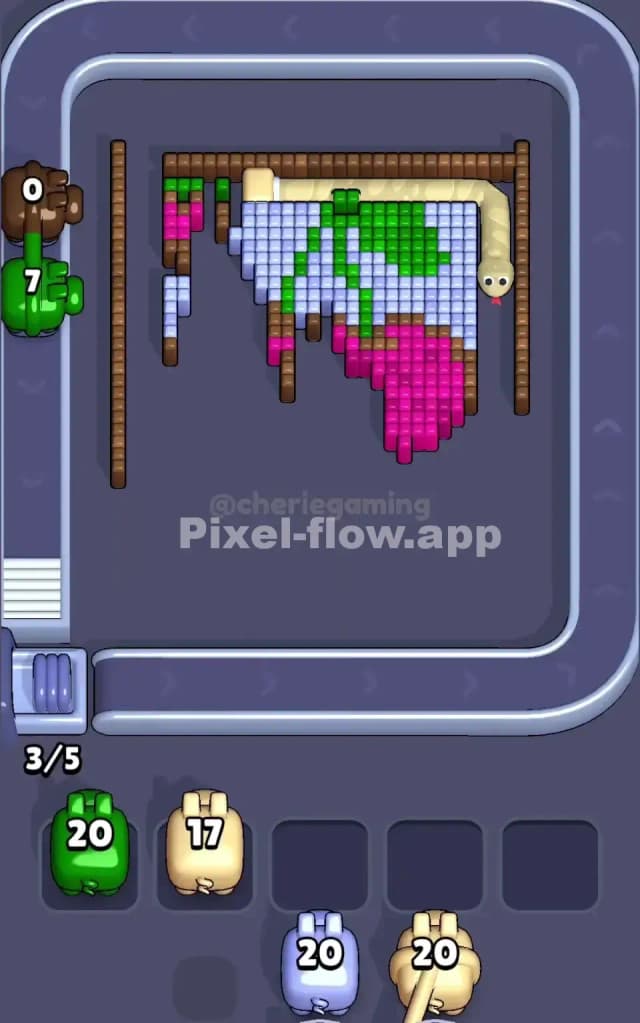
Pixel Flow Level 114 presents you with a charming pixel-art butterfly rendered in vibrant magenta, bright green, and light blue across a brown wooden frame. The butterfly's wings dominate the lower and central portions of the board in magenta, while green accents form the upper wing details and antennae. The background is largely light blue, with brown voxels framing the entire composition. What makes this level visually striking is also what makes it strategically demanding: the colors are distributed across multiple depth layers, and you'll need to methodically peel away each layer to expose what lies beneath. The starting configuration shows the magenta and green clusters are front-facing and obvious, but the layering means you can't simply blast away at the first visible target without consequence.
Win Condition and Deterministic Mechanics
Your goal in Pixel Flow Level 114 is straightforward on paper: clear every single voxel cube from the board. You start with three pigs—a beige pig with 20 ammo, a magenta pig with 20 ammo, and a light blue pig with 20 ammo—sitting in the queue (5/5 slots visible). Every cube you destroy costs exactly one ammo from the matching color pig, and the pig order never changes. This deterministic setup means that once you know the total cube count for each color, you can calculate whether your ammo is sufficient and plan the exact sequence to avoid jamming the waiting slots. The real challenge isn't whether you have enough ammo overall; it's sequencing your pigs so that no pig runs out of targets while still holding ammunition, because that's when the level becomes unwinnable.
Why Pixel Flow Level 114 Feels So Tricky
The Magenta Bottleneck and Waiting Slot Pressure
The most significant bottleneck in Pixel Flow Level 114 is the sheer volume of magenta cubes forming the butterfly's wings. With the magenta pig carrying 20 ammo and magenta cubes spread across both shallow and deep layers, you'll inevitably expose situations where magenta targets aren't immediately visible. If you fire the magenta pig too early without a clear understanding of where all magenta cubes sit, you risk the pig dropping into a waiting slot with leftover ammo and no valid targets—a dangerous position that can quickly cascade into failure if your remaining pigs can't fill the board gaps fast enough. The pressure comes from the fact that magenta is both abundant and strategically central to the butterfly's structure, so misjudging when to deploy the magenta pig can lock you into a losing state within just a handful of moves.
The Green and Blue Layer Complications
Green cubes form the antenna and upper-wing details but aren't as densely packed as magenta, which creates an awkward rhythm: the green pig has enough ammo (20) but relatively few visible targets at the start. If you're not careful, you'll activate the green pig too early and watch it drop into a waiting slot with 15+ ammo remaining, leaving you scrambled to expose deeper green layers. Similarly, light blue occupies the background layer, and while it's plentiful once you clear the top colors, accessing those blue cubes requires you to have already cleared magenta and green in the right order. Brown voxels form the frame and aren't destructible, so they act as visual anchors but don't consume ammo—don't mistake them for a strategic advantage.
The "Aha" Moment and Why It's Frustrating
I'll be honest: Pixel Flow Level 114 frustrated me the first time because I reflexively fired the magenta pig as soon as I saw magenta cubes, assuming more would appear as I progressed. Instead, the magenta pig got stuck in a waiting slot with 8 ammo left and no targets, and by the time I realized the error, my blue pig couldn't fill the remaining slots without running dry itself. The level clicked once I understood that the brown frame and the layered structure meant I needed to reverse-engineer the order: start by asking "which color pig absolutely must go first to unlock the others?" Once I grasped that light blue was the deepest layer and that clearing green first would expose more blue cubes for the final phase, the sequence fell into place. It's a humbling reminder that Pixel Flow Level 114 isn't about reflexes—it's about patience and planning.
Step-by-Step Strategy to Clear Pixel Flow Level 114
Opening: Secure the Blue Foundation
Begin Pixel Flow Level 114 by not firing magenta or green immediately. Instead, let the beige pig (or confirm if it's actually a cream-colored pig with 20 ammo) take the first action if it has targets. However, the true opening move is to fire the light blue pig first, even though blue seems "background-y." Here's why: blue cubes form the foundational layer beneath magenta and green. By deploying blue early, you'll destroy background cubes and begin exposing the deeper structure, which in turn clarifies exactly where the magenta and green clusters really sit. Aim to spend roughly 8–10 blue ammo in this opening phase. Watch the waiting slots carefully—keep at least 3 open at all times to give yourself room to maneuver if a pig gets stuck. The beige pig should follow blue's first activation, spending 3–5 ammo on any brown or neutral cube targets on the frame or edges.
Mid-Game: Expose Layers and Sequence the Wing Clusters
Once blue and beige have opened the board, activate your green pig. Green cubes are fewer in number, so the goal here is to eliminate all visible green (the antenna and upper-wing accents) in a single or double round. If green doesn't have visible targets after clearing the antenna, park it in a waiting slot rather than forcing it to shoot air. This reserves its remaining ammo for the next phase when deeper green cubes may surface. Immediately after green, resume the light blue pig's work, plowing through the newly exposed background cubes. At this point, Pixel Flow Level 114's layering becomes obvious: each blue cube you clear reveals more magenta below it. By the mid-game checkpoint, you should have 2–3 waiting slots occupied and 10–12 ammo remaining across all three pigs combined.
The critical moment arrives when magenta enters the sequence. Fire magenta after blue has stripped away a significant portion of the background and after green has cleared the obvious antenna details. Magenta has the most cubes, so its activation should be deliberate: spend 5–8 ammo per round, watching for when new magenta targets appear as the layers shift. If magenta ever runs out of visible targets while holding 3+ ammo, immediately park it and bring blue back to clear more background. The waiting slots are your safety valve—use them ruthlessly to avoid a pig shooting blanks.
End-Game: The Final Sequence and Buffer Cleanup
By the end-game phase of Pixel Flow Level 114, you'll have 1–2 waiting slots filled and 1–2 pigs still active. The goal is to exhaust all three pigs' ammo exactly as you clear the last few cubes. Prioritize finishing magenta first, since it has the most cubes and the greatest risk of getting stuck. Once magenta is depleted, resume blue to clear any remaining background that didn't get exposed earlier. Finally, green's last ammo should account for any antenna or upper-wing detail cubes you deliberately skipped. The endgame feels tight because you're down to 1–3 cubes remaining and 1–2 ammo in active pigs, but that's exactly the state you want: no pig gets stuck because all pigs are moving toward zero simultaneously. If you've planned correctly, your last blue cube and last magenta cube will be destroyed on consecutive moves, and the level clears with all waiting slots empty.
The Logic Behind This Pixel Flow Level 114 Plan
Why Order Beats Reaction
Pixel Flow Level 114 succeeds because it forces you to think in reverse: instead of "which pig should I fire now?" ask "which pig must fire next to unlock the others?" The butterfly's layered structure means blue is the foundation, green is the mid-layer detail, and magenta is the bulk. By respecting that order, you ensure that every pig you deploy has targets waiting, and you minimize the risk of a pig occupying a waiting slot with wasted ammo. This isn't luck or intuition—it's logic. The pigs' ammo counts (20, 20, 20) are deliberately balanced against the cube counts (approximately 20 magenta, 8–10 green, 15–18 blue, depending on frame cubes). Knowing these numbers lets you plan moves three pigs ahead instead of reacting to each result.
Staying Calm and Counting Ammo
The psychological key to clearing Pixel Flow Level 114 is staying calm when a pig drops into a waiting slot. Don't panic; instead, count the remaining ammo in the queue and ask yourself, "Can my remaining pigs consume the 'stuck' pig's leftover ammo by destroying new cubes?" Often the answer is yes, and you simply adjust your next two moves. Keep a mental tally of waiting slots occupied—once 4 out of 5 are full, your next move must either activate a pig in a waiting slot or clear a cube that frees a waiting slot. This discipline prevents cascading failures. Watch the pig queue constantly, and before firing any pig, glance at the board and count the visible cubes of that color. If the count doesn't match your ammo expectation, pause and investigate—there may be cubes hidden in a deeper layer that will surface after you fire a different color first. Pixel Flow Level 114 rewards patience and punishes rushing, so take your time and enjoy the puzzle-solving.