Pixel Flow Level 121 Solution Walkthrough | Pixel Flow 121

How to solve Pixel Flow level 121? Get instant solution for Pixel Flow 121 with our step by step solution & video walkthrough.

Share Pixel Flow Level 121 Guide:
Pixel Flow Level 121 Gameplay
Pixel Flow Level 121 Solution 1
Pixel Flow Level 121 Solution 2
Pixel Flow Level 121 Solution 3

Pixel Flow Level 121 Overview

The Board Layout and Main Challenge

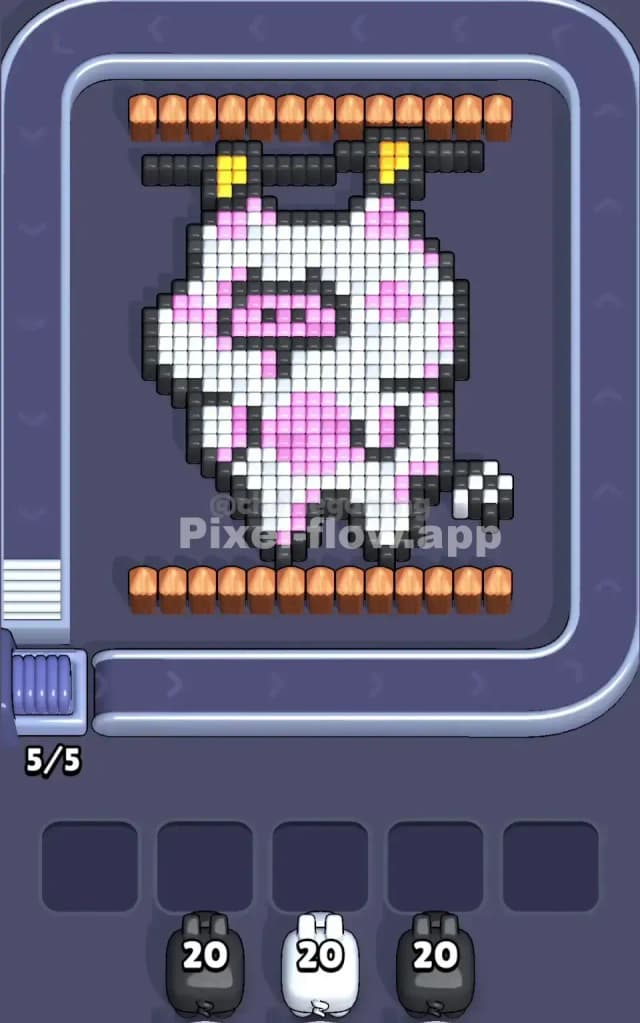
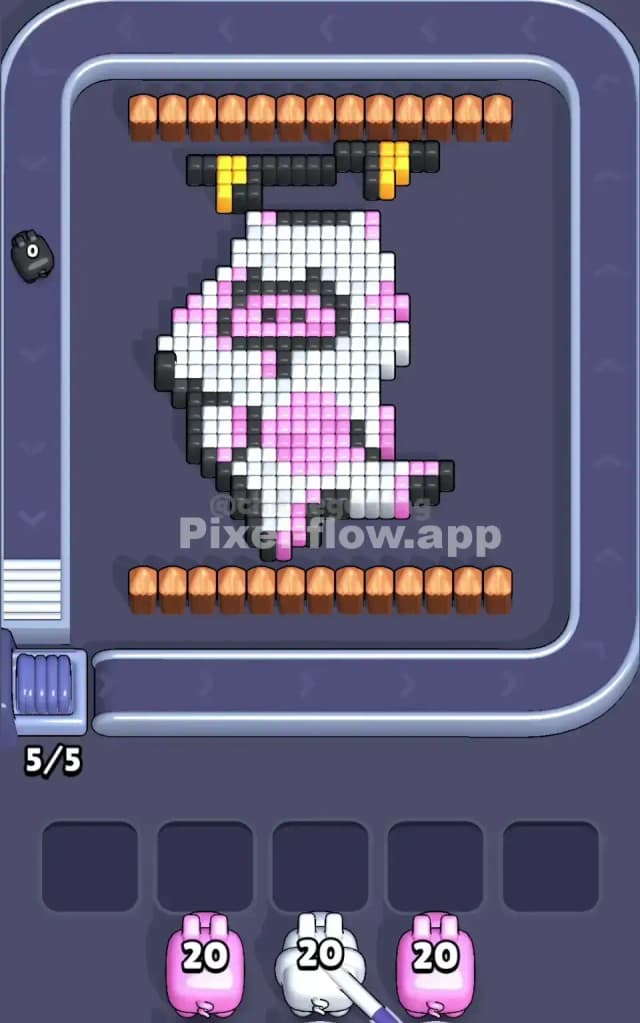
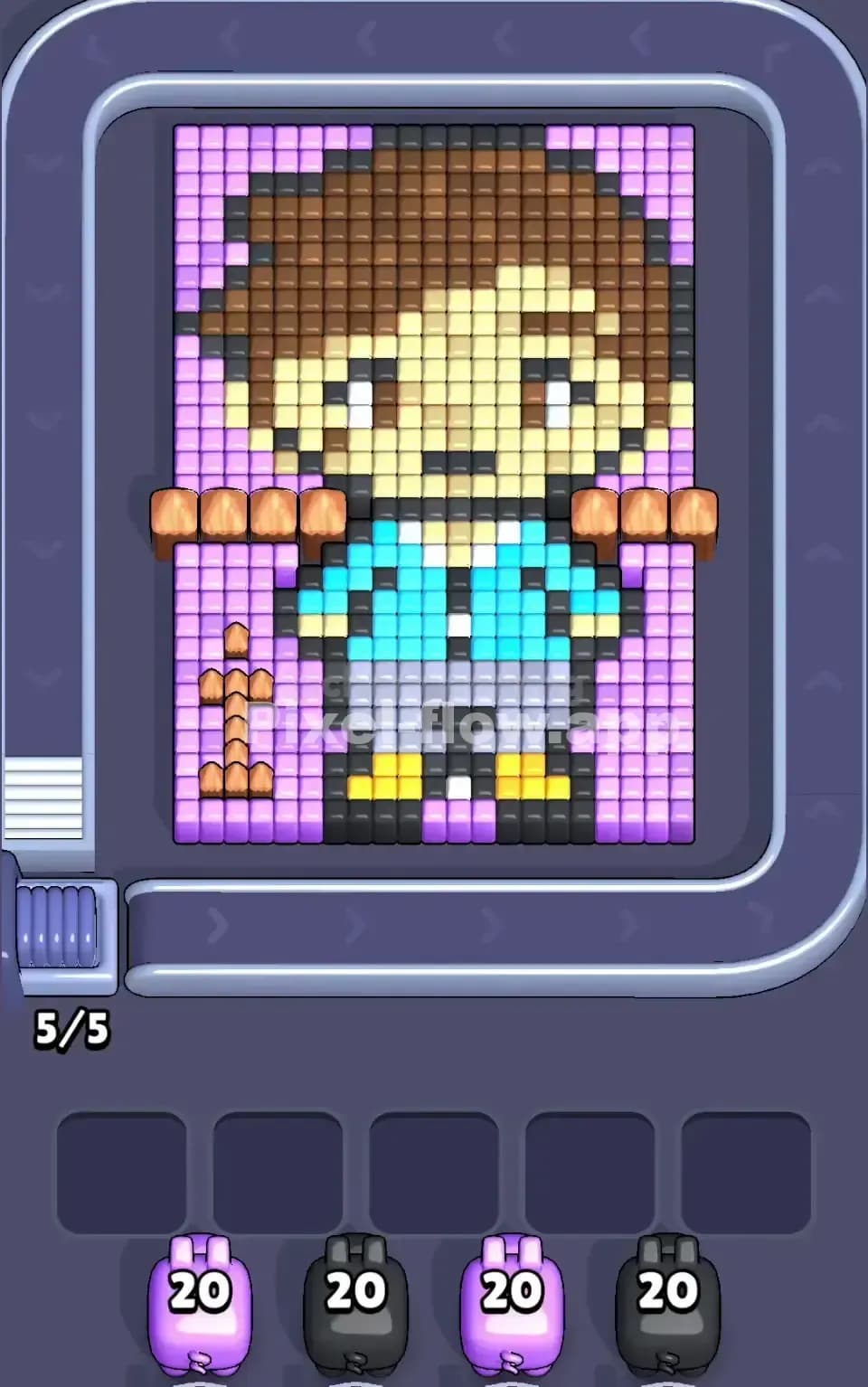
Pixel Flow Level 121 presents a charming cat face built from layered voxel cubes, and it's trickier than it looks at first glance. The pixel art is dominated by white and pink cubes forming the cat's features—whiskers, eyes, and face outline—with black cubes creating contrast and definition throughout. You'll also spot orange cubes forming a solid border at the top and bottom of the board, along with a few yellow accent cubes positioned near the upper corners. The color palette might seem simple, but that simplicity is deceptive; the arrangement of these colors across multiple depth layers is what makes Pixel Flow Level 121 such a puzzle.

At the bottom of the screen, you're looking at three pigs, all carrying exactly 20 ammo each. The left and right pigs are black, and the center pig is white. Your job is to clear every single cube on the board by shooting them with matching-colored voxels, working strategically so that no pig gets stuck in the waiting slots without any valid targets remaining. You've got five waiting slots total, and filling all five while still having unspent ammo is a guaranteed loss.

The Win Condition and Deterministic Nature

To beat Pixel Flow Level 121, you must eliminate all cubes from the board—no exceptions. The good news is that every pig's ammo count is fixed and predetermined; you're not gambling on random numbers. Each pig will automatically shoot cubes of its own color whenever you send it down the conveyor belt. Understanding that every move is deterministic means you can plan ahead confidently. Count the visible cubes of each color, match them against the pig ammo you see queued up, and you'll start to see patterns emerging. The white pig in the middle needs to account for all white cubes across all layers, and the same logic applies to the black pigs and the orange pigs waiting in the queue. This predictability is your greatest ally in clearing Pixel Flow Level 121.

Why Pixel Flow Level 121 Feels So Tricky

The White and Pink Bottleneck

Here's where most players stumble with Pixel Flow Level 121: white and pink cubes make up the bulk of the visible board, but the three pigs you see are one white (20 ammo) and two black (20 ammo each). That immediately raises a red flag. Where are the pink cubes coming from? They must be hidden in the queue, waiting to roll down after you've cleared some surface layers. The problem is that if you deploy your white pig too early without exposing the deeper pink and black layers beneath it, you might burn through its 20 ammo on white cubes only—then watch helplessly as a pink pig arrives with nothing to shoot but empty space. That's how you jam up your waiting slots in Pixel Flow Level 121.

Awkward Color Pockets and Layer Exposure

The cat's whiskers and cheeks have pink and white cubes arranged in an intricate pattern that doesn't fully reveal which colors lie underneath. You can see some black cubes in the mix, but there are definitely pockets where a pig will arrive and find zero valid targets because the color it shoots doesn't appear on the exposed surface. This is especially dangerous near the left and right sides of the face where white and pink intermingle. If you send a black pig down when only white and pink remain visible, it'll drop straight into a waiting slot—and if that happens twice more before you've cleared enough cubes, you'll have three stuck pigs and a catastrophic jam. The geometry of Pixel Flow Level 121 deliberately creates these color pockets to force you to think ahead.

Personal Reaction and the "Click" Moment

I'll be honest: my first three attempts at Pixel Flow Level 121 felt chaotic. I kept deploying pigs frantically, watching my waiting slots fill up, and then panicking when I realized I'd backed myself into a corner with only pink cubes visible and no pink pig in sight. The frustration hit hard around attempt four when I realized I'd been ignoring the queue entirely. Once I started actually looking at which pig would arrive next—not just reacting to what was on screen—Pixel Flow Level 121 went from maddening to manageable. That's when it clicked: the level isn't random or unfair; it's a puzzle where patience and planning beat speed every time.

Step-by-Step Strategy to Clear Pixel Flow Level 121

Opening: Establish Control and Preserve Buffer Space

Your first move in Pixel Flow Level 121 should be to deploy the left black pig. Why black first? Because the black cubes are scattered throughout the board as a foundational layer, and clearing some of them early will expose the pink and white layers beneath without immediately using up your white pig's ammo on white cubes alone. Watch the black pig shoot; it'll likely hit the black cubes forming the definition and contrast around the cat's features. As it shoots, observe which cubes disappear—this tells you exactly how the layers are stacking.

After the black pig finishes, you should have at least three waiting slots still free. Don't rush to fill all five. The golden rule for Pixel Flow Level 121 is to keep your buffer active; if you ever see all five slots occupied, you've lost strategic flexibility. Now, peek at the queue. A pink pig should be arriving soon. Before you send it down, count how many pink cubes are currently visible on the board. If there are significantly more pink cubes visible than the pink pig's ammo, you're safe to deploy it.

Mid-Game: Sequence Pigs and Layer Excavation

Once you're three or four pigs deep into Pixel Flow Level 121, the strategy shifts to precision. You're no longer just clearing surface colors; you're actively engineering which layers get exposed next. If you've got white cubes covering pink cubes, you might need to send a white pig to peel them away. But here's the trap: if you're not careful, you'll use up your white pig's ammo on surface whites and then have no way to deal with white cubes hiding in deeper layers.

The smart play in Pixel Flow Level 121 is to alternate between colors intentionally. If a black pig just cleared a section, check whether that revealed any new white cubes or pink cubes beneath. Send the matching-colored pig next to capitalize on the exposure. This creates a rhythm: black clears contrast, revealing white/pink underneath; white clears its layer, exposing more pink; pink finishes, and you circle back if needed. The waiting slots should never get completely full if you're sequencing correctly.

Pay close attention to pigs that arrive with ammo but no visible targets. If you see a white pig about to drop into a waiting slot because you've already cleared all surface white cubes, that's a sign you've miscalculated. Pause, review what colors remain on board, and decide: do you need to send a different color next to expose new whites? Or is this pig genuinely stuck because you've over-committed? For Pixel Flow Level 121, these moments are the difference between victory and frustration.

End-Game: The Final Clear and Buffer Management

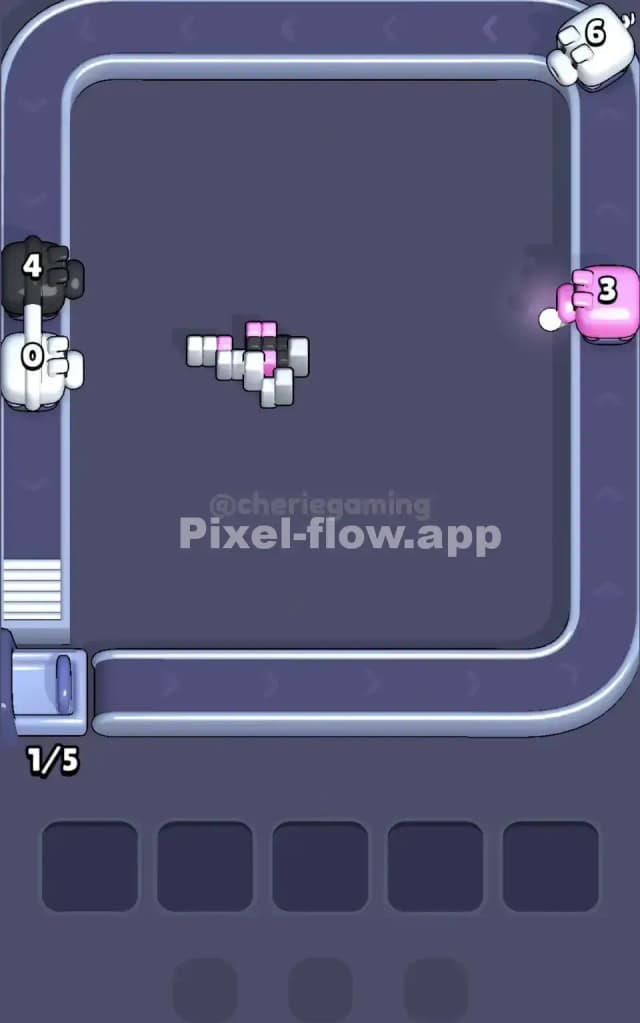
As you approach the end of Pixel Flow Level 121, you're down to maybe two or three layers, and the remaining cubes are scattered. At this stage, counting becomes essential. If you've got 15 ammo left on a white pig and you can count exactly 15 white cubes remaining, fire that pig. The math checks out; no ammo wasted, no stuck pig.

The very last moves of Pixel Flow Level 121 are about tidiness. You want to finish with your waiting slots empty or nearly empty, and every pig should have spent all or nearly all its ammo. If you notice you've got two pigs left in the queue and only one color of cubes remaining, you've got a problem—one of those pigs is definitely getting stuck. Rewind (if the game allows) and rethink your mid-game sequencing. If you're already at the end and locked in, finish the remaining color quickly and accept the stuck pig as a learning moment for your next attempt at Pixel Flow Level 121.

The Logic Behind This Pixel Flow Level 121 Plan

Why This Strategy Avoids Jams

The core logic of this Pixel Flow Level 121 strategy is respecting the deterministic nature of the pig queue. Every pig that arrives is a fixed entity with fixed ammo and a fixed color. You can't change that, but you absolutely can control when you deploy each pig and what color state the board is in when it arrives. By sequencing colors intentionally—using black to expose white, white to expose pink, and so on—you ensure that every pig you deploy has something to shoot. No stuck pigs means no jammed waiting slots, and no jammed slots means no failed run.

The buffer management component (keeping at least two waiting slots free) is your safety valve. It forces you to pause and plan rather than panic-firing pigs. When you see an open slot beckoning, you have to ask yourself: "Do I know what pig is coming next, and will it have valid targets?" That single question, asked before every deployment, is what separates clearing Pixel Flow Level 121 cleanly and watching your run collapse.

Staying Calm and Counting Ahead

The psychological side of Pixel Flow Level 121 is just as important as the tactical side. It's easy to get frustrated when a pig reaches the board and finds no targets, but that frustration clouds your judgment for the next move. Instead, develop the habit of counting ammo and cubes during the pig's animation. Watch your white pig shoot, mentally note how many white cubes vanished, and immediately ask: "How many white cubes are still visible?" If the answer is "zero," congratulations—you'll need a different color next. If it's "five," mark that as a target for the next white pig if one's coming.

Looking two or three pigs ahead in the queue gives you incredible foresight in Pixel Flow Level 121. If you can see that a pink pig is arriving in three turns, you can plan to use your intervening turns (black, white, whatever) to expose pink cubes from deeper layers. This foresight transforms Pixel Flow Level 121 from a reactive gauntlet into a solvable puzzle where you're always one step ahead, never caught off guard.