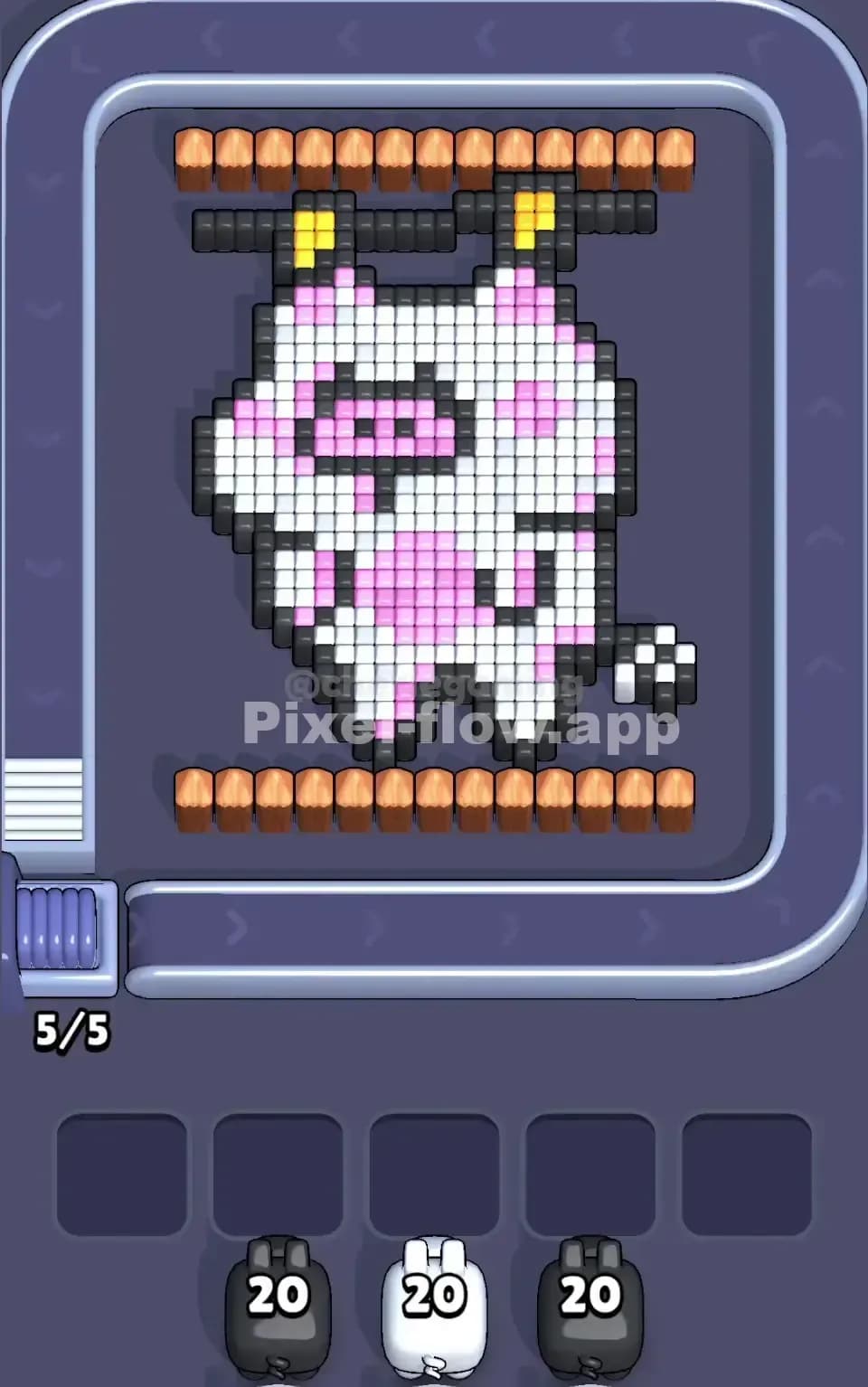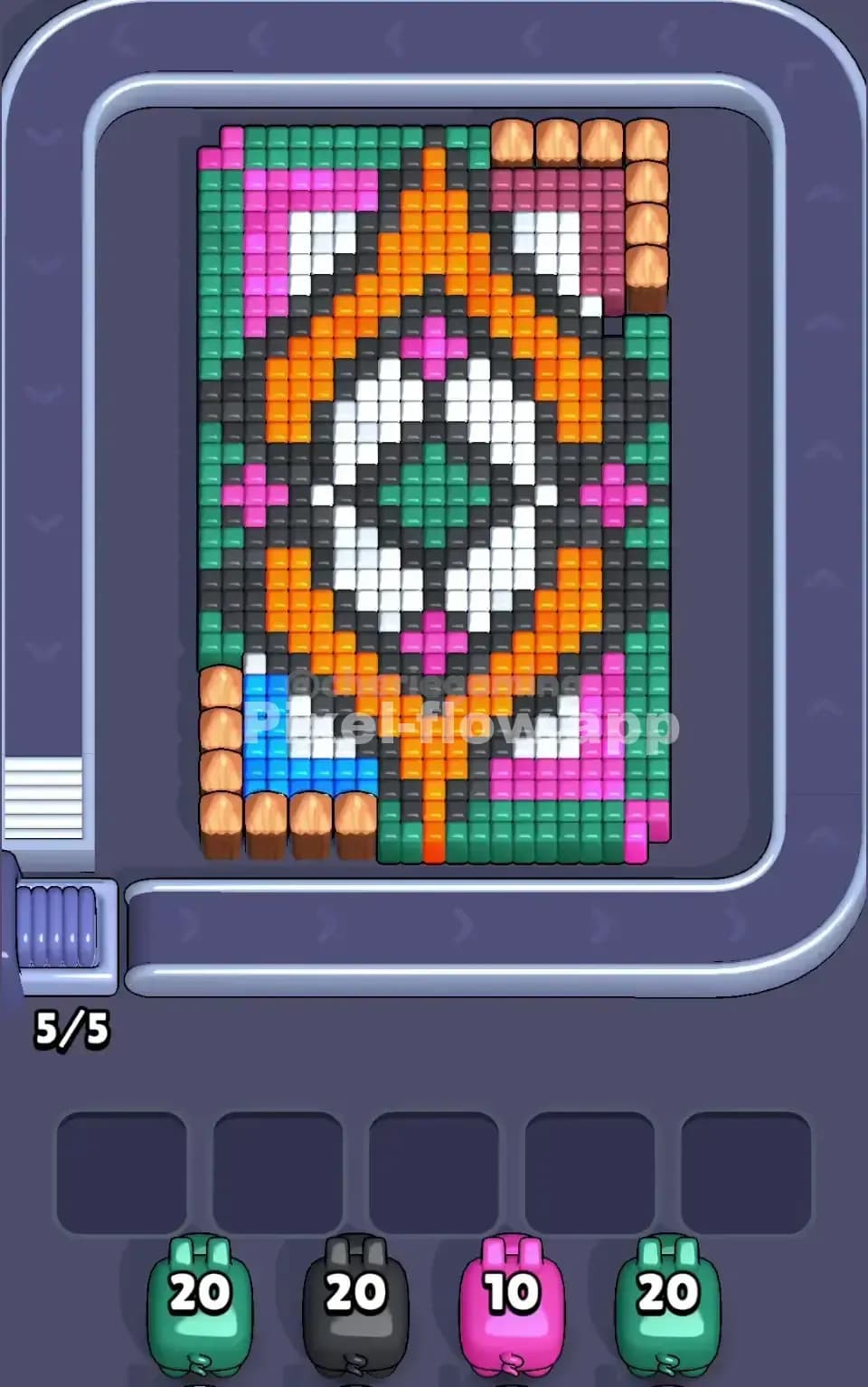
Pixel Flow Level 122 Solution | Pixel Flow 122 Walkthrough
How to beat Pixel Flow Level 122: Video solution & walkthrough. The fastest way to pass Pixel Flow 122.
Is this the wrong level layout?🤔
Pixel Flow randomizes levels for different players. Don't worry, just upload a screenshot of your board, and our AI will find the correct video instantly.

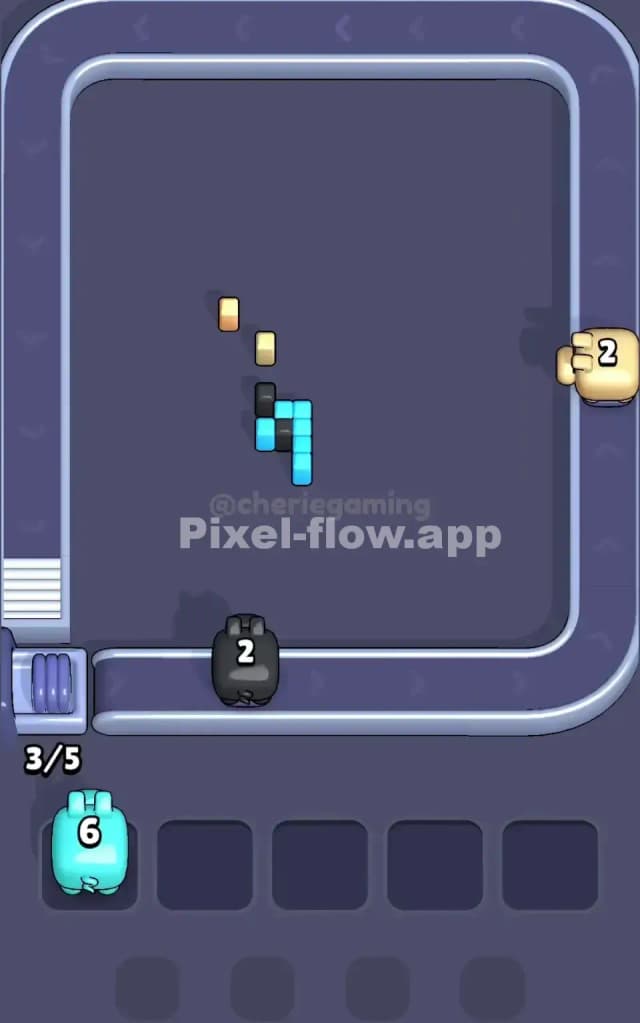
Pixel Flow Level 122 Overview
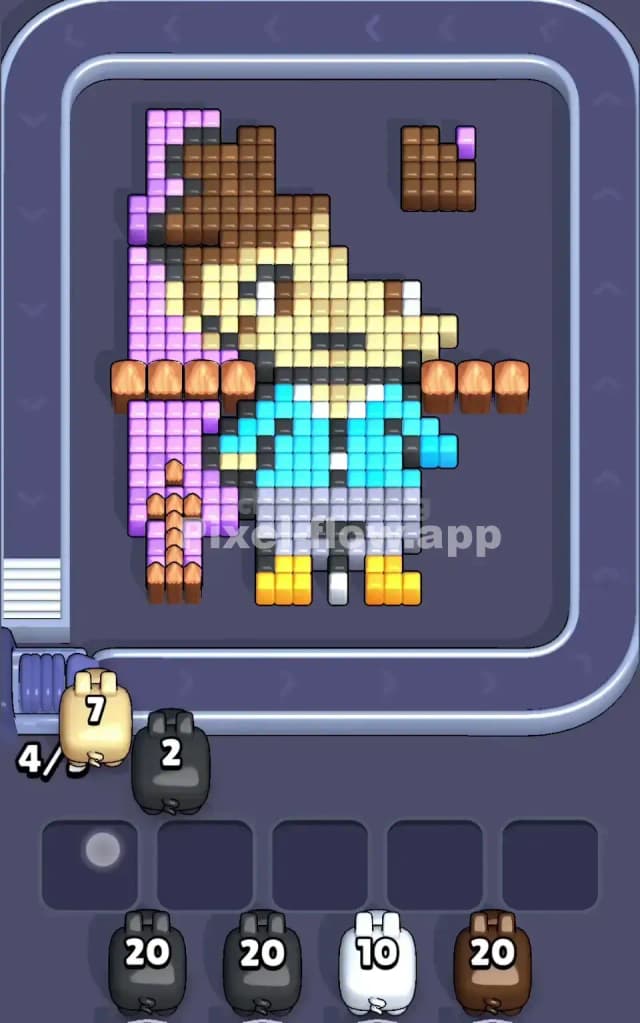
The Starting Board and Visual Theme
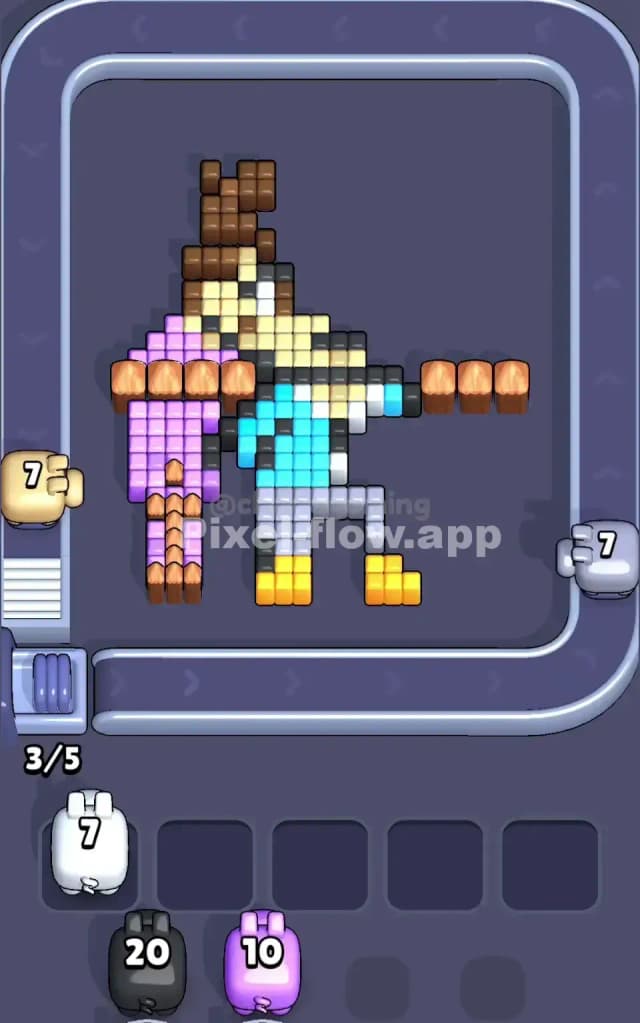
Pixel Flow Level 122 presents a charming pixel-art character face—think retro video game aesthetics—built from layered voxel cubes in multiple colors. The dominant hues are magenta (which dominates the outer border and corners), brown and tan tones (forming the face and hair structure), pale yellow (creating facial features and highlights), black (defining outlines and shadows), cyan (accenting the mouth region), and touches of bright yellow (adding detail to the lower section). You'll notice the board feels dense; there's no obvious "easy" clearing zone, and the colors are distributed across both shallow and deep layers. This multi-layered design is exactly what makes Pixel Flow Level 122 challenging—you can't just spray bullets at random and expect success.
The Win Condition and Deterministic Nature
Your goal in Pixel Flow Level 122 is straightforward: clear every single voxel cube on the board. What makes this level special is that everything about it is predetermined. Your four pigs are lined up in the queue, each with exactly 20 ammo, and they'll arrive on the conveyor belt in a fixed order. There's no randomness here, which is actually good news—it means Pixel Flow Level 122 can be solved with pure strategy and planning. Once you understand the pig sequence and how many cubes of each color exist, you can map out a winning path. The trick is doing it without filling all five waiting slots with stuck pigs before you've cleared the board.
Why Pixel Flow Level 122 Feels So Tricky
The Magenta Bottleneck
The biggest threat in Pixel Flow Level 122 is magenta. This color blankets the entire perimeter and corners, forming what I call the "pink prison." With so many magenta cubes visible at once, it's tempting to burn through a pig's ammo on them immediately. But here's where the puzzle bites back: magenta cubes don't expose deeper layers efficiently. You'll spend 8–10 ammo clearing the outer ring and barely reveal what's underneath. Meanwhile, you've just used a pig that could've been targeting a rarer color, and now you're stuck with a half-spent pig in a waiting slot. The magenta layer is the reason Pixel Flow Level 122 punishes impatience—you must resist the urge to clear the obvious stuff first.
Awkward Mid-Layer Color Distribution
Once you start peeling back magenta, Pixel Flow Level 122 throws a curveball. The brown, black, and tan cubes form the core character design, but they're not all the same depth. Some brown cubes are exposed immediately after magenta dies; others hide behind black outlines. This staggered reveal means you can't always find targets for every pig's remaining ammo. You'll activate a pig expecting to dump all 20 shots into brown, only to realize there are just 12 brown cubes visible and 8 black ones blocking them. This is when waiting slots fill up, and the level tightens its grip on you.
The Cyan and Yellow Scatter Problem
Deep in the board, cyan and bright yellow form accent details in the mouth and lower features. These colors don't cluster; they're sprinkled strategically around the composition. When you're in endgame, you might have a pig with 5 ammo left but only 3 visible cyan cubes. That pig goes into a waiting slot, and suddenly you're one jam away from losing. Pixel Flow Level 122 is cruel about this because you can't afford to ignore any color—every remaining cube matters.
The Personal Moment It Clicked
Honestly, Pixel Flow Level 122 frustrated me for a few attempts because I kept treating it like a casual puzzle. I'd clear magenta, deal with brown, and hope the rest worked itself out. It didn't. The level felt impossible until I realized I needed to map out the entire pig queue and pre-count every color on the board before making a single move. Once I accepted that Pixel Flow Level 122 demanded forethought, the solution became elegant and almost beautiful. That shift from reactive to proactive thinking is what transforms the level from a brick wall into a satisfying logic puzzle.
Step-by-Step Strategy to Clear Pixel Flow Level 122
Opening: Securing Your First Two Moves
Start Pixel Flow Level 122 by sending your first pink pig at the magenta border, but with a crucial discipline: only clear the top-left and top-right corner clusters, along with strategic sections that expose the brown hair and facial structure. You want to spend roughly 12–14 of that pig's 20 ammo, leaving 6–8 cubes on the board. Why? Because your second pig (which is black) will arrive next, and you need exposed black outlines to target. This controlled opening keeps your waiting slots empty. Don't fill more than one slot in your first three moves. By forcing yourself to leave magenta cubes standing, you create pockets of black that the second pig can chip away at efficiently. This rhythm—partial clear, move on, expose next color—is the pulse of Pixel Flow Level 122.
Mid-Game: Layering and Exposure
Once your pink and black pigs have each spent roughly 14–16 ammo, Pixel Flow Level 122's middle layers start to reveal themselves. Your third pig (pink again) should arrive now. This is where you pivot strategy. Instead of clearing remaining magenta, target any exposed brown or tan cubes you can find. You're no longer clearing the obvious; you're excavating. This pig might have only 8–10 targets, so it drops into a waiting slot—and that's okay, because now your fourth pig (black) comes in with full 20 ammo aimed at the newly exposed sections. The black pig becomes your workhorse, potentially clearing 15+ cubes of its color that were hidden behind the first wave. As you clear these layers, cyan and yellow start peeking through from beneath.
End-Game: The Careful Finish
Pixel Flow Level 122's endgame is about precision. Once all your pigs are cycling through the waiting slots, you need to ensure no pig runs out of targets while others still have ammo left. Focus on exposing all cyan cubes first—they're concentrated in the mouth region and are often accessible once the mid-layers thin out. Spend both your pink pigs' remaining ammo on any scattered magenta or brown you missed, or on yellow accents if needed. Your black pigs should finish off the black outline cubes and any remaining dark shadows. By the time you're down to the last 3–4 cubes (usually bright yellow details), your pigs should be cycling through with just 1–2 ammo each. If you've planned correctly in Pixel Flow Level 122, the final pig will deliver its last shot, all slots will empty, and victory triggers.
The Logic Behind This Pixel Flow Level 122 Plan
Why This Strategy Exploits the Game's Mechanics
The core insight in Pixel Flow Level 122 is that pig order and color availability are fixed. You can't change which pig arrives next, but you can control when to fire each pig. By intentionally leaving magenta cubes exposed longer than you'd think optimal, you delay the arrival of later pigs, giving earlier ones time to spend ammo on newly exposed colors. This staggering prevents the bottleneck where all waiting slots fill because everyone's looking for the same color. Pixel Flow Level 122 rewards this kind of "strategic delay"—it's counterintuitive, but it works because you're managing the queue like a production line, not a race.
Staying Calm and Planning Ahead
The mindset needed for Pixel Flow Level 122 is calm observation. Before you send any pig, glance at the queue to see what's coming. Count the visible cubes of the color your incoming pig shoots. Ask yourself: "If this pig uses all 20 ammo, will it hit a wall?" If yes, decide which 12–16 cubes to clear and deliberately stop. This requires discipline—you'll see leftover cubes and feel the urge to finish them—but Pixel Flow Level 122 teaches you that incomplete clears are tactical moves, not failures. Think three pigs ahead. Watch which colors pop into view as layers fall. Anticipate bottlenecks. This proactive approach turns Pixel Flow Level 122 from a frustrating puzzle into a satisfying choreography of moves. You're not reacting to the board; you're conducting it.