Pixel Flow Level 123 Solution | Pixel Flow 123 Walkthrough
How to beat Pixel Flow Level 123: Video solution & walkthrough. The fastest way to pass Pixel Flow 123.
Is this the wrong level layout?🤔
Pixel Flow randomizes levels for different players. Don't worry, just upload a screenshot of your board, and our AI will find the correct video instantly.
Pixel Flow Level 123 Walkthrough
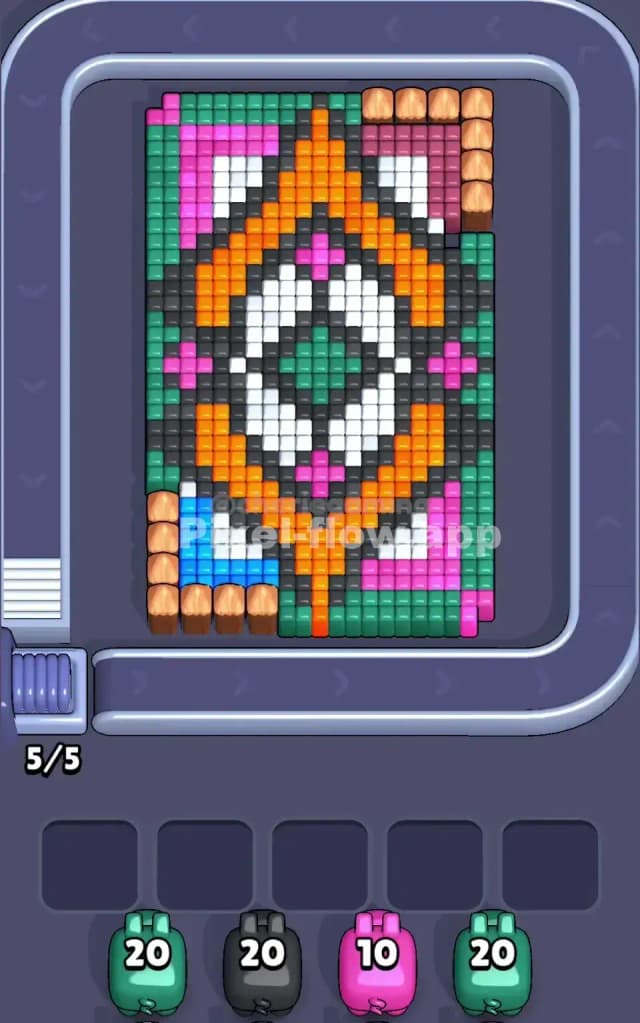
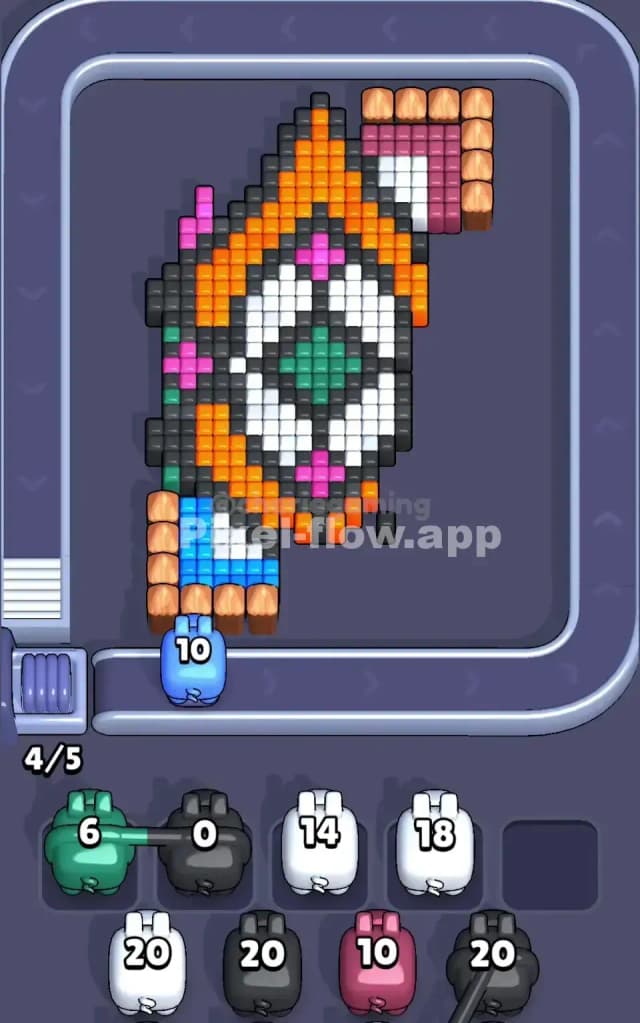
This level features a dense, geometric tribal pattern that looks like a woven rug or an Aztec shield. The design is built around a massive central diamond shape. The core is white, surrounded by a thick orange band, which is then outlined in black. The outer edges are filled with vertical green strips on the left and right, plus patches of bright pink triangles in the corners. You also have rigid wooden blocks guarding the top-right and bottom-left corners, which act as annoying blockers for your shots.
This is a very hard level. The layers are packed tight, and the color distribution is uneven. You can easily get choked out if you don't peel the outer "skin" of the design correctly.
Pixel Flow Level 123 Overview
Think of Pixel Flow Level 123 as a layered onion. The "skin" is mostly Green and Pink. These colors dominate the perimeter. The left side is a solid vertical wall of green pixels. The bottom-right corner is a mix of green horizontal lines and a pink triangle.
The "meat" of the level is the Orange diamond. It sits right in the middle, protected by a thin Black outline. You cannot effectively clear the orange bulk until you strip away the green and pink borders.
The "heart" is the White center with a tiny green dot in the very middle.
The asymmetry here is dangerous. The bottom-left corner has a unique patch of Blue hidden behind a wooden L-shape. The top-right corner has a matching wooden L-shape but no blue. These wooden blocks are indestructible barriers. They force your pigs to shoot from specific angles, limiting your valid moves. If a Blue pig spawns early, you are in trouble because that blue patch is buried deep behind wood and green layers.
Step by step solution walkthrough for Pixel Flow Level 123
First Color Zone to Erase in Pixel Flow Level 123
Target the Green zones immediately.
Narratively, the green blocks are the wrapping paper on this gift. The entire left column is green. The bottom row is green. Looking at the queue in typical runs of Pixel Flow 123, you often get high-ammo Green pigs early. This is intentional design.
Logically, you must clear the left-side green wall first. Why? Because the Black and Orange layers are physically blocked by it. If you try to shoot the inner colors while the green wall stands, your shots will hit the green surface and waste ammo (if the colors don't match) or simply have no path to the target. Clearing that left green strip opens up the entire flank of the Black outline, allowing your Black pigs to do massive damage later.
How to pass Pixel Flow Level 123 without power ups or boosters
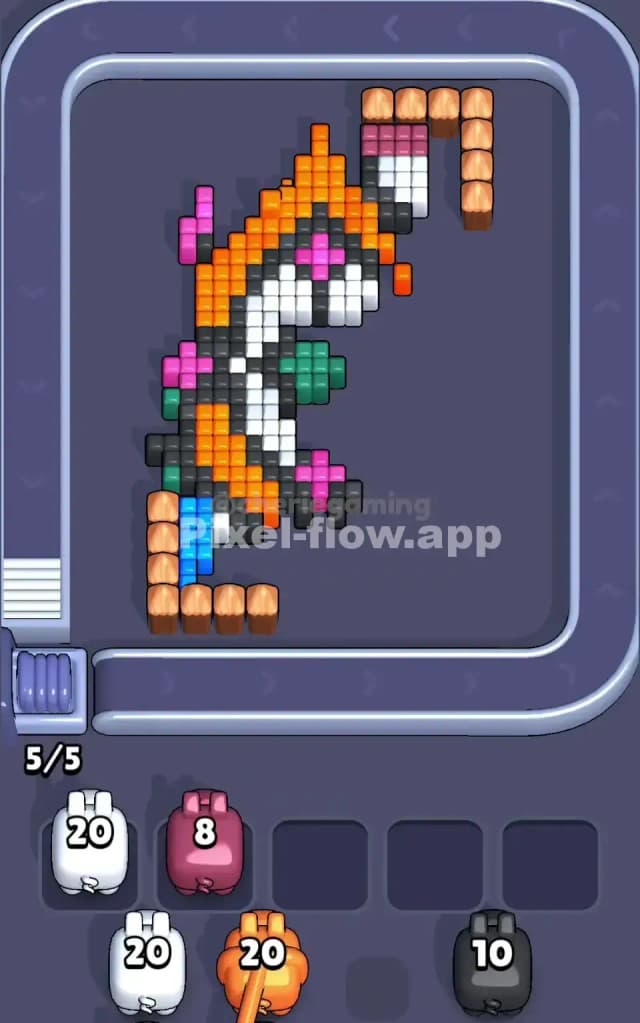
Around the mid-point, Pixel Flow Level 123 looks like a mess. You will likely have stripped the Left Green wall and the bottom-right Pink triangle. The board will resemble a jagged, floating island of Orange and White.
Here is the trap: The Black outline.
The black pixels serve as a separator between the outer green/pink and the inner orange. Once the green is gone, the black layer is fully exposed. You must prioritize using Black pigs here. Do not slot them if you can help it. The moment a Black pig appears, use it to sever the connection between the remaining outer scraps and the central diamond.
If you refuse to use power-ups, you have to be disciplined with your Waiting Slots. You will likely get a White pig or an Orange pig before the center is fully ready. Slot them. Do not waste their ammo shooting at the wooden corners or trying to snipe a single pixel. Save the Orange pigs for when the black outline is 80% gone. Once that black border falls, the Orange diamond becomes a giant, easy target that a single high-ammo pig can decimate.
Last Details You Clean Up in Pixel Flow Level 123
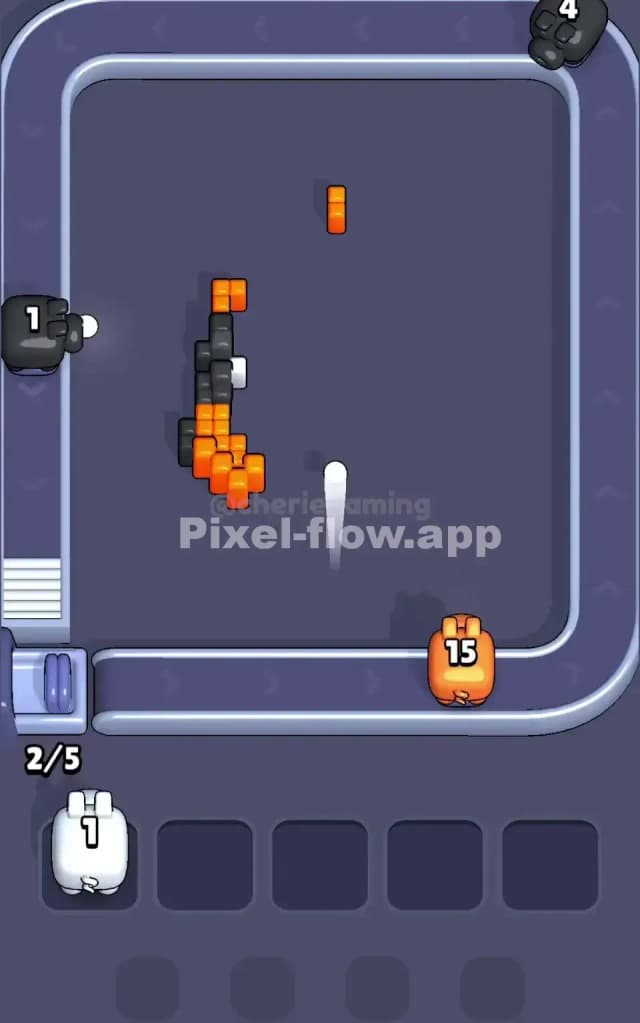
The endgame of Pixel Flow 123 is usually the White center and that tricky Blue patch in the bottom left.
By now, the orange diamond is gone. You are left with the white core. This part is easy—it’s a big target. The real problem is the Blue zone. It is tucked in the bottom-left corner, sandwiched between the wooden blocks and the main design.
Often, players forget about this blue patch until they have a Blue pig clogging up their queue. Keep an eye on the bottom-left. As you clear the white center, try to make sure you have a clear line of sight to the blue pixels so when that final Blue pig arrives, he isn't blocked by leftover trash from the main design. The wooden blocks will still be there, staring at you. Ignore them. Just clean the pixels around them.