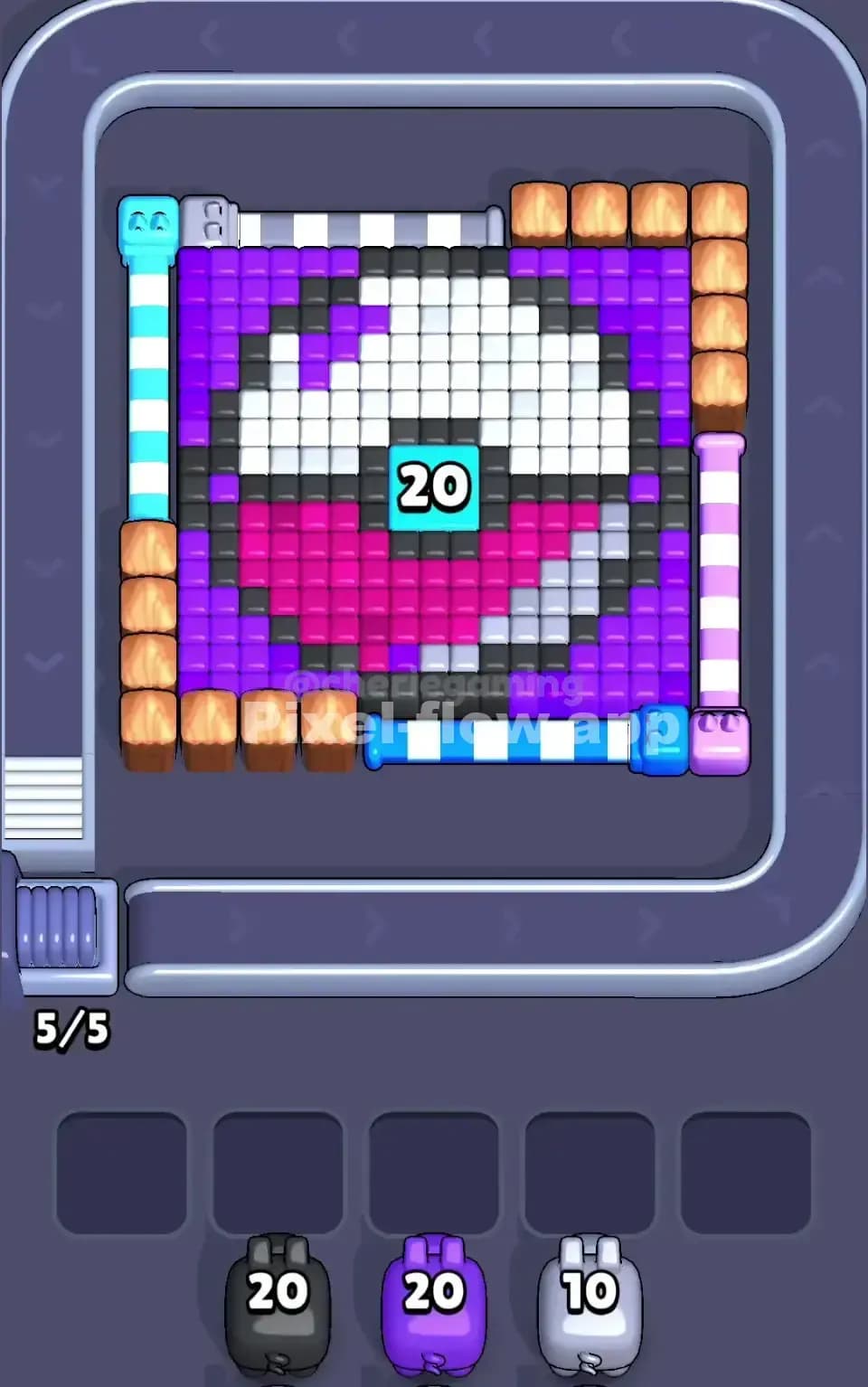
Pixel Flow Level 129 Solution | Pixel Flow 129 Walkthrough
How to beat Pixel Flow Level 129: Video solution & walkthrough. The fastest way to pass Pixel Flow 129.
Is this the wrong level layout?🤔
Pixel Flow randomizes levels for different players. Don't worry, just upload a screenshot of your board, and our AI will find the correct video instantly.

Pixel Flow Level 129 Overview
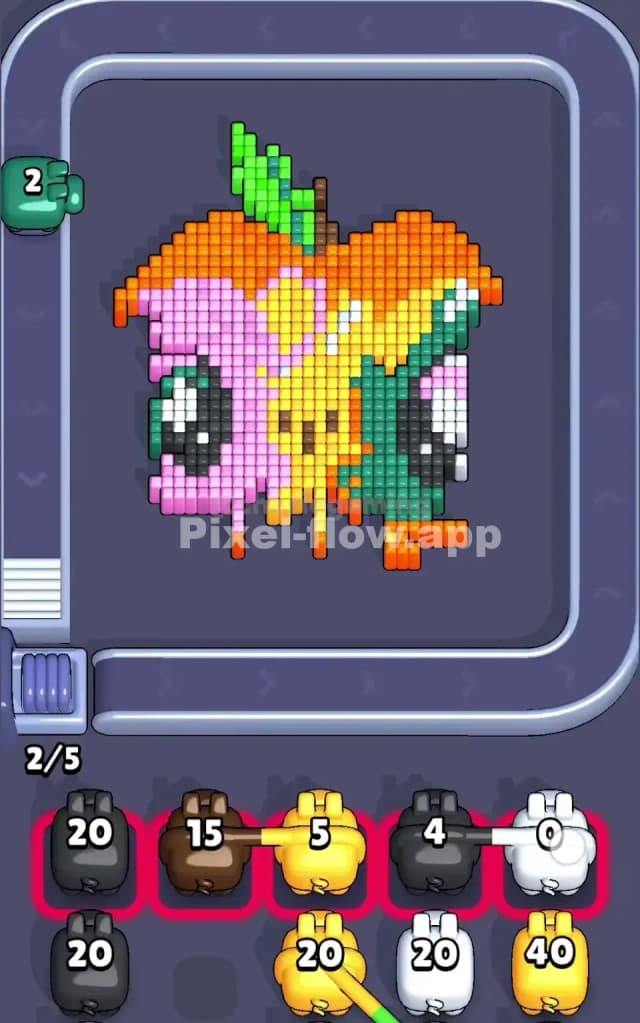
The Smiling Pumpkin Canvas
Pixel Flow Level 129 presents you with a cheerful autumn scene: a large, colorful pumpkin with a friendly jack-o'-lantern face, complete with a leafy green stem at the top. The main subject is rendered in multiple color layers, starting with a bright orange outer shell forming the pumpkin's body. Inside, you'll find pink cheeks framing the face, yellow accents in the nose and mouth regions, and darker shades (black, brown) creating the facial features and depth. A smaller green leaf design sits to the right, adding visual complexity to the overall composition. The beauty of Pixel Flow Level 129 is that it looks deceptively simple—until you realize the pigs won't cooperate with your first instinct.
Your win condition is straightforward: clear every single voxel cube from the board by strategically deploying five color-coded pigs, each carrying exactly 20 ammo units. The pig order is completely deterministic and always the same in Pixel Flow Level 129, which means success hinges entirely on sequencing and planning. If you can match every cube to its corresponding pig color before all five waiting slots fill up with stuck pigs, you've conquered the level.
The Deterministic Pig Arsenal
In Pixel Flow Level 129, your pig lineup comes in this exact order: orange, green, black, pink, and orange again. Each pig carries precisely 20 ammo, giving you a total of 100 shots to work with. Crucially, every cube on the board must have a matching color pig available at some point during your run. Because the sequence never changes, there's no luck involved—only planning. The challenge in Pixel Flow Level 129 emerges when you realize that a pig might arrive before its matching cubes are exposed, or worse, it might arrive when all visible targets are already gone, forcing it into a waiting slot prematurely.
Why Pixel Flow Level 129 Feels So Tricky
The Waiting Slot Bottleneck
The single biggest threat to your Pixel Flow Level 129 run is the five-slot waiting buffer filling up with pigs that have nowhere to go. Picture this: you call out the first orange pig, it tears through the outer layer beautifully, but then the green pig comes down and there are no green cubes visible yet because they're hidden beneath the orange shell. That green pig has 20 ammo and nowhere to spend it, so it parks in slot one. Now the black pig arrives, still no exposed black cubes—slot two fills. By the time the second orange pig rolls in, you might have three or four pigs sitting idle, and if you can't expose their colors before the final pig lands, you're locked out of victory. Pixel Flow Level 129 punishes you for not planning the layer reveal carefully enough.
The Tricky Color Patches and Hidden Depths
The pink cheeks and yellow nose area in Pixel Flow Level 129 are deceptive. They sit in the middle-to-deep layers, meaning you can't access them until you've peeled back significant orange coverage. However, pink and yellow patches are scattered throughout—some on the surface, some buried. If your pink or yellow pigs arrive too early, they'll only hit a handful of cubes and then get stuck with wasted ammo. The black eye details and brown stem also create a puzzle: there's not a ton of black or brown on the board relative to orange and green, so these pigs need precise targeting windows. Miss the timing, and you'll have a pig with half its ammo still loaded, unable to find targets, rotting in a waiting slot.
When the Realization Hits
I'll be honest—my first few attempts at Pixel Flow Level 129 felt like I was playing blind. I'd clear the obvious orange shell, feel good about myself, and then watch helplessly as three pigs stacked up in the waiting area with no targets. The moment it clicked was when I stopped thinking about "what's available now" and started asking "what will be available if I clear this section in this order?" Pixel Flow Level 129 demands that you think two or three moves ahead, visualizing which inner colors will surface when you remove a specific outer block. That mental shift transforms the level from frustrating to achievable.
Step-by-Step Strategy to Clear Pixel Flow Level 129
Opening: Controlled Orange Assault
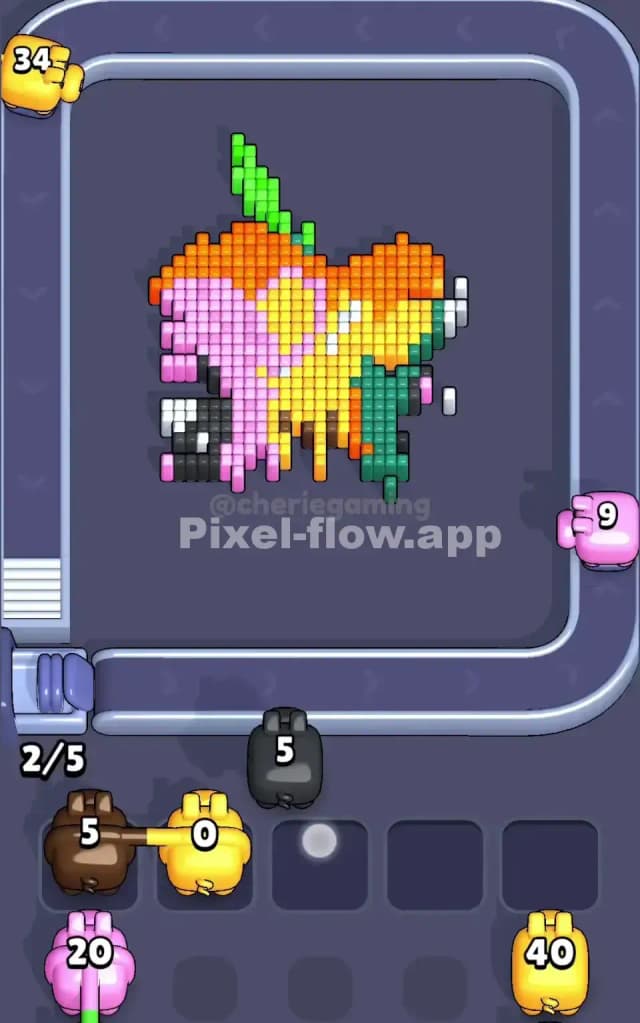
Launch your first orange pig and let it do what it does best—peel away the outer orange shell systematically. You've got 20 ammo, and there's a lot of orange, so this pig will likely run dry before exposing all the inner layers. That's okay; in fact, it's expected. The key is to be deliberate: target orange cubes that, when removed, will expose either the pink cheeks or the green leaf stem—the second pig's targets. Don't spray randomly; aim for edges and corners that open up new regions. Keep at least three waiting slots free at this stage. Your goal is to have the first orange pig expend nearly all its ammo while revealing enough pink and green to keep the second pig (green) busy the moment it arrives.
Mid-Game: Sequencing and Layer Exposure
When your green pig lands, you should have a clear path to a decent chunk of green cubes, both in the leaf area and in the patches mixed into the face. Let it chew through approximately 15–18 of its 20 ammo here, targeting strategically to expose the black eye details and yellow nose sections. Now the black pig arrives; with luck, you've exposed enough black outline work that it can spend 18–19 ammo immediately, keeping the waiting slots manageable. This is the tension zone of Pixel Flow Level 129: each pig needs to find targets fast, or you'll jam up.
Once the second orange pig lands, you've hopefully exposed most of the yellow and pink interior. The second orange pig should finish off remaining orange sections and any orange mixed into the lower portions of the pumpkin. By now, you should be cycling through with only 1–2 pigs waiting at any given time. The strategy is to keep the buffer flowing like a healthy conveyor belt, never letting more than two pigs sit idle simultaneously.
End-Game: The Final Colors and Clean Exit
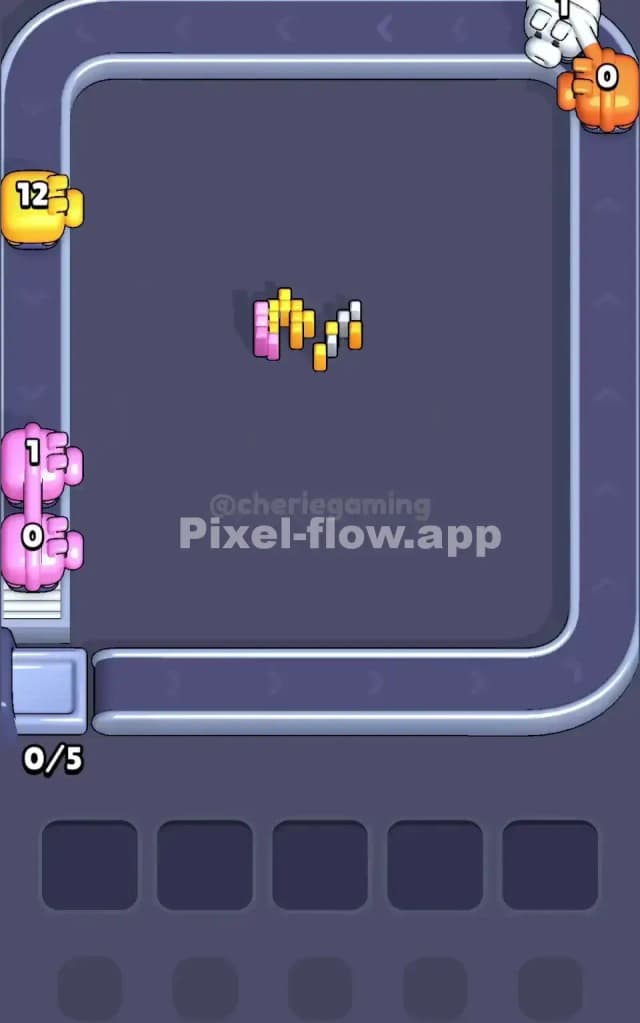
As you reach the final stretch of Pixel Flow Level 129, your pink pig should arrive to a board where pink cubes are visible but not yet cleared. Ideally, it will find 18–20 targets and execute cleanly, leaving only a few scattered cubes. Yellow is often the last color to fully reveal in puzzles like this, and if you've planned correctly, any remaining yellow cubes will be exposed and ready for cleanup. Some versions of Pixel Flow 129 might have a tiny bit of yellow that sticks around through most of the run—that's fine. The pink pig can chip away at it if needed.
The final rule of Pixel Flow Level 129 end-game is this: never call a pig unless you're confident it will find at least one target. A single voxel is enough to keep it active and out of the waiting zone. If you've got one or two cubes of a specific color left and no pig for that color queued up, you've made a sequencing error earlier, and you're likely facing failure.
The Logic Behind This Pixel Flow Level 129 Plan
Determinism as Your Superpower
Pixel Flow Level 129 isn't a game of chance; it's a logic puzzle disguised as a shooter. Because the pig sequence, ammo counts, and board state are entirely deterministic, you can solve it like a mathematical equation. Every color you see on the board has a pig waiting for it, and that pig has exactly enough ammo (across multiple potential targets) to clear its color. The strategy I've outlined doesn't bypass the mechanics; it honors them by respecting the timing constraints. You're not trying to be lucky; you're trying to be systematic. Plan which regions to clear in which order, and the rest follows naturally.
Staying Calm and Counting Ammo
Pixel Flow Level 129 rewards patience. Between each pig dispatch, take a breath and mentally note which waiting slots are occupied and how much ammo they're carrying. Count the visible cubes of the next incoming color. If a pig arrives and has no valid targets, immediately identify why: did you clear the surface cubes of that color without exposing the deeper ones? Did you miscalculate the layer structure? Use each failed attempt as data. Pixel Flow Level 129 teaches you its pattern through repetition. Most players crack it on their third or fourth serious attempt once they've internalized the color positions and layer sequence.
The waiting slots are your real resource in Pixel Flow Level 129, not the pigs themselves. Manage them like a chess master manages pieces—position each pig so it contributes the moment it arrives, and orchestrate the board's exposure so no pig ever feels stranded. That's the heart of mastering Pixel Flow Level 129.