Pixel Flow Level 13 Solution | Pixel Flow 13 Walkthrough
How to beat Pixel Flow Level 13: Video solution & walkthrough. The fastest way to pass Pixel Flow 13.
Is this the wrong level layout?🤔
Pixel Flow randomizes levels for different players. Don't worry, just upload a screenshot of your board, and our AI will find the correct video instantly.


Pixel Flow Level 13 Walkthrough
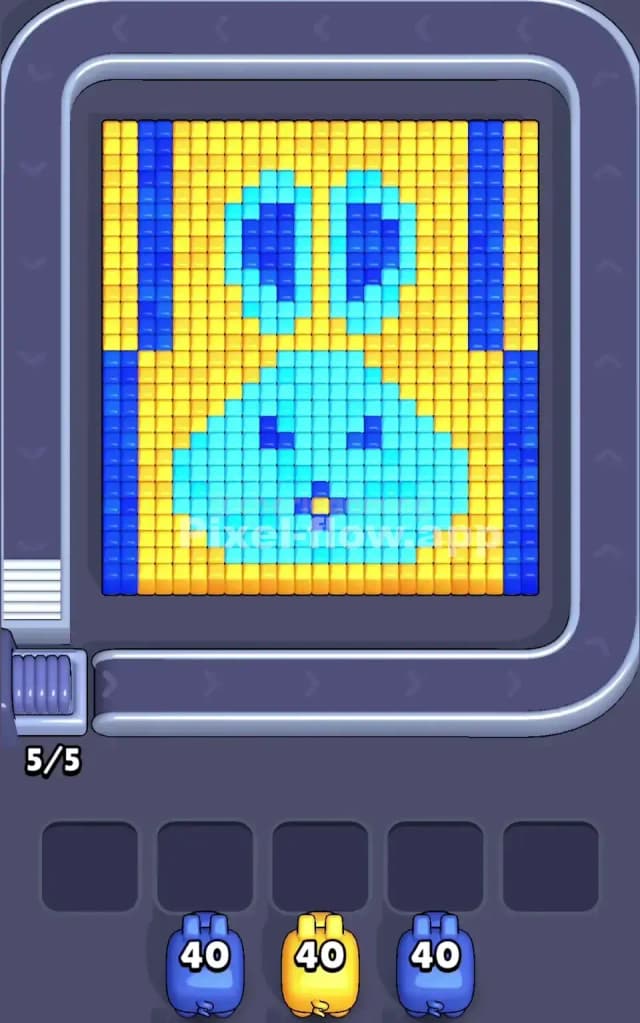
This level features a giant, pixelated rabbit head set against a solid yellow backdrop. The bunny itself is primarily a light cyan blue, with darker blue accents inside the ears and forming the eyes. The background is a massive wall of yellow, framed on the far left and right by vertical columns of dark blue. Your job is simple: clear the outer yellow and dark blue columns first to expose the bunny's face in the center.
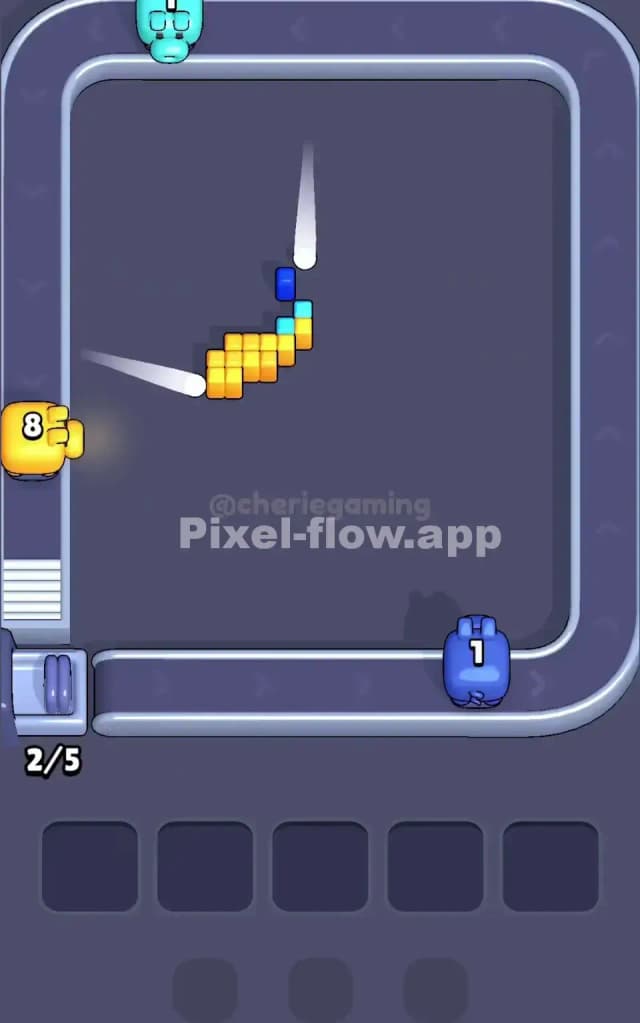
The rule to beat Pixel Flow Level 13 is strict ammo management. You have limited slots (5) at the bottom. If you pull a pig that can't hit anything, it clogs a slot. Fill all 5 slots with useless pigs, and you lose. This level isn't complex, but the sheer volume of yellow blocks makes it easy to get impatient and clog your board. I would judge this as a very hard level if you rush, but easy if you are patient.
Pixel Flow Level 13 Overview
The artwork depicts a stylized blue bunny. It feels cheerful and bright, almost like a simplistic cartoon icon. The layout is highly symmetrical. Two massive yellow zones dominate the top left and top right, surrounding the ears. Vertical dark blue stripes run down the extreme left and right edges like bookends.
The bunny's face (cyan) is buried in the middle, safe under layers of yellow. The ears have inner dark blue patches that are also buried. The most dangerous part of this board is the deception of the blue stripes on the sides. They look accessible, but often they are blocked by the yellow pixels right next to them.
Key asymmetric note: There is none. The board is perfectly mirrored. However, your pig queue won't be. You might get three blue pigs in a row when you really need yellow. That mismatch is where the difficulty spikes.
Step by step solution walkthrough for Pixel Flow Level 13
First Color Zone to Erase in Pixel Flow Level 13
Start with the vertical Dark Blue columns on the far left and right edges.
Here is why: These columns are "tall" targets. A single blue pig can sit in a slot and fire rapidly down the entire column without stopping. If you ignore these and focus on the yellow first, you risk clogging your slots with blue pigs later when the easy blue targets are gone. Get those edge stripes out of the way immediately.
Once the dark blue edges are thinning out, switch your focus entirely to Yellow. The yellow background is huge. It covers the bunny's forehead and cheeks. You need to strip away this yellow layer to reveal the cyan face underneath. Prioritize the yellow blocks at the top of the screen near the ears. Clearing these opens up firing lanes for the inner ear details later.
How to pass Pixel Flow Level 13 without power ups or boosters
Around the mid-game mark, your board will look messy. The crisp rectangle is gone. You'll likely have a jagged bunny head remaining: the yellow background is mostly stripped away, leaving a jagged cyan outline.
At this stage, STOP auto-dropping pigs. Look at the queue.
You will see Cyan pigs start to appear. Do not drop them unless you have a clear shot at the bunny's face. If the bunny's cheeks are still covered by a single layer of yellow pixels, that Cyan pig is a death sentence for your slot management. It will sit there, useless, blocking a spot.
Wait for Yellow pigs. Even if you have to let the conveyor belt run for a few seconds. Only drop a Yellow pig if it can clear the debris blocking the Cyan layer. Once the face is exposed, then—and only then—unleash the Cyan pigs. They will shred the face rapidly because it's a big, connected target.
Last Details You Clean Up in Pixel Flow Level 13
The final few moves are always the trickiest. You will usually be left with the Dark Blue inner ear pixels and the Dark Blue eyes.
These are small targets. They are not long columns like the start of the level. A Dark Blue pig here might only have 2 or 3 targets to hit before it goes dormant. Be extremely careful. If you have 3 slots filled and you drop a Dark Blue pig that only hits the left eye (2 pixels), that pig stays in your slot forever with 38 ammo left.
To clean up safely:
- Ensure you have at least 2 empty slots before attacking the eyes.
- If the queue offers a Cyan pig and there are still random Cyan blocks on the edges of the face, use it to clear space.
- The level ends when the last dark blue pixel in the eye or ear vanishes. Watch the ammo count!