Pixel Flow Level 15 Solution | Pixel Flow 15 Walkthrough
How to beat Pixel Flow Level 15: Video solution & walkthrough. The fastest way to pass Pixel Flow 15.
Is this the wrong level layout?🤔
Pixel Flow randomizes levels for different players. Don't worry, just upload a screenshot of your board, and our AI will find the correct video instantly.
Pixel Flow Level 15 Walkthrough
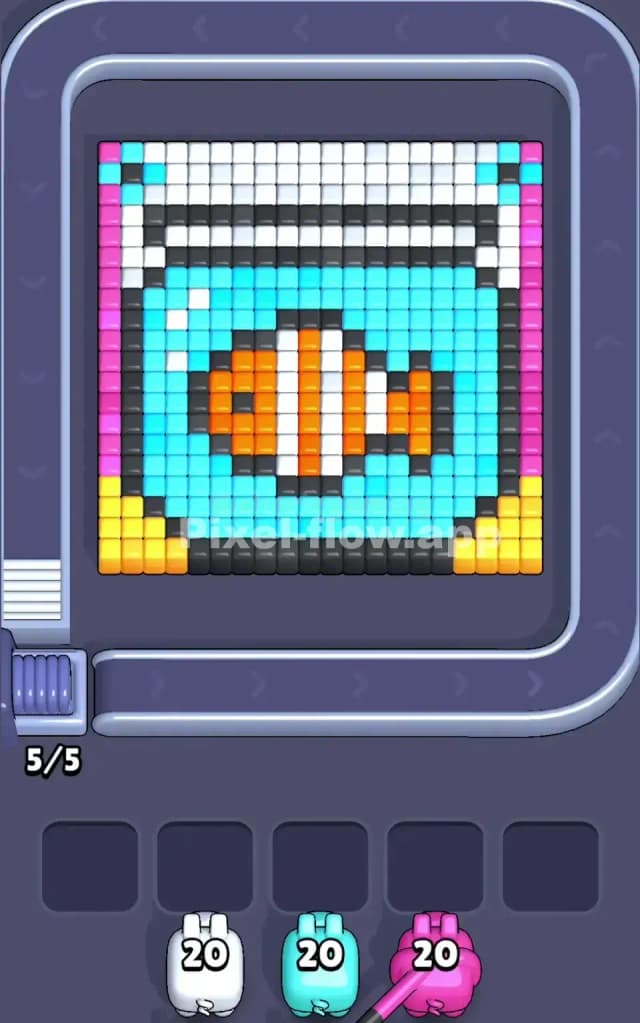
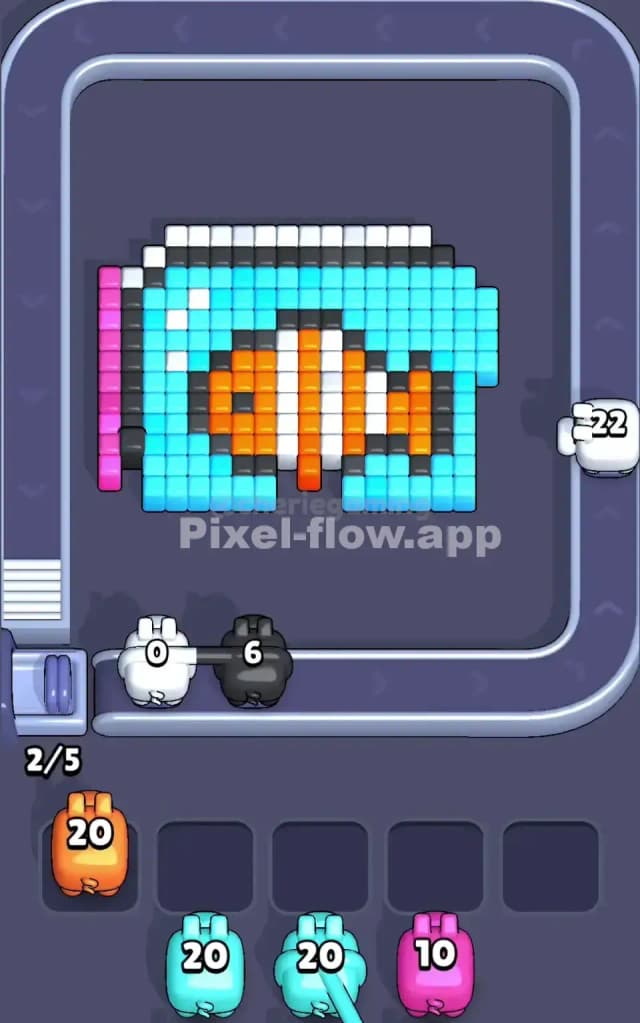
This level features a classic pet store scene: a bright orange clownfish trapped inside a plastic bag filled with blue water. The layout is incredibly symmetrical and blocky. You have the main blue water body in the center, a white "zip-top" or bag opening at the top, and vertical strips of pink on the left and right edges. The bottom corners are anchored by yellow blocks.
The rules for Pixel Flow Level 15 are standard but punishing if you get greedy. You have 5 slots for idle pigs. Pigs only shoot what they can see. The trick here is depth. The orange fish is buried deep inside the blue water and black outline layers. If you pull orange pigs too early, they will clog your slots and end your run. Is this a hard level? No. It is not very hard. It is a medium-difficulty logic puzzle that rewards patience.
Pixel Flow Level 15 Overview
Imagine you just bought a fish. That’s the vibe here. The central figure is a striped orange and white clownfish, surrounded by a thick black outline. This fish is "swimming" in a large square of cyan/light blue water.
The "bag" itself has distinct features. The top section is a mix of white and dark grey/black rows, representing the sealed top of the plastic bag. The vertical sides are framed by tall columns of hot pink blocks. The bottom corners have little L-shaped brackets of yellow pixels.
The board is highly symmetrical. The left pink strip matches the right pink strip. The top white bag seal is uniform across the width. The biggest danger zone is the center. The blue water is a massive block that covers the actual subject (the fish). You cannot touch the fish until you drain the water. This means Cyan/Blue pigs are your best friends early on, and Orange pigs are your worst enemies until the end.
Step by step solution walkthrough for Pixel Flow Level 15
First Color Zone to Erase in Pixel Flow Level 15
You have two excellent starting options, but one is safer. Start with the White pigs.
Why? Look at the top of the bag. The top four rows are dominated by white pixels. These are the "outermost" layer of the top section. Sending a White pig down the conveyor belt will immediately clear huge chunks of the top rows without getting stuck.
Your second viable option is the Pink pigs. The left and right edges are solid vertical columns of pink. A pink pig will clean an entire column in one go and likely empty its ammo. However, the white section at the top is denser and clears a wider area, revealing the black outlines underneath faster. Do not touch the Blue or Orange pigs yet. The Blue is reachable, but often layered behind the black/white border at the top. The Orange is completely inaccessible.
How to pass Pixel Flow Level 15 without power ups or boosters
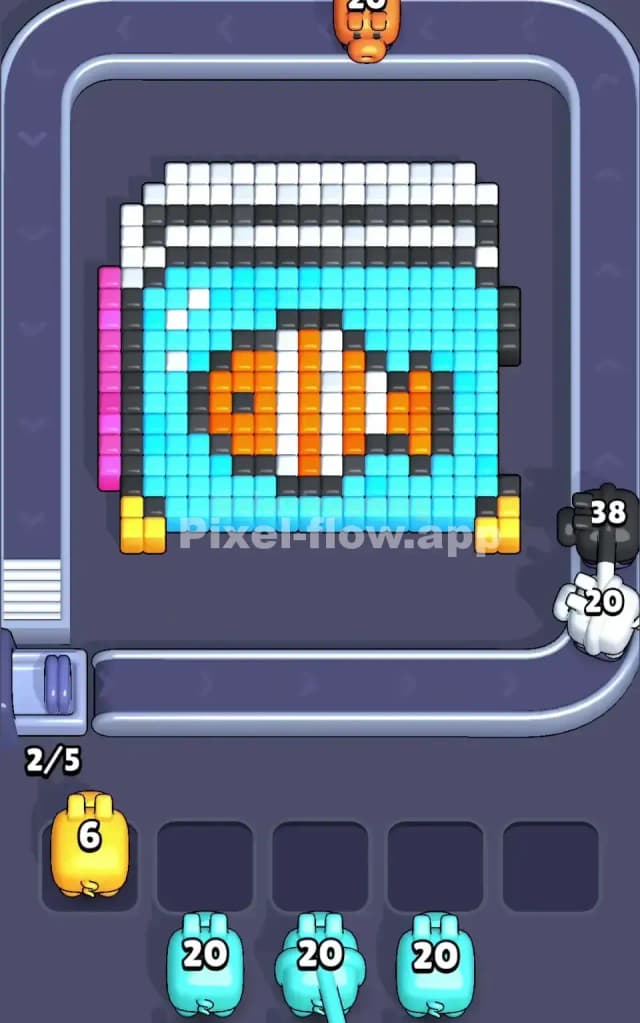
Once you’ve stripped away the top White seal and the side Pink columns, the board looks like a floating square of blue water with some black scaffolding. This is the mid-game danger zone.
You will see Black pigs and Cyan (Light Blue) pigs appear. Prioritize the Black pigs first. The black pixels form the "frame" of the bag and the outline of the fish. By clearing the black frame, you often expose the edges of the blue water blocks.
Once the black outlines are thinned out, unleash the Cyan pigs. This is the most satisfying part of Pixel Flow Level 15. The water is a huge, solid block. One or two Cyan pigs can destroy dozens of blocks rapidly.
Crucial Logic Trap: You might see an Orange pig appear in your queue while blue water still covers the fish. Do not click it. Let it sit in the queue. If you put it in a slot, it will sit there with full ammo, useless, blocking a spot you need for a Black or Cyan pig. Only deploy the Orange pig when you can clearly see the orange stripes of the fish.
Last Details You Clean Up in Pixel Flow Level 15
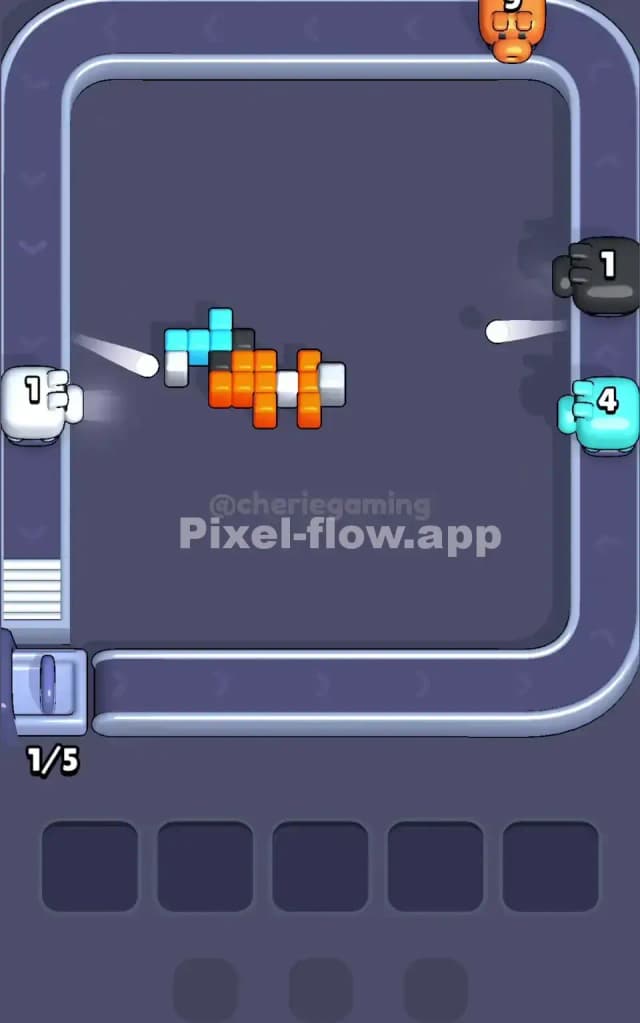
After the water drains, you are left with the fish itself. It’s a simple pattern: Orange body, White stripes, Black outline.
At this stage, your slots should be mostly empty if you played correctly. You will be cleaning up the specific details of the clownfish. You might have a few stray Yellow blocks left in the bottom corners if you ignored them earlier—clear those with a Yellow pig now. Finally, send in the Orange pigs to eat the fish's body and the last White pigs to clear the stripes. The level ends when the fish swims away (or rather, vanishes pixel by pixel).