Pixel Flow Level 164 Solution | Pixel Flow 164 Walkthrough
How to beat Pixel Flow Level 164: Video solution & walkthrough. The fastest way to pass Pixel Flow 164.
Is this the wrong level layout?🤔
Pixel Flow randomizes levels for different players. Don't worry, just upload a screenshot of your board, and our AI will find the correct video instantly.
Pixel Flow Level 164 Walkthrough
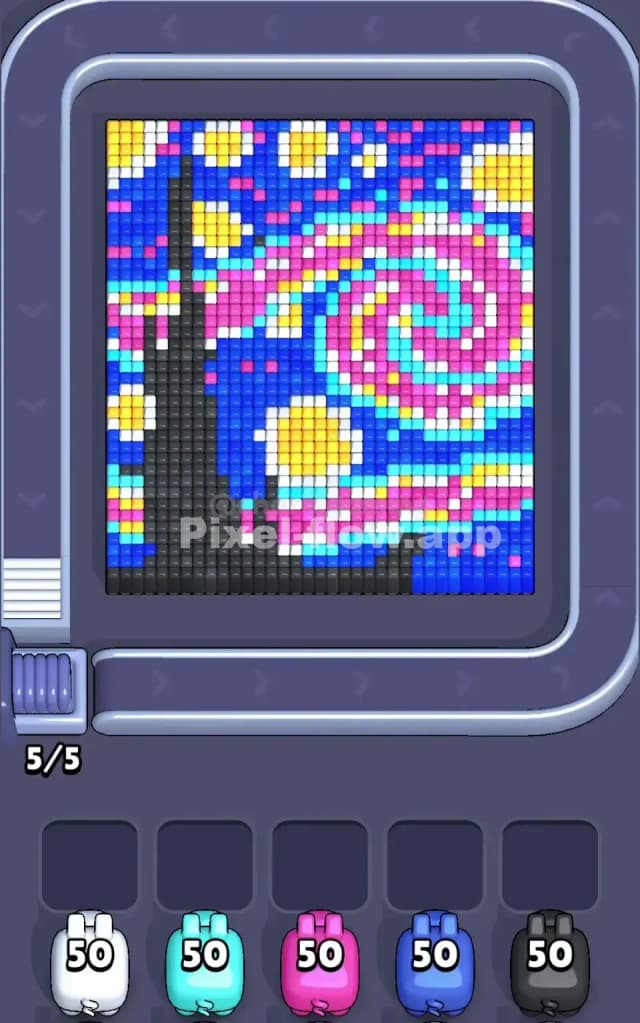
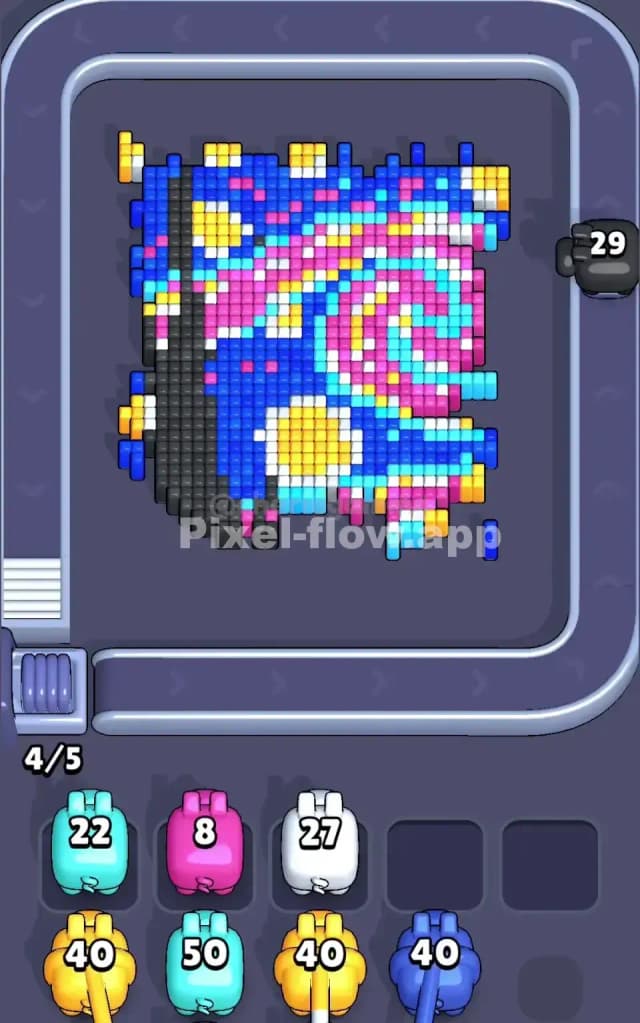
This level is a voxel recreation of the famous "Starry Night" painting. You are looking at a swirling night sky pattern full of blues, cyans, and pinks, with bright yellow stars scattered around. A massive, dark cypress tree shape dominates the left side. The goal is simple: clear the outer layers of the sky and tree to reveal the canvas underneath without jamming your five pig slots. Because of the complex swirling patterns and scattered "stars," I judge this as a very hard level. It is easy to get stuck with colors that have no valid targets.
Pixel Flow Level 164 Overview
The artwork in Pixel Flow Level 164 is instantly recognizable. It mimics the chaotic energy of Van Gogh’s brushstrokes using voxels. The background is a deep, dark blue night sky. Overlaid on this are swirls of bright pink and cyan that spiral in the center right. Bright yellow "stars" pop out at the top corners and near the bottom center.
The most critical asymmetric feature is the black cypress tree on the far left. It is a tall, jagged vertical block that cuts through all the sky layers. Unlike the scattered stars, this tree is a solid, continuous mass. This difference is key. The right side is a mess of mixed pixels (cyan, pink, white, yellow), while the left is dominated by that heavy black column. This imbalance dictates your strategy: the left side is "safe" and predictable, while the right side is dangerous and prone to clutter.
Step by step solution walkthrough for Pixel Flow Level 164
First Color Zone to Erase in Pixel Flow Level 164
I start by attacking the black cypress tree on the left side.
Here is why: The sky patterns (pink, cyan, white) are extremely fragmented. If you pick a pink pig first, it might only shoot 10 blocks before running out of targets, forcing it to drop into your waiting slots. That slot is now clogged.
The black tree, however, is a massive vertical chunk. A black pig here will fire for a long time, clearing a huge vertical strip on the left. This does two things:
- It almost certainly empties the pig's ammo entirely, keeping your slots clear.
- It exposes the deep blue background layer underneath the tree, simplifying the left flank of the board.
After the black, prioritize the dark blue background if available, or large clusters of the cyan swirls. Avoid the yellow stars early on; they are too scattered and will likely leave you with a pig stuck in the waiting area holding 40+ ammo.
How to pass Pixel Flow Level 164 without power ups or boosters
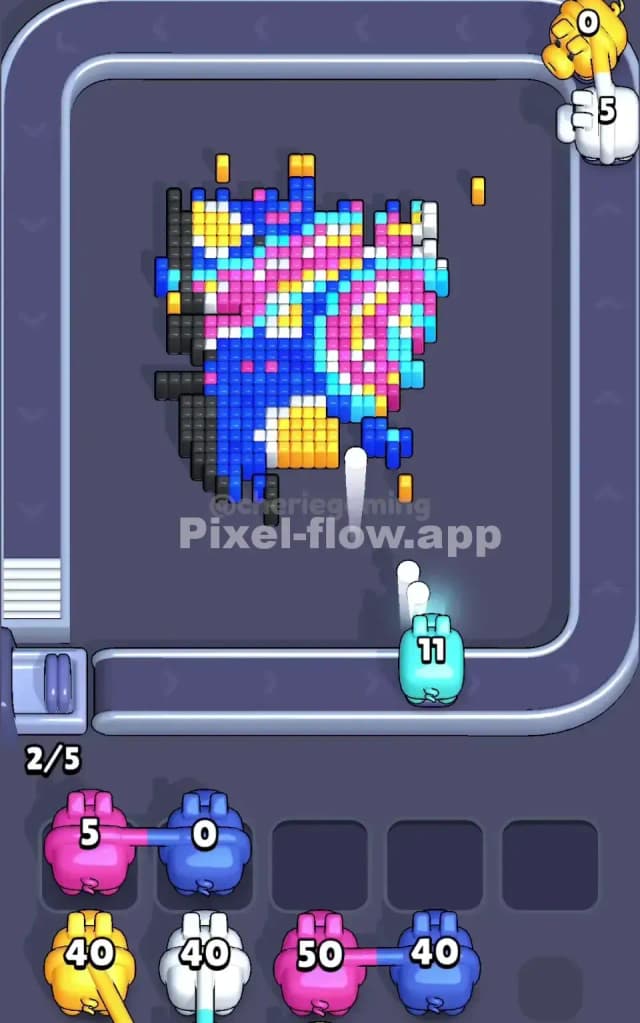
Once you’ve cleared the black tree and perhaps the main dark blue background, the picture looks half-destroyed. You are left with floating islands of the "swirls"—patches of pink, cyan, and white mixed together.
At this mid-level stage, you face a danger zone. The pixels are checkered. A pink block might be sitting right next to a cyan one, blocking the layer behind it.
To survive without boosters:
- Look for "unblockers." Scan the board for the color that is currently "on top" of the most stacks. Usually, in the swirl section, the cyan or pink tend to be the top-most layer covering the whites and yellows.
- Ignore the Yellows. Do not touch the yellow pigs yet. The yellow stars are often buried under the swirls or surrounded by them. If you pick yellow now, the pig will hit the 4 exposed yellow blocks and then sit in your slot uselessly.
- The White Pixel Trap. Be careful with white. It is used as a highlight color here. It exists in tiny 1-2 block groups. Only select a white pig if you see a white pig already in your waiting slot that you can merge with, or if you are absolutely sure you can clear a path to more white blocks.
Focus on stripping away one color of the swirl completely—usually pink—before moving to the next.
Last Details You Clean Up in Pixel Flow Level 164
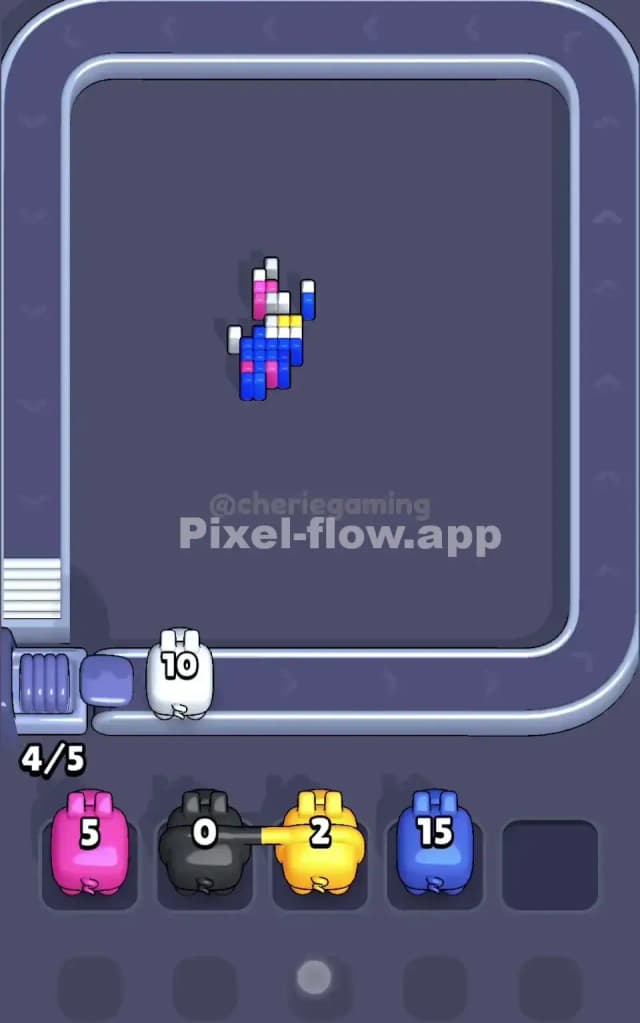
In the final few moves of Pixel Flow Level 164, you will likely be staring at the remnants of the "stars."
The board usually looks like this: the heavy black tree is gone, the blue sky is gone, and the pink/cyan swirls are gone. What remains are the yellow cores of the stars and the moon, usually sitting isolated in the top right, top left, and bottom center.
This is the cleanup phase. Now is the time to finally grab those yellow pigs. Since everything blocking them is gone, the yellow pigs will have a clear line of sight to destroy the remaining star clusters. The very last blocks are often tiny stray pixels of white or light blue that were hiding behind the yellow centers. Keep one slot open for a "trash" pig to clean up these final stragglers.