Pixel Flow Level 165 Solution Walkthrough | Pixel Flow 165

How to solve Pixel Flow level 165? Get instant solution for Pixel Flow 165 with our step by step solution & video walkthrough.

Share Pixel Flow Level 165 Guide:
Pixel Flow Level 165 Gameplay
Pixel Flow Level 165 Solution 1
Pixel Flow Level 165 Solution 2
Pixel Flow Level 165 Solution 3

Pixel Flow Level 165 Overview

The Board Layout and Pixel Art Subject

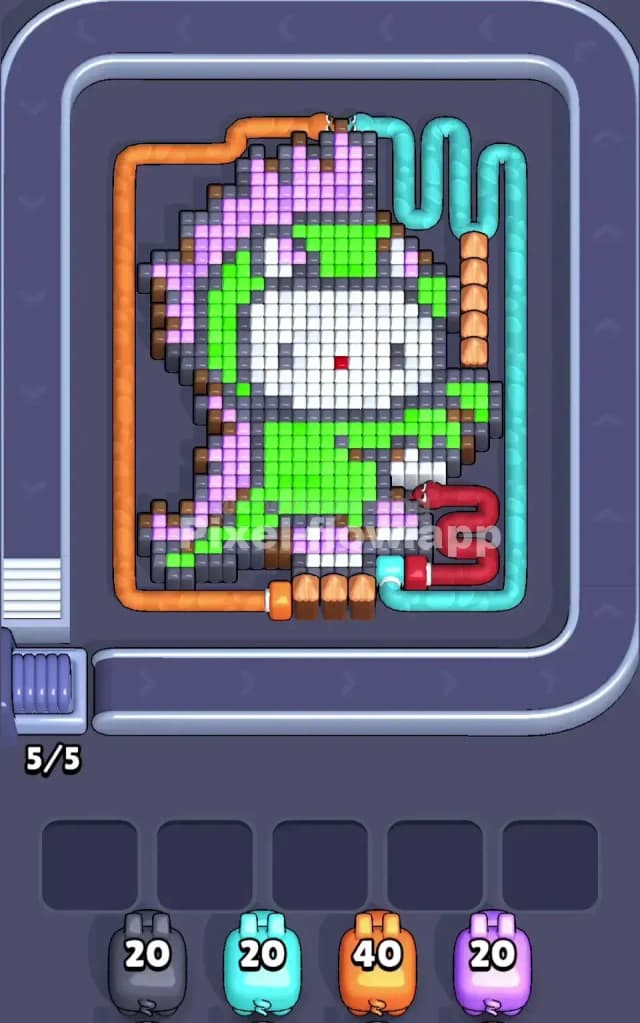
Pixel Flow Level 165 presents you with a complex layered voxel picture that forms a cat's face—a charming but deceptively challenging pixel art subject. The board is dominated by several bold color zones: a large white center (the cat's face), surrounded by green patches (ears and accents), bright magenta/pink blocks (background decoration), orange and brown framing elements along the sides, and cyan highlights on the right border. The cat's features include a small red nose in the center and red eyes lower on the board. What makes this layout tricky is how the colors interweave; you'll notice that white cubes form the main "body" of the image, but they're blocked by overlapping layers of green, magenta, and brown that must be cleared strategically to access deeper sections. The confined space and the way colors wrap around the central figure mean that poor pig sequencing will quickly fill your waiting slots with stuck pigs that have nowhere to shoot.

The Win Condition and Deterministic Nature

Your goal in Pixel Flow Level 165 is to clear every single voxel cube on the board by having color-matched pigs shoot them away. You'll notice at the bottom of the screen five waiting slots and a queue of four incoming pigs: a gray pig with 20 ammo, a cyan pig with 20 ammo, an orange pig with 40 ammo, and a magenta pig with 20 ammo. Every pig's ammo count is fixed and every color sequence is predetermined—there's no randomness here. This determinism is both a blessing and a curse: it means the level has a perfect solution, but it also means any wasted move or miscalculation compounds into failure. Understanding that you control when pigs enter the board (by clearing their matching colors or deliberately parking them) is the key to solving Pixel Flow Level 165 without jamming your buffer.

Why Pixel Flow Level 165 Feels So Tricky

The White Cube Bottleneck and Layer Blocking

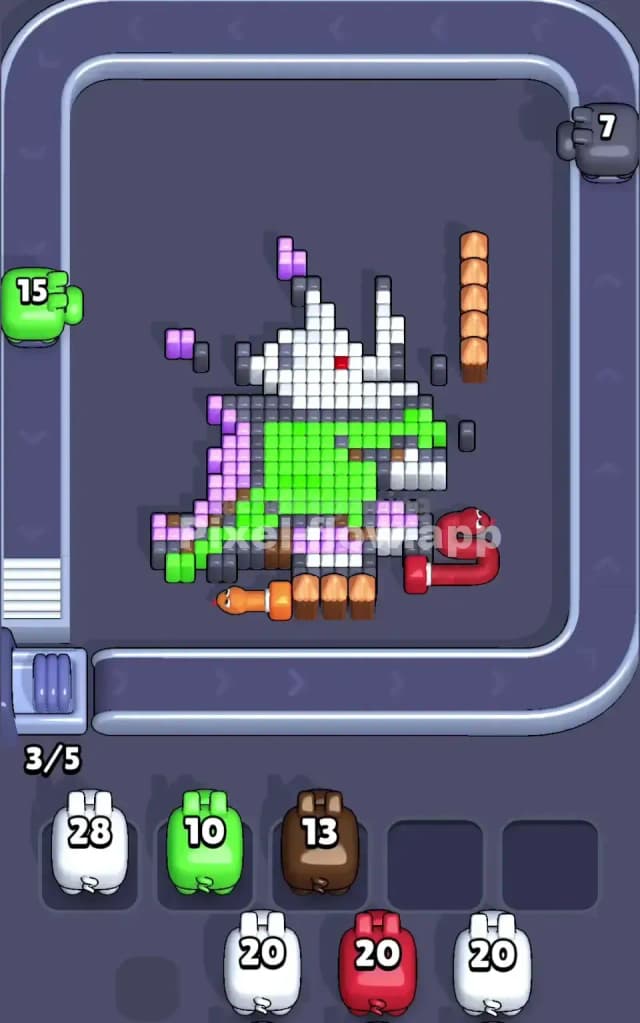
The biggest obstacle in Pixel Flow Level 165 is the white cube cluster at the heart of the board. White occupies a massive central zone, but it's buried beneath multiple layers of green, magenta, and brown cubes that act as natural blockers. Here's the frustrating part: you won't be able to target white cubes until those overlapping colors are removed, yet the incoming pig queue doesn't include a white pig until later. This creates a timing puzzle—you must clear green, magenta, and brown in a precise order to expose white without trapping yourself with half-empty pigs in your waiting slots. If you burn through your cyan or orange ammo carelessly on easy targets, you'll have no flexibility when you need to expose the white layer cleanly.

Scattered Color Pockets and Ammo Mismatches

Pixel Flow Level 165 scatters small pockets of magenta and green throughout the board in ways that seem random but demand careful accounting. You'll spot isolated magenta blocks on the left side that tempt you to spend the magenta pig's ammo early, but that pig is your fourth and final addition to the board. Similarly, green appears in clusters on the right and upper sections, mixed with the framing colors, so you can't simply "clear all green" in one sweep. The brown and orange framing elements add another layer of complexity—orange has 40 ammo (the highest on the board), but much of that will be needed for the structural frame rather than interior cubes. If you don't account for these scattered pockets, you'll end up with a pig that still has ammo but no valid targets, forcing it into a waiting slot and triggering a cascade of failures.

The Moment It Clicked for Me

I'll be honest: my first ten attempts at Pixel Flow Level 165 felt chaotic. I'd clear a big color patch, feel proud, then realize I'd just stranded a half-spent pig with no more valid targets. The real "aha" moment came when I stopped thinking about clearing colors and started thinking about exposure—which cubes am I uncovering by removing this block, and do I have a pig in the queue that can use them? Once I mapped out the layer structure mentally (white center, green mid-layer, magenta and brown outer frame), the level went from frustrating to manageable. It's a puzzle that rewards patience and planning, not reflexes.

Step-by-Step Strategy to Clear Pixel Flow Level 165

Opening: Freeing Up Waiting Slots and Establishing Board Control

Start Pixel Flow Level 165 by sending the gray pig first. Gray appears scattered throughout the board as dark structural elements, and the gray pig has 20 ammo—enough to clear a respectable chunk without overdoing it. Your immediate goal is to knock out 12–15 gray cubes on the left side and lower frame, clearing some of the outer clutter and keeping at least 3–4 waiting slots empty for future pigs. Don't get greedy; you're not trying to empty gray entirely, just breaking the visual congestion so you can see what's underneath. Once gray is done, it should drop into a waiting slot (since it will have shot all its visible targets), which is fine—you've used one slot but freed up board space in return.

Next, introduce the cyan pig. The cyan pig has 20 ammo and appears as the large turquoise border on the right side. Shoot about 12–15 cyan cubes from this right-side frame, exposing some of the green patches behind it. Don't empty cyan yet; leave a few cubes unshot so the pig can stay active on the board longer and remain available if you need it for clean-up later. This is a crucial move in Pixel Flow Level 165: keeping a pig with 4–8 ammo remaining means it won't drop into a waiting slot until you're ready.

Mid-Game: Layered Exposure and Strategic Parking

Once you've loosened the outer frame with gray and cyan, deploy the orange pig strategically. Orange has 40 ammo—the largest pool on the board—and it handles both the left-side frame and several interior brown/orange accent cubes. Spend roughly 20–25 of orange's ammo clearing the left border and upper-left structural elements, again being careful not to overcommit. The remaining 15–20 orange shots should be preserved for later, when you need to access the magenta layer behind the current obstacles.

Here's where Pixel Flow Level 165 demands real planning: expose the green layer next. Green appears extensively in the mid-section, framing the white core, and you'll have a cyan pig with 8–12 remaining ammo. Use those cyan shots to carefully remove 8–12 green cubes from the right side, creating a "window" into the interior. Then let cyan drop into a waiting slot—you've now used two slots, which is perfectly acceptable. At this point, you should have clear sightlines to white cubes in the center, even if they're not yet fully accessible.

End-Game: Precision Finishing and Buffer Management

In the final phase of Pixel Flow Level 165, deploy orange's remaining ammo (15–20 shots) to clear remaining brown and magenta cubes, exposing more white and red. The red nose and eyes are small targets, so they won't consume much ammo from any pig. Once white is fully visible, you'll need a white pig, but here's the thing: there's no dedicated white pig in this level. Instead, you'll rely on orange's final shots and any leftover magenta ammo to finish white cubes by process of elimination. This is why conserving ammo early matters so much in Pixel Flow Level 165.

Send the magenta pig last and use its 20 ammo to sweep up any remaining magenta cubes plus leftover white and red. By this point, your waiting slots will have 3–4 parked pigs (gray, cyan, and possibly orange), leaving room for magenta to work without jamming you. Count your remaining magenta ammo carefully as you approach the final 5–10 cubes; you should land exactly at zero or have just 1–2 ammo left, signaling a clean clear.

The Logic Behind This Pixel Flow Level 165 Plan

Exploitation of Pig Order and Ammo Economy

The strategy outlined above works because it respects the deterministic nature of Pixel Flow Level 165. You're not reacting randomly to the board; instead, you're working with the fixed pig sequence and ammo counts to create a cascading effect: gray loosens the frame, cyan exposes green, orange opens the magenta layer, and magenta finishes the core. Each pig's ammo is perfectly calibrated if you avoid waste, and by conserving 4–8 shots per pig at intermediate steps, you ensure that no pig ever drops into a waiting slot prematurely, which would trigger a jam. The logic is essentially "expose one layer at a time, keep pigs flexible by not emptying them fully, and let the last pig mop up anything unusual."

Staying Calm, Counting Ammo, and Planning Ahead

Pixel Flow Level 165 is winnable only if you resist the urge to fire everything at once. Watch your queue constantly—know which pigs are coming and how much ammo they have. Count how many matching cubes remain on the board before you commit a pig to the waiting slot; if a pig has 8 ammo and you only see 5 valid targets, that pig will jam. Instead, fire 5 shots, leave the pig with 3 ammo stranded temporarily, move on to other colors, and come back to finish it later. Always plan two or three pigs ahead: "If I clear cyan now, will that expose enough green for orange to work?" This forward-thinking approach transforms Pixel Flow Level 165 from a frustrating gauntlet into a solvable logic puzzle. Stay patient, trust your plan, and the level will clear cleanly.