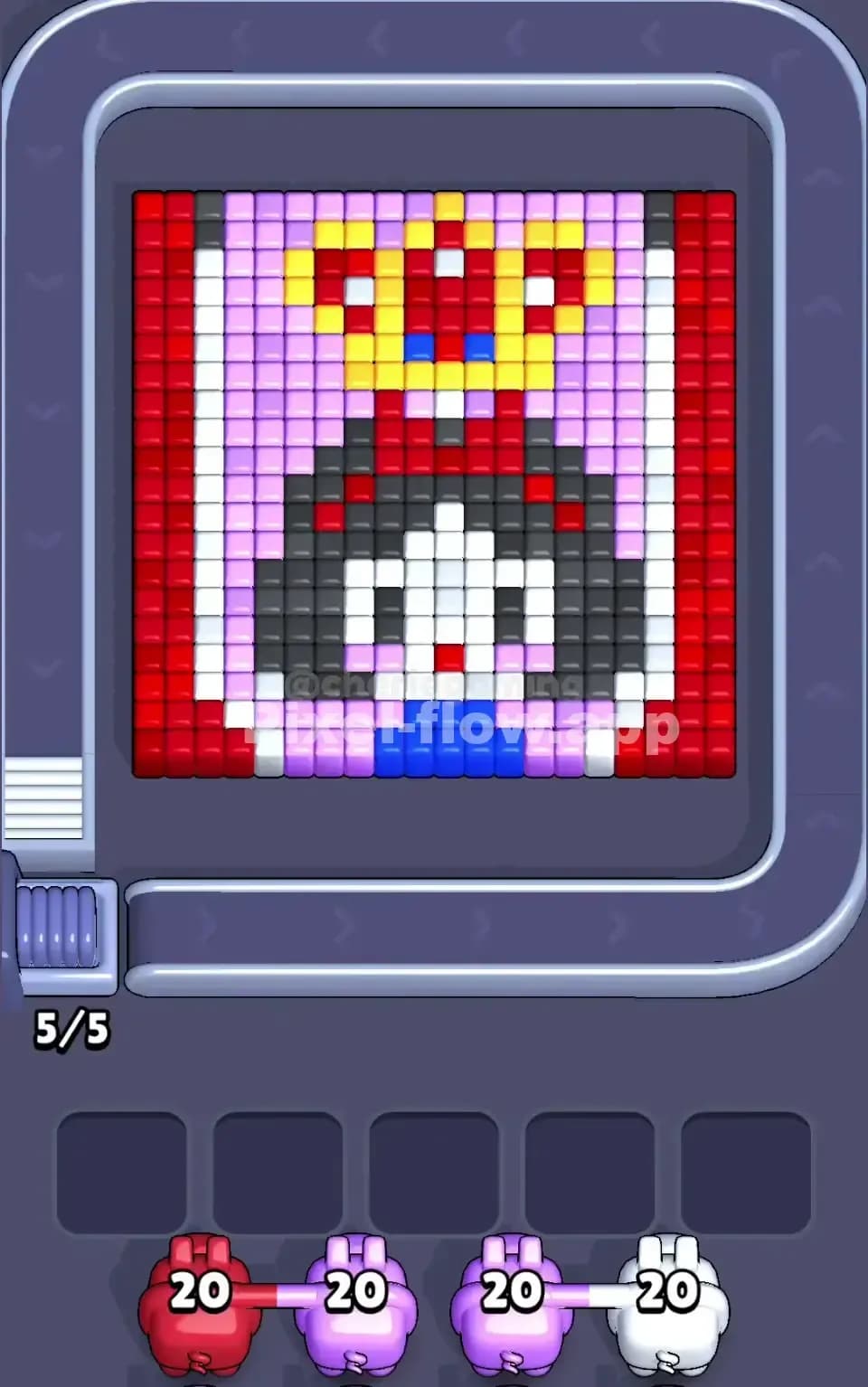
Pixel Flow Level 17 Solution | Pixel Flow 17 Walkthrough
How to beat Pixel Flow Level 17: Video solution & walkthrough. The fastest way to pass Pixel Flow 17.
Is this the wrong level layout?🤔
Pixel Flow randomizes levels for different players. Don't worry, just upload a screenshot of your board, and our AI will find the correct video instantly.


Pixel Flow Level 17 Walkthrough
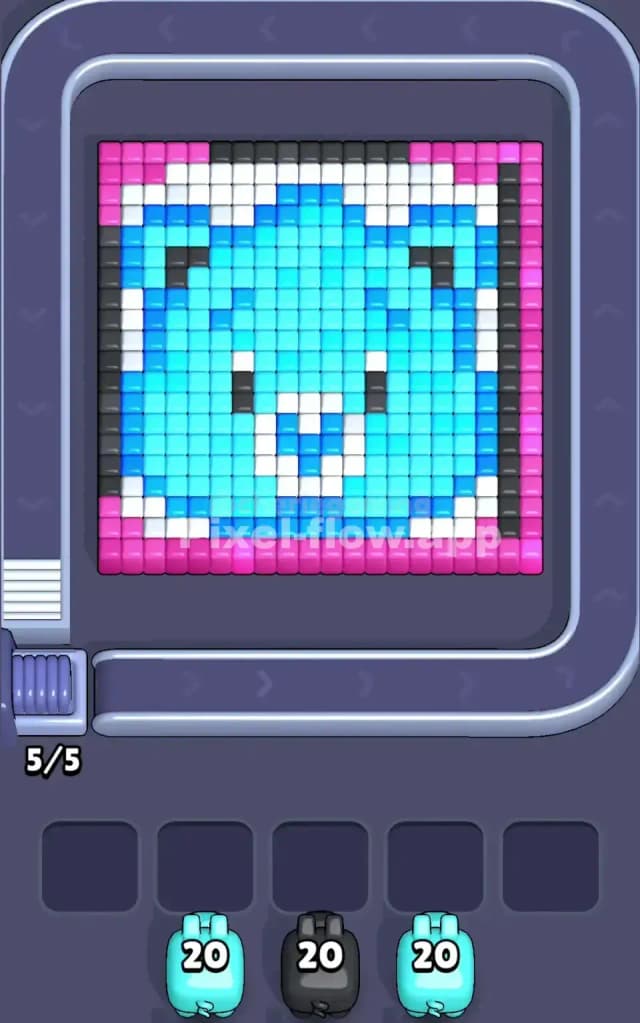
This level features a giant, pixelated blue bear face—reminiscent of those classic 80s cartoons with the tummy symbols. The main challenge here is the dense layering. You have a thick outer "frame" of pink and black that completely encases the blue face.
The rules for Pixel Flow Level 17 are standard but strict:
- Match Colors: Pigs only shoot cubes that match their color.
- Watch Ammo: Each pig has 20 shots. A pig with ammo but no targets clogs up your waiting slots.
- Clear Layers: You cannot hit the inner blue pixels until you strip away the outer pink and black frame.
Is this a very hard level? No. It's moderate. The color separation is clean, meaning you rarely make a mistake by accidentally hitting a hidden layer. The main risk is clogging your slots with blue pigs before the blue layer is exposed.
Pixel Flow Level 17 Overview
The board is a single, large portrait of a cartoon bear. The bear is primarily Cyan (Light Blue), with a White snout and inner ears. The eyes and nose are Black.
Crucially, the entire portrait is framed.
- Top and Bottom: Heavy rows of Pink pixels.
- Sides: The right side has a significant vertical strip of Black, while the left side has a mix of pink and black bordering.
This framing creates a "cage" around the bear. You can't just start blasting the face. The game will throw Cyan pigs at you early on. Resist them. If you grab three cyan pigs while the pink/black frame is still solid, you will fill your waiting bench and lose instantly. You need to focus entirely on the perimeter first.
Step by step solution walkthrough for Pixel Flow Level 17
First Color Zone to Erase in Pixel Flow Level 17
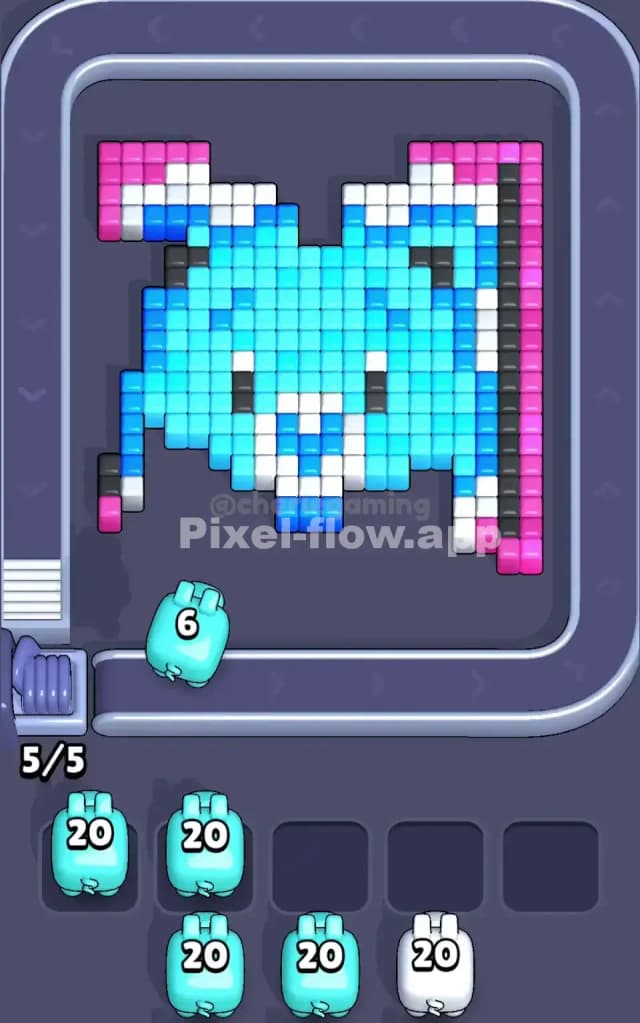
I start by shaving off the Pink border. This is the safest opening move.
Why Pink? Look at the top and bottom rows. They are solid, uninterrupted lines of pink. A single pink pig can sit on the belt and clear an entire row without stopping. This is "efficient spending." If you choose black first, the pig might clear a few blocks on the right and then drop into a slot because the left-side black blocks are blocked by other colors.
By clearing the pink top and bottom first, you effectively "open the lid" of the puzzle. Once those horizontal pink bars are gone, you expose the white top of the bear's head and the bottom of the chin, giving you more valid targets for white pigs later.
How to pass Pixel Flow Level 17 without power ups or boosters
Around the mid-point of the level, the board usually looks like a mess. You've likely cleared the pink frame, and now you have a vertical strip of Black on the right side that is stubbornly protecting the blue face.
At this stage, you will see a lot of Cyan (blue) pigs on the conveyor belt. Do not pick them yet.
Here is the no-booster priority list for the mid-game:
- Prioritize Black Pigs: You must clear that right-side vertical black bar. Until that bar is gone, the blue pixels underneath it are invincible. If you let a black pig pass by, you are delaying your progress.
- Use White Pigs Cautiously: The white pixels are mostly in the snout and ears. They are often buried inside the blue face. Only pick a white pig if you can clearly see exposed white blocks (like the top of the head). If you pick a white pig too early, it will just sit in your slot doing nothing.
- Ignore Blue Pigs: Even though the bear is 80% blue, ignore the blue pigs until the black/pink frame is totally gone. You need the board wide open so your blue pigs can unload their full 20 ammo in one go.
Last Details You Clean Up in Pixel Flow Level 17
The end game is almost entirely Cyan and White.
Once the frame is gone, you are left with the bear's face. The last tricky spots are usually the Black eyes and nose. These are often "islands" surrounded by blue.
Watch out for the "floating pixel" trap. Sometimes, a single black pixel (part of the eye) will be left floating after you clear the surrounding blue. If you have a black pig sitting in your slot with 1 ammo left, it will snipe this instantly. If not, you have to wait for a fresh black pig just to kill that one pixel.
Ideally, try to clear the eyes while you are clearing the main blue face. Don't leave the eyes for the very last second, or you'll be cycling through pigs desperately looking for one black shooter. Finish with a massive wave of Cyan pigs to wipe the remaining face clean.