Pixel Flow Level 18 Solution Walkthrough | Pixel Flow 18

How to solve Pixel Flow level 18? Get instant solution for Pixel Flow 18 with our step by step solution & video walkthrough.

Share Pixel Flow Level 18 Guide:
Pixel Flow Level 18 Gameplay
Pixel Flow Level 18 Solution 1
Pixel Flow Level 18 Solution 2
Pixel Flow Level 18 Solution 3

Pixel Flow Level 18 Overview

The Board Layout and Starting Colors

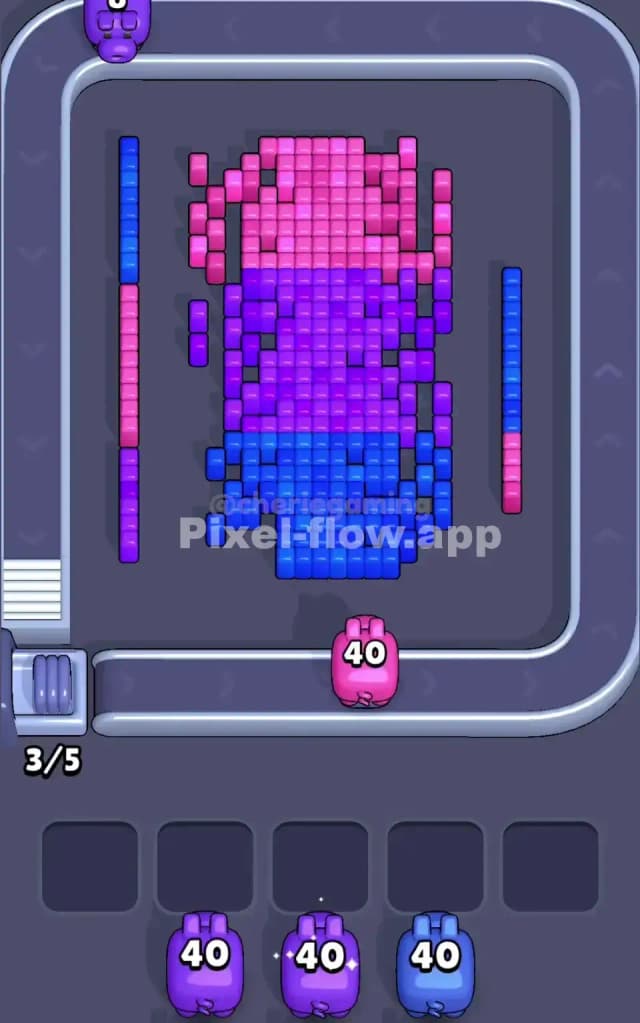
Pixel Flow Level 18 is a beautifully layered voxel puzzle that challenges you with a dense, multi-colored composition. The board features three dominant colors—magenta (hot pink), blue, and purple—arranged in distinct regions that create a visually striking but strategically demanding puzzle. The magenta cubes occupy the top portion and sides of the board, forming thick vertical walls on the left and right edges. The blue cubes cluster at the bottom and lower-middle sections, while purple fills the central zone, creating a complex middle layer that you'll need to navigate carefully. This tri-color structure means you're juggling three separate pig streams, each with 40 ammo capacity, and they're all competing for board space. The layout forces you to think in three dimensions: not just clearing visible cubes, but understanding how each color blocks access to the layers beneath it.

The Win Condition and Deterministic Challenge

To clear Pixel Flow Level 18, you must eliminate every single voxel cube on the board—all magenta, all blue, and all purple. The beauty and the trap of this level is that everything's deterministic: the pig queue order never changes, their ammo counts are fixed at 40 each, and the board won't shift or randomize. This means success isn't about luck—it's about sequencing. You'll feed pigs in the order they arrive, and each pig spends exactly one ammo per matching cube destroyed. If you miscalculate and jam up your five waiting slots with pigs that have nowhere to shoot, you'll hit a dead end and lose. The challenge is reading ahead, understanding which colors block which layers, and orchestrating your pig releases so that every cube finds a shooter and every shooter finds a cube.

Why Pixel Flow Level 18 Feels So Tricky

The Mid-Board Purple Bottleneck

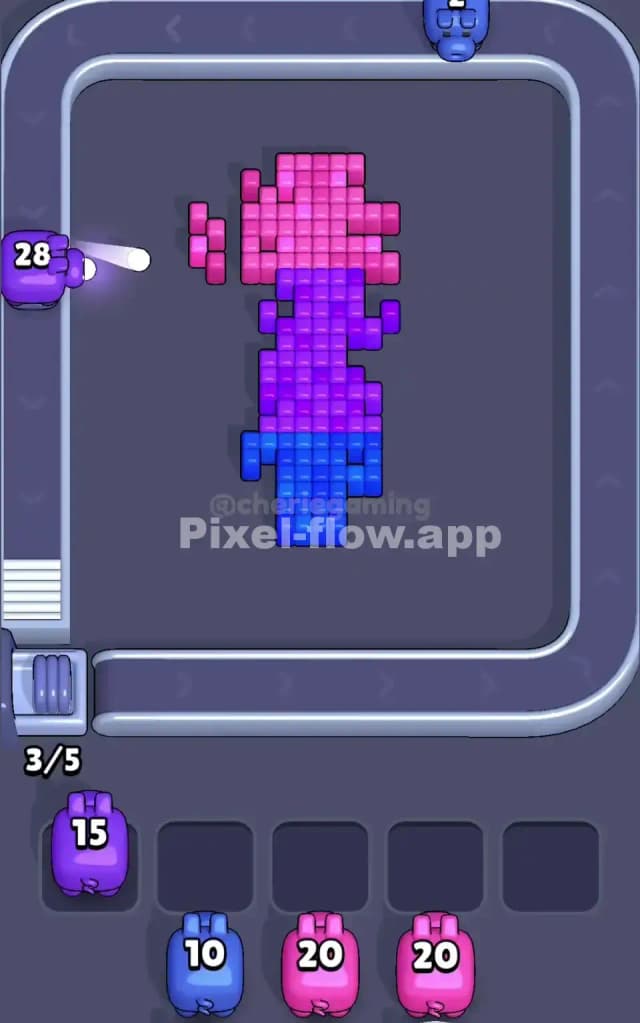
The single biggest threat to your run through Pixel Flow Level 18 is the purple layer sitting smack in the middle of the board. Purple cubes are surrounded and partially obscured by magenta on top and blue below, which means you can't always see or hit every purple cube immediately. This creates a dangerous scenario: a purple pig might arrive while most of its targets are still hidden behind magenta, forcing it to drop into a waiting slot with ammo left to burn. If you're not careful, you'll end up with multiple color-blocked pigs sitting idle in your buffer, watching their ammo tick away toward uselessness. The purple zone is especially tricky because it's the "glue" holding the composition together—you can't push deep into the blues without clearing purples, and you can't fully clear purples without first exposing them from the magenta layer above. This is the mental knot that makes Pixel Flow Level 18 feel overwhelming at first.

Awkward Color Patches and Hidden Targets

Beyond the purple squeeze, Pixel Flow Level 18 hides smaller but equally frustrating color pockets. There are scattered magenta cubes nestled within and between the blue and purple regions—cubes that aren't immediately obvious from the top-down view. When a magenta pig drops into your waiting queue early, it might have 30+ ammo left, but if you can't see those hidden targets, you'll panic and waste moves. Similarly, the blue layer at the bottom has some irregular shape to it; it's not a solid block, so certain blue pigs might struggle to find valid targets if you've cleared the wrong section first. Purple compounds this problem because it's so dominant—it creates visual noise that makes you miss the smaller color patches hiding in plain sight. You'll often find yourself rotating your mental model of the board, trying to understand which cubes are blocking which, and it's easy to get lost in that three-dimensional reasoning.

The "Click" Moment and Personal Reaction

Honestly, Pixel Flow Level 18 frustrated me for a solid handful of attempts. I kept trying to clear magenta first because it's so prominent, and that left me with a purple pig stuck in the buffer with 35 ammo and no targets. Then I'd panic, clear random blues, and accidentally wall off more purples. The turning point came when I stopped trying to "solve" the level and instead started watching which pig was coming next and working backward—if a purple pig is due in three turns, what do I need to clear right now to make sure it has targets? That shift from reactive to proactive thinking is what finally made Pixel Flow Level 18 click for me. Once I accepted that the pig queue was my timeline, not my enemy, the level stopped feeling impossible and started feeling like a satisfying puzzle.

Step-by-Step Strategy to Clear Pixel Flow Level 18

Opening: Start with Strategic Magenta Clears

Your first move in Pixel Flow Level 18 is to release the leading magenta pig and let it chip away at the top-layer magenta cubes. Don't try to clear all magenta immediately—that's overkill and wastes ammo on areas you don't need to expose yet. Instead, focus on clearing the magenta cubes that are directly blocking or obscuring purple targets. Specifically, target the magenta regions on the top and upper-sides of the board, the ones that form a ceiling over the purple layer. This opening salvo should use roughly 15–20 of the first magenta pig's 40 ammo, leaving it with enough capacity to handle any remaining surface magenta later. Your goal is to keep at least two waiting slots free after this opening move. If you're jamming up the buffer already, you've been too aggressive. After the first magenta pig does its work, a blue pig will likely arrive next. Don't fight it—let the blue pig start working on the bottom-layer blues, clearing the irregular edges and exposed blue cubes. This secondary action will create visual clarity about what's underneath and prepare the board for purple exposure.

Mid-Game: Sequencing Pigs and Exposing Inner Layers

Now Pixel Flow Level 18 enters its critical phase. As you cycle through more pigs, you'll have a mix of colors in the queue, and this is where patience and forward-thinking matter most. When a purple pig arrives, assess the purple cubes that are currently visible and shootable—these are your "easy targets." Feed the purple pig until it runs out of valid targets, then let it settle into a waiting slot if it still has ammo. Don't panic if a purple pig can't see all its targets yet; that's expected. Instead, continue clearing magenta or blue to expose deeper purple cubes, and those will become available for the next purple pig that rolls up. A critical habit: always count your waiting slots before releasing a new pig. If you have fewer than two free slots and the incoming pig is a color with limited visible targets, you're skating on thin ice. The mid-game is also when you should be watching the conveyor belt—the queue usually shows the next 1–2 pigs coming. If you see a purple pig in position 2, plan your current moves to maximize purple exposure so that pig won't be stuck. The layered structure of Pixel Flow Level 18 rewards this kind of planning. You're essentially playing three parallel games (magenta, blue, purple), and the trick is keeping all three games from deadlocking simultaneously.

End-Game: Cleaning the Buffer and Avoiding Last-Minute Jams

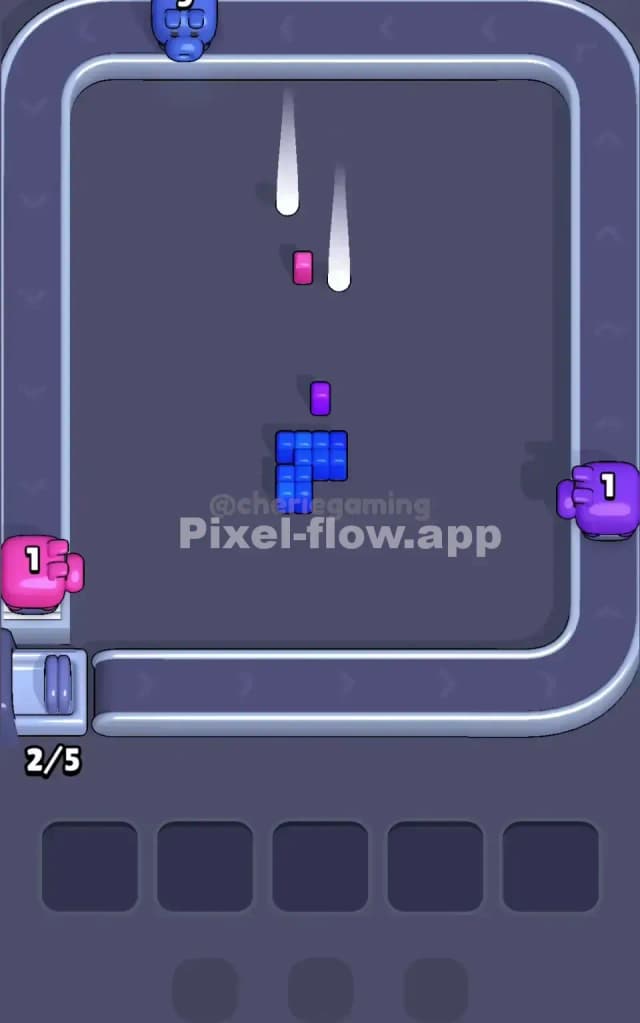
As you push deeper into Pixel Flow Level 18, the board will start thinning out, and your waiting slots will fill with half-spent pigs. This is actually a good sign—it means you're making progress. The danger is a last-second jam where you have three pigs in the buffer, two of them with ammo left, but no valid targets for either. To avoid this, your end-game strategy should prioritize finishing off any color that still has scattered cubes on the board. If you've got two magenta pigs in waiting with 10 ammo each, and there are five magenta cubes still visible, that's perfect—release one magenta pig and let it clean house. If you're down to the final five cubes and they're all different colors spread across the board, you've got a problem; you'll need to hope your remaining pigs in the queue include each of those colors. The absolute final move should leave you with just one pig on the board, shooting the last cube, and all other waiting slots empty. If you've planned correctly, Pixel Flow Level 18 will end cleanly without a pile-up of stuck pigs watching from the sidelines.

The Logic Behind This Pixel Flow Level 18 Plan

Exploiting Pig Order, Ammo, and Buffer Slots

The core logic underpinning this Pixel Flow Level 18 strategy is treating the pig queue as a resource timeline. You can't change pig order, but you can absolutely control when you release each pig and what targets they encounter when they arrive. Every pig has 40 ammo, which is plenty if targets are available, but worthless if they're blocked. By clearing strategically—always keeping the next incoming pig in mind—you ensure ammo efficiency. The five waiting slots are your safety margin, but they're also your ceiling. Fill them carelessly, and you've painted yourself into a corner. The arithmetic is simple: if you have three pigs in waiting (slots 0, 1, 2 are full), and slots 3 and 4 are free, you have two moves before you're forced to watch a pig spawn with nowhere to shoot. This Pixel Flow Level 18 plan works because it respects those constraints and uses them as guardrails for decision-making.

Staying Calm: Counting Ammo, Planning Ahead

Under pressure, it's tempting to spam releases or panic-clear random cubes. What separates a clear from a failure in Pixel Flow Level 18 is staying methodical. Before releasing each pig, glance at the queue and count: what colors are coming next? Then look at the board: which of those colors have visible targets right now? If a blue pig is coming in two turns and there are only three blue cubes visible, you need to clear something else first to expose more blues—or accept that the blue pig will land in waiting. Once you internalize this rhythm—queue check, target count, then release—Pixel Flow Level 18 stops feeling chaotic. You're not reacting to chaos; you're orchestrating it. The level rewards that mindfulness with a satisfying clear, and the key is staying patient even when the board looks messy and the waiting slots are filling up. Trust the plan, count your moves ahead, and Pixel Flow Level 18 becomes a puzzle you've already solved before you even finish it.