Pixel Flow Level 170 Solution Walkthrough | Pixel Flow 170

How to solve Pixel Flow level 170? Get instant solution for Pixel Flow 170 with our step by step solution & video walkthrough.

Share Pixel Flow Level 170 Guide:
Pixel Flow Level 170 Gameplay
Pixel Flow Level 170 Solution 1
Pixel Flow Level 170 Solution 2
Pixel Flow Level 170 Solution 3

Pixel Flow Level 170 Overview

The Board Layout and Pixel Art

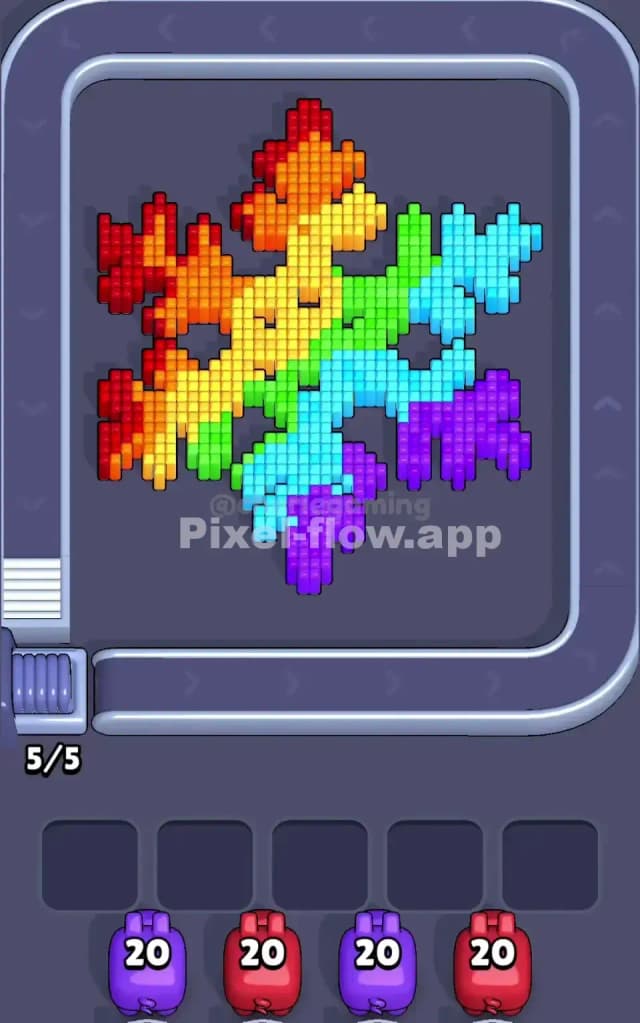
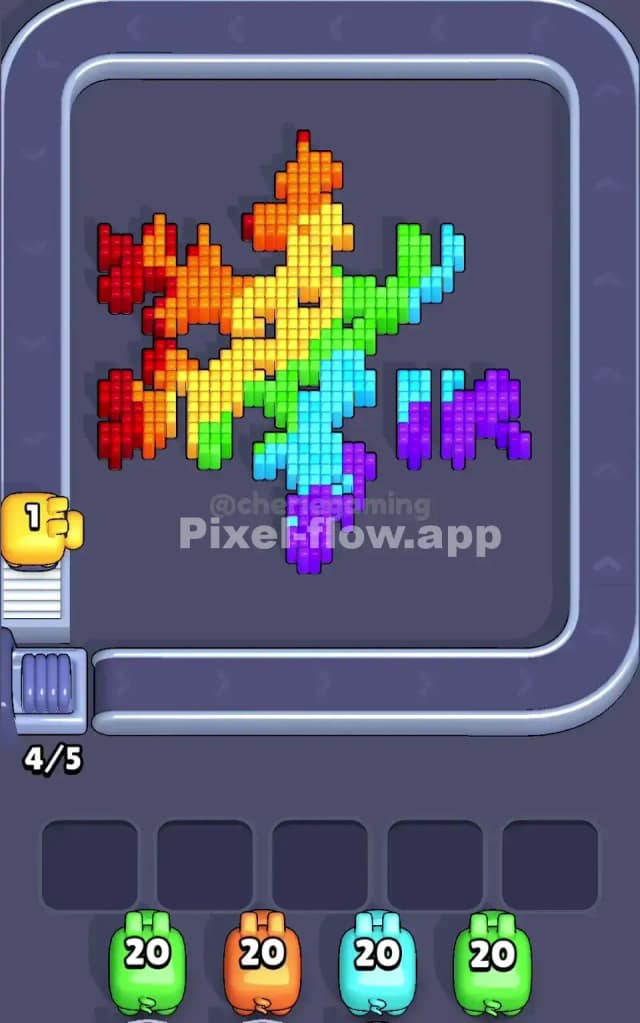
Pixel Flow Level 170 presents you with a stunning rainbow voxel design that resembles a blooming flower or celestial burst. The board is divided into five distinct color zones arranged radially: red dominates the left flank, orange and yellow form the warm middle-upper section, green occupies the center-right, cyan extends across the lower-right quadrant, and purple anchors the bottom. Each color section contains multiple layers of depth, with some cubes sitting flush on the surface while others hide beneath, waiting to be exposed as you clear the overlying colors. The symmetry of the design is deceptive—while it looks balanced, the actual distribution of cubes per color and their spatial arrangement create unique challenges that make Pixel Flow 170 feel far more demanding than a casual glance suggests.

Win Condition and Deterministic Gameplay

To beat Pixel Flow Level 170, you must clear every single voxel cube from the board before your waiting slots overflow with stuck pigs. You have exactly five pigs in your queue, each carrying a fixed ammo count of 20 shots. The pigs arrive in a locked sequence: purple (20 ammo), red (20 ammo), purple (20 ammo), red (20 ammo), and one more pig depending on your initial setup. Because the pig order and ammo values never change, success in Pixel Flow Level 170 hinges entirely on making deliberate choices about which pigs to deploy and when. There's no luck involved—only strategy and foresight.


Why Pixel Flow Level 170 Feels So Tricky

The Central Bottleneck: Purple and Red Dominance

Here's where Pixel Flow Level 170 gets genuinely frustrating: you're staring at a pig queue that's heavily weighted toward purple and red (two pigs of each color), yet the board features substantial yellow, green, and cyan patches that you cannot shoot with those colors. If you're not careful about which pigs you deploy early, you'll find yourself sitting with a purple or red pig in the waiting slots, still holding 15+ ammo, with absolutely no valid targets left on the board. That's a dead end, and it happens faster than you'd think. The moment you lock in that scenario, Pixel Flow Level 170 becomes unwinnable, and you're forced to restart.

The Exposed vs. Hidden Cube Problem

Another trap in Pixel Flow Level 170 is that many cubes are layered. The yellow cubes, for instance, sit partially behind red on the upper section and partially behind green in the middle—meaning a single red pig might clear only half its visible red cubes before you're forced to deploy a green pig to expose the yellow underneath. This staggered reveal mechanic means you can't just bulldoze one color at a time. You have to think in three dimensions and anticipate which colors will become available after you've cleared the obstruction. Miss this, and you'll watch a pig run out of ammo while the color it needs stays hidden, landing it squarely in your waiting buffer.

The Cyan and Purple Sprawl

I'll be honest: the first time I tackled Pixel Flow Level 170, I underestimated how many cyan and purple cubes were actually on the board. They're scattered across the lower half and center, intermingled in ways that make it hard to clear them efficiently with just two purple pigs (40 ammo total). If you waste purple ammo early on scattered cubes, you won't have enough to finish the job later. Similarly, cyan doesn't appear in your pig queue at all—you have to rely entirely on red and purple pigs somehow avoiding the cyan cubes, which means cyan cubes must be cleared by strategic non-targeting or by exposing them last and using whatever ammo overlap remains. The moment I realized this constraint, Pixel Flow Level 170 clicked for me, and my whole approach shifted.


Step-by-Step Strategy to Clear Pixel Flow Level 170

Opening: Secure Your Waiting Slots

Your first move should be to deploy your first purple pig and target the purple cubes that are most exposed and least tangled with other colors. In Pixel Flow Level 170, the purple sections at the bottom-right and lower-center are good early targets because clearing them doesn't immediately expose a flood of new colors demanding different ammo. Shoot conservatively—aim for 8–10 purple cubes with your first pig, leaving it with roughly 10 ammo remaining, then let it drop into a waiting slot. This achieves two things: you've removed some purple from the board without committing all your purple firepower, and you've kept a pig in reserve for later stages. After your first purple pig settles, immediately deploy your first red pig and target the red cubes on the left and upper sections. Again, don't empty it completely—aim for about 10 shots, then park it. You now have three waiting slots free and two pigs with partial ammo reserves: a perfect safety margin for the middle game.

Mid-Game: Layered Exposure and Ammo Alignment

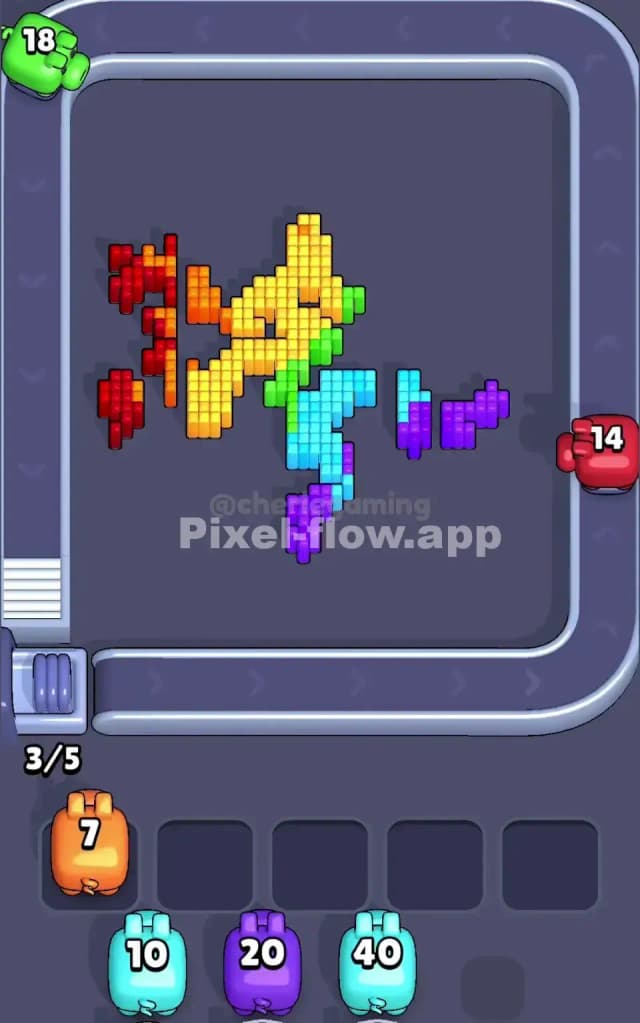
Once you've cleared rough outlines of purple and red, the yellow beneath and around them becomes visible. Deploy your second red pig now and target yellow cubes aggressively—red pigs can't hurt yellow, so red's second deployment is your chance to clear red cubes you missed or finish the red sections more thoroughly. After the second red pig has spent 15–18 ammo, let it fall into a waiting slot. Now the board should have much less red and purple obstruction, revealing the full extent of yellow, green, and cyan. This is where Pixel Flow Level 170 really tests your planning. You still have one purple pig left (with 20 fresh ammo), and it's your only reliable tool for cyan and purple cleanup. Before you deploy it, visually scan the board: count the cyan cubes you can see and estimate how many purple remain hidden. Your second purple pig needs to handle both, so it should have at least 15 cubes to target combined. If it looks light, you're in trouble—but if you've managed the first two pigs correctly, you should have enough coverage. Deploy the second purple pig and focus on cyan first (since cyan won't come back), then clean up any remaining purple. When this pig has 2–3 ammo left, park it in a waiting slot.

End-Game: The Final Stretch Without Overflow

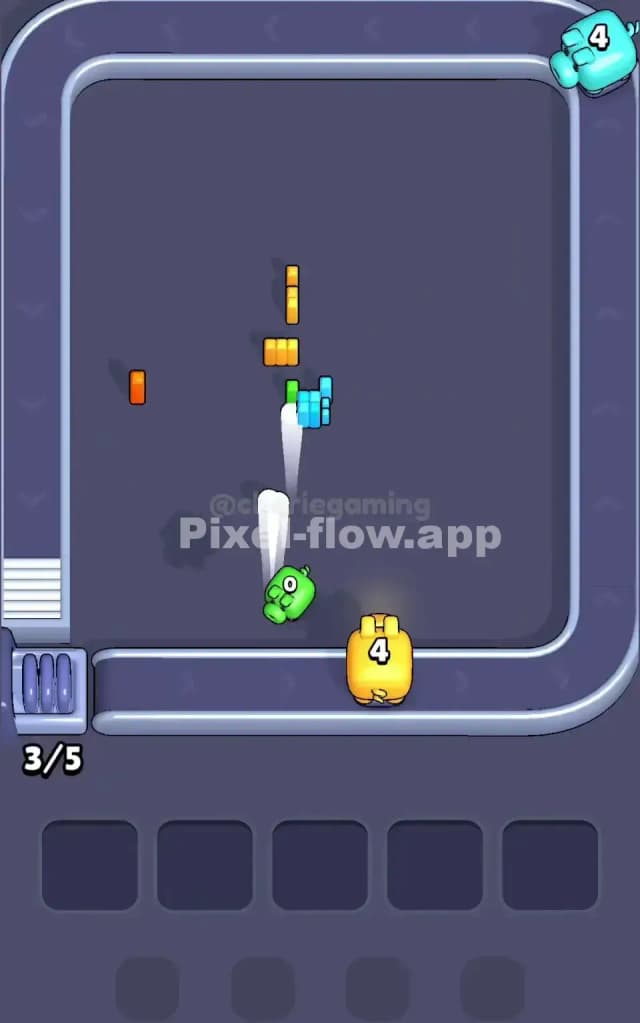
By now, you should have 2–3 pigs sitting in waiting slots and a nearly clear board except for stubborn green patches and maybe a few isolated yellow or cyan cubes. Your final move in Pixel Flow Level 170 depends on what's left: if green is the last color and you have no green pig in your queue, you're forced to accept that you can't clear green with your remaining resources, which signals a restart. However, if your planning has been tight, you'll have left just enough ammo on your benched pigs to mop up the last few cubes. Here's the trick: you don't deploy your final pig from the queue immediately. Instead, you let your waiting-slot pigs shoot at colors they can hit, even if it seems wasteful. A red pig can clear the last red cube; a purple pig can finish cyan. Once those benched pigs are completely depleted, they drop off the board and free their waiting slots. Only then do you deploy your final queued pig to finish any remaining color. In Pixel Flow Level 170, this final pig is often a green one, and it should be your cleanup crew—targeting the green cubes you've exposed throughout the game. Finish with a clear board and zero pigs waiting, and you've won.


The Logic Behind This Pixel Flow Level 170 Plan

Exploiting Deterministic Pig Order and Ammo Counts

The beauty of Pixel Flow Level 170 is that every run follows the same rules: the pigs arrive in a fixed order with fixed ammo. This means you can calculate success before you even fire your first shot. By deliberately parking your first two pigs with partial ammo, you're essentially creating a secondary resource pool—ammo that's "saved" in waiting slots, ready to finish colors that your main queue can't address. This strategy turns Pixel Flow Level 170 from a reactive scramble into a planned sequence. You're not hoping to get lucky; you're engineering the outcome by controlling when colors become available and which pigs have ammo left to spend on them.

Staying Calm and Planning Ahead

The final piece of mastering Pixel Flow Level 170 is mental discipline. Before you tap to fire, take three seconds to look at the next two pigs in your queue and the current board state. Ask yourself: "If I deploy this pig now and spend 12 ammo, will the colors it reveals create a target for the next pig, or will I strand it?" This forward-thinking habit prevents the cascading failures that cause Pixel Flow Level 170 to feel impossible. When you feel pressure mounting as your waiting slots fill, remember that the game is deterministic—there's always a solution if you've made the right choices earlier. Count your remaining ammo across all pigs, estimate the remaining cubes, and trust that careful sequencing will carry you through to victory.