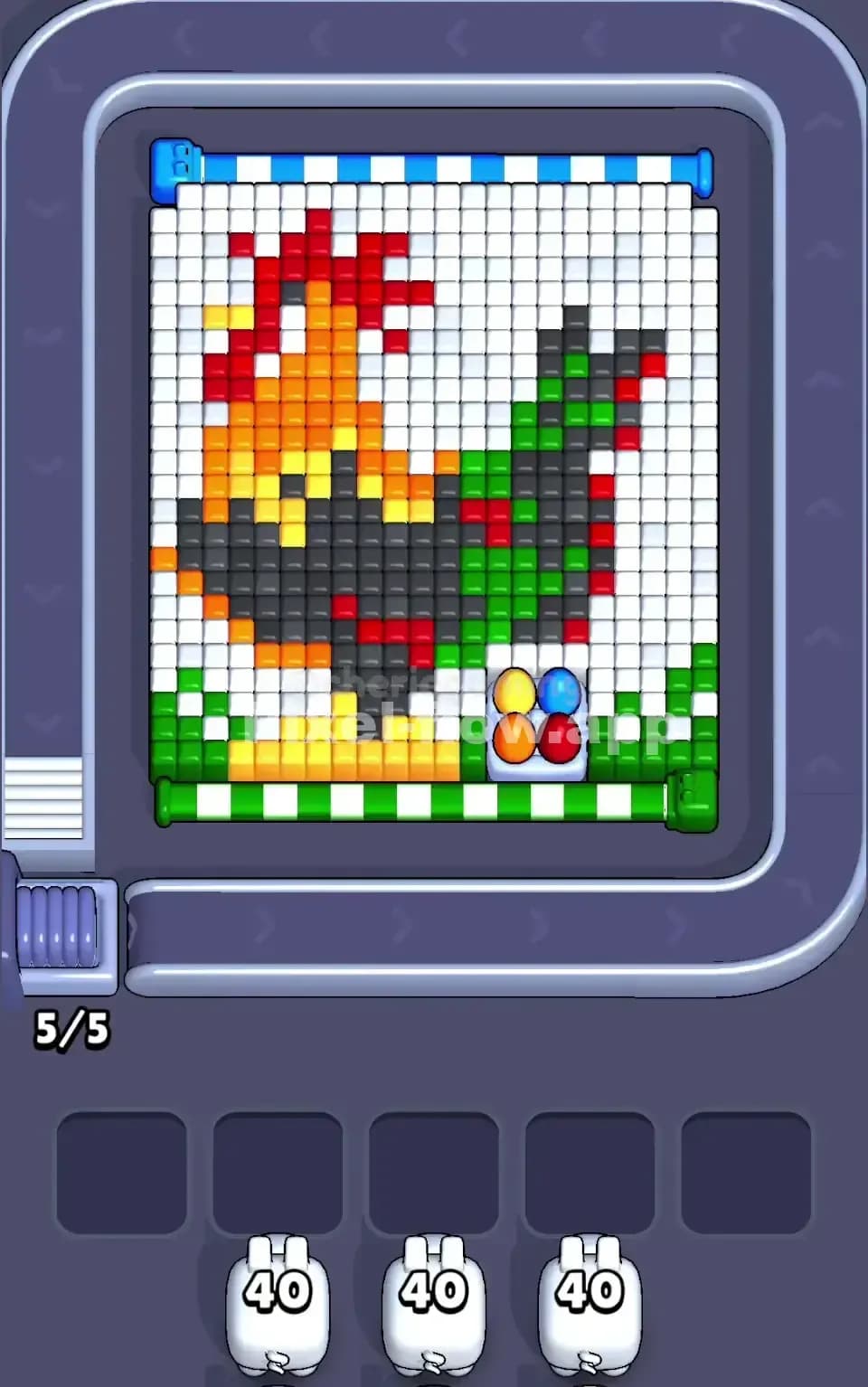
Pixel Flow Level 198 Solution | Pixel Flow 198 Walkthrough
How to beat Pixel Flow Level 198: Video solution & walkthrough. The fastest way to pass Pixel Flow 198.
Is this the wrong level layout?🤔
Pixel Flow randomizes levels for different players. Don't worry, just upload a screenshot of your board, and our AI will find the correct video instantly.
Pixel Flow Level 198 Overview
The Board Layout and Subject Matter
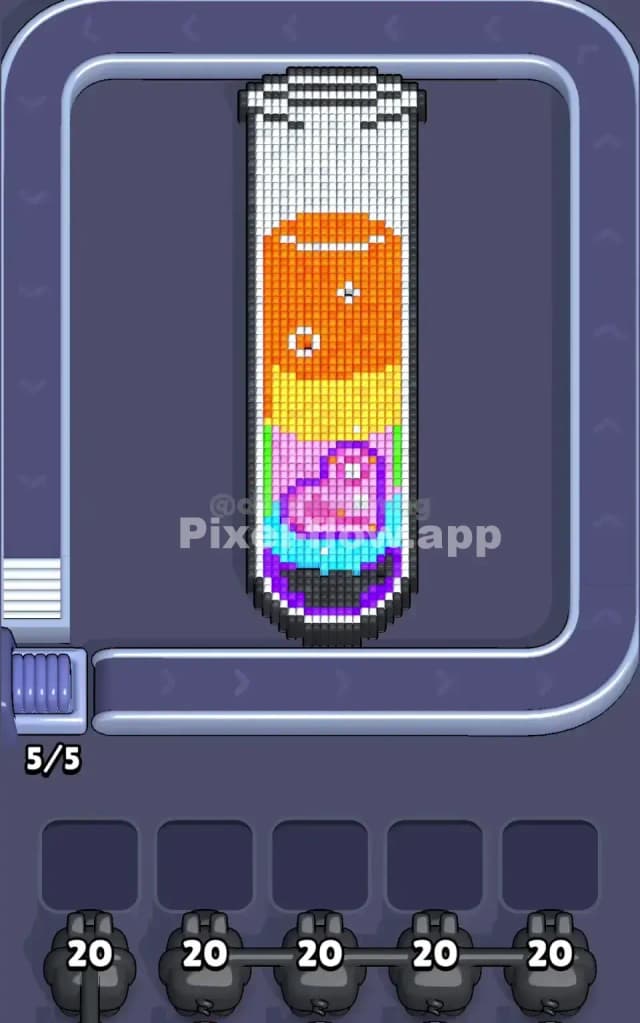
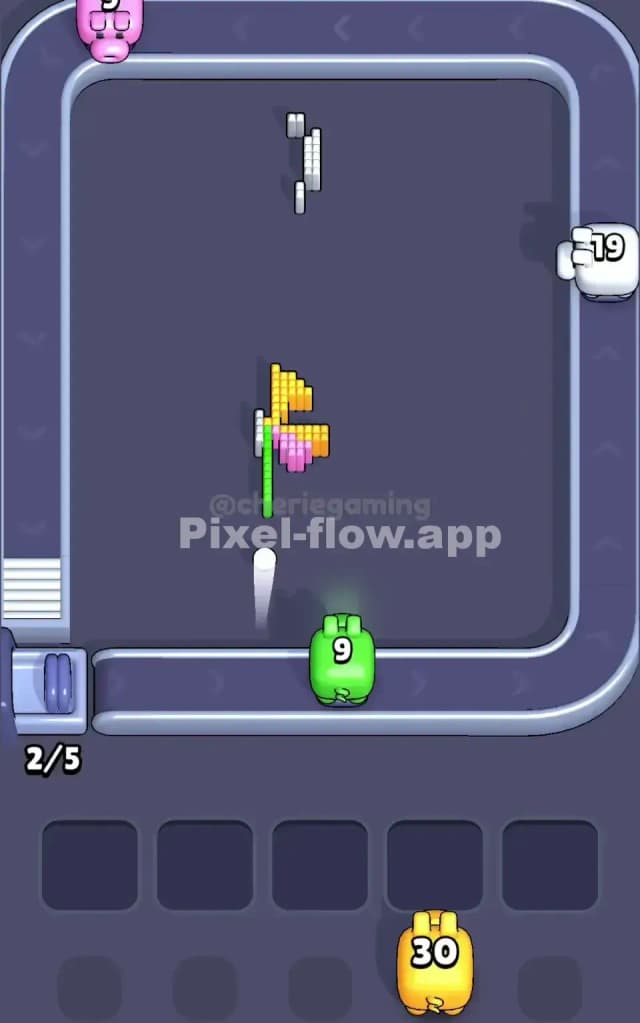
Pixel Flow Level 198 presents a vibrant vertical pixel art design that resembles a stylized popsicle or ice cream treat rendered in a narrow rectangular frame. The image is layered with distinct color bands stacked from top to bottom: white and black dominate the upper section (forming the stick and border), followed by a substantial orange zone, then yellow, lime green, and finally a complex lower region mixing magenta, cyan, purple, and dark gray. The challenge here isn't just about clearing cubes—it's about understanding that each color band represents a different pig's ammunition pool, and you'll need to carefully orchestrate their firing sequence to expose the deeper, more intricate layers hidden beneath. The white and black zones at the top act as a natural starting point, but they're deceptively simple; the real complexity emerges once you push deeper into the orange and yellow sections, where cube placement becomes trickier and color transitions demand precise planning.
Win Condition and the Deterministic Nature of Pigs
To clear Pixel Flow Level 198, you must eliminate every single voxel cube on the board. This isn't a score-chasing level—it's pure completion. You'll notice at the bottom of the screen that there are five pig slots, each carrying exactly 20 ammunition units. This deterministic ammo count is crucial: it means every pig will fire exactly 20 times before it must either find a new target or drop into one of your five waiting slots. If you mismanage your sequence and all five waiting slots fill with pigs that have remaining ammo but no valid targets, you'll fail instantly. The win condition is absolute—zero cubes remaining—and the path to victory hinges entirely on your ability to predict which colors will be exposed as you clear each layer, and when to deploy each pig so their full ammo load gets spent productively.
Why Pixel Flow Level 198 Feels So Tricky
The Orange Zone Bottleneck
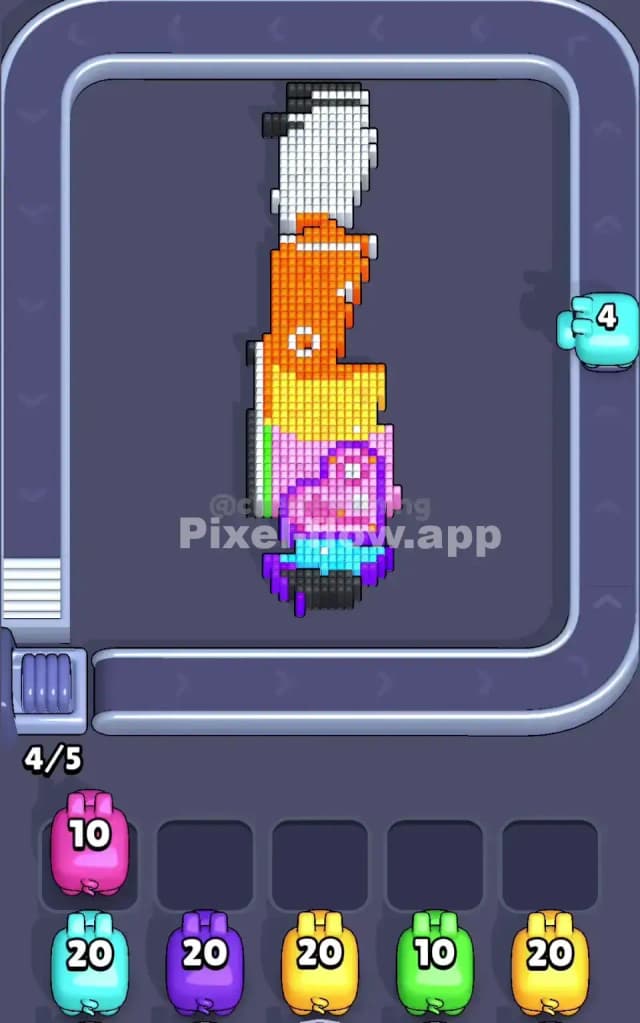
The orange section dominates the middle-upper portion of Pixel Flow Level 198, and it's the primary culprit behind most players' first few failures. Orange occupies roughly a third of the total cube count, meaning the orange pig will have a lot of targets to shoot. However—and this is the sneaky part—orange isn't evenly distributed. There are subtle white and black gaps embedded within the orange zone, creating "islands" of color. When your orange pig runs out of adjacent orange cubes to target, it'll drop into a waiting slot, even though it may still have 5 or 6 ammo remaining. If you're not careful and you've already filled three waiting slots with other partially-spent pigs, you're suddenly at 4/5 capacity with no relief in sight. The bottleneck emerges because orange comes early enough that you can't yet access the final layers, but late enough that it demands serious attention.
The Yellow-to-Green Transition Problem
Below the orange lies a thick yellow band that looks straightforward until you actually start firing. The issue is that yellow cubes sit directly atop lime green, and the green zone has an irregular, almost scattered distribution. When your yellow pig finishes, the green pig will arrive to find targets spread across multiple disconnected regions. Green ammo won't stretch far enough to cover all isolated green cubes, so you'll watch helplessly as three or four green voxels remain untouched while your green pig drops into the buffer with zero ammo left. This forces you to rely on other color pigs (perhaps blue or magenta from deeper layers) to finish the job, which means you've wasted sequential opportunities. It's not a hard wall, but it's a resource sink that punishes poor planning.
The Hidden Complexity Below: Magenta, Cyan, and Purple
Here's where Pixel Flow Level 198 really tests your patience: the bottom third of the puzzle is a chaotic blend of magenta, cyan, and purple, with black borders weaving throughout. Unlike the relatively clean horizontal bands above, these colors overlap, interlock, and create isolated pockets. A single cyan cube might be surrounded entirely by purple, meaning your cyan pig shoots it and then has nothing left to do. The worst-case scenario is having a pig with 15 ammo remaining stuck between two other colors' territories, unable to contribute further. I'll admit that when I first tackled this level, I spent three attempts just watching these lower colors jam up the waiting slots, not understanding why I couldn't clear them efficiently. The "aha!" moment came when I realized I needed to plan the entire sequence—not just react to what's visible—and deliberately park certain pigs early so that later, more strategic pigs could do their work.
Step-by-Step Strategy to Clear Pixel Flow Level 198
Opening Moves: Secure Your Buffer Room
Start by launching your first pig (which will be white) immediately. Don't hesitate—white occupies the very top of Pixel Flow Level 198 and will clear quickly, giving you breathing room in your waiting slots. Your first pig will shoot all white cubes in rapid succession and likely finish before it even needs to enter a waiting slot. The second pig (black) follows naturally and handles the border/outline cubes. By the time your second pig is done, you've cleared the top layer and still have all five waiting slots available. This is your insurance policy. Now, here's the critical part: before you send your third pig, take a moment to assess what's been exposed. You should see the orange zone fully revealed and ready for targeting. Don't send the orange pig yet—instead, send whichever pig is queued next if it's not orange. This sounds counterintuitive, but by staggering the order slightly, you're preventing the orange pig from landing in a waiting slot too early. If orange arrives at slot 1 with 8 ammo remaining and can't find more targets, it'll just sit there, blocking future pigs from entering if needed.
Mid-Game Execution: Layering and Strategic Parking
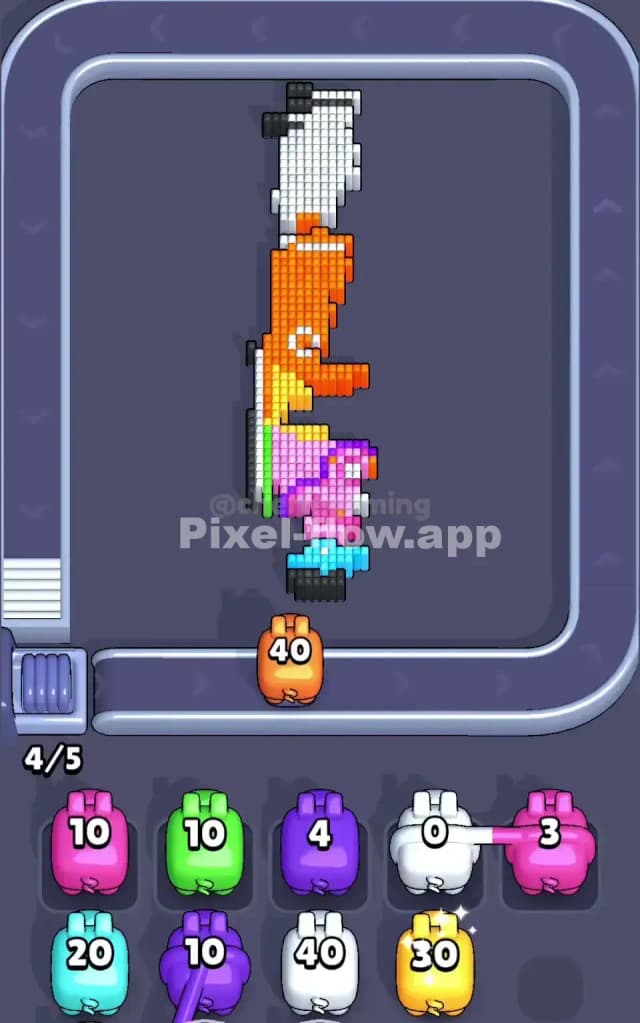
Once you've got two pigs cleared and your buffer is secure, you can begin the actual puzzle-solving phase of Pixel Flow Level 198. Now send orange. Watch closely as it fires—you'll notice it clears most of the orange zone, but inevitably hits those white and black gaps and runs out of adjacent targets. When orange drops into waiting slot 1, it should have minimal ammo left (ideally 0–3). If orange still has 10+ ammo, you made a mistake in your opening sequence; restart and try sending a different pig second instead of black. With orange parked, the yellow pig arrives automatically. Yellow has an easier time because it occupies a solid band, but keep an eye on the yellow-to-green boundary. Yellow will finish faster than orange did, and it'll drop into slot 2. Now comes the delicate part: green pig. Green is scattered, and it won't clear all green cubes on the first pass. This is fine—let green enter slot 3 with whatever ammo it has left. The beauty of this level is that the lower-layer pigs (magenta, cyan, purple) will eventually expose more green cubes as they clear their own colors, allowing you to cycle back. You're not trying to finish each color perfectly on the first go; you're establishing a foundation for the cascade that follows.
End-Game Execution: The Cascade and Final Cleanup
As your magenta, cyan, and purple pigs enter the field, the lower-layer colors will begin interlocking with the upper ones you've already partially cleared. This is where Pixel Flow Level 198 truly tests your foresight. Magenta will fire into the lower zone and expose hidden green cubes above it. When magenta finishes and parks, you'll have three waiting slots occupied. Now cyan arrives and does similar work—it reveals purple details and potentially more green. The key is watching your waiting slots: you need to maintain at least one empty slot at all times until the very end. If all five slots fill and you still have cubes remaining, you've failed. To prevent this, consider this endgame principle: if a pig enters a slot and you know another pig will expose more targets for it, let it wait. Don't restart just because a slot is occupied. The final pig (usually purple or whichever comes last) will have the hardest job because it needs to clean up all remaining purple cubes, including isolated ones that are surrounded by empty space. When that final pig shoots its last ammo and the board is empty, you've conquered Pixel Flow Level 198. If you end with one or two pigs still in the waiting slots but the board is clear, that's a flawless win—it means you managed your resources perfectly.
The Logic Behind This Pixel Flow Level 198 Plan
Why Sequential Planning Beats Reactive Play
The strategy outlined above works because Pixel Flow Level 198 is entirely deterministic. Every pig has exactly 20 ammo, the cube layout never changes, and pig order never changes. This means you can theoretically solve the level without ever making a mistake if you plan perfectly. The logic is simple: rather than sending pigs one by one and hoping they clear their color, you map out which colors will be exposed after each layer falls away. You predict which pigs will need to wait and ensure you never fill all five slots simultaneously with no remaining targets. Reactive players send a pig, watch it fail or partially succeed, and then curse the game. Strategic players send a pig, know exactly what that pig will accomplish, and have already decided what the next pig will do. This foresight transforms Pixel Flow Level 198 from a frustrating luck-fest into a puzzle with a clear solution path.
Staying Calm and Counting Ammo Under Pressure
The final piece of mastering Pixel Flow Level 198 is mental discipline. As pigs fire, your instinct is to watch the pretty colors disappear and celebrate. Instead, count the shots. If your orange pig fires 12 times and then stops, you know it has 8 ammo left over. That information tells you orange will park in a waiting slot. By mentally tracking ammo as it depletes, you can predict waiting slot occupancy two or three pigs ahead. This predictive mindset prevents panic. When you see a waiting slot fill up, you're not surprised—you expected it, and you already know which exposed colors will give the next pig fresh targets. You also avoid the temptation to restart after a single pig parks; parking is fine as long as subsequent pigs have work to do. Take a breath between pig launches, glance at the queue, and remind yourself that Pixel Flow Level 198 has exactly one optimal solution, and you're finding it.