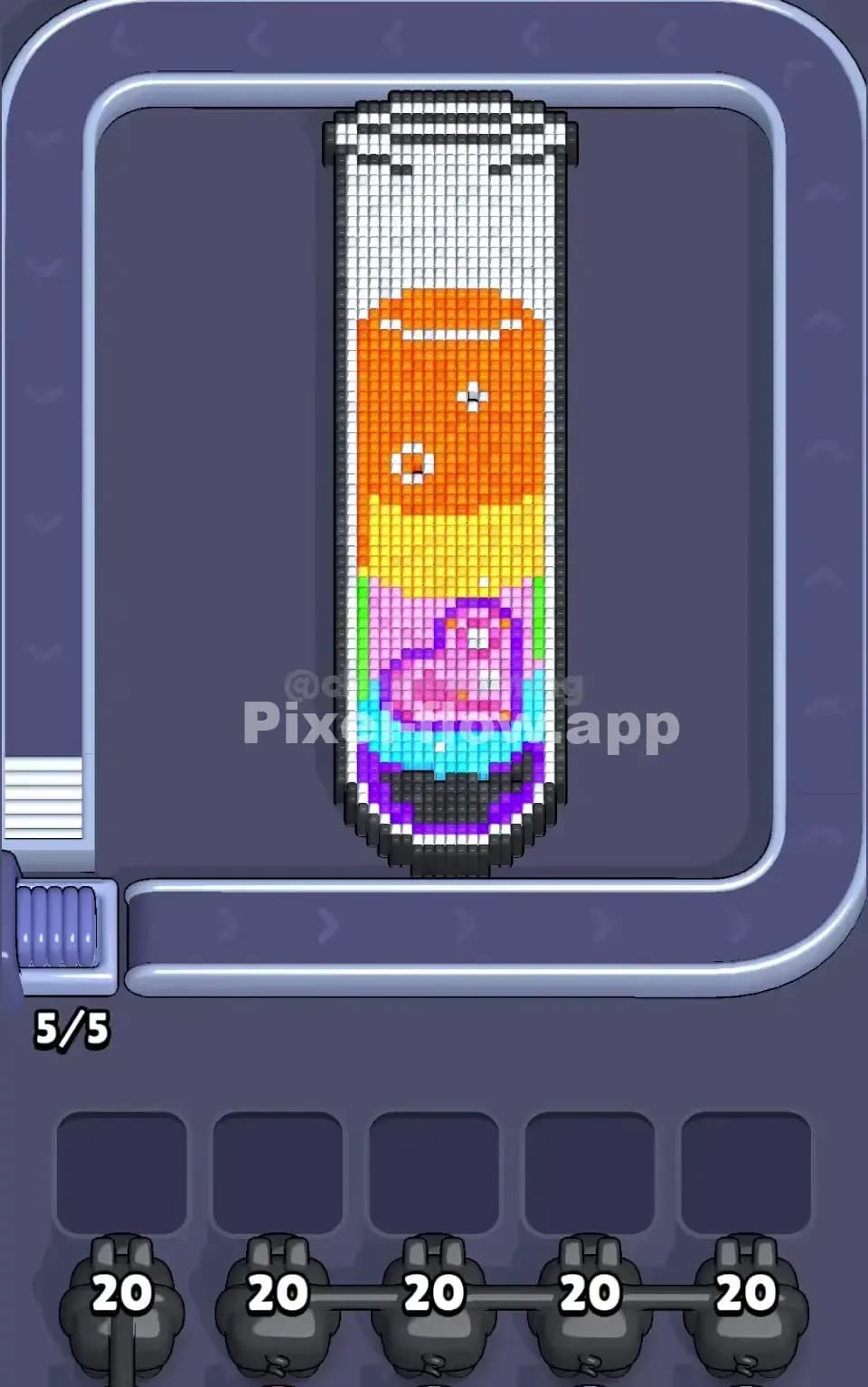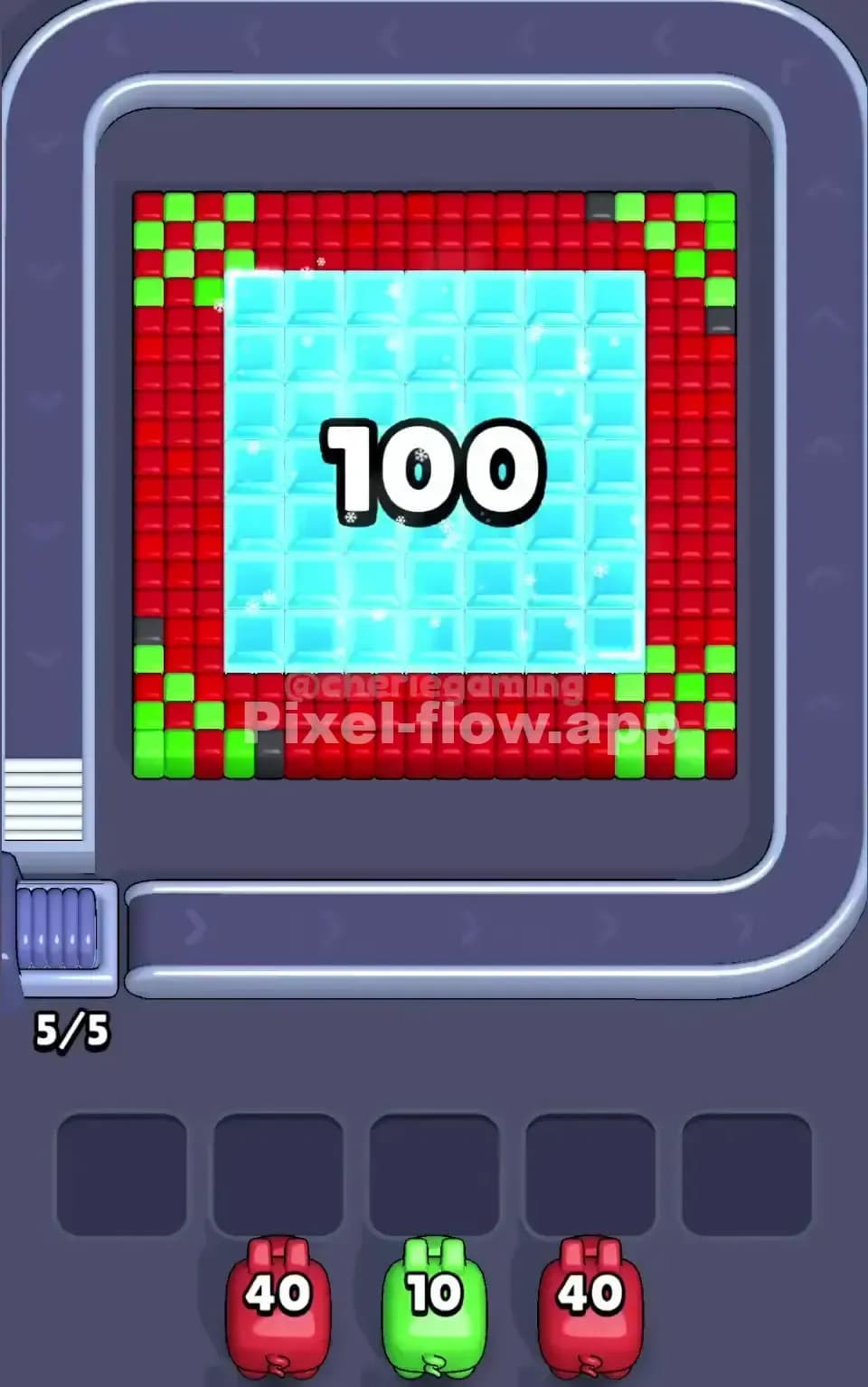
Pixel Flow Level 199 Solution | Pixel Flow 199 Walkthrough
How to beat Pixel Flow Level 199: Video solution & walkthrough. The fastest way to pass Pixel Flow 199.
Is this the wrong level layout?🤔
Pixel Flow randomizes levels for different players. Don't worry, just upload a screenshot of your board, and our AI will find the correct video instantly.

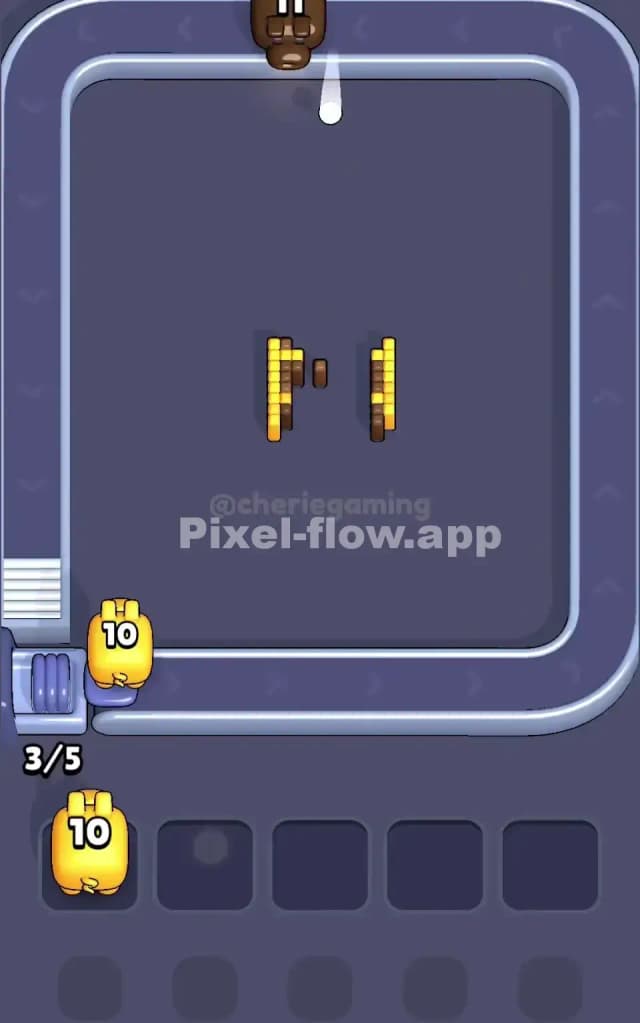
Pixel Flow Level 199 Walkthrough
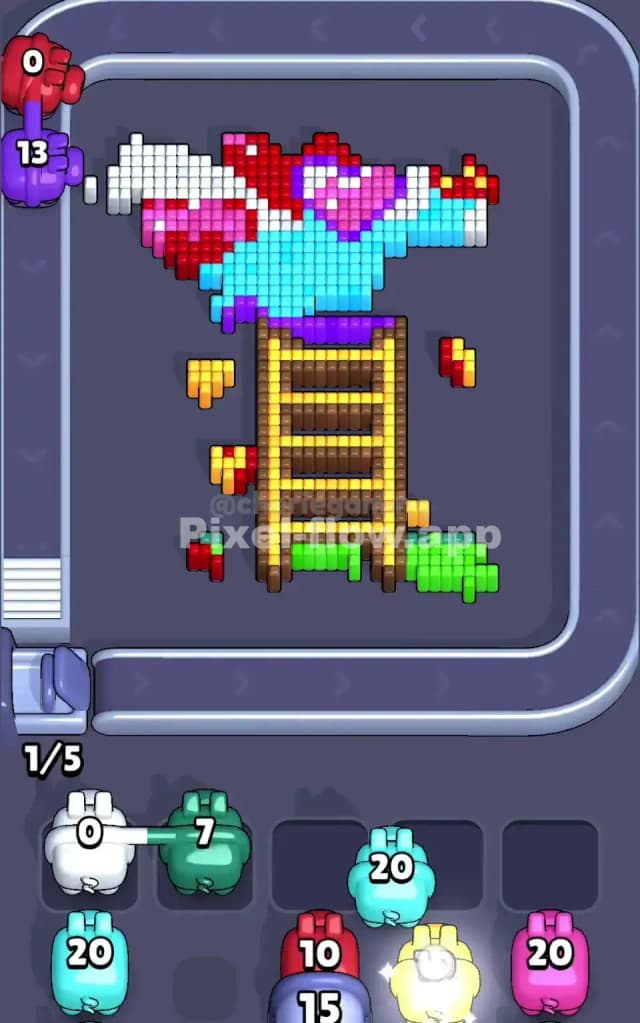
This level features a whimsical "Ladder to the Clouds" scene. You are looking at a sturdy wooden ladder climbing up from a patch of green grass into a massive, fluffy canopy of blue and white clouds populated by red and pink hearts.
The main challenge here is verticality and layering. The cloud at the top is incredibly dense, acting as a "roof" that blocks access to the shapes hidden inside it. The ladder acts as a central spine that connects the bottom to the top. While the sheer number of pixels might look intimidating, this is not a very hard level if you break it down layer by layer. The biggest risk is getting clogged with "Heart" colors (Red, Pink) before you have cleared enough of the "Cloud" colors (Cyan, White) to expose them.
Pixel Flow Level 199 Overview
Imagine a romantic stairway to heaven. At the very bottom, you have a wide, flat foundation of bright green grass speckled with a few red flowers. Rising from the center is a brown ladder with yellow rungs. This ladder leads straight up into a giant, mushroom-shaped cloud.
The cloud is the dominant feature. It is mostly Cyan (light blue) with puffy White highlights on the edges. Buried deep inside this blue mass are several hearts: a large Red one and a smaller Pink one. There are also floating hearts on the left and right of the ladder—one Yellow, one Red.
The visual trap here is the density of the cloud. The Cyan pixels cover the top of the ladder and surround the upper hearts. You cannot just shoot blindly at the top; you have to peel back the blue sky to find the love hidden inside. The grass at the bottom is physically separate from the cloud, making the level feel like two distinct zones: the "ground game" and the "sky game."
Step by step solution walkthrough for Pixel Flow Level 199
First Color Zone to Erase in Pixel Flow Level 199
I strongly recommend starting with the Green Grass at the very bottom.
Here is the logic: The Green zone is a solid, continuous block that sits at the lowest layer of the 3D model. It doesn't hide anything critical, but it takes up a lot of visual space. By using a Green pig early, you can completely wipe out the bottom row. This does two things. First, it clears a "lane" for your eyes so you can focus strictly on the vertical ladder and the cloud. Second, the Green pigs usually have high ammo counts (often 20+), and the grass is dense enough to let you dump that ammo quickly without worrying about leftovers clogging your bench.
Once the grass is shaved off, the bottom of the Brown ladder is fully exposed, giving you a new target to whittle away at while you wait for the right pigs to handle the sky.
How to pass Pixel Flow Level 199 without power ups or boosters
The mid-game of Pixel Flow Level 199 is where things get messy. At this stage, the grass is gone, and you are staring at the massive Cyan and White cloud. You will likely see Red and Pink pigs rolling down the conveyor belt.
Do not panic and grab them immediately.
This is the main trap. The Red and Pink hearts are buried inside the Cyan cloud. If you pick up a Red pig too early, it might only find one or two exposed red pixels (like the floating heart on the left) and then sit in your waiting slot with 18 ammo left, blocking you.
Instead, aggressively hunt for Cyan and White pigs. You need to strip the "skin" off the cloud. Prioritize the Cyan pigs to eat away the main body of the blue cloud. As the blue pixels vanish, they will reveal the Red and Pink hearts underneath. Only when you see a large chunk of Red or Pink exposed should you grab those specific colored pigs.
Also, keep an eye on the Brown pigs. The ladder rails are vertical and thick. Clearing the Brown rails often exposes the Yellow rungs. If you ignore the Brown pigs, the ladder remains a solid wall that might block shots meant for the background.
Last Details You Clean Up in Pixel Flow Level 199
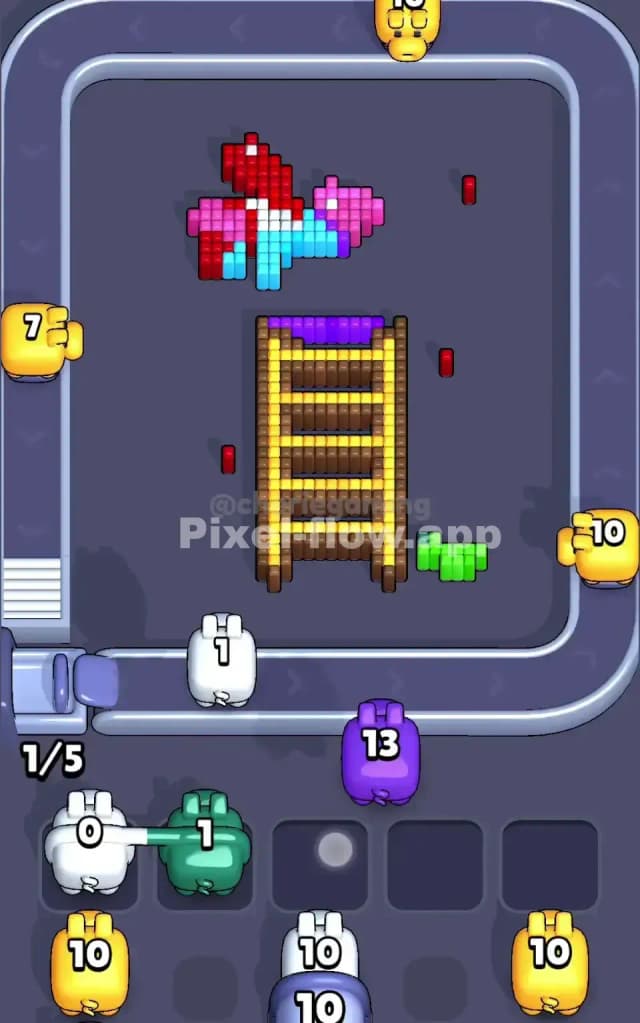
By the end of the level, the massive cloud should be reduced to scattered fragments. You are likely left with the skeletal remains of the ladder and the floating hearts.
The final cleanup usually involves the Yellow and Red pixels.
- The Ladder Rungs: These are Yellow. They are often the last thing to go because they are sandwiched between the Brown rails. Once the rails are gone, the rungs are just floating yellow bars.
- The Floating Hearts: There is a tricky Yellow heart floating on the left side and a Red one on the right. These are often ignored during the chaos of clearing the cloud.
Make sure you have a plan for your final Yellow pig. You need it to hit both the ladder rungs and that lonely floating heart. If you waste your Yellow ammo early on the rungs while the heart is blocked by a stray blue pixel, you’ll be forced to cycle through pigs to find another Yellow one. Stay sharp, clear the rails, and then snap up the yellow rungs to finish the stage.