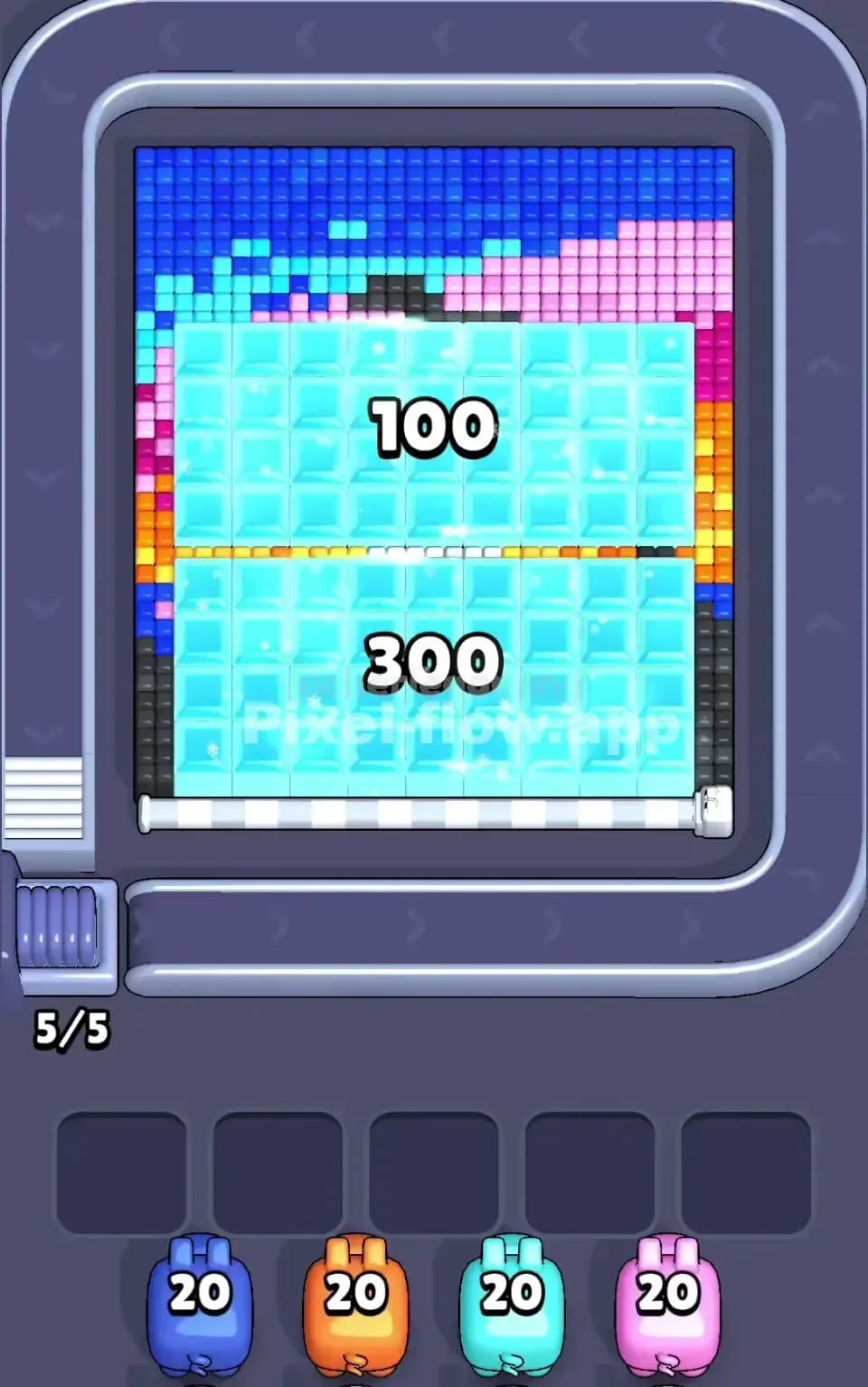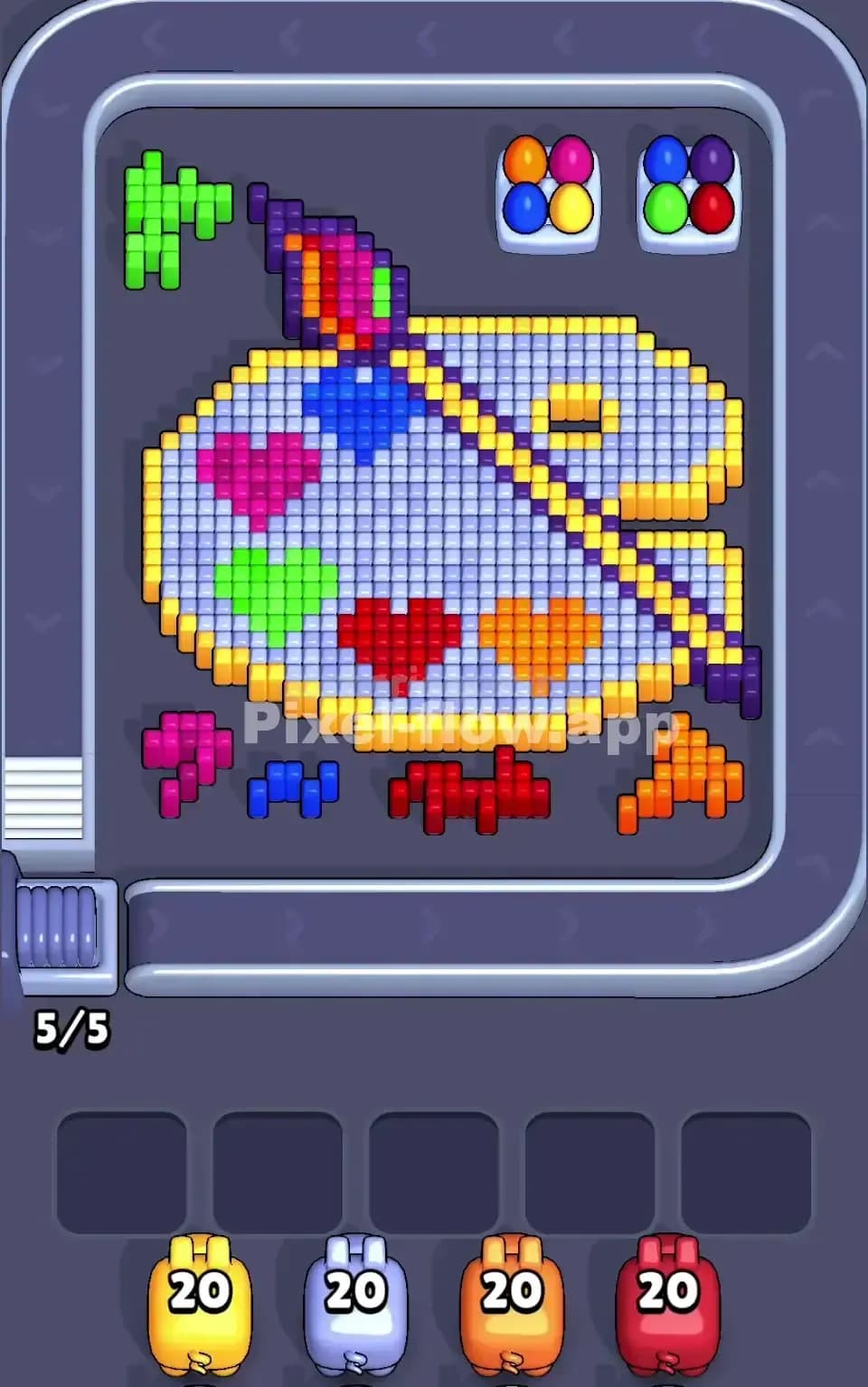
Pixel Flow Level 203 Solution | Pixel Flow 203 Walkthrough
How to beat Pixel Flow Level 203: Video solution & walkthrough. The fastest way to pass Pixel Flow 203.
Is this the wrong level layout?🤔
Pixel Flow randomizes levels for different players. Don't worry, just upload a screenshot of your board, and our AI will find the correct video instantly.
Pixel Flow Level 203 Walkthrough
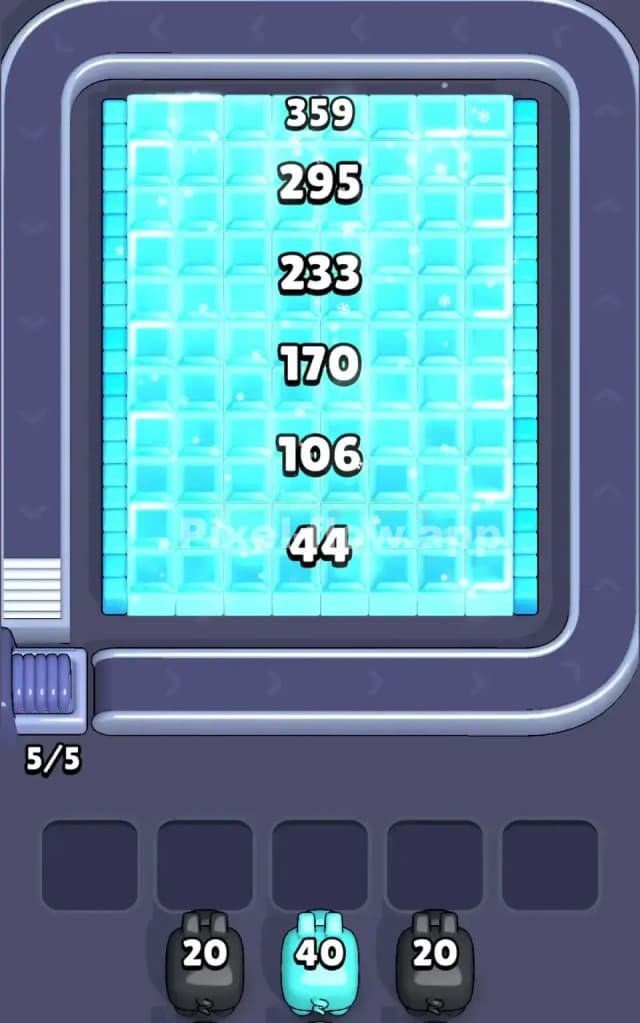
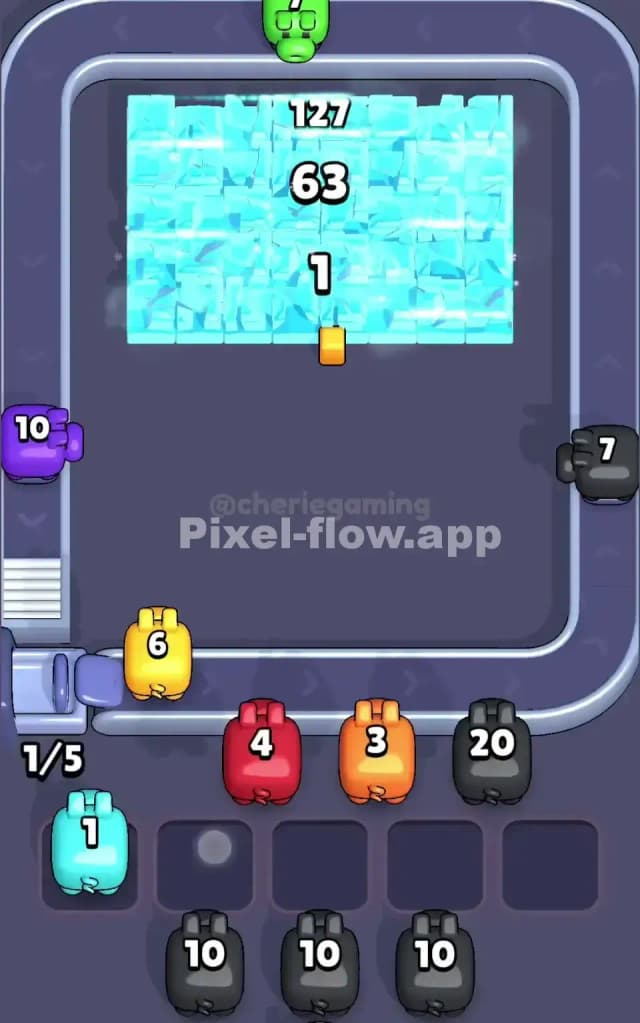
This level is an excavation job. Unlike other stages where you see a cute animal or a house immediately, Pixel Flow Level 203 presents you with a massive, intimidating wall of cyan ice blocks. It looks like a spreadsheet of frozen water. The numbers stamped on the front (359, 295, etc.) represent the sheer density of pixels you have to chew through. Underneath this frozen crust lies a hidden, colorful object, but you have to dig to find it. Because of the high durability of the ice and the risk of clogging your slots with useless colors early on, this is a very hard level.
Pixel Flow Level 203 Overview
Imagine a colorful tropical toy frozen inside a giant ice cube. That is Pixel Flow 203. The entire board is dominated by a monolithic slab of Cyan pixels. It feels cold and impenetrable.
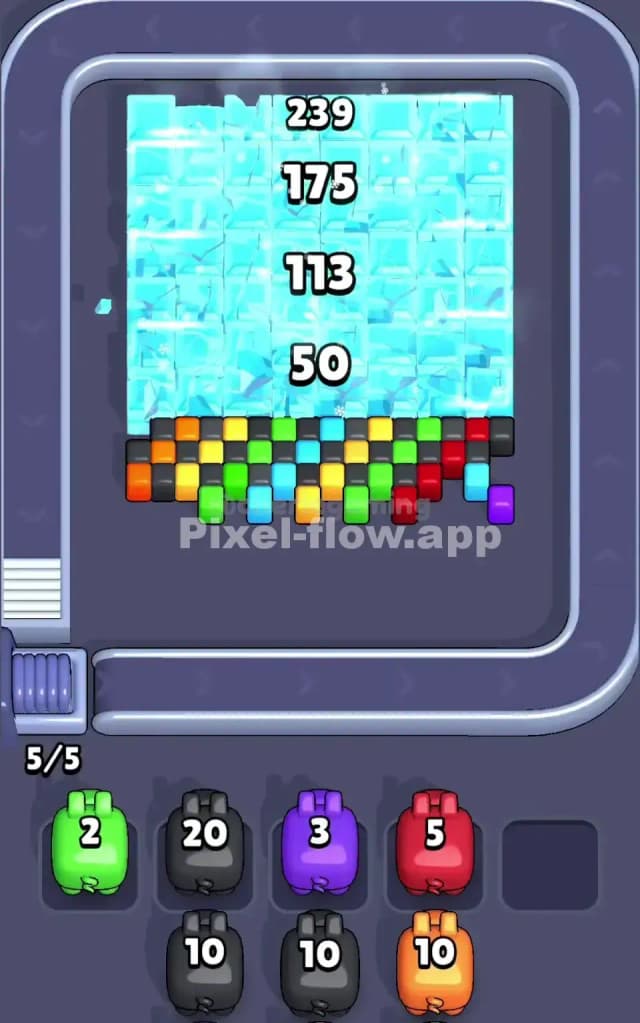
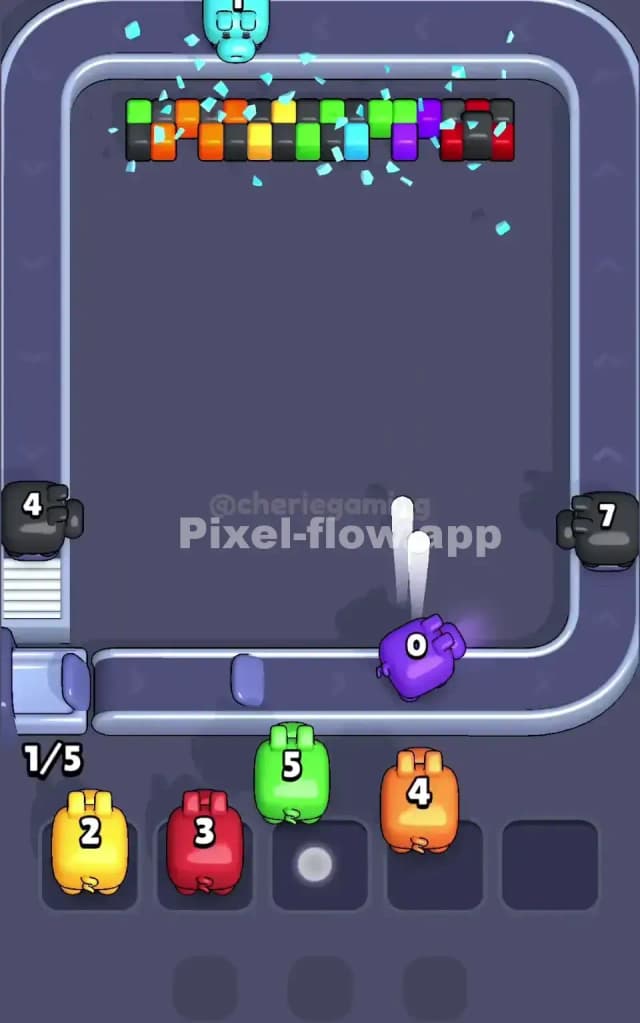
As you chip away the front layers, the "Ice" fractures. You will start to see gaps revealing the hidden core. The second phase of the level is starkly different from the first; the cool blue gives way to a chaotic mix of Red, Orange, Yellow, and Purple. It’s an asymmetric digging experience: you start with total uniformity, and end with a scattered mess of multi-colored confetti.
Step by step solution walkthrough for Pixel Flow Level 203
First Color Zone to Erase in Pixel Flow Level 203
You must attack the Cyan immediately. This is not a choice; it is a necessity. The Cyan layer acts as a "lid" on the rest of the level. Until you remove significant chunks of this blue ice, the game will starve you of valid moves for other colors.
Prioritize the Cyan Pigs with 40 ammo. You will see these heavy hitters in your conveyor belt. Do not waste them. If you see a Cyan pig, verify that it has a clear line of sight to the main ice wall. If you mistakenly place a Black pig or a Red pig into a waiting slot while the board is still 90% Cyan, you are filling your limited "bench" with dead weight. Clear the blue surface area first to open up the board.
How to pass Pixel Flow Level 203 without power ups or boosters
The mid-game of Pixel Flow Level 203 is where most players lose. Once the ice starts cracking, the game’s RNG will start feeding you pigs for the inner colors—Red, Orange, and Purple—before you have fully exposed those layers.
This is the "Clog Trap." You might have a waiting slot full of Black pigs (like in the reference play), but the only available targets are deep behind the remaining ice.
To survive without boosters:
- Ignore the "Hidden" Colors initially: If a Red pig comes down the belt, but you only see one tiny Red pixel exposed, let that pig pass unless your waiting slots are empty. Do not hoard colors you cannot use immediately.
- Flush the Black Pigs: You will likely accumulate Black pigs (20 ammo) that target the border or deep shadows. Use them aggressively whenever a path opens on the edges. They act as trash disposal for the conveyor belt, keeping the flow moving so you can find more Cyan pigs.
- Vertical Drilling: Try to clear one vertical column of ice completely rather than shaving the whole face evenly. A vertical breach allows your pigs to shoot "inside" the structure, hitting the hidden colors earlier.
Last Details You Clean Up in Pixel Flow Level 203
By the end, the giant ice wall is just jagged shards. You will be left with the "core" of the hidden object. This usually consists of single voxels of Yellow or Green that were buried the deepest.
The danger here is aiming. With the big wall gone, your pigs might miss their intended target if it's rotating or moving (if applicable), or simply because the target area is now tiny. Watch the ammo counters. Do not send a 40-ammo pig to kill a single leftover pixel if a 5-ammo pig is coming up next. Efficiency in the final seconds prevents you from running out of moves right at the finish line.