Pixel Flow Level 205 Solution Walkthrough | Pixel Flow 205

How to solve Pixel Flow level 205? Get instant solution for Pixel Flow 205 with our step by step solution & video walkthrough.

Share Pixel Flow Level 205 Guide:
Pixel Flow Level 205 Gameplay
Pixel Flow Level 205 Solution 1
Pixel Flow Level 205 Solution 2
Pixel Flow Level 205 Solution 3

Pixel Flow Level 205 Overview

The Starting Board and Its Pixel Art Challenge

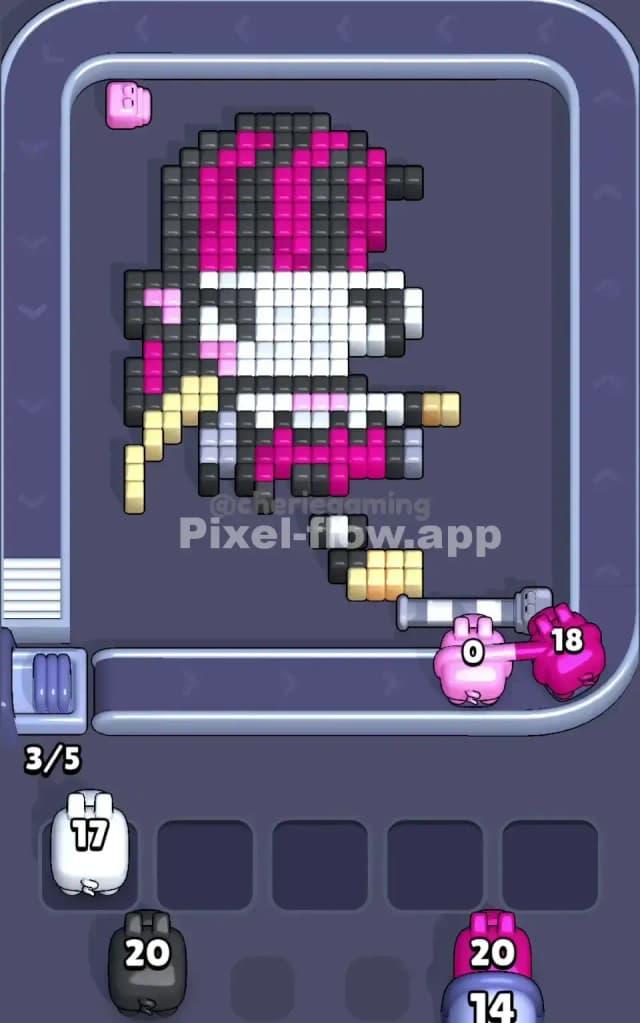
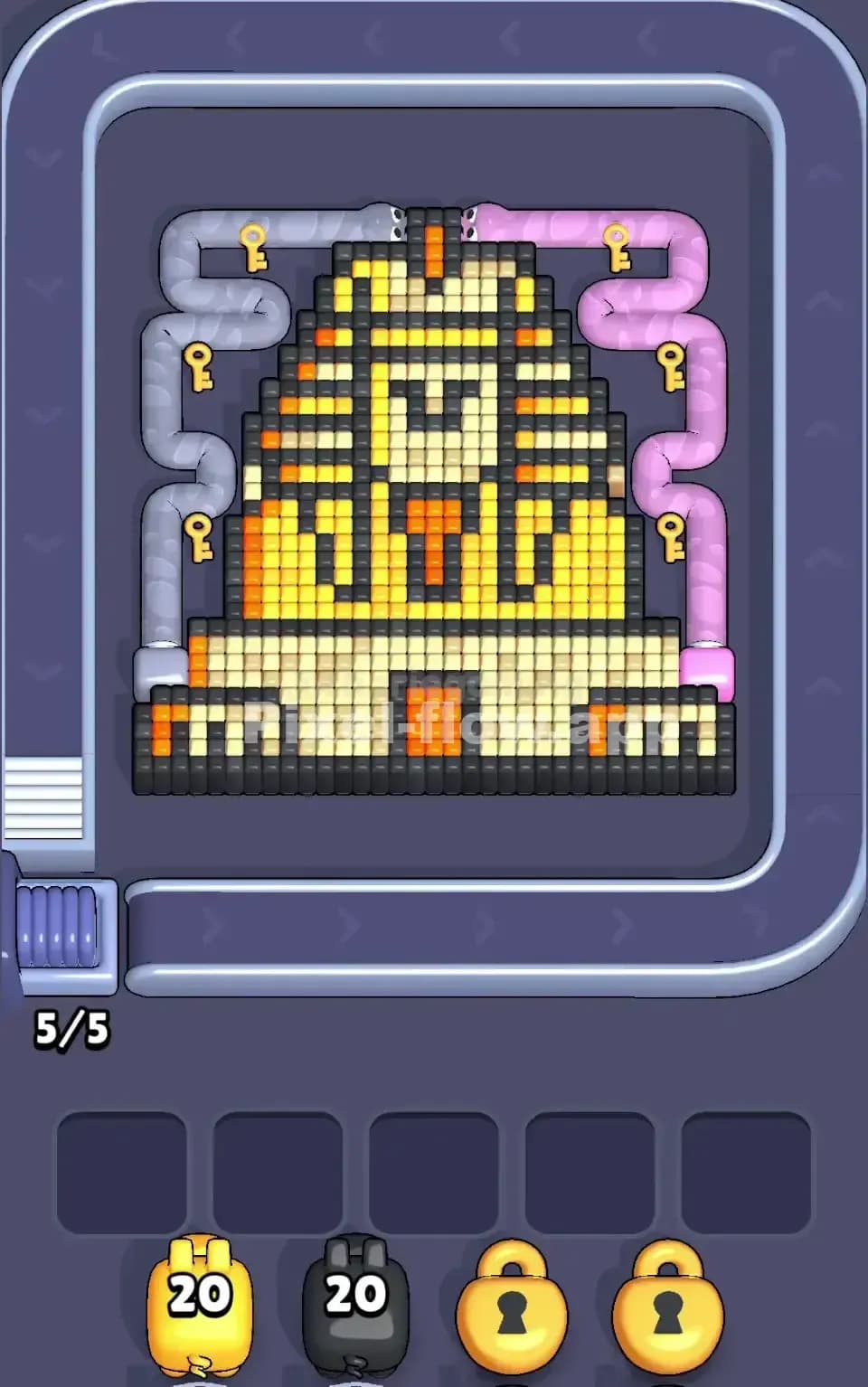
Pixel Flow Level 205 presents a layered pixel portrait with a complex color scheme that'll test your planning skills right from the start. The board showcases a character's face rendered in multiple colors, with dominant swaths of black, magenta, white, and yellow forming the main visible layer. You'll notice cyan blocks stacked heavily on the left side of the board, and these act as one of your primary targets early on. The pixel art itself has real depth—there are clear patches of lighter and darker regions that suggest several layers of colors hiding beneath the surface, which means you can't just blast away at the most obvious colors without thinking ahead.

The incoming pig queue shows you're working with four distinct colors: cyan (40 ammo), yellow (20 ammo each for three pigs), and white (10 ammo). There's also a darker pig waiting with 20 ammo that you'll need to identify and sequence carefully. This deterministic setup means every pig has a fixed job to do, and you'll need to hit your marks precisely to avoid getting stuck with ammo-rich pigs sitting idle in your five waiting slots.

Win Condition and the Importance of Sequencing

Your goal in Pixel Flow Level 205 is simple on paper: clear every single voxel cube from the board. However, the real challenge lies in doing so without jamming up your waiting slots. If all five slots fill with pigs that have no valid targets left to shoot, you're done for—there's no recovery from that state. This means you can't just send pigs down the line willy-nilly. You need to think about which colors are actually visible, how many cubes of each color exist, and whether the ammo counts will align perfectly with the number of cubes you can access at any given moment.


Why Pixel Flow Level 205 Feels So Tricky

The Cyan and Yellow Bottleneck

Here's where Pixel Flow Level 205 will frustrate you most: cyan and yellow form a substantial outer shell that's protecting the inner layers. You've got 40 cyan ammo available, and while that seems like a lot, the cyan cubes form both left-side towers and scattered patches across the board that aren't always easy to access simultaneously. The real trap is that if you send your three yellow pigs (20 ammo each) too early, you might find that yellow targets are hidden behind black and magenta cubes, leaving those pigs stuck in your waiting slots with full ammo tanks. I've seen runs fail because a yellow pig dropped into slot three with 18 ammo remaining—it's a helpless feeling when you realize there's nowhere left for it to shoot.

Hidden Color Patches and the Ammo Mismatch

Pixel Flow 205 has several sneaky white and magenta patches scattered throughout the composition that don't reveal themselves until you've cleared the overlying layers. You might think you need to clear all visible magenta first, but some magenta cubes are actually interior-facing, exposed only once you've peeled back the black and white voxels. The white pig (10 ammo) is particularly nerve-wracking because its ammo is limited, yet white appears both on the surface and deeper in. Count wrong, and you'll have a white pig with 3 ammo left sitting in slot four, unable to do anything because you've already cleared all the accessible white.

The Pressure of the Five-Slot Limit

What makes Pixel Flow Level 205 genuinely difficult is that you've only got five waiting slots to work with, and the pig queue keeps moving. Miss your rhythm by even one or two pigs, and suddenly you're in a situation where a half-spent pig is blocking a fresh one from entering. I remember my first serious attempt at this level—I had a cyan pig with 8 ammo left in slot two, a yellow pig with 12 ammo in slot four, and nowhere to send the next white pig. The sense of helplessness was real, but it also made me realize that planning three pigs ahead isn't optional; it's essential.


Step-by-Step Strategy to Clear Pixel Flow Level 205

Opening: Establish Breathing Room with Cyan First

Start by sending your cyan pig straight into action. With 40 ammo available and cyan occupying the left-side towers visibly, you're looking at roughly 35–38 cubes of cyan that are immediately targetable. Your first cyan pig should knock out the left-side vertical towers without hesitation—this clears roughly 15–18 blocks and opens up the left side of the board significantly. This opening move is crucial because it immediately frees up one waiting slot, allowing the next pig in the queue to enter without jamming.

After your first cyan barrage, check the board carefully: you should see magenta and white starting to emerge on the left side, and the yellow layer should still be largely intact on the right and upper sections. Don't send your yellow pigs yet. Instead, let the remaining cyan from the queue (you should have around 22 ammo left if you spent roughly 18 on the left towers) take a second pass. This second cyan pig should target the remaining cyan cubes that are now more exposed—likely scattered patches and the upper-right cyan regions. By the end of these two cyan runs, you should have cleared roughly 35–37 of the 40 cyan cubes, with maybe 3–5 stragglers remaining in awkward spots.

Keep at least two waiting slots free at all times during your opening phase. If you're approaching a situation where two pigs are sitting idle with ammo remaining, you've moved too slowly or miscalculated. The opening in Pixel Flow Level 205 should feel like steady progress, not a logjam.

Mid-Game: Expose Layers and Park Strategically

Now comes the delicate choreography of Pixel Flow Level 205's mid-section. You should see white and magenta clusters more clearly now, especially around the face's features and borders. Here's the key insight: don't try to clear white entirely. Instead, send your first yellow pig (20 ammo) to target the bright yellow cubes that form the upper border and right-side frame of the portrait. Yellow is somewhat isolated and visible, so your first yellow pig should spend most of its 20 ammo in a single focused assault. Aim for 18–19 cubes hit, leaving just 1–2 ammo potentially unspent (which forces the pig into a waiting slot if no stray yellows remain).

Once that yellow pig is either fully spent or parked in a waiting slot, send your next pig in the queue. If it's another yellow (and it should be from your queue), this pig will finish off any remaining yellow cubes and help expose the magenta underneath. Your second yellow pig should spend about 15–18 ammo on the remaining yellow patches, particularly focusing on the right-side yellow blocks that shield the darker inner layers.

The third yellow pig is where strategy gets tighter. By the time this pig enters in Pixel Flow Level 205, most yellow should be gone, and you're probably looking at 12–18 ammo that has nowhere to land. This is the pig you'll park in a waiting slot intentionally—it's okay to have one pig waiting, as long as you never let three or more accumulate simultaneously. Use this mid-game window to assess: count the remaining magenta, count the remaining white, count the remaining black (if any are visible). Your white pig (10 ammo) comes last, and it needs a clear picture of what's left.

End-Game: The Final Color Sequence and Clean Exit

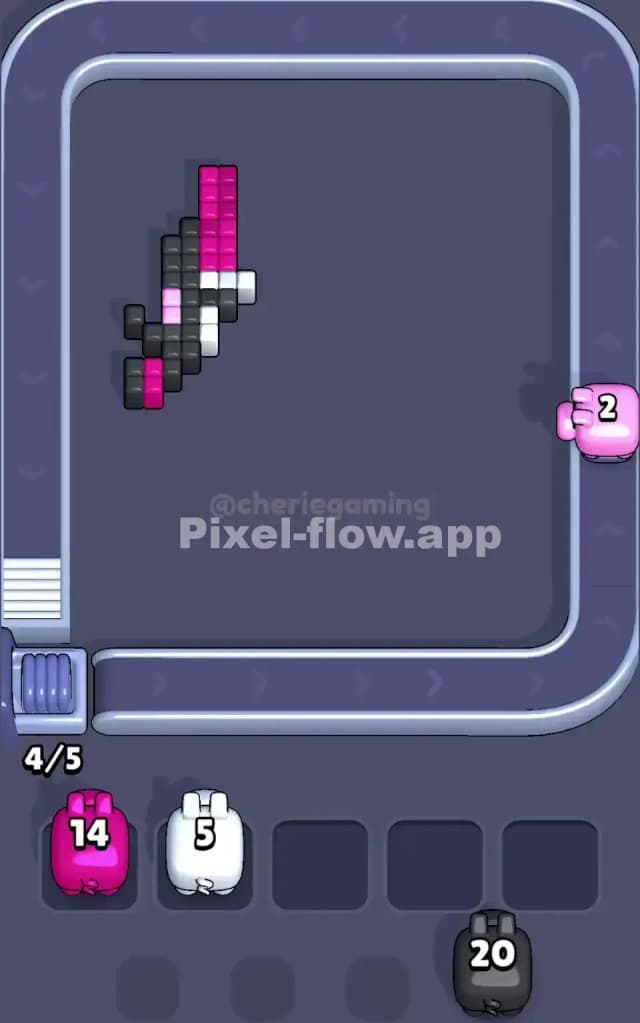
By the time Pixel Flow Level 205's endgame arrives, you should have cleared cyan, yellow, and have a partial clear of magenta and white. Your waiting slots should have at most two pigs in them, and neither should have more than 5–8 ammo remaining. Send your white pig into action targeting all accessible white cubes—this should be a quick, decisive run that spends 8–10 of its ammo and clears most or all remaining white.

Now focus on magenta as your final color. If you have a dark-colored pig (the one with 20 ammo that was visible in the queue) remaining, this is its moment to shine. Magenta cubes should be the last substantive color left on the board, and 20 ammo should be more than enough to finish them off cleanly. Send this final pig, watch it clear magenta systematically, and feel the satisfaction of Pixel Flow Level 205 complete as the last cube vanishes.

The end-game in Pixel Flow 205 should feel calm and inevitable, not desperate. If you're scrambling at the end, you made a sequencing error earlier—and that's okay for learning purposes, but the goal is to reach this point with a clear view of victory.


The Logic Behind This Pixel Flow Level 205 Plan

Why Pig Order and Ammo Count Matter More Than Instinct

Pixel Flow Level 205 is solvable because the pig order and ammo counts aren't random—they're fixed. You always know which pigs are coming and how much ammo each one carries. The strategy outlined above works because it respects that determinism. By sending cyan first, you're not guessing; you're leveraging the fact that cyan is the most abundant visible color and has the most ammo to spend. By parking yellow strategically, you're acknowledging that yellow's 20-ammo pigs won't have targets forever, so you use them while they're useful and accept one sitting idle rather than risk having two or three stuck pigs with no recourse.

The waiting slots are a resource too. Don't think of them as failures or setbacks—think of them as a buffer that lets you maintain control. Having one pig parked in a waiting slot while you assess the board is a sign of good strategy, not poor play. The danger zone is three or more pigs waiting; that's when you've lost control of Pixel Flow Level 205.

Staying Calm Under Ammo Pressure

The psychological trick to beating Pixel Flow Level 205 is learning to read ahead and count. Before sending each pig, glance at the queue and ask yourself: which pig is coming next, and will it have valid targets? If the answer is no, you might need to adjust your current pig's trajectory to expose those targets, or you might need to accept parking a pig. But make that choice consciously, not in panic.

Count ammo like currency. If a pig has 20 ammo and you see 18 matching-color cubes on the board, that pig will spend 18 and sit with 2 ammo left—plan accordingly. This mindset transforms Pixel Flow Level 205 from a frustrating puzzle into a logical sequence you can control. You're not at the mercy of the game; you're orchestrating a symphony of pigs and cubes, and every note matters.