Pixel Flow Level 206 Solution | Pixel Flow 206 Walkthrough
How to beat Pixel Flow Level 206: Video solution & walkthrough. The fastest way to pass Pixel Flow 206.
Is this the wrong level layout?🤔
Pixel Flow randomizes levels for different players. Don't worry, just upload a screenshot of your board, and our AI will find the correct video instantly.
Pixel Flow Level 206 Walkthrough
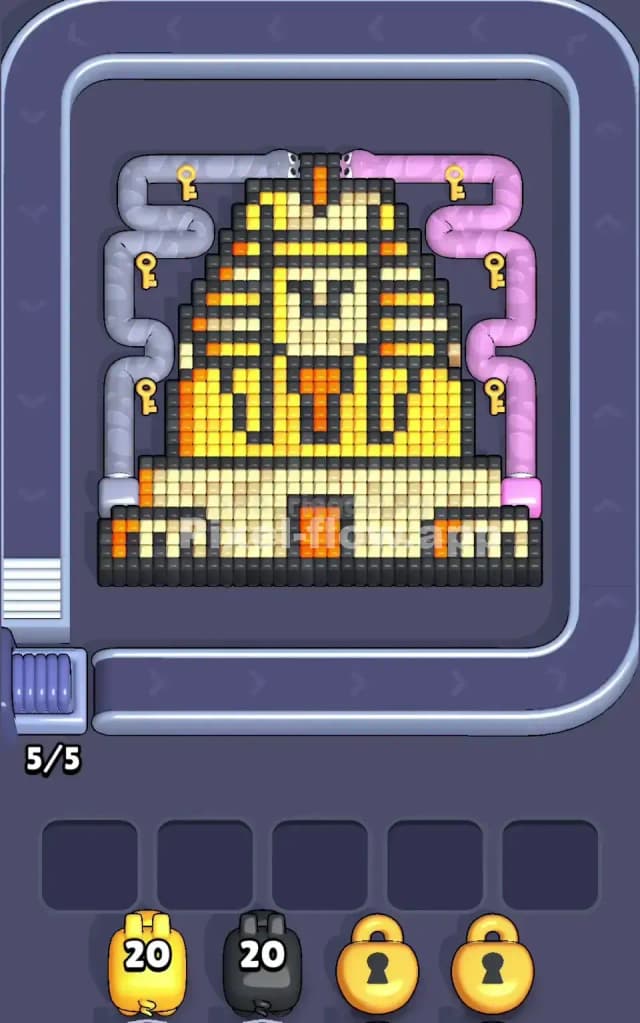
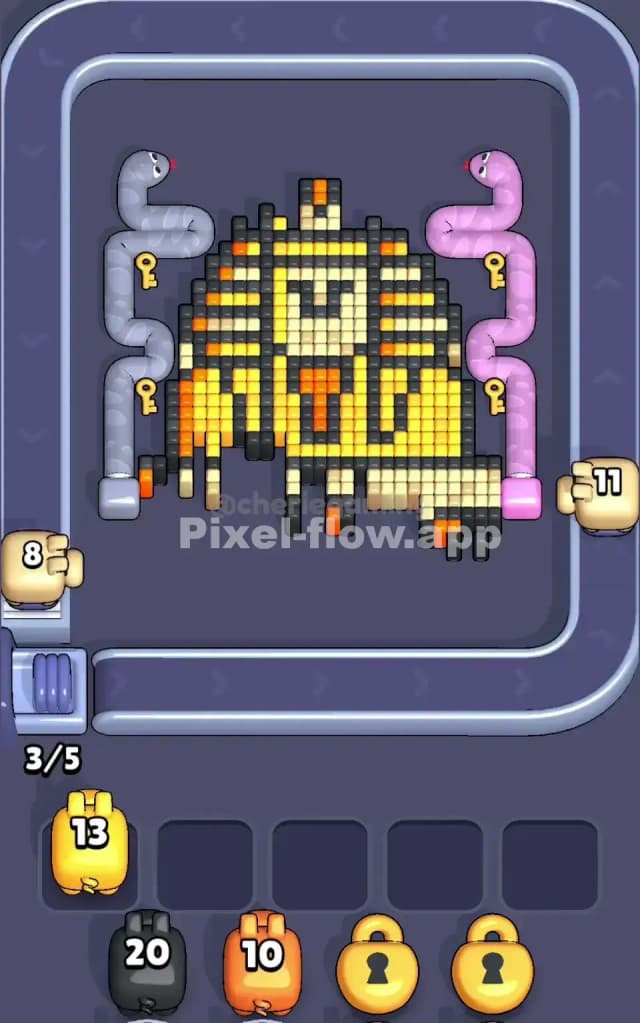
This level features a grand Egyptian Sphinx or Pharaoh statue. It sits front and center, majestic and imposing, flanked by two large, winding snakes—a grey one on the left and a pink one on the right. To beat Pixel Flow Level 206, you must dismantle the statue layer by layer while managing the annoying snakes that lock down the sides. It is a very hard level because the snakes block access to the statue’s core until you specifically target them with the correct colors, creating a bottleneck that can easily clog your waiting slots.
Pixel Flow Level 206 Overview
The artwork is a golden, desert-themed voxel statue. It has the classic nemes headdress with stripes of black and gold, a central face area made of lighter tan blocks, and a dark beard. The base of the statue is heavy, with dark grey blocks at the very bottom and lighter cream blocks just above that.
The biggest threat here isn't the statue itself; it's the "guards." Two long, winding snakes made of solid color blocks hug the sides of the Pharaoh.
- Left Snake: Grey blocks. It holds three golden keys.
- Right Snake: Pink blocks. It also holds three golden keys.
These snakes physically wall off the left and right edges of the statue. Until you clear them, you cannot hit any statue blocks that might be hiding behind their curves. The board is symmetric, but your pig queue won't be. You have five waiting slots, and with so many distinct colors (Black, Gold, Tan, Grey, Pink, Cream), those slots fill up instantly if you aren't careful.
Step by step solution walkthrough for Pixel Flow Level 206
First Color Zone to Erase in Pixel Flow Level 206
Your absolute priority is Black.
Look at the bottom of the statue. There is a massive foundation of dark grey/black blocks. This is the most accessible layer. More importantly, the headdress has prominent black stripes. By focusing on black first, you do two things:
- You clear the bottom row, which often exposes the "roots" of the other colors, allowing for better angles.
- You thin out the headdress, making the statue less dense.
I start by shaving off that bottom foundation because it’s a solid block of dark pixels that lets my black pigs fully empty their ammo without getting stuck. Once the bottom is gone, the Cream layer (the statue's chest/shoulders) becomes the new bottom edge, and it is much easier to target.
Crucial Warning: Do not pull a Pink or Grey pig into your active slot unless you are absolutely sure you can clear a significant chunk of the snakes. Ideally, ignore the snakes until you have no other moves or a matching pig appears naturally on the belt without needing to be stored.
How to pass Pixel Flow Level 206 without power ups or boosters
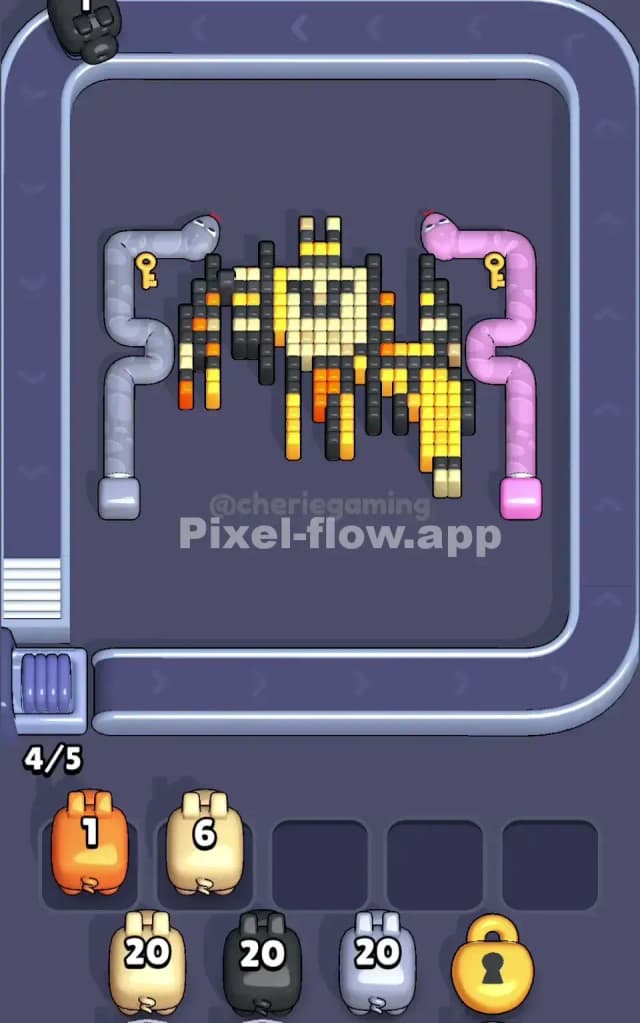
The mid-game is where Pixel Flow Level 206 gets dangerous. At this point, you've likely cleared the bottom black foundation and maybe some of the gold stripes. The statue looks half-destroyed, a floating face without a chin.
Now you must deal with the snakes. You cannot reach the deeper layers of the statue's sides until the snakes are gone.
- Wait for Grey or Pink Pigs: Do not clog your slots with Tan or Cream pigs if a snake color is coming up on the belt.
- The Snake Trap: The snakes are long. A single pig often isn't enough to kill the whole snake. If you use a Pink pig and it leaves 2-3 blocks of the pink snake behind, you have wasted a slot and failed to open the path. Only engage the snakes when you have a clear shot to remove a large section or a key.
- Gold Priority: The gold blocks are scattered everywhere—in the headdress, the beard, and the sides. Gold pigs are high value here. If you see a Gold pig, use it immediately. It will likely find targets all over the board, keeping your slots open.
If you refuse to use power-ups, you must be disciplined about the waiting slots. If you have 3 slots filled with useless colors (like Cream pigs when the Cream layer is blocked by the Pink snake), you will lose. Always ask: "Does this pig have a target right now?" If no, let it loop.
Last Details You Clean Up in Pixel Flow Level 206
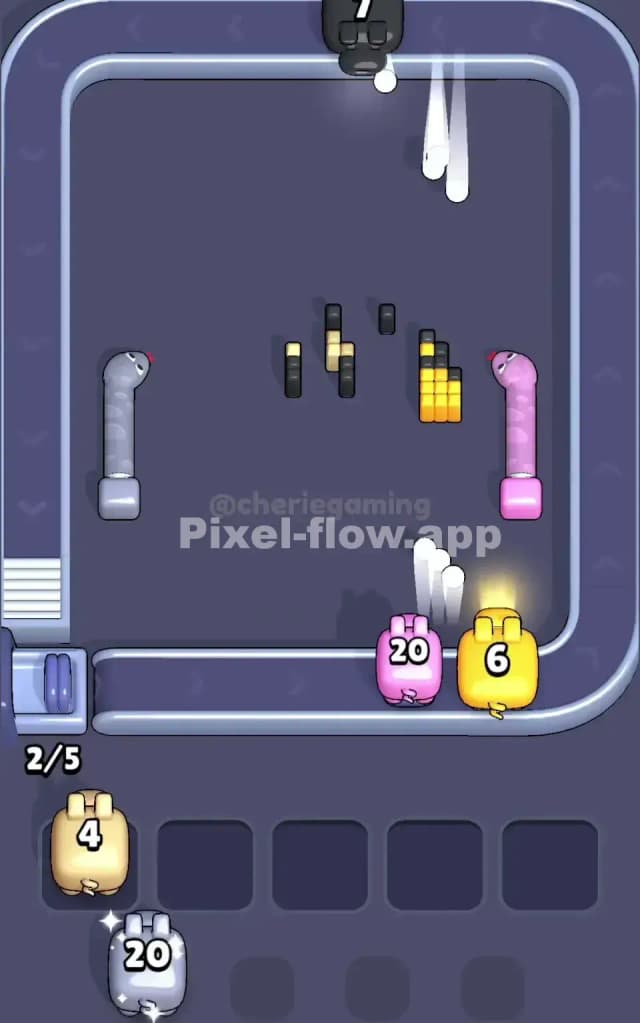
In the final phase, the majestic Pharaoh is usually just a floating nose and some scattered headdress blocks. The snakes should be dead by now.
The last tricky bits are usually hidden in the "beard" area or the very center of the face. These blocks are often Tan or Orange. Because they were in the center, they were shielded by the outer layers for the whole game. You might find yourself with a single Orange block left deep in the middle. Save a high-ammo pig of the appropriate color (usually Tan or Gold) in your last slot specifically for this cleanup. Don't waste it early on glancing shots. Aim for the center mass.