Pixel Flow Level 208 Solution Walkthrough | Pixel Flow 208
How to solve Pixel Flow level 208? Get instant solution for Pixel Flow 208 with our step by step solution & video walkthrough.


Pixel Flow Level 208 Overview
Understanding the Board Layout and Colors
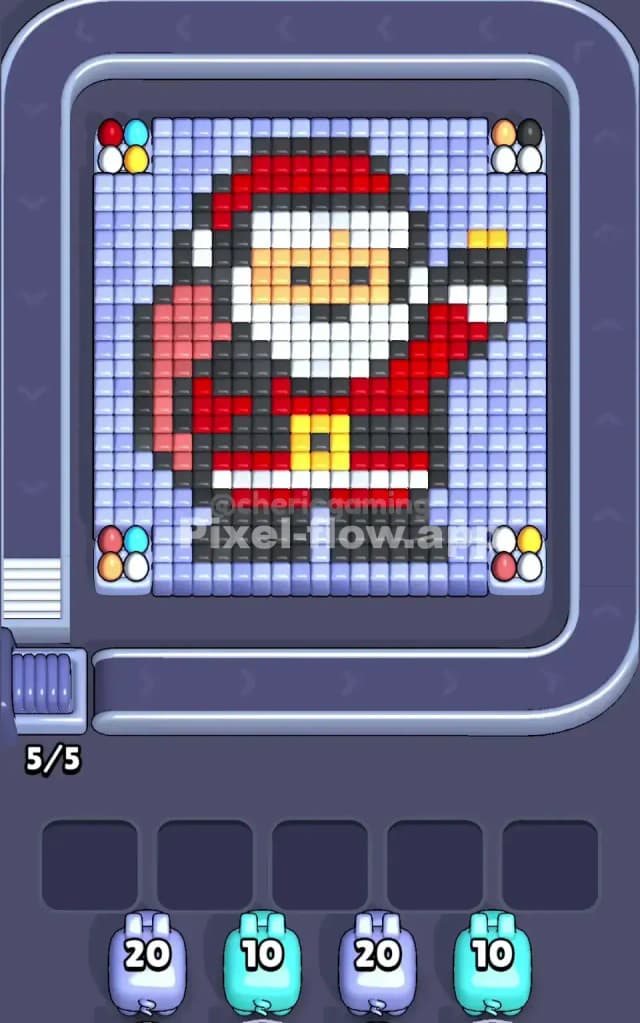
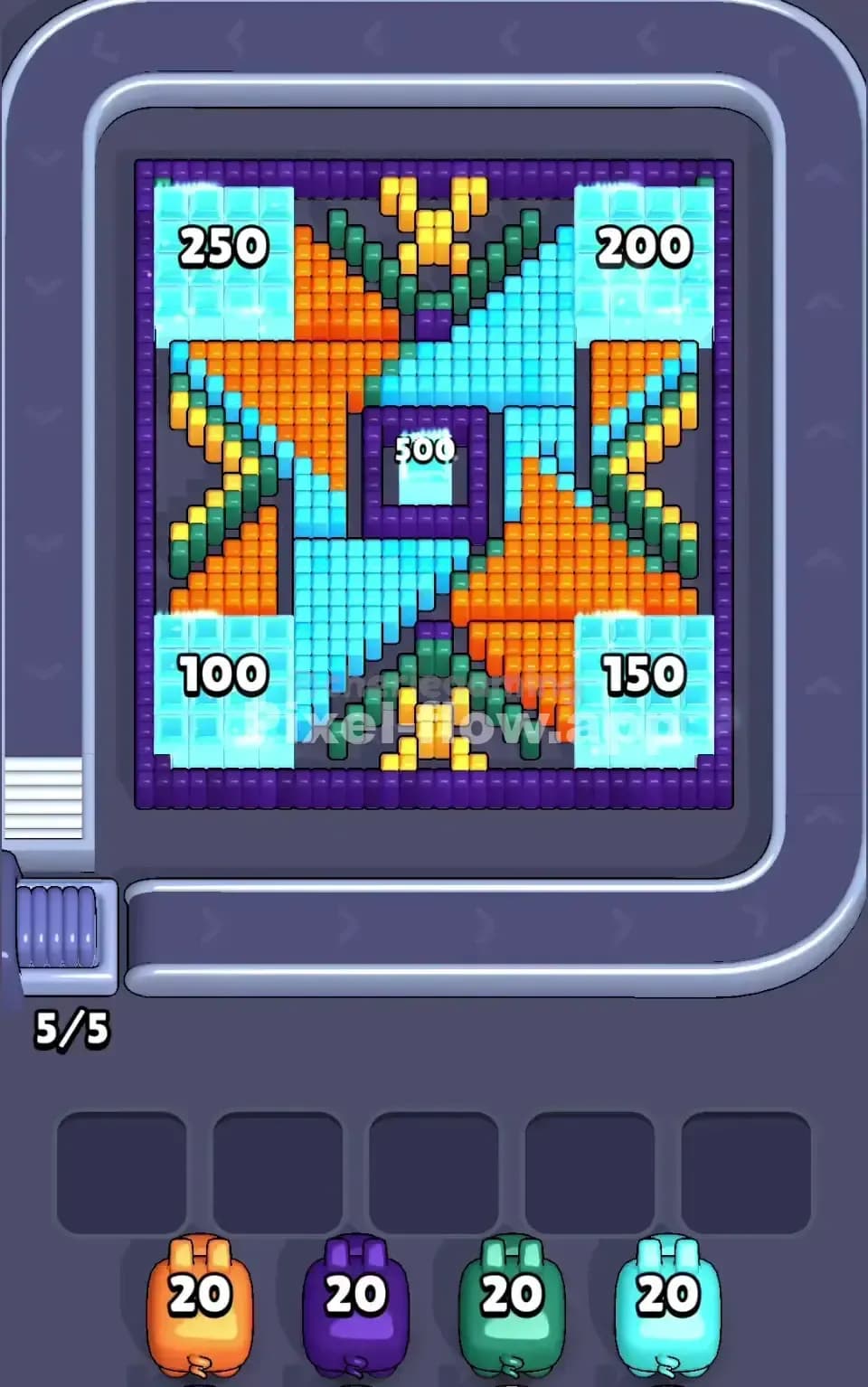
Pixel Flow Level 208 presents you with a detailed pixel art scene featuring what appears to be a character or creature with a distinctive face and body structure. The board is dominated by light blue cubes that form the background, creating a clean canvas that emphasizes the central subject. The main focal point is rendered in multiple colors: red forms the outline and facial features, white creates the face and body sections, black provides definition and shading, yellow highlights certain details (like the eyes or mouth area), and light cyan accents add depth to specific regions. There's also a layer of dark gray cubes that define borders and structure within the composition. What makes Pixel Flow Level 208 challenging isn't just the size of the puzzle—it's the careful distribution of these colors across different depths and the way they're layered beneath that dominant light blue background.
The Win Condition and Deterministic Nature
To beat Pixel Flow Level 208, you must clear every single voxel cube from the board by methodically firing pigs at matching-colored cubes until nothing remains. Your pig queue contains four pigs total: two with 20 ammo shots each (light blue) and two with 10 ammo shots each (cyan), as shown at the bottom of the screen. Each pig will automatically shoot cubes of its corresponding color, spending one ammo per destroyed cube. The level is entirely deterministic—there's no randomness in the order pigs arrive or how much ammo they carry. This means success in Pixel Flow Level 208 hinges entirely on your sequencing decisions and how well you manage the five waiting slots at the bottom of the screen.
Why Pixel Flow Level 208 Feels So Tricky
The Light Blue Bottleneck
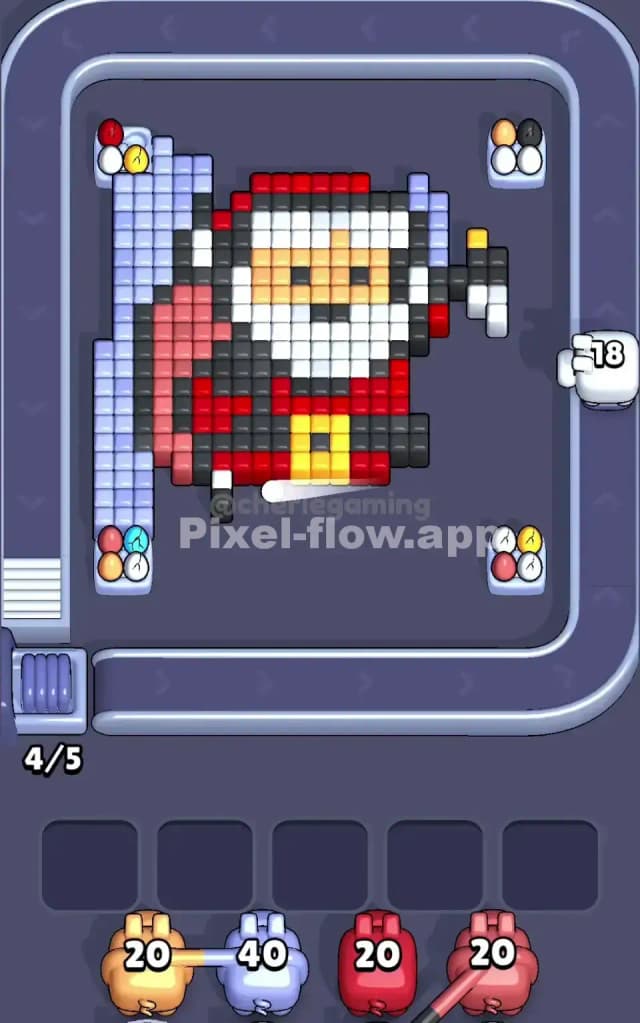
The biggest threat to your success in Pixel Flow Level 208 is the sheer volume of light blue cubes covering the background. With two pigs carrying 20 ammo each, you're looking at 40 total light blue shots available, and that's likely not enough to clear every background cube in one pass. The light blue pigs will dominate your early moves, but here's the problem: if you fire both light blue pigs consecutively without planning ahead, you'll expose layers underneath and potentially block access to other colors. More critically, if a light blue pig runs out of ammo before eliminating all visible light blue cubes, it'll drop into a waiting slot. If you're not careful and end up filling multiple waiting slots with partially spent pigs, you'll create a traffic jam that leaves you stuck with no way to progress through Pixel Flow Level 208.
Awkward Color Distribution and Hidden Layers
Pixel Flow Level 208 hides several subtle traps beneath its initial appearance. The cyan cubes (10 ammo each) are likely concentrated in specific regions—maybe defining certain edges or details of the central figure. If you fire your cyan pigs too early, before those cubes are fully exposed by the light blue removal, those pigs will jam up your waiting slots with unused ammo. Meanwhile, the red, white, yellow, and black cubes are interwoven throughout the composition. Some of these colors appear in the foreground (the character's outline and features), while others are buried deeper. You might encounter a situation where a red pig has plenty of ammo remaining, but all visible red cubes are already gone because they were covered by overlapping layers. That's when the pig drops into waiting purgatory, sitting there with unused ammo and nowhere to shoot.
The Moment It Clicked
I'll be honest—Pixel Flow Level 208 frustrated me during my first attempts because I kept reacting to what I saw rather than planning ahead. I'd fire pigs willy-nilly, expose new layers, and suddenly find myself with three jammed pigs and no valid targets. The breakthrough came when I stopped thinking "what can I shoot right now?" and started thinking "what does clearing this color reveal, and will my next pig have targets when it arrives?" Once I committed to counting ammo against visible cubes before pulling the trigger, and once I understood that sometimes you need to let a pig sit in a waiting slot temporarily to prevent bigger jams later, Pixel Flow Level 208 became manageable. The frustration turned into respect for the puzzle's elegant design.
Step-by-Step Strategy to Clear Pixel Flow Level 208
Opening: Establishing Control and Breathing Room
Your first priority in Pixel Flow Level 208 is to fire one of your 20-ammo light blue pigs and clear a substantial but controlled portion of the background. Don't dump both light blue pigs immediately—this is crucial. Fire the first light blue pig and observe which deeper-colored cubes get exposed: look for concentrations of red, white, black, yellow, or cyan. After this first pig, you should have at least three waiting slots still empty. Next, assess whether firing the cyan pig makes sense. If cyan cubes are now heavily exposed in visible regions, pull the cyan pig onto the board. If not, wait. The goal in the opening phase of Pixel Flow Level 208 is to maintain a two-slot buffer in your waiting area. This buffer gives you flexibility and prevents you from accidentally creating a deadlock where every slot is full and the next pig has nowhere to go.
Mid-Game: Sequencing Pigs and Exposing Inner Layers
As you progress through Pixel Flow Level 208, you'll enter the critical middle phase where layer management becomes everything. After your initial light blue and cyan shots, assess the board state. You should now see red cubes, white cubes, black cubes, and yellow cubes more clearly. Start targeting the colors that form the outline and highest points of the central figure—red and black typically define edges. Fire a pig that targets a prominent color, watch it remove those cubes, and immediately plan your next move before pulling the next pig. Here's the key insight: sometimes you'll have a pig with 10 or 15 ammo remaining that can't find any more targets of its color. Rather than letting it jam your buffer immediately, if your waiting slots still have room, let it sit there for a moment. Then fire a pig that targets a different color and removes blocking layers. This might expose new cubes for the "stuck" pig. The sequencing puzzle in Pixel Flow Level 208 is about creating cascading opportunities—each pig's shot should ideally clear the way for the next pig to have targets.
End-Game: The Final Push and Clean Finish
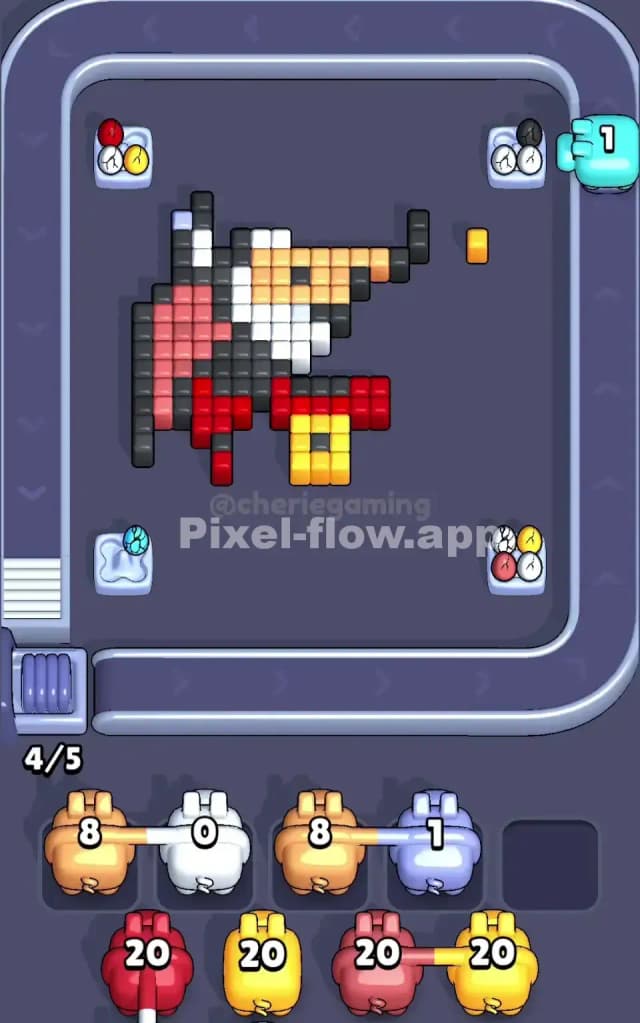
As you approach the end of Pixel Flow Level 208, you'll be dealing with the last scattered cubes and whatever pigs remain in your queue and waiting slots. At this stage, count your ammo very carefully. If you have one light blue pig left with 8 ammo, visually count exactly how many light blue cubes you see on the board. If there are fewer than eight, that pig will jam. In this case, fire other pigs first to expose or eliminate those blocking cubes, or accept that the pig will drop into a waiting slot and work around it. The final colors should clean up in a logical order: typically white (large areas) and then smaller accent colors like yellow. Your goal is to reach a state where you can fire your remaining pigs sequentially and watch each one empty its ammo with no cubes left over. If you've managed Pixel Flow Level 208 correctly, the final pig should shoot its last ammo, and the board will glow with victory. Avoid the trap of saving one pig's ammo by overfilling waiting slots—the game doesn't reward efficiency; it punishes you for getting stuck.
The Logic Behind This Pixel Flow Level 208 Plan
Why This Strategy Works
The strategy for Pixel Flow Level 208 isn't about speed or luck; it's about respecting the deterministic nature of the puzzle. Your pig queue is fixed, and your ammo is fixed. The only variable you control is when you fire each pig. By maintaining buffer space in your waiting slots, you're buying yourself the option to pause and reassess without being forced into a bad decision. By sequencing colors that expose deeper layers, you're ensuring that future pigs have targets waiting for them. By counting ammo against visible cubes before firing, you're preventing the worst outcome: a jammed pig with full ammo and nothing to shoot. Pixel Flow Level 208 rewards planning and punishes reactivity.
Staying Calm and Thinking Ahead
The mental game in Pixel Flow Level 208 is staying calm when the board looks chaotic. Instead of panicking, develop the habit of pausing after each pig fires and asking yourself three questions: "How many ammo shots does my next pig have? How many visible cubes of that color exist on the board? What happens if I fire now versus waiting one more move?" This two- or three-pig look-ahead transforms Pixel Flow Level 208 from a frustrating guessing game into a solvable logic puzzle. You'll notice patterns—maybe light blue always pairs well with red removal, or maybe cyan works best after most background is clear. Watch these patterns emerge, trust the sequence, and you'll crack Pixel Flow Level 208 without filling your waiting slots with regret.