Pixel Flow Level 213 Solution Walkthrough | Pixel Flow 213
How to solve Pixel Flow level 213? Get instant solution for Pixel Flow 213 with our step by step solution & video walkthrough.


Pixel Flow Level 213 Overview
The Starting Board and Color Layers
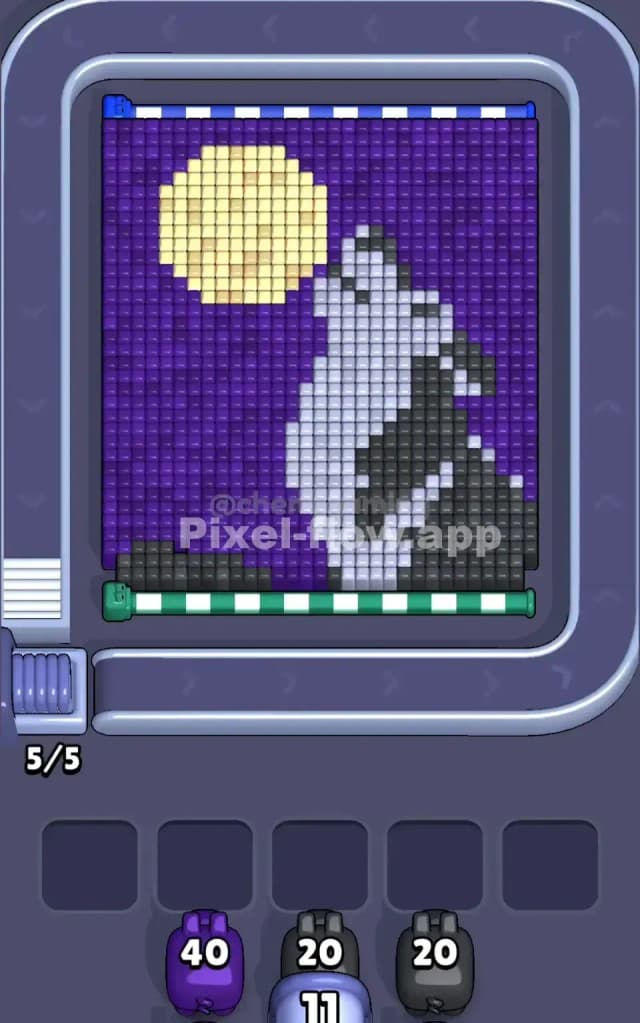
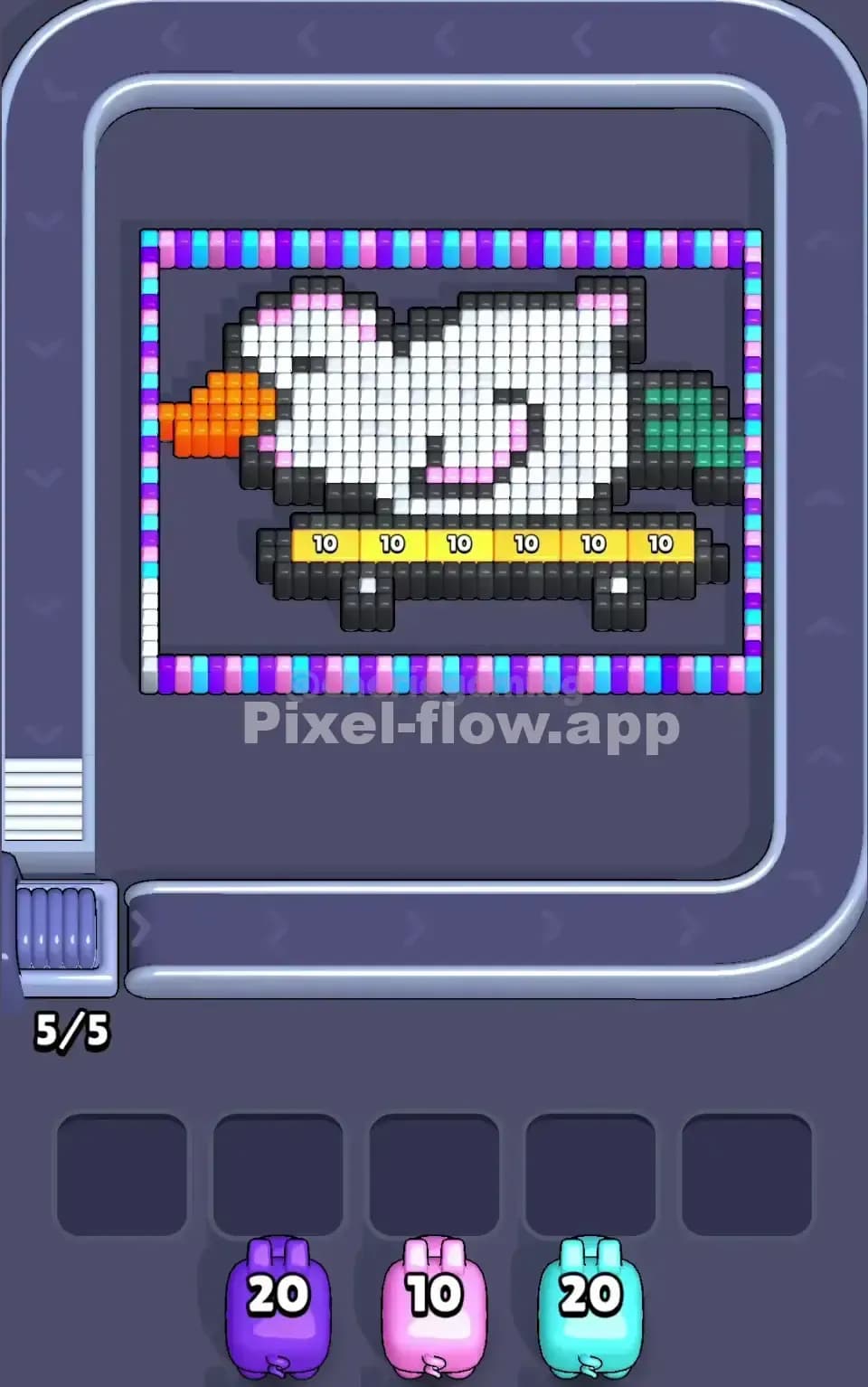
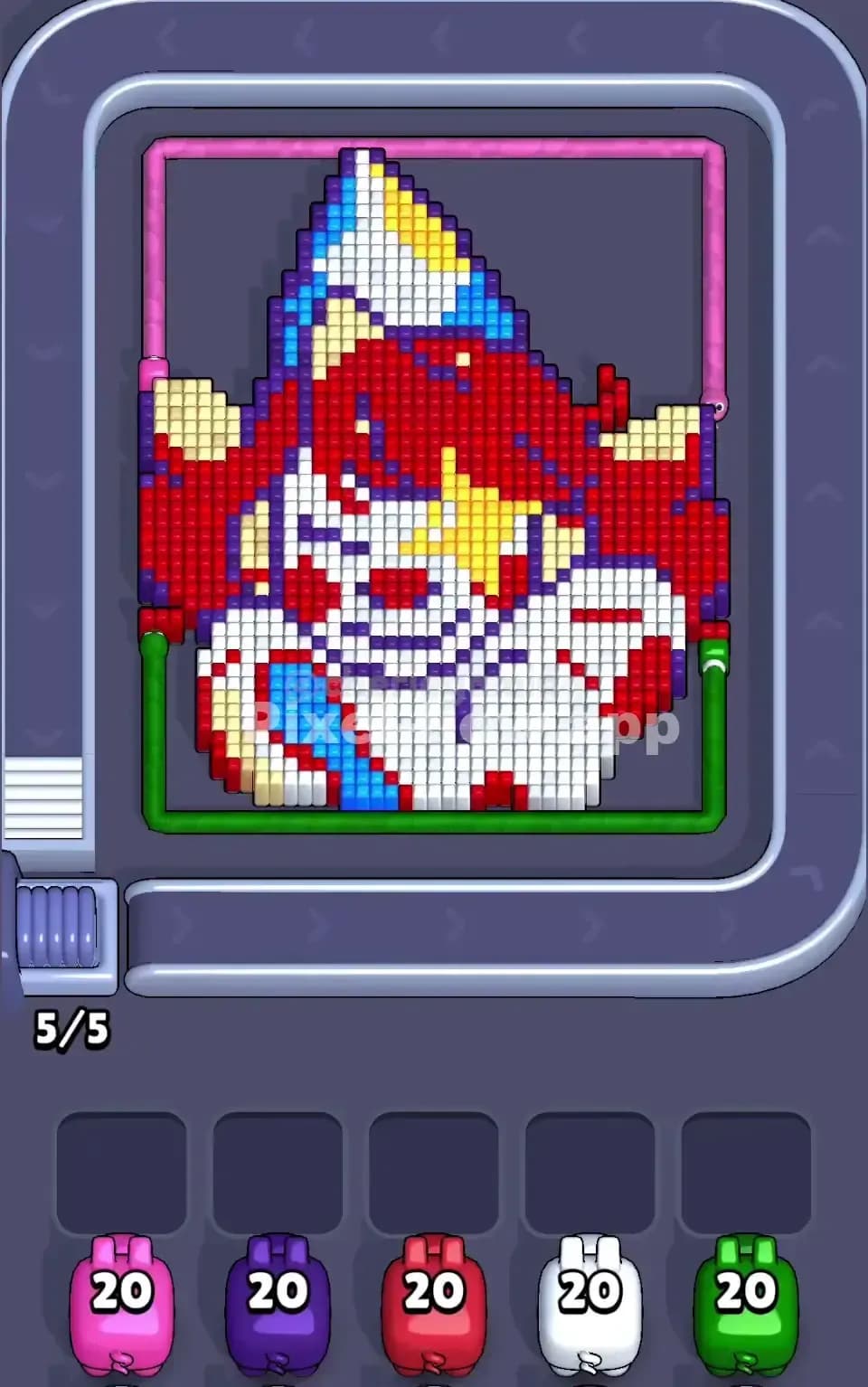
Pixel Flow Level 213 presents you with a striking pixel-art scene: a bright yellow sun dominates the upper-left quadrant, while below it sits a figure rendered in white, light gray, and dark gray tones against a deep purple background. The board is densely packed with cubes across multiple layers, and you're dealing with a core set of five color groups that need systematic clearing. The purple backdrop is the most abundant color, forming the bulk of the canvas, but the real puzzle lies in how the yellow sun, white/gray figure, and darker accents are interlocked. This layered structure means you can't simply blast away one color; you must expose deeper shades by removing their surface-level neighbors in the correct sequence.
Win Condition and Deterministic Mechanics
Your goal in Pixel Flow Level 213 is straightforward: clear every single voxel cube from the board. What makes this achievable—and what makes it tricky—is that pig order and ammo counts are completely fixed and deterministic. You have no control over which pig arrives next or how many shots it carries, but you have full control over when you deploy it and where its cubes land. The blue pig at the top carries 12 shots, the purple pig below it has 40 ammo, and the two gray pigs have 20 and 11 shots respectively. The green pig at the bottom adds another dimension with its own ammo pool. Understanding these numbers upfront is essential; every shot must count, and wasting ammo on the wrong target at the wrong time can lock you into failure.
Why Pixel Flow Level 213 Feels So Tricky
The Purple Bottleneck
The biggest headache in Pixel Flow Level 213 is the sheer abundance of purple cubes. Purple forms the deep background and surrounds almost everything else on the board. If you're not careful, your purple pig will run out of targets while still holding ammo, forcing it into a waiting slot with nowhere to go. Once that happens, your buffer starts filling, and if you jam all five waiting slots with "stuck" pigs—each one desperate for targets it can't find—the level ends in failure. The temptation is to clear purple early and get it over with, but doing so prematurely can expose deeper colors that your remaining pigs aren't ready to handle.
The Hidden Gray Patches
Gray is deceptively tricky in Pixel Flow Level 213. There are two gray pigs with 20 and 11 shots respectively, but gray cubes are scattered across the figure's body in clusters that aren't always immediately obvious. Some gray sits behind white, some sits behind darker shades, and some is tucked into corners where you'd least expect it. If you don't account for all the gray hiding in the mid-layers, one of your gray pigs will fire into empty space and drop into a waiting slot with ammo to spare. I've watched players clear what they thought was all the visible gray, only to realize too late that a hidden cluster in the figure's legs was still waiting underneath the white layer.
The White and Yellow Precision Problem
Yellow and white, though fewer in number than purple, demand precision timing in Pixel Flow Level 213. The yellow sun is a chunky block of 40+ cubes, and while the blue pig at the top seems designed to target it, you need to expose the white figure first in many cases. White cubes form the figure's outline and clothing, and they're sandwiched between yellow above and gray below. Fire at white too early, and you might leave gray stranded. Fire too late, and you'll exhaust other pigs and run out of waiting-slot space. The interplay between these three colors—yellow, white, and gray—is where Pixel Flow Level 213 really tests your foresight.
When It Clicked For Me
Honestly, Pixel Flow Level 213 frustrated me on my first five attempts. I kept thinking "just clear whatever's visible," but that reactive mindset led to stuck pigs and failed boards. The turning point came when I stopped staring at the pretty pixel art and started counting: counting ammo, counting visible targets, counting empty waiting slots. Once I realized that every pig's ammo total had a reason—it was meant to match the cubes available if you sequenced correctly—the level went from chaotic to elegant. It's that satisfying click where you see the puzzle designer's intent.
Step-by-Step Strategy to Clear Pixel Flow Level 213
Opening: Expose the Mid-Layers Without Jamming the Buffer
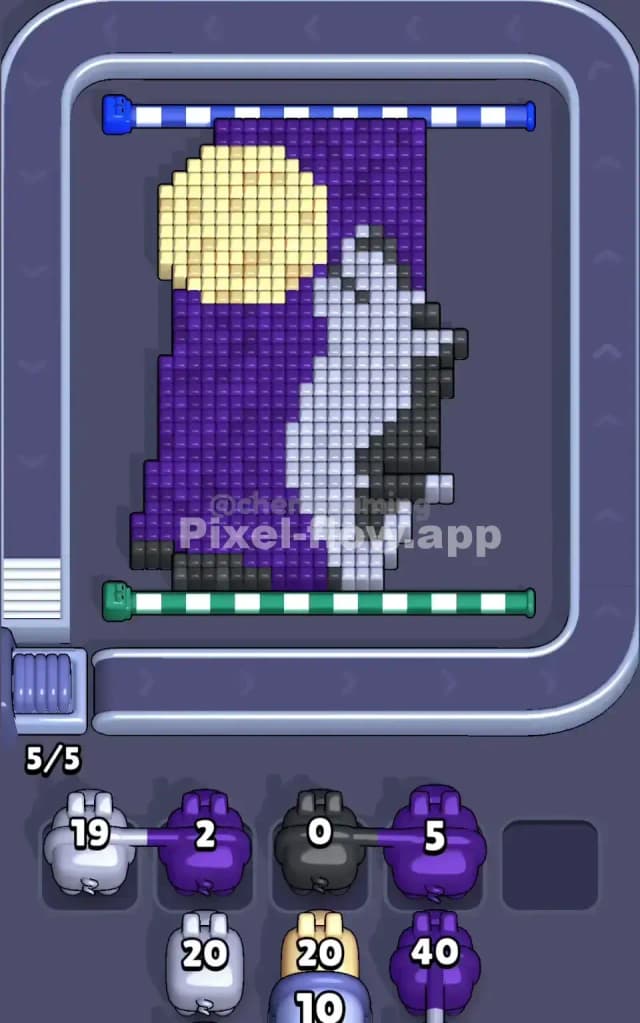
Start Pixel Flow Level 213 by deploying your blue pig first. The blue pig sits at the top with 12 ammo and can target the yellow sun immediately. Don't hesitate here; yellow is mostly accessible, and clearing it early opens up the white figure beneath without any real risk. Blue's 12 shots should cleanly erase the bulk of the yellow layer, leaving you with two free waiting slots and the whole board opened up for the next phase. This move is low-stakes and high-reward.
Next, send in your purple pig (40 ammo). Yes, purple is abundant, and yes, you'll want to be careful not to fire it all at once. Instead, target only the purple cubes that are actively blocking white or gray. Think of purple as a selective tool in Pixel Flow Level 213, not a wrecking ball. Your goal is to create gaps in the purple background so white becomes fully visible. The purple pig might drop into a waiting slot with ammo remaining, and that's fine—you'll circle back to it later once white is gone.
After purple, your blue pig (from the top conveyor) comes around again if you managed to spend all its ammo the first time. If blue is back and ready, use it to clean up any remaining yellow scraps. This keeps your waiting slots as empty as possible heading into the trickier mid-game.
Mid-Game: Sequence Gray and White with Surgical Precision
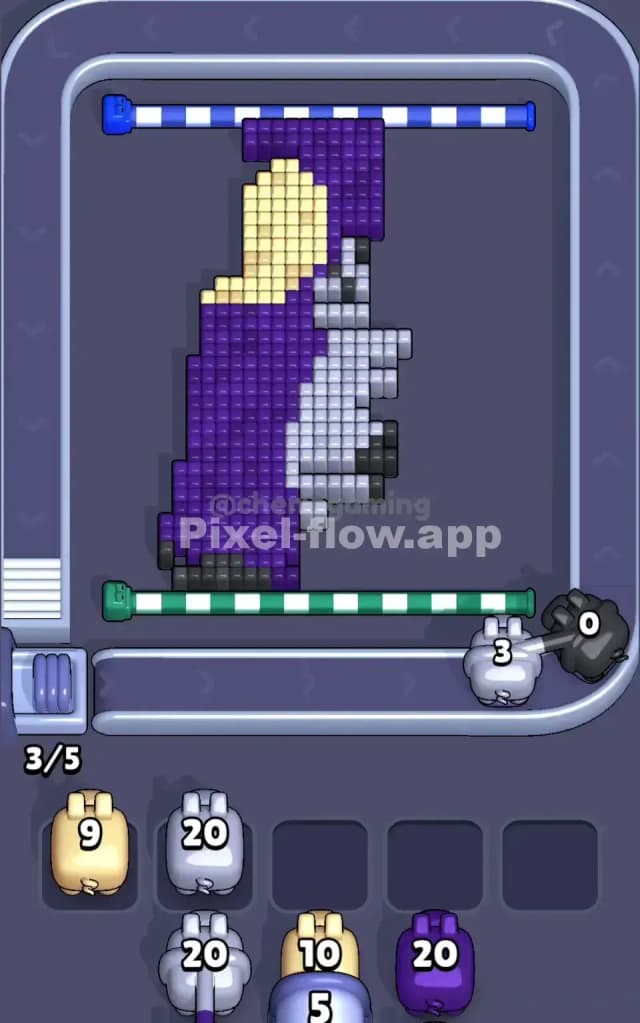
This is where Pixel Flow Level 213 demands your full attention. Once yellow is mostly gone and purple has been selectively reduced, you'll have white and gray as your primary targets. Send in your first gray pig (20 ammo) and task it with the most visible gray patches—typically the figure's torso and upper body. Don't try to hunt gray cubes scattered across the entire board; focus on contiguous blocks that are fully exposed. This prevents your gray pig from "wasting" shots looking for buried targets.
After the first gray pig, loop back to your purple pig if it's still in a waiting slot. Feed it more purple targets to avoid it becoming permanently stuck. Pixel Flow Level 213's waiting slots are your pacing mechanism; keep them turning over. If you see three slots filled, immediately place your next pig to target something and free up space.
Deploy your second gray pig (11 ammo) after the first one has done some work. By this stage, white should be partially visible, and your first gray pig will have either finished or parked itself in a waiting slot. The second gray pig's 11 shots should be enough to clear any remaining gray, especially the trickier clusters hidden in the figure's lower half. Watch for gray cubes tucked behind or adjacent to white; these are easy to miss and often the reason second gray pigs fail.
End-Game: Close the Loop Cleanly
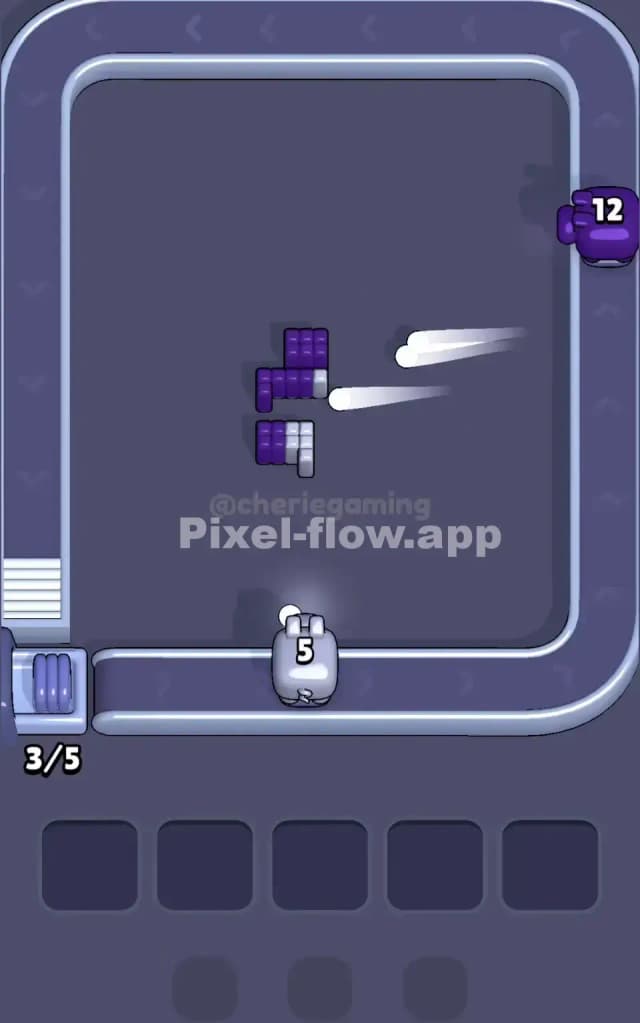
By the end-game phase of Pixel Flow Level 213, you should have white, any lingering purple, and possibly a stray gray or two left on the board. Your purple pig should have cycled multiple times by now, and its remaining ammo should align with the remaining purple cubes. Deploy it confidently to finish off the purple background.
White is your final target in Pixel Flow Level 213. Once purple is cleared, white becomes your sole focus. If you've managed your waiting slots well, you'll have fresh pigs arriving that can target white without interference. Fire methodically at white, clearing the figure's outline layer by layer. The final few white cubes often sit in awkward positions, but as long as you haven't jammed your waiting slots, you'll have the firepower to finish them.
The last step is ensuring all waiting slots are empty and all ammo is spent simultaneously. If you've followed this sequence, you'll place your final shot, watch the last cube disappear, and see that satisfying victory screen. Pixel Flow Level 213 clears when all cubes are gone and no pig is left with unspent ammo.
The Logic Behind This Pixel Flow Level 213 Plan
Exploiting Fixed Ammo and Pig Order
The genius of Pixel Flow Level 213 lies in its deterministic design. Every pig arrives in a fixed sequence with a fixed ammo count, and the board's cube distribution is also fixed. This means the level isn't a puzzle of luck; it's a puzzle of matching. Your purple pig's 40 ammo doesn't exist by accident—there are approximately 40 purple cubes on the board, assuming you don't block access to some. Your gray pigs' combined ammo (20 + 11) matches the gray cube count. When you understand this, you stop reacting and start orchestrating. You're not randomly firing; you're conducting a symphony where each pig plays its predetermined part at the right moment.
Staying Calm and Planning Ahead
The pressure in Pixel Flow Level 213 comes from waiting-slot scarcity. With only five slots, you can have at most five pigs stuck before the level fails. This is where staying calm becomes your superpower. Before each move, ask yourself: "Which pig is coming next? How many targets does it have? Do I have room in my waiting slots?" Count ammo mentally as you play. If your purple pig is about to arrive and you've only cleared half the purple layer, plan ahead to use other pigs first, create more targets, and then deploy purple when it'll be most efficient.
Looking two or three pigs ahead in Pixel Flow Level 213 transforms the level from stressful to manageable. You're not just reacting to what's on screen; you're anticipating the queue. This foresight prevents the pile-up that kills most attempts. When you place a pig with a full awareness of the next two arrivals, you're playing Pixel Flow Level 213 at mastery level.