Pixel Flow Level 221 Solution Walkthrough | Pixel Flow 221

How to solve Pixel Flow level 221? Get instant solution for Pixel Flow 221 with our step by step solution & video walkthrough.

Share Pixel Flow Level 221 Guide:
Pixel Flow Level 221 Gameplay
Pixel Flow Level 221 Solution 1
Pixel Flow Level 221 Solution 2
Pixel Flow Level 221 Solution 3

Pixel Flow Level 221 Overview

The Board Layout and Dominant Colors

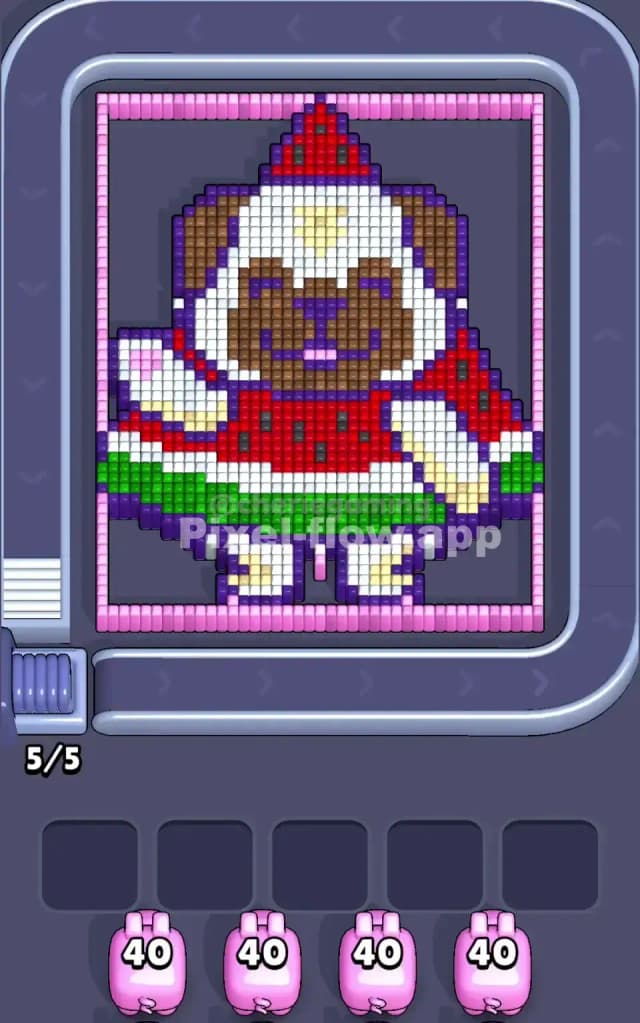
Pixel Flow Level 221 presents a charming character portrait built entirely from voxel cubes—think of it as a detailed pixel-art face surrounded by a thick border of bright pink. The character's head dominates the center, featuring white face cubes, a brown beard section, red accents in the hair and details, yellow highlights, green patches (likely clothing), and a notable purple outline weaving throughout the entire composition. The pink border creates a frame around the whole puzzle and serves as both a visual anchor and a significant color sink that you'll need to manage carefully. What makes this level particularly engaging is how these colors layer together—you're not just staring at a flat image, but rather a multi-depth puzzle where exposing inner cubes requires precise sequencing of which pig you deploy next.

The Win Condition and Deterministic Nature

Your goal in Pixel Flow Level 221 is straightforward: eliminate every single voxel cube on the board by sending the right colored pigs down the conveyor belt at the right time. You've got four pink pigs in your queue, each with 40 ammo shots, meaning 160 total pink cubes to destroy. What's crucial to understand is that every pig's ammo count is fixed, and their order never changes—there's no randomness here. This deterministic nature is actually your secret weapon: once you understand the board layout and anticipate which colors will be available as you progress, you can plan your moves several pigs ahead, turning Pixel Flow Level 221 from a chaotic puzzle into a satisfying logic game.


Why Pixel Flow Level 221 Feels So Tricky

The Pink Border Bottleneck

Here's where Pixel Flow Level 221 throws most players for a loop: that gorgeous pink border surrounding the entire composition isn't just decoration—it's a massive color sink that demands careful management. The pink pigs have 40 ammo each, which sounds like plenty until you realize you're facing roughly 80+ pink cubes when you account for the frame and any pink details within the main image. The problem isn't that pink is too hard to clear; it's that if you're careless with your first two pink pigs, you might lock yourself into a situation where you've got two more pink pigs in the queue, neither of which will have enough targets to spend their full ammo. When that happens, they'll drop into your waiting slots, and if all five slots fill up with stuck pigs, you'll fail the level instantly. The bottleneck forces you to think strategically about when to deploy pink pigs rather than just throwing them at the board whenever you like.

Awkward Color Pockets and Hidden Layers

Pixel Flow Level 221 has some genuinely sneaky color distribution that catches players off guard. The brown beard section contains a substantial number of cubes, but they're clustered in one area rather than spread across the board, meaning you can't whittle them away gradually—you'll either need to commit a whole pig to brown all at once or risk leaving orphaned cubes that no pig can reach. Similarly, the red accents in the hair and clothing details are scattered in a way that makes it hard to predict exactly how many red cubes remain after you've cleared the obvious patches. The yellow highlights hidden within the white face sections are particularly deceptive; you'll think you're done with yellow only to discover another handful tucked behind layers you haven't exposed yet. These pockets threaten to leave you with pigs that have ammo remaining but no valid targets of their color, which forces them into the waiting slots and tightens your buffer uncomfortably.

The Moment Everything Clicked for Me

I'll be honest—my first five attempts at Pixel Flow Level 221 felt absolutely maddening. I'd get three-quarters of the way through, feeling confident, only to suddenly have two stuck pigs with 15 ammo each and absolutely nothing to shoot. That's when I realized I wasn't reading the board strategically; I was just reacting to whatever pig came next. Once I sat down and actually counted the visible cubes of each color before I made a single move, everything shifted. I saw that pink was going to be a long game, that I needed to intersperse pink deployments with other colors to expose the deeper layers, and that I could actually use a half-spent pig in the waiting slot as a temporary buffer if I planned the next sequence carefully. Pixel Flow Level 221 stopped feeling frustrating and started feeling like a satisfying puzzle I could actually control.


Step-by-Step Strategy to Clear Pixel Flow Level 221

Opening: Establishing a Safe Rhythm

Don't lead with pink on Pixel Flow Level 221—I know that might sound counterintuitive, but here's why. Your first move should target either red or brown, whichever color cluster looks smaller to you on the board. The reason is simple: you want to expose some of the inner layers before you commit your pink pigs to the border. If you deploy a pink pig first, you'll burn through a huge chunk of its ammo on the frame, and you won't yet know exactly how many pink cubes exist deeper in the image. Instead, take your time with the secondary colors to reveal the true depth of the puzzle. After clearing an initial patch of red or brown—roughly 25 to 30 cubes—you'll have freed up some waiting slots and gotten a clearer picture of what the board actually contains. Now you can deploy your first pink pig with confidence, knowing you're not walking into an ammo trap.

Mid-Game: Sequencing and Exposing Hidden Layers

This is where Pixel Flow Level 221 becomes a genuine logic puzzle. As you move through your second and third pig deployments, you want to think about color exposure rather than just color elimination. For example, once you've cleared the outer red accents, ask yourself: what colors are now newly visible? Will deploying a white pig now reveal more brown, more purple, or more of the supporting colors? In Pixel Flow Level 221, the purple outline is deceptive—it doesn't look like there's that much purple until you start clearing around it, and suddenly you realize it threads through the entire composition. After your first pink deployment, you should have at least 2–3 waiting slots still available. Use your second pig (let's say it's pink again) to clear more of the border, but don't empty it completely. Leave some pink cubes visible so that if a later pig gets stuck, it has somewhere to land. Your third pig should target a color that's now exposed—brown, perhaps, or a secondary color that's now clearly accessible. The goal is to keep your waiting slots from filling up while steadily working toward a complete clear.

End-Game: The Clean Exit

The final phase of Pixel Flow Level 221 is all about emptying your waiting slots and clearing the last few scattered cubes without jamming yourself. By the time you've deployed your third pig in Pixel Flow Level 221, you should be able to see which colors remain in meaningful quantities and which are nearly exhausted. If you've got one or two pigs stuck in the waiting slots with a few ammo remaining, don't panic—this is actually a safe position if you plan the next pig carefully. Deploy your final pink pig (or whatever color has the most remaining cubes) and watch it systematically clear everything it targets. As it shoots, your stuck pigs in the waiting slots will have their ammo exhausted by the cubes that fall, freeing up those slots naturally. The last few cubes should fall in rapid succession, and if you've counted correctly, you'll hit zero at exactly the moment your last pig empties its final ammo. That's the satisfying rhythm of a cleanly executed Pixel Flow Level 221.


The Logic Behind This Pixel Flow Level 221 Plan

Why This Strategy Exploits the Game's Mechanics

Pixel Flow Level 221 is designed around the constraint that pigs shoot their own color and automatically drop if they're stuck. The strategy I've outlined works because it respects those constraints rather than fighting them. By delaying your pink deployment and starting with secondary colors, you're using the game's natural layer-exposure mechanic to your advantage—you're letting the board tell you its structure instead of guessing. By keeping waiting slots free early on, you're giving yourself the flexibility to respond to unexpected color pockets without instant failure. And by planning the final sequence around color exhaustion rates, you're using your knowledge of deterministic ammo counts to engineer a clean ending. Pixel Flow Level 221 rewards this kind of forward thinking, and punishes players who just react moment-to-moment.

Staying Calm and Counting Ahead

The real key to mastering Pixel Flow Level 221 is learning to pause between moves and actually think. Before you deploy a pig, spend five seconds scanning the board and asking: "How many cubes of this color do I actually see? Are any hidden behind layers I'll expose next? What color comes after this in my queue, and will it have targets?" This mindfulness transforms Pixel Flow Level 221 from a stressful time-pressure puzzle into a satisfying logic game where every move feels intentional. You don't need to be perfect—you just need to be patient and observant. Count your ammo, count your visible targets, and trust that if you've managed your waiting slots well, you'll have enough flexibility to handle the last few surprises. Pixel Flow Level 221 isn't about reflexes; it's about strategy, and that's what makes it genuinely fun once you get the hang of it.