Pixel Flow Level 241 Solution | Pixel Flow 241 Walkthrough
How to beat Pixel Flow Level 241: Video solution & walkthrough. The fastest way to pass Pixel Flow 241.
Is this the wrong level layout?🤔
Pixel Flow randomizes levels for different players. Don't worry, just upload a screenshot of your board, and our AI will find the correct video instantly.
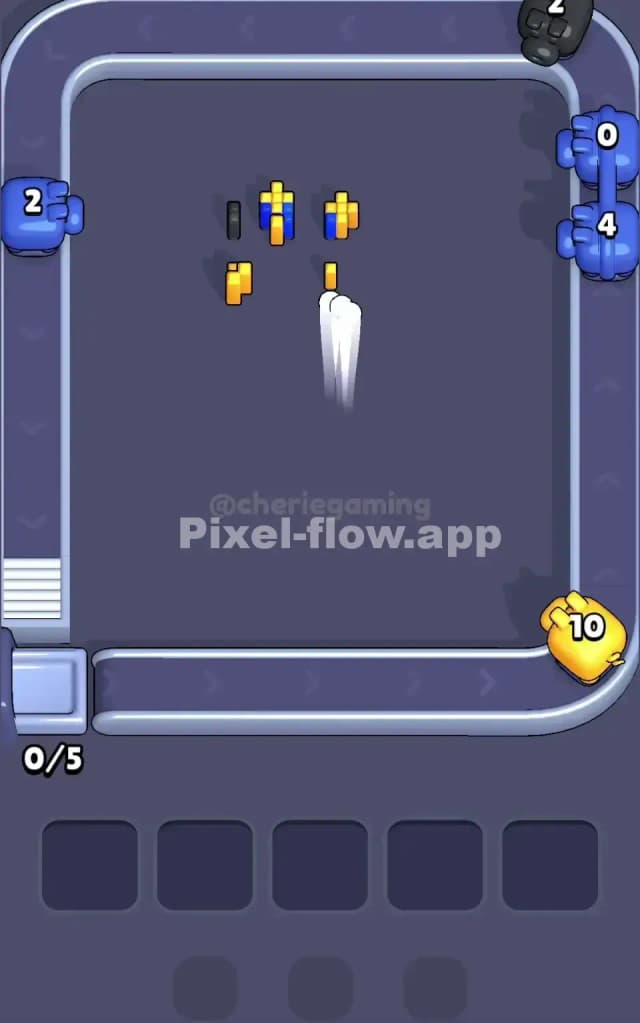
Pixel Flow Level 241 Walkthrough
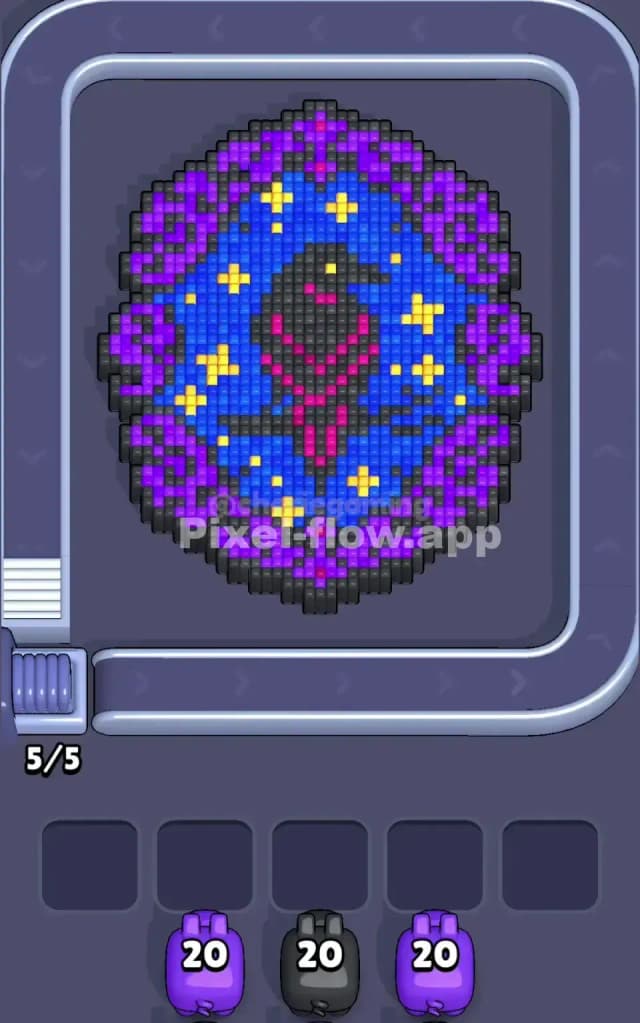
This level features a striking, almost occult design: a dark raven or crow centered in a starry night sky, framed by an ornate purple border. The central bird is primarily black with hot pink highlights, while the background is deep blue scattered with yellow stars. To beat Pixel Flow Level 241, you need to peel away the outer layers—specifically the purple frame and the blue sky—to access the dense black core of the bird. Because the colors are so distinct but tightly interwoven in the middle, it is easy to jam your slots. I would judge this as a very hard level due to the specific layering of the black bird under the blue sky.
Pixel Flow Level 241 Overview
Imagine looking at a stained-glass window at midnight. That's the vibe here. The centerpiece is a moody, dark grey bird, possibly a raven, sitting vertically in the middle. It isn't just a blob; it has a distinct shape with pink accents running down its chest like a mystical rune.
Surrounding this bird is a heavy field of Deep Blue representing the night sky. This blue isn't empty—it is studded with bright Yellow crosses that look like twinkling stars. Finally, the whole scene is encased in a thick, decorative border made of Purple and dark grey blocks.
The asymmetry here is subtle but dangerous. The bird is vertical, meaning the black blocks are stacked high in the middle columns. However, the blue sky spreads wide to the left and right. If you focus too much on the center bird early on, you will ignore the massive amount of blue on the sides, which often blocks the conveyor belt angles you need later. The purple border is the outermost shell, wrapping around everything else.
Step by step solution walkthrough for Pixel Flow Level 241
First Color Zone to Erase in Pixel Flow Level 241
The Purple Border.
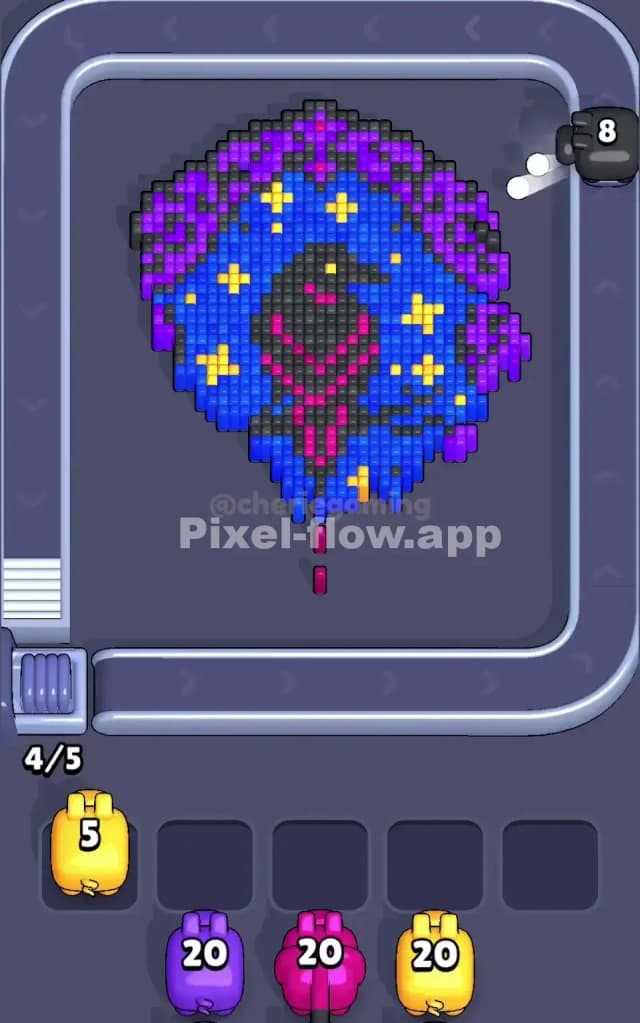
You have no choice here, but you need to be smart about it. The purple blocks form the protective crust of the entire image. Narratively, you are "breaking the frame" to get to the picture. Logically, the purple pixels are the most accessible targets for your pigs because they are on the extreme edges (top, bottom, left, right).
Start by clearing the top and bottom arches of the purple frame. This exposes the Deep Blue sky underneath. Do not try to snipe the yellow stars yet. The yellow stars are embedded in the blue; if you send a yellow pig now, it will likely have no clear shots and will just clog up your waiting slots. Clear the purple frame until the blue sky is the dominant outer layer.
How to pass Pixel Flow Level 241 without power ups or boosters
Once the purple frame is mostly gone, the board usually looks like a blue rectangle with a black smudge in the middle. This is the danger zone. You will see a lot of Blue, Yellow, and Black pigs coming down the belt.
- Prioritize Blue: The blue sky is massive. It covers the bird and holds the yellow stars in place. You must aggressively use Blue pigs to "shave" the sky.
- The Yellow Trap: You will be tempted to use Yellow pigs to hit the stars. Be careful. The stars are often single blocks or small groups surrounded by blue. Only deploy a Yellow pig if you clearly see a yellow "plus sign" exposed on the surface. If the star is buried behind blue, the yellow pig will drop into your slot and sit there, useless.
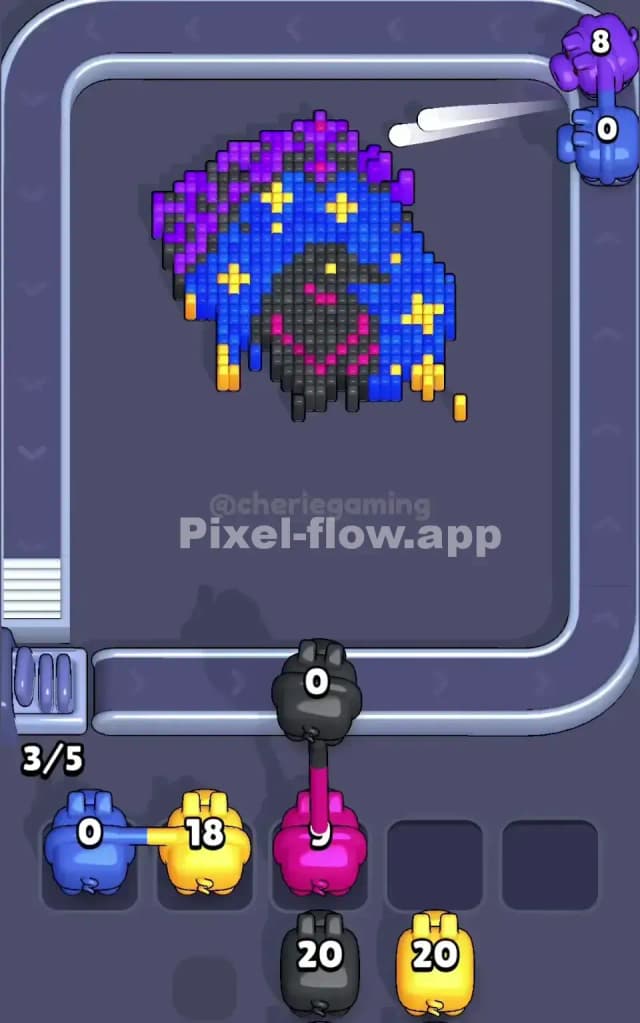
- The Black Bird Core: As you strip away the blue, the black bird becomes exposed. The black layer is very thick/deep. Do not fear the Black pigs. Unlike the yellow ones, the black target area is huge and central. If you have a Black pig and the bird is even partially visible, send it. It will likely find a target.
- Managing the Pink: The pink accents on the bird are the trickiest. They are tiny and deep inside the black mass. Treat Pink pigs like hazardous waste—only deploy them if you are absolutely sure the black covering them is gone. Otherwise, let them pass or wait until you've cleared more black.
Last Details You Clean Up in Pixel Flow Level 241
In the final phase, the majestic bird is usually just a few scattered columns of pixels. The most common leftovers in Pixel Flow 241 are:
- Hidden Yellows: Sometimes a single yellow star block hides behind the bird's wing or near the bottom corner. Check the sides.
- The Pink Spine: The very last thing to go is often the pink strip running down the bird's chest. Because it was the deepest layer, it remains until the end. Ensure you keep one slot open for that final Pink pig, or you’ll fail with only 3 blocks left on the screen.
Clear the blue sky, expose the black bird, and save the pink details for the victory lap.