Pixel Flow Level 244 Solution | Pixel Flow 244 Walkthrough
How to beat Pixel Flow Level 244: Video solution & walkthrough. The fastest way to pass Pixel Flow 244.
Is this the wrong level layout?🤔
Pixel Flow randomizes levels for different players. Don't worry, just upload a screenshot of your board, and our AI will find the correct video instantly.
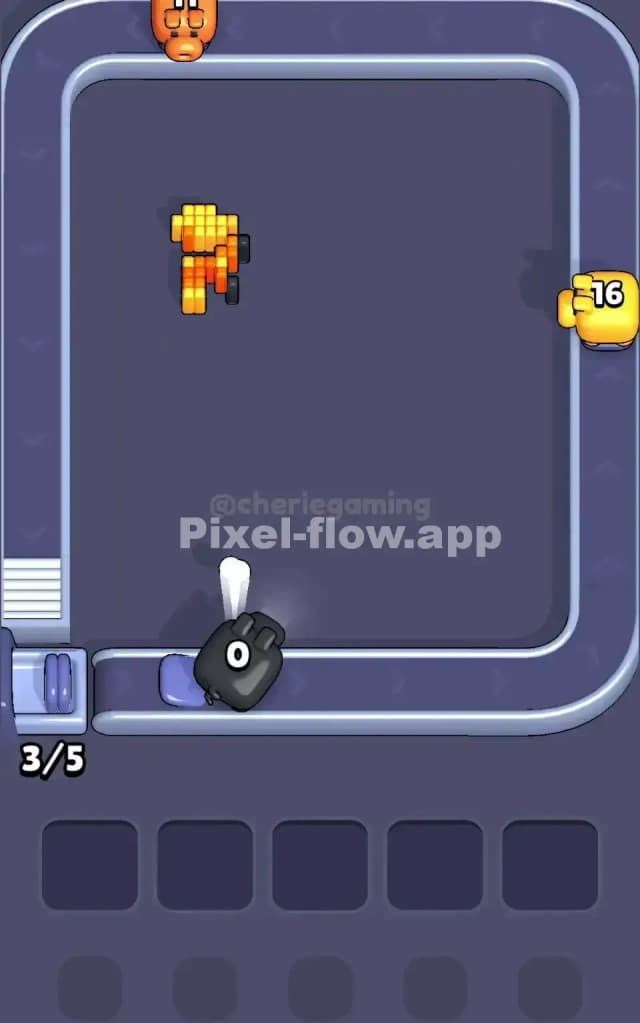
Pixel Flow Level 244 Walkthrough
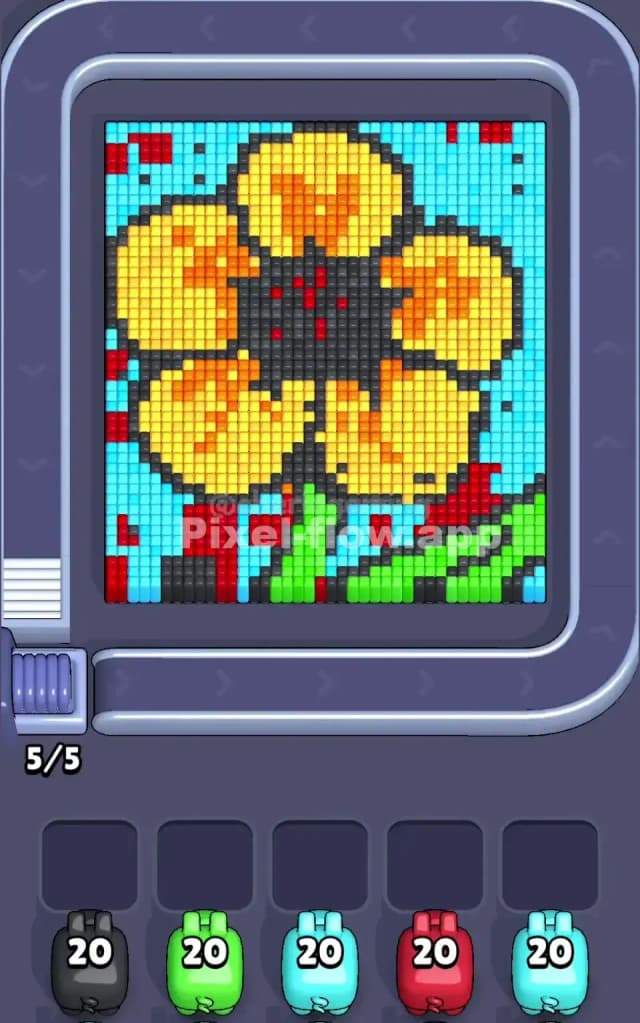
This level features a massive, five-petaled yellow flower centered on a light blue background. You have green foliage in the bottom right corner and annoying red speckles scattered across the board. The main colors are Yellow (petals), Light Blue (sky), Green (leaves), Orange (shading), and Black (center).
The rule to beat Pixel Flow Level 244 is strict prioritization. You must clear the background sky and the bottom leaves before you can effectively attack the flower itself. If you pull too many orange or black pigs early while the blue blocks are still shielding the center, you will clog your slots and fail. Is this a hard level? Yes. It is a very hard level because the red blocks are sparse and can trap a red pig in your waiting area for too long.
Pixel Flow Level 244 Overview
Imagine a close-up of a sunflower or a daisy against a clear sky. That’s your board. The center is a heavy cluster of black pixels with tiny red dots hidden inside. The petals are big, chunky regions of yellow, but they aren't flat—they are heavily shaded with orange pixels that reveal themselves later.
The board is asymmetrical. The top left is mostly empty blue sky with a few red floating blocks. The bottom right is dense with green leaves. This uneven weight matters. Your green pigs are useless on the left side of the board, and your blue pigs are useless near the bottom right stem. You have to watch the conveyor belt constantly. The random red pixels are the biggest threat; they don't form large groups, so a Red pig takes forever to empty its ammo.
Step by step solution walkthrough for Pixel Flow Level 244
First Color Zone to Erase in Pixel Flow Level 244
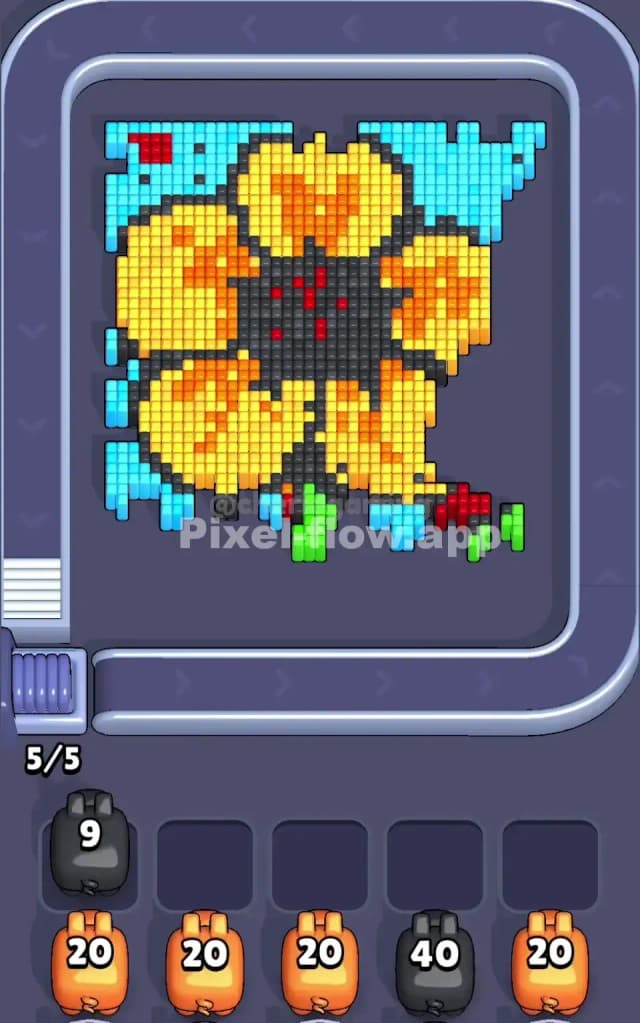
You need to attack the Light Blue background immediately.
This is the largest contiguous block of color on the outer layer. By erasing the light blue pixels, you strip away the "frame" of the picture. This exposes the edges of the yellow petals and the red floating blocks. If you ignore the blue and try to snipe the yellow center first, the blue blocks will act as a shield, blocking your shots from certain angles.
While you are shredding the blue sky, keep an eye on Green. The green section is isolated in the bottom right. If a Green pig appears, use it instantly to clear that corner. It’s a freebie. Clearing the green opens up the bottom edge of the flower, allowing your pigs to shoot upward into the orange/yellow layers later.
How to pass Pixel Flow Level 244 without power ups or boosters
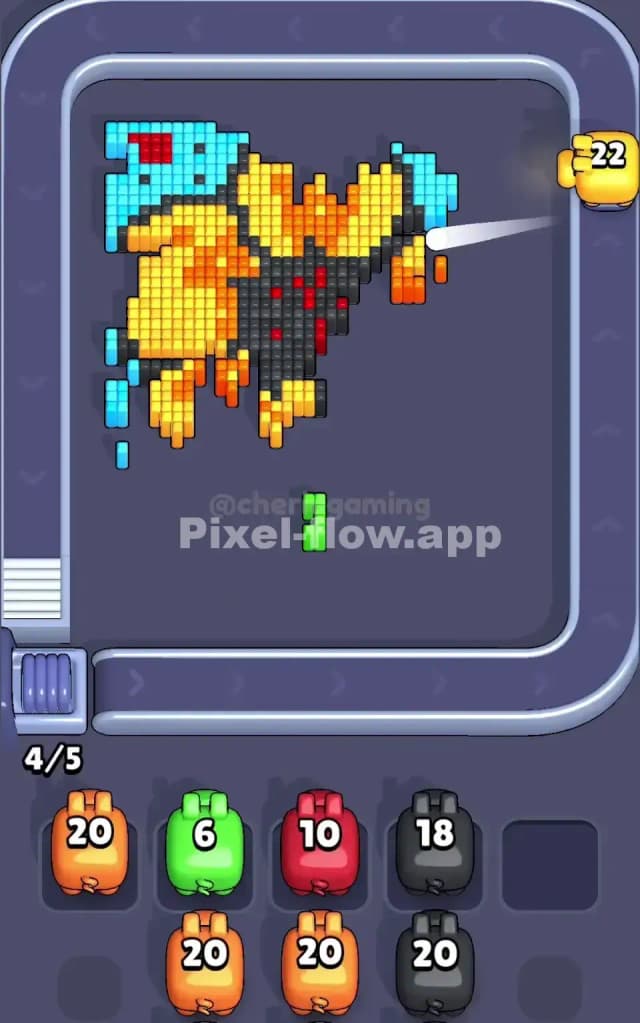
Around the mid-game mark, the blue sky and green leaves will be gone. You will be left with a floating yellow flower shape. This is the danger zone.
The queue often sends Orange pigs before you have cleared all the Yellow. Since the orange pixels act as shading behind or mixed in with the yellow, an Orange pig might sit in your slot doing nothing while you frantically wait for a Yellow pig to peel off the top layer.
To survive this without items:
- Don't hoard Red pigs. There are very few red blocks. If a Red pig drops into a slot, focus on clearing those specific red pixels immediately to get that pig off your board.
- Prioritize Yellow over Orange. Even if you see Orange in the queue, do not let it drop unless you see exposed orange pixels. If the flower is still solid yellow, that Orange pig is a dead weight.
- Check the Black center. Sometimes the black pixels are exposed early. If a Black pig comes up, let it fire at the center. This creates a hole in the middle of the flower, effectively giving you two angles of attack (from the outside in, and from the inside out).
Last Details You Clean Up in Pixel Flow Level 244
In the final moments of Pixel Flow Level 244, the yellow petals will be shredded. You will mostly see the underlying Orange structure and the Black core.
The trickiest part at the end is usually the Red dots inside the black center. These are often the very last pixels to go. You might have a Red pig stuck in your slot for the last 30 seconds of the game, just waiting for the black layer to disappear so it can hit those final three or four red dots. Be patient. As long as you kept your other slots clear, you can afford to have one Red pig camping until the end. Clear the black, expose the red core, and finish the flower.