Pixel Flow Level 261 Solution | Pixel Flow 261 Walkthrough
How to beat Pixel Flow Level 261: Video solution & walkthrough. The fastest way to pass Pixel Flow 261.
Is this the wrong level layout?🤔
Pixel Flow randomizes levels for different players. Don't worry, just upload a screenshot of your board, and our AI will find the correct video instantly.

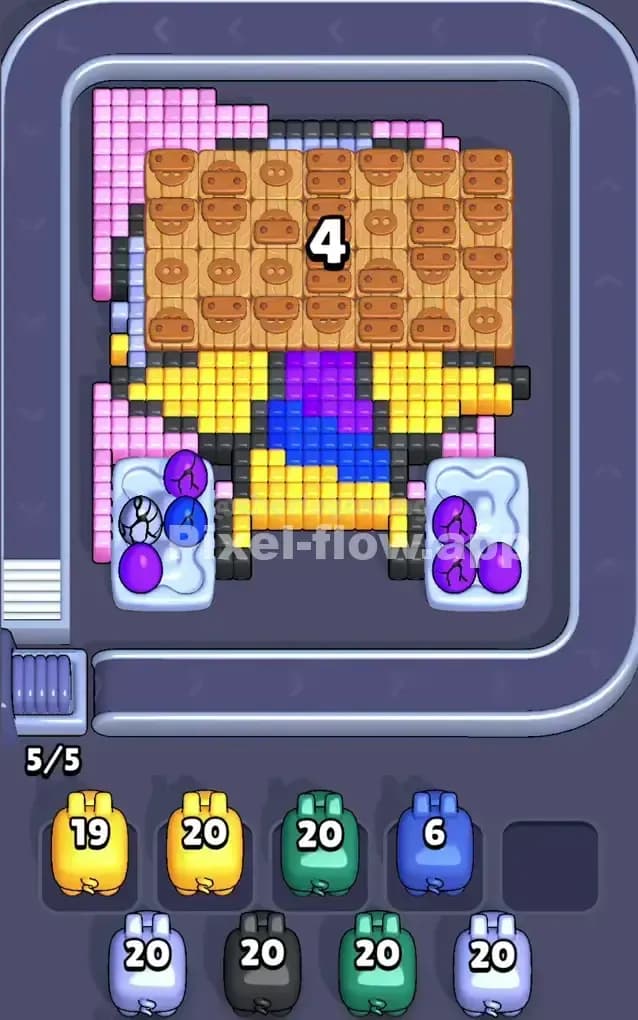
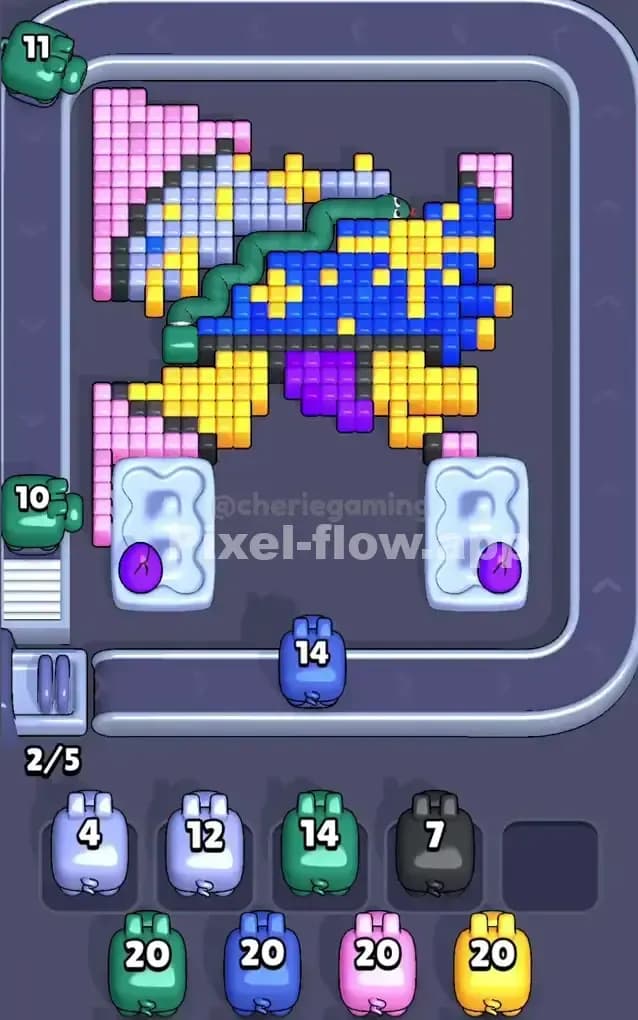
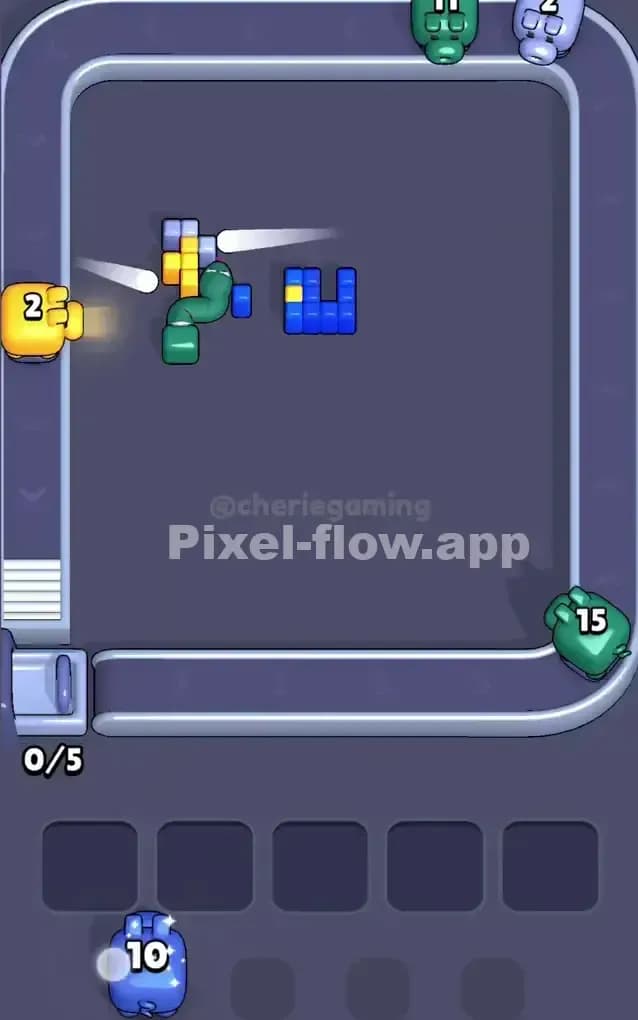
Pixel Flow Level 261 Walkthrough
This level features a hidden pixel art image of a wizard wearing a blue starry hat, but you won't see much of him at first. The board is aggressively blocked by three massive obstacles: a wooden crate structure at the top and two gigantic blocks of ice at the bottom corners.
The Rules to Beat It: You cannot touch the wizard's hat or the background until you deal with the blockers. The ice blocks are particularly nasty because they have 60 HP each. This means they require 60 individual hits to break. Your primary goal is to tunnel through the exposed middle section to open up angles on these blockers.
Is it hard? Yes. This is a very hard level. The high health on the ice blocks creates a serious endurance test for your ammo management. One wrong move with your waiting slots, and you will soft-lock the game before the ice even cracks.
Pixel Flow Level 261 Overview
Imagine a wizard trapped in a freezer. That’s the vibe here. The central character is a mage figure dressed in deep blue robes with bright yellow stars. He is surrounded by a soft pink background. However, the scene is heavily obscured.
At the very top, a brown wooden barricade covers the tip of his hat. It has a counter of "6," meaning it takes a few solid hits to dismantle. The bottom left and right corners are dominated by two massive, translucent blue ice cubes. These are the danger zones. They obscure two purple magical orbs (or possibly grapes) hidden underneath.
The layout is strictly symmetrical, which usually makes things easier, but here it creates a bottleneck. Because the ice and wood cover 70% of the screen, you are forced to play in a very narrow vertical channel right in the center. This lack of space makes it easy to clog your five pig slots if the conveyor belt gives you colors you can't currently reach.
Step by step solution walkthrough for Pixel Flow Level 261
First Color Zone to Erase in Pixel Flow Level 261
You have zero choice here: you must attack the Center Vertical Strip.
Ignore the ice blocks for a moment. Look at the gap between them. You will see a mix of Yellow and Blue pixels forming the wizard's face and chest. This is the only "soft" part of the board exposed at the start.
- Prioritize Yellow and Blue Pigs: As they come down the belt, slot them immediately. You need to strip away this center column of yellow skin/shirt pixels and blue robe pixels.
- Ignore the Pink Background: Even if you have pink pigs, hold them if you can. The pink background is largely blocked by the wooden crate at the top. Until the wood breaks, your pink pigs are mostly useless and will just clog your board.
- Breaking the Wood: As you clear the yellow/blue center, the wooden crate at the top (with the "6" counter) will become vulnerable. Focus fire on the pixels directly touching it. Once that wood shatters, it exposes the top of the wizard's hat and, crucially, more valid targets for your pink and blue pigs.
How to pass Pixel Flow Level 261 without power ups or boosters
The mid-game is where most players fail Pixel Flow 261. You’ve cleared the center, the wood is gone, but now you are staring at those two 60 HP ice blocks. They refuse to melt.
Here is the strategy to survive the grind:
- The Green Snake Reveal: Once the top layers of the wizard's hat are shaved off, you will suddenly encounter a Green Snake wrapped around the wizard. It wasn't visible at the start. Suddenly, the game will start sending you Green pigs.
- Critical Warning: Do not let Green pigs pile up in your waiting slots before the snake is exposed. If you see a Green pig coming and the snake isn't visible yet, let it loop around the belt if possible, or prioritize clearing the Blue/Yellow covering the snake to make the Green pig valid.
- Chipping the Ice: You do not need a "bomb" to break the ice. You need volume. The ice blocks usually take hits from any color adjacent to them, or specific ice-breaking colors. Watch which pigs reduce the "60" counter. Usually, clearing the pixels next to the ice counts as damage. Keep clearing the central Purple and Yellow pixels adjacent to the ice walls. Every adjacent clear chips away at that massive 60 HP pool.
- Slot Management: With the ice taking so long to break, you will have moments where you have 3 or 4 pigs in your slots waiting for the ice to die. This is dangerous. Always keep one slot open. If you have 4 slots full of Pink pigs but the only available targets are Blue pixels inside the ice, you are dead. Aggressively spend ammo on any valid pixel to keep your slots rotating.
Last Details You Clean Up in Pixel Flow Level 261
The end of Pixel Flow Level 261 is messy. The ice finally shatters, revealing the purple items (likely magical orbs) at the bottom corners.
- The Purple Orbs: These are the final "hard" targets. They sit in the pockets where the ice used to be. Save your Purple pigs for this moment. If purple pigs spawn early, they are dead weight.
- The White Sparkles: Scattered throughout the Blue hat are tiny White pixels (stars). These are easy to miss. Often, a single White pixel will be left stranded in a sea of empty space. Keep a sharp eye on your White pigs; don't discard them thinking you are done with the stars.
- Background Sweep: The final moves are usually just mopping up the remaining Pink background pixels in the top corners. This is the victory lap. Once the Green Snake and the Ice Blocks are gone, the board opens up completely, and you can spam your remaining pigs to finish the art.