Pixel Flow Level 278 Solution Walkthrough | Pixel Flow 278
How to solve Pixel Flow level 278? Get instant solution for Pixel Flow 278 with our step by step solution & video walkthrough.


Pixel Flow Level 278 Overview
The Starting Board and Pixel Art Structure
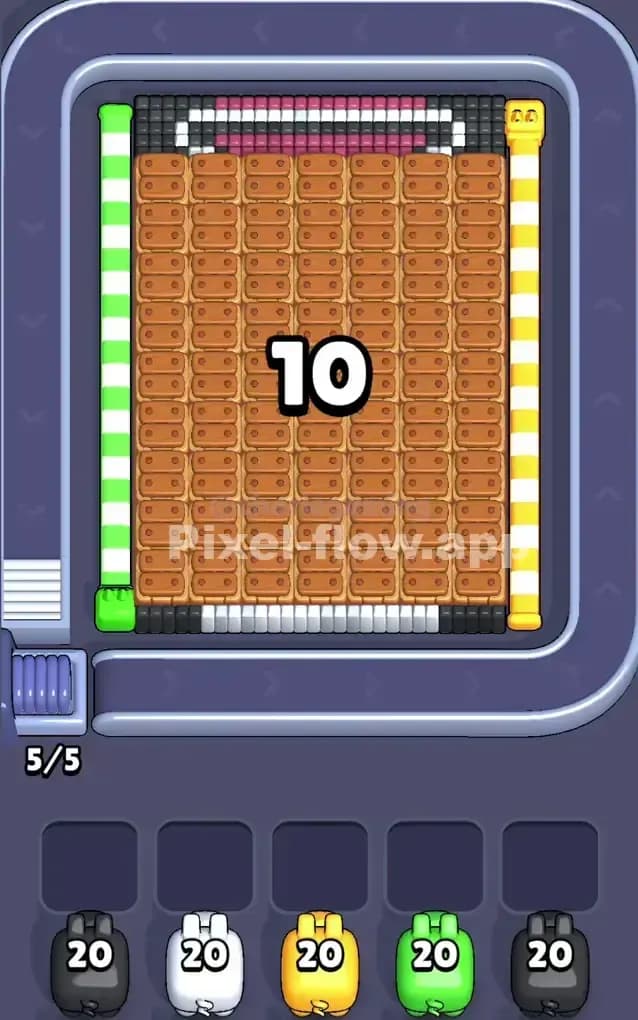
Pixel Flow Level 278 presents you with a deceptively simple-looking puzzle: a massive grid of warm brown voxel cubes that dominates the entire board, layered beneath a colorful frame of black, white, red, pink, and gray cubes at the top. The brown cubes form the bulk of the visible pixel art, creating what feels like a giant chocolate cake or a thick wooden floor. Above this brown foundation sits a horizontal stripe of darker tones—blacks and grays—and a ribbon of red and pink cubes that hint at hidden complexity. The board layout is symmetrical, with the brown layer so thick and uniform that it's easy to panic: "How am I supposed to clear all that?"
What makes Pixel Flow 278 especially tricky is that the brown cubes aren't your enemy—they're actually a distraction. Beneath that solid brown surface lie the real puzzle pieces: white, black, gray, red, pink, and other accent colors that you'll need to expose and clear methodically. Your pig queue shows five pigs, each with 20 ammo, and they're color-coded to match specific target groups. The win condition is straightforward: clear every single voxel cube on the board by matching pigs to their corresponding colors and managing your waiting slots wisely.
Understanding the Win Condition and Deterministic Ammo
Pixel Flow Level 278 victory depends entirely on clearing the full board without jamming your waiting slots. Every pig has exactly 20 ammo, meaning it can destroy up to 20 cubes of its color. The moment all five waiting slots fill with pigs that have no valid targets remaining, you'll fail—the game can't proceed, and you're stuck. This is why ammo management and pig sequencing aren't optional; they're the foundation of success in Pixel Flow 278. The order in which you release pigs and the order they appear in the incoming queue are completely fixed, so there's no luck involved—only strategy and planning.
Why Pixel Flow Level 278 Feels So Tricky
The Brown Cube Bottleneck
The overwhelming mass of brown cubes creates the first psychological and practical hurdle in Pixel Flow Level 278. Looking at the board, you see hundreds of brown voxels, and only one brown pig to clear them. That pig has 20 ammo, which means it can only destroy 20 of those brown cubes before it's exhausted. The remaining brown cubes will still be there, blocking access to deeper colors and creating a suffocating sense of incompleteness. Here's the crux: you cannot clear all brown cubes with a single pig. Instead, you need to use brown pig strategically to expose patches of other colors hidden beneath the brown layer, then switch focus to those secondary colors. If you don't plan this transition carefully, you'll end up with a brown pig sitting in a waiting slot with 5+ ammo remaining but zero valid targets—and that's a recipe for failure in Pixel Flow 278.
The Color Sequencing Trap
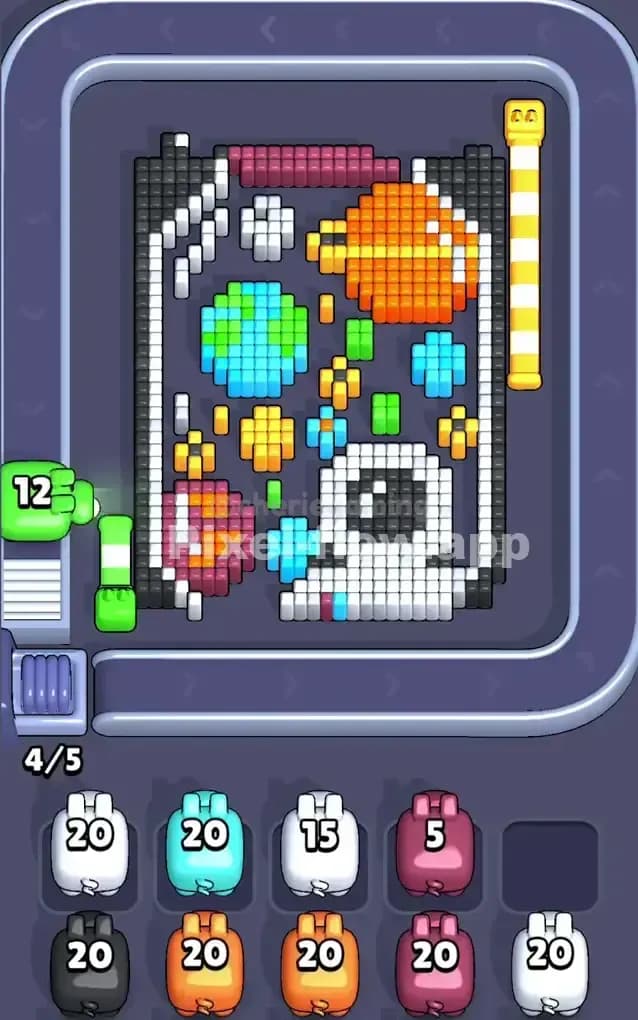
Pixel Flow 278 hides multiple color layers beneath the brown facade, and exposing them in the wrong order can leave you in a bind. The top stripe contains blacks, grays, whites, reds, and pinks—all of which need to be cleared eventually. However, if you expose red or pink cubes too early without having the corresponding pig ready, you're wasting precious ammo on other colors and potentially jamming your waiting slots. The white and black accent cubes are scattered throughout the design, and they're easy to overlook until a pig lands on them and discovers a cluster you didn't anticipate. Pixel Flow Level 278 punishes hasty decisions because the pig order is fixed; you can't simply "do" the colors in reverse if you realize you've made a mistake.
Personal Breakthrough Moment
I'll be honest: my first three attempts at Pixel Flow Level 278 felt like I was bashing my head against a wall. I'd start by aggressively clearing the brown cubes, thinking I'd somehow stumble into a win. Instead, I'd exhaust my brown pig at slot 3 or 4, then watch helplessly as the next pigs (white and black) found only scattered targets and clogged the queue. The level clicked for me when I stopped treating the brown layer as the main puzzle and started thinking of it as a key. Brown pig isn't meant to clear the entire brown layer; it's meant to strategically carve away just enough brown to expose the secondary colors underneath. Once I adopted that mindset, Pixel Flow 278 transformed from frustrating to solvable.
Step-by-Step Strategy to Clear Pixel Flow Level 278
Opening: Selective Exposure Over Brute Force
Start Pixel Flow Level 278 by deploying your brown pig, but resist the urge to spam it recklessly. Instead, release it with the goal of exposing one complete column or region of hidden colors—perhaps targeting the central or left-most brown cubes that block access to the blacks, grays, and whites above. Your brown pig will shoot 20 cubes; use those 20 carefully. Focus on creating "windows" into deeper layers rather than trying to clear large contiguous brown areas. As you release the brown pig, watch the board closely to see what colors emerge. The moment brown pig runs out of ammo and lands in a waiting slot, you should have at least 3–4 free slots remaining. This buffer is your safety net for Pixel Flow 278. If you've already filled 3 slots by the time brown is done, you're in trouble.
As the white and black pigs enter the queue, begin targeting the newly exposed cubes. The white pig should prioritize any white voxels it can reach, spending its ammo efficiently. If white pig finishes early and lands in a waiting slot, that's fine—you still have slots available. The black pig should follow suit, clearing visible black cubes without wasting ammo on air or unreachable targets. By the end of this opening phase in Pixel Flow Level 278, you should have cleared the top stripe and some of the second layer, with 1–2 waiting slots still empty.
Mid-Game: Layered Exposure and Ammo Precision
The middle phase of Pixel Flow Level 278 is where precision matters most. As you've exposed deeper colors, the yellow and green pigs are now incoming. Before you deploy them, count the visible yellow and green cubes on the board. Your yellow pig has exactly 20 ammo, and your green pig has exactly 20 ammo. If you count fewer than 20 yellow cubes visible, you'll eventually have a yellow pig stuck in a waiting slot with unused ammo—and that's a jam. To prevent this, you may need to use other pigs to clear a few blocking brown or gray cubes first, exposing more yellow targets for the yellow pig to hit.
This is also the phase where you manage your waiting slots like a chess player planning three moves ahead. If you have a pig in a waiting slot with 5+ ammo remaining but no valid targets, you're losing. Instead, try to keep half-spent pigs (those with low ammo) parked in slots so that future pigs have room to land and find targets. Pixel Flow Level 278 demands that you think holistically: every pig's role is interconnected. The gray pig, for example, might need to clear just 5–8 gray cubes early on, then sit idle, freeing space for the incoming yellow or green pigs to land and fire successfully.
End-Game: The Final Clearout
As you approach the finish line of Pixel Flow Level 278, the board should be mostly clear except for scattered remnants of one or two colors. Ideally, your last two pigs should have unobstructed access to their targets and enough ammo to finish the job. If the board is cluttered with orphaned brown or accent cubes that don't match any incoming pig, you've made a sequencing error earlier—but it's often recoverable if you have waiting slots available. The final moves of Pixel Flow Level 278 should feel almost relaxing: deploy the remaining pigs, watch them fire, and ensure every cube is accounted for.
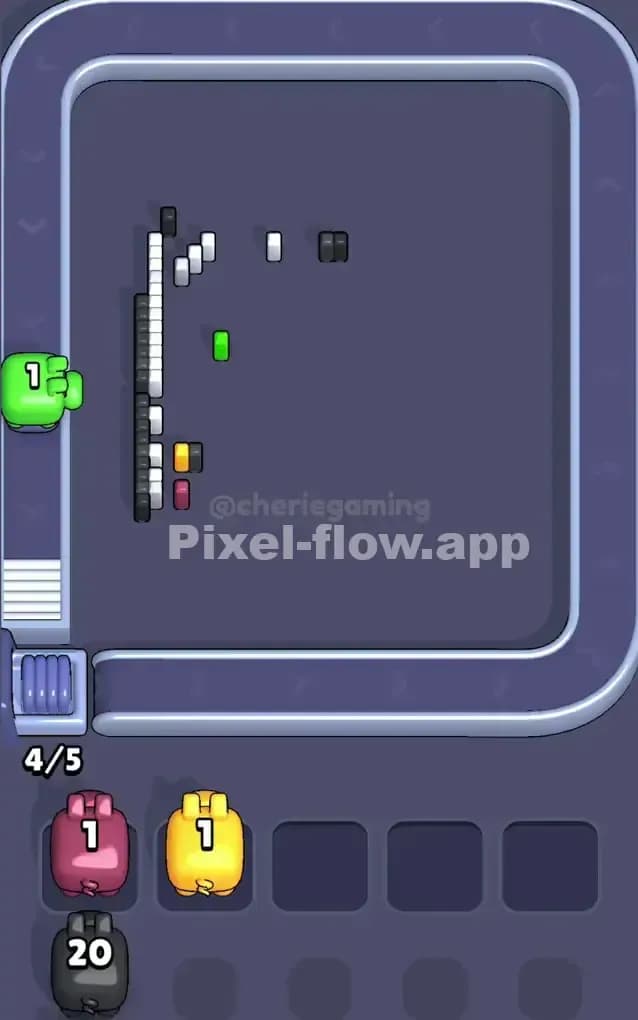
If you find yourself with one or two pigs stuck in waiting slots and the board still has cubes of their color visible, you've won—release those pigs, let them finish their ammo cleanly, and celebrate. Pixel Flow Level 278 is won when the board goes dark (empty) and no cubes remain.
The Logic Behind This Pixel Flow Level 278 Plan
Exploiting Fixed Pig Order and Ammo Economics
The strategy works because Pixel Flow Level 278 is deterministic. The pig order never changes, and each pig's ammo is fixed at 20. By counting visible cubes before releasing a pig and by strategically exposing only the colors you need, you transform randomness into control. The brown pig isn't weak because it has only 20 ammo; it's perfectly calibrated for opening the board. The white, black, yellow, and green pigs are equally balanced—there are roughly 20 cubes of each color waiting to be exposed. The genius of Pixel Flow Level 278 is that ammo exactly matches the number of cubes if you sequence pigs correctly and don't waste shots on wrong targets.
The Waiting Slots as a Strategic Resource
Your five waiting slots in Pixel Flow Level 278 aren't just a failure condition; they're a tactical buffer. By deliberately parking half-spent pigs in slots early, you create breathing room for future pigs. Think of waiting slots as a finite resource—once all five are full and no pig can find valid targets, you've hit a game-over state. The corollary is that by keeping slots free during the mid-game, you're buying optionality: future pigs can land, assess the board, and find targets without panic. Pixel Flow Level 278 punishes greedy players who want to maximize every pig's ammo spend in one go; the smarter approach is to distribute the workload across turns and slots.
Staying Calm and Counting Two Pigs Ahead
The final mindset shift for mastering Pixel Flow Level 278 is to play proactively rather than reactively. Before you release the current pig, glance at the next two pigs in the queue and ask: "Do those pigs have targets waiting?" If not, your current pig's job is partly to expose targets for them. This forward-looking approach prevents the cascading jam that sinks so many Pixel Flow Level 278 attempts. You'll notice your stress levels drop the moment you stop reacting to each pig individually and start orchestrating the entire puzzle as a symphony. Count your ammo, count visible cubes, and trust the system—Pixel Flow Level 278 rewards patience and planning far more than reflexes.