Pixel Flow Level 292 Solution Walkthrough | Pixel Flow 292
How to solve Pixel Flow level 292? Get instant solution for Pixel Flow 292 with our step by step solution & video walkthrough.


Pixel Flow Level 292 Overview
The Starting Board and Visual Composition
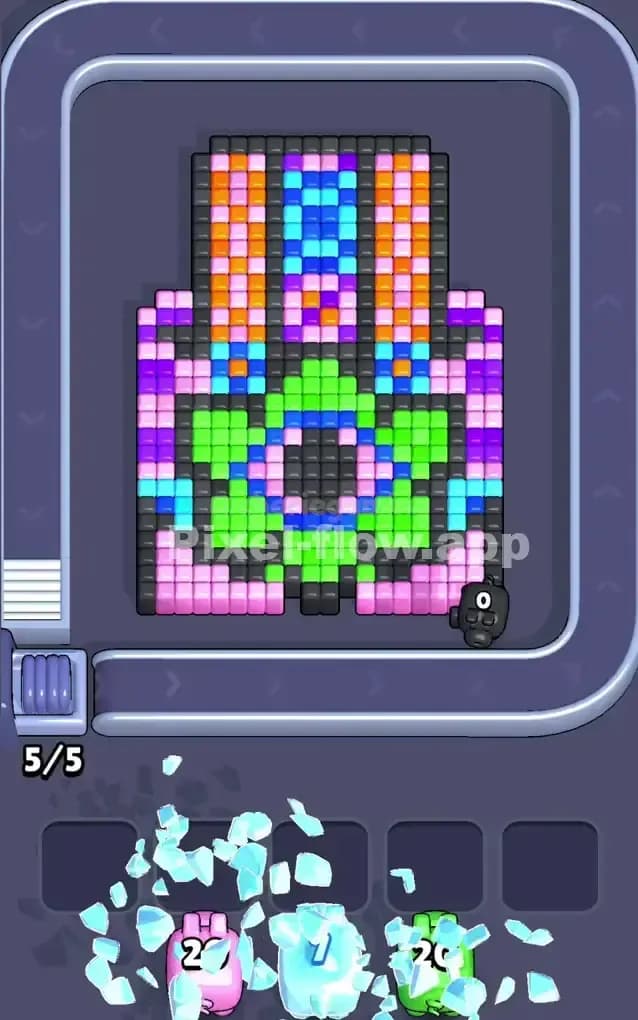
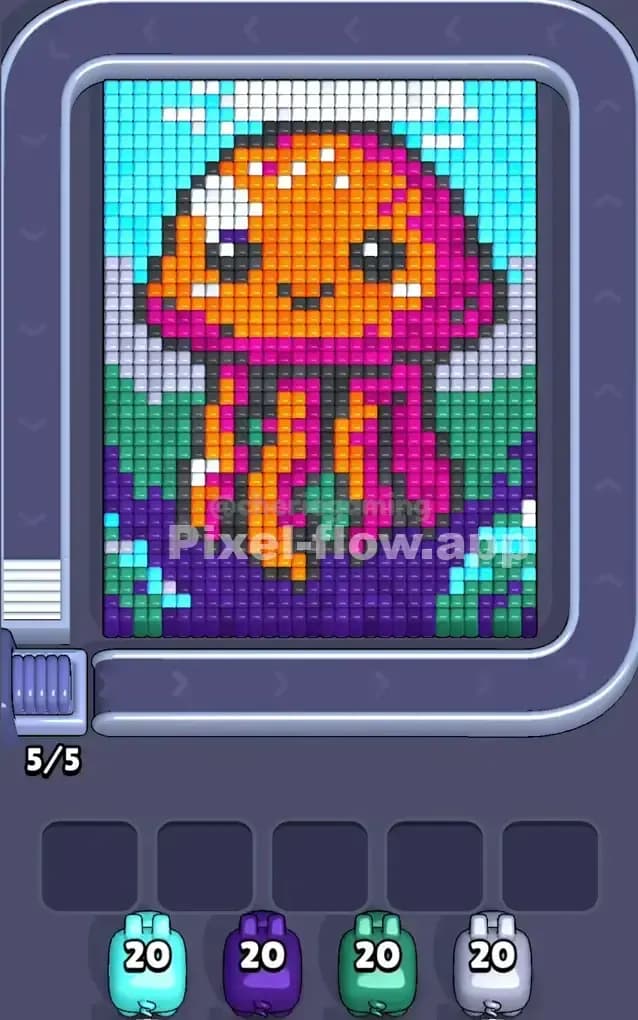
Pixel Flow Level 292 presents a beautifully layered voxel portrait that feels deceptively simple at first glance. The pixel art features a character's face as the central subject, with a striking color palette dominated by vibrant purples, bright greens, crisp blues, warm oranges, and soft pinks. The face is framed by what appears to be decorative elements or headwear in orange and cyan tones, creating a symmetric composition that makes the board feel balanced—but don't let that fool you. The deeper you look, you'll notice that multiple colors occupy the same visual space at different depths, meaning you can't simply attack colors in the order you see them. Dark gray and black cubes form the structural skeleton of the image, and they're scattered throughout in a way that creates natural barriers between color zones. This layering is what makes Pixel Flow Level 292 genuinely challenging; you're not just matching colors, you're excavating through a 3D puzzle where each decision ripples forward.
The Win Condition and Deterministic Nature
To beat Pixel Flow Level 292, you need to clear every single voxel cube from the board. That means no color can remain, no matter how hidden or awkwardly positioned. The good news is that the pig order, ammo counts, and cube positions never change—Pixel Flow Level 292 is entirely deterministic. Once you understand the pattern and respect the constraints of your waiting slots, you can solve it reliably. Every pig that rolls down the conveyor carries a fixed amount of ammunition, and each shot you fire is one ammo spent. If you run out of ammo before clearing all cubes of a certain color, that pig gets stuck in one of your five waiting slots, and if all five slots fill up without a solution, you're done. The key to clearing Pixel Flow Level 292 is planning far enough ahead so that never happens.
Why Pixel Flow Level 292 Feels So Tricky
The Central Bottleneck: Purple and Pink Saturation
The biggest threat to your run on Pixel Flow Level 292 comes from the massive number of purple and pink cubes occupying the middle and lower portions of the board. There's so much purple that you could easily imagine the pig for that color arriving with insufficient ammo, or worse, showing up after you've already spent critical waiting slots on other colors. The purples form a dense horizontal band across the middle, and they're interwoven with blacks that obscure your line of sight and make it hard to judge exactly how many cubes you're dealing with. What really makes this dangerous is that the purple pig can't start firing until certain overlying layers—particularly the orange and cyan—are either cleared or moved past. If you're not careful about the order in which you call your pigs, you could easily trap a purple pig with ammo left over but no targets, and that's an instant game-over scenario on Pixel Flow Level 292.
The Tricky Color Patches and Hidden Layers
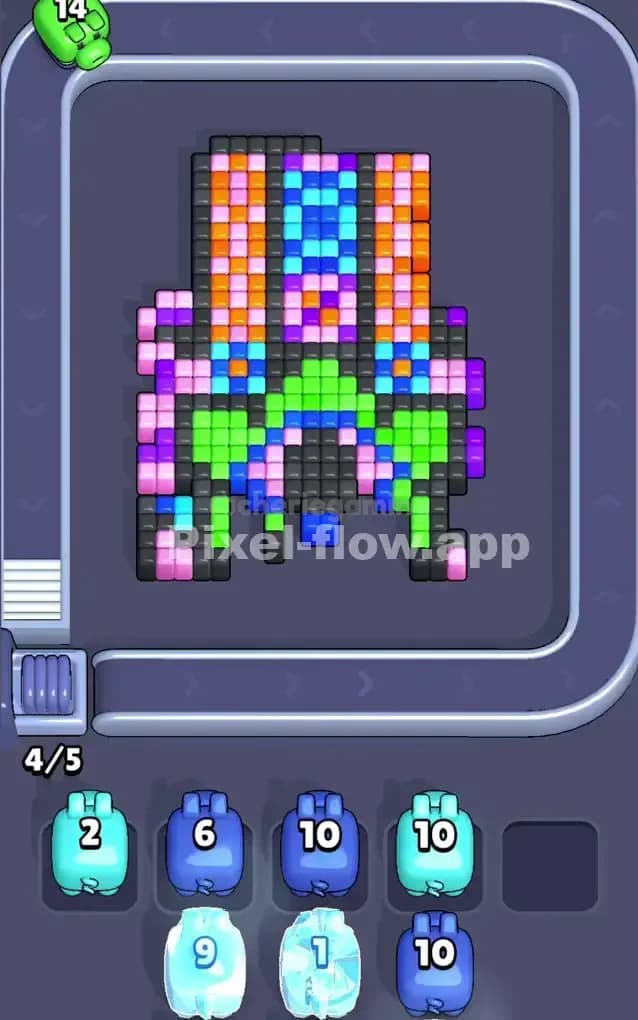
Beyond the purple problem, Pixel Flow Level 292 hides several nasty surprises. The bright green cubes form a large circular cluster in the center-lower region, which means the green pig will need a generous ammo supply—but green sits deep, underneath blues and blacks that need clearing first. If green arrives too early in your sequence, it'll be stuck with full ammo and nowhere to shoot. Similarly, the orange and cyan cubes in the upper frame are split into discontinuous patches; you might clear half the orange cubes but then realize the remaining half is blocked by cyan, forcing your orange pig to wait in limbo. The blue cubes are scattered throughout multiple layers, making it dangerously easy to miscalculate how many blues you actually need to destroy. One miscalculation and you're watching your blue pig sit helpless while your waiting slots fill up with half-spent pigs.
The "Aha" Moment That Clicks Everything Into Place
I'll be honest—the first few attempts at Pixel Flow Level 292 felt overwhelming. I kept calling pigs in what seemed like a logical order and then hit walls around move 8 or 9 when my buffer was full and nothing was working. It was frustrating because I could see the colors I needed to hit, but the geometry and depth kept sabotaging me. Then something clicked: I started mapping out the pig order on paper, noting which colors could be attacked immediately and which ones needed prerequisites. Once I realized that the black and dark gray cubes were actually the key to exposing inner layers, and that I needed to be ruthless about sequencing colors to keep slots open, Pixel Flow Level 292 went from impossible to totally solvable. That's when the level felt less like a trap and more like an elegant puzzle.
Step-by-Step Strategy to Clear Pixel Flow Level 292
Opening: Prioritize Orange and Establish Flow
Start Pixel Flow Level 292 by calling your orange pig first. The orange cubes are largely on the surface and visible, so your orange pig should have a clear line of fire without too much obstruction. Orange doesn't have a massive count, which means it'll clear relatively quickly and free up the first waiting slot fast. This gives you breathing room and lets you see what's underneath. While your orange pig is working, keep one eye on the remaining queue—typically you'll want cyan or light blue to go next, depending on which of those colors has better immediate visibility. The goal in the opening is to get through at least two pigs within your first 2–3 calls, keeping your waiting slots feeling spacious. Don't be tempted to call a pig just because you see its color; ask yourself: Can this pig actually shoot right now, or will it be blocked? If it'll be blocked, hold off and call something else.
Mid-Game: Excavation and Careful Layering
Once you've cleared your top-layer colors, Pixel Flow Level 292 asks you to shift strategy and start excavating downward. This is when you call black or dark gray to expose the vibrant colors beneath. The blacks don't have massive ammo counts, but they're critical because they're the supports holding back your purple, green, and pink. Fire your black pig(s) methodically, and watch as each shot opens new lines of sight into the deeper layers. Now pink and purple start to become viable targets. Here's the trick: don't call all your pink at once. Pink is everywhere on Pixel Flow Level 292, and if your pink pig arrives with more ammo than you can spend in one go, it'll get stuck. Instead, call a modest amount of pink, let it deplete, then bring in other colors to expose more pink cubes, then call another pig later if needed. This "interlocking" approach prevents wasteful waiting. The same logic applies to purple and green. Alternate between colors, always making sure the next pig in your queue has visible targets to shoot.
End-Game: The Final Assembly and Buffer Cleanup
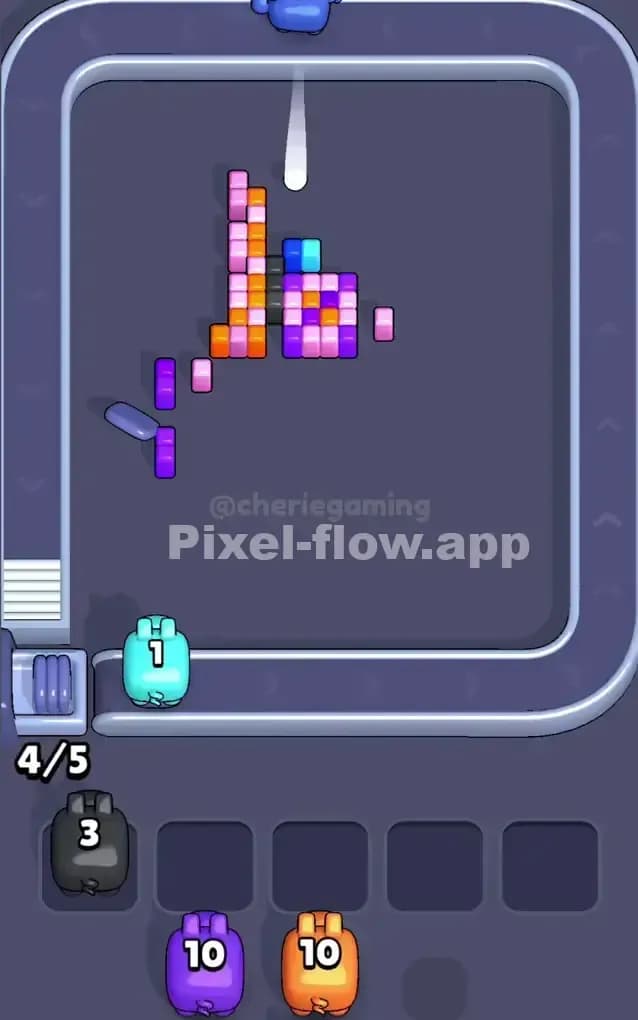
As you approach the end of Pixel Flow Level 292, you'll have a few scattered cubes left—maybe some blues hiding in pockets, a final cluster of green, and stubborn grays in odd corners. This is where precision matters most. You can't afford to call a pig with 5 ammo and have it use only 2 before getting stuck. By now, you should know exactly how many cubes of each remaining color are on the board; count them visually or reference your mental map. Call pigs in an order that guarantees exact ammo matches or slight over-supply (over-supply means the pig uses what it needs and ignores what it can't find, which is fine). Fire your final pig, watch the last cubes disappear, and Pixel Flow Level 292 is solved. The satisfaction comes from the fact that you planned this ending, not stumbled into it.
The Logic Behind This Pixel Flow Level 292 Plan
Why This Strategy Exploits the Deterministic System
Pixel Flow Level 292 is designed so that there's always a solution—you just have to find the right pig order. The strategy above works because it respects three core constraints: pig order is fixed, ammo counts are fixed, and waiting slots are finite. By prioritizing visible colors first (orange, cyan), you free up slots and reduce cognitive load. By using black and gray as "excavation tools," you ensure that deeper colors become accessible, which means later pigs have targets and don't get stuck. By alternating between colors and matching ammo supplies to remaining cube counts, you avoid the trap of over-ammo pigs clogging your buffer. This isn't random trial-and-error; it's using game mechanics strategically. Every move on Pixel Flow Level 292 has a reason, and that reason stems from understanding the interaction between the conveyor queue and the five waiting slots.
Staying Calm and Thinking Two Pigs Ahead
The mental skill required to clear Pixel Flow Level 292 is forward planning. Before you call each pig, ask yourself: Where will this pig go if there are no targets? What will that mean for the pig after it? By thinking one or two pigs ahead, you catch potential jams before they happen. Watch your waiting slots like a hawk—if you ever have three pigs waiting, you're in danger, and you need to adjust your next call to expose their targets immediately. Count ammo visibly; don't rely on hope. If your cyan pig has 8 ammo and you can only see 6 cyan cubes, you know cyan will need a waiting slot unless you expose more cyan first. That information shapes your decision. Pixel Flow Level 292 rewards this deliberate, measured approach far more than it rewards hasty clicking. Take your time, breathe, and trust the strategy—you've got this.