Pixel Flow Level 321 Solution Walkthrough | Pixel Flow 321
How to solve Pixel Flow level 321? Get instant solution for Pixel Flow 321 with our step by step solution & video walkthrough.


Pixel Flow Level 321 Overview
The Pixel Art Setup and Color Layers
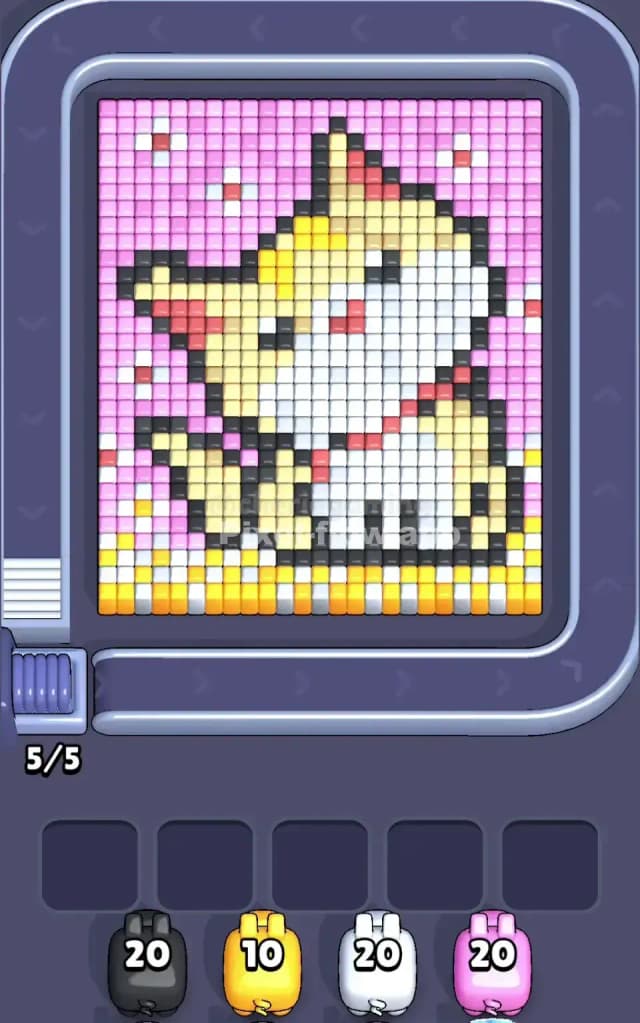
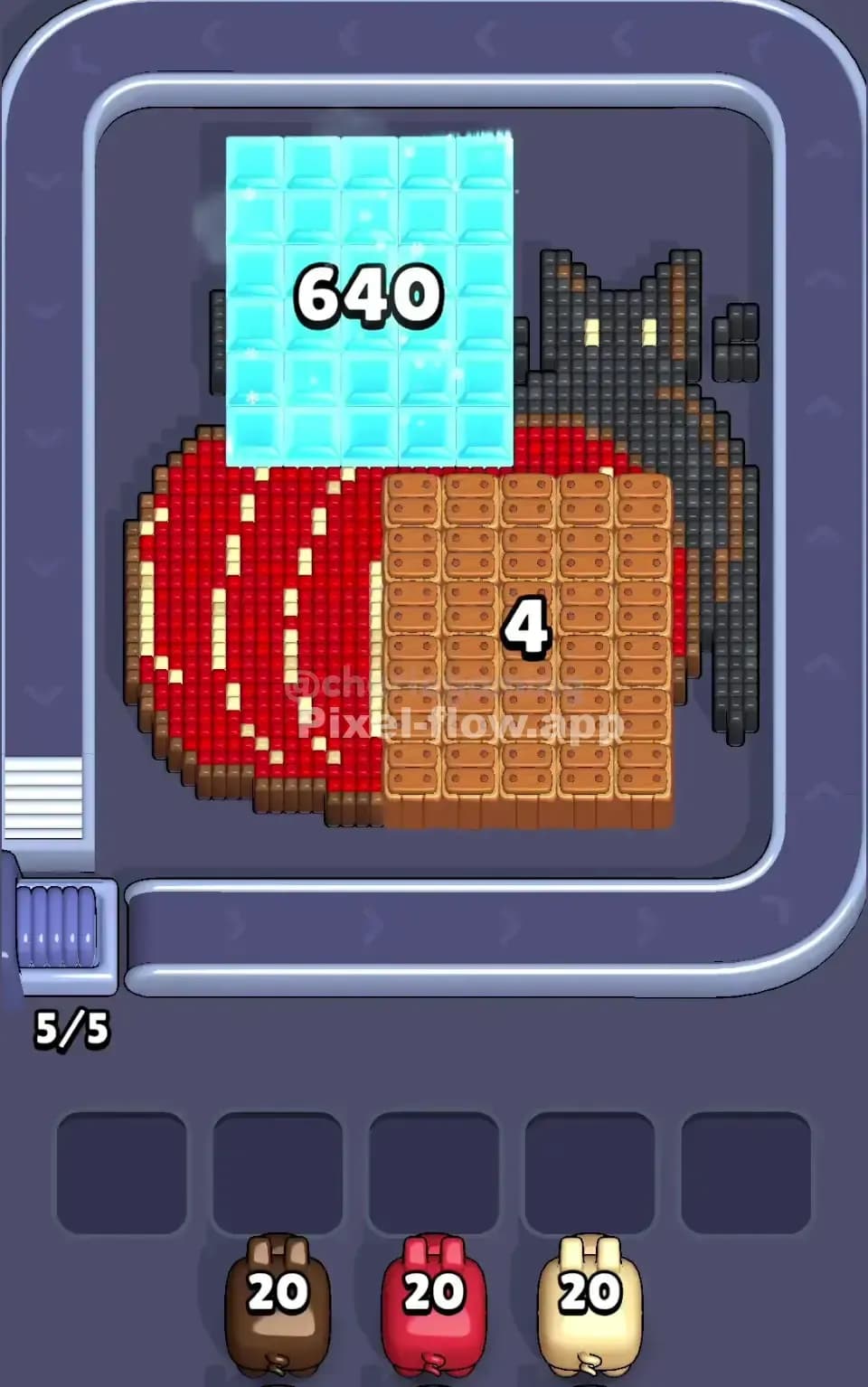
Pixel Flow Level 321 presents a charming pixel-art scene dominated by a cozy cottage surrounded by a vibrant landscape. The board is layered strategically: a bright cyan sky sits at the top, a dark gray building structure anchors the middle-right, warm terracotta and tan walls form the cottage itself, and a striking red section represents foliage or decorative elements. What makes Pixel Flow 321 visually deceptive is that these colors don't all sit on the same depth—some cubes hide behind others, and you won't see the full picture until you've strategically cleared sections. The color palette consists primarily of cyan, gray, tan, and red, with occasional beige accents that add complexity to the puzzle.
The Win Condition and Deterministic Challenge
To beat Pixel Flow Level 321, you need to clear every single voxel cube from the board. Unlike puzzle games where luck plays a role, Pixel Flow 321 is entirely deterministic: each pig has a fixed ammo count, arrives in a fixed order, and always shoots cubes of its own color. This means victory isn't about hoping for the right sequence—it's about understanding the puzzle deeply enough to engineer that sequence yourself. You'll see three pigs queued up at the start, each with 20 ammo, and a moving conveyor that delivers them one at a time. The challenge is orchestrating their fire so that every cube vanishes and no pig gets stuck in your waiting slots with unused ammunition.
Why Pixel Flow Level 321 Feels So Tricky
The Core Bottleneck: Cyan Abundance
The biggest trap in Pixel Flow Level 321 is the sheer volume of cyan cubes blocking the top of the board. That large cyan square dominates the visual landscape and represents 640 ammo's worth of potential targets—far more than any single pig can handle. If you're not careful and burn through your early pigs on cyan without a clear strategy, you'll find yourself with pigs still in the queue but no matching cubes to shoot. They'll tumble into your waiting slots, and suddenly you've jammed the buffer. This is the classic jam condition: stuck pigs with ammo remaining and nowhere left to spend it. The cyan layer acts as a gatekeeper, and you have to respect its size.
The Hidden Complexity: Scattered Color Patches
What looks like a simple cottage scene hides genuinely awkward color distribution. The tan and beige sections intermingle with red, creating small isolated pockets that don't always align with the pigs' arrival order. You might have a tan pig arriving when most visible tan cubes are buried under gray or red, forcing that pig to wait or jam prematurely. Similarly, the gray building structure is fragmented across the right side and doesn't form one coherent block, meaning you can't just "clear gray" in one sweep. Pixel Flow Level 321 demands that you map out where each color cluster sits and in what depth order they sit—otherwise, you'll misjudge which pig to deploy and when.
The Ammo-to-Target Mismatch Problem
Each of your three pigs arrives with exactly 20 ammo. At face value, 60 total ammo seems reasonable for a board this size, but the distribution of cubes is rarely even. Cyan demands far more than 20 shots to clear meaningfully. Red and tan are spread across multiple visual regions. Gray is fragmented. And if you shoot cyan aggressively with your first pig, you'll run out of ammo before reaching deeper layers, leaving your second and third pigs unable to contribute because their target colors remain blocked. This mismatch between ammo and demand is what makes Pixel Flow Level 321 so deceptively hard—you can't just spam your first pig and hope the rest sorts itself out.
The Personal "Click" Moment
Honestly, Pixel Flow Level 321 frustrated me for a while. I kept hammering cyan, filling my waiting slots with stuck tan and red pigs, and watching the level fail. The turning point came when I stopped thinking about "clearing cyan" and started thinking about "which 5–6 cyan cubes do I need to shoot to expose the next color layer?" Once I embraced the idea that I didn't need to clear cyan entirely before moving on, and that exposing layers was more important than exhausting single colors, the puzzle opened up. That mental shift—from "clean up one color" to "engineer the layer sequence"—is what makes Pixel Flow Level 321 click.
Step-by-Step Strategy to Clear Pixel Flow Level 321
Opening: Targeting Cyan Strategically Without Jamming
Your first move in Pixel Flow Level 321 should be to deploy your first pig (brown, tan, or whichever color comes first) and focus on cracking the cyan layer, but only partially. Don't try to obliterate all 640 cyan cubes with your first 20 ammo—that's a fool's errand. Instead, shoot cyan cubes that are adjacent to or overlapping with other colors. The goal is to expose underneath layers and give your subsequent pigs valid targets. Shoot maybe 10–12 cyan cubes, prioritizing the edges and corners where cyan meets red or gray. This keeps your first pig busy without wasting ammo on cubes that block nothing useful. Critically, you want to keep at least 2 waiting slots empty after your first pig drops. If you've got 5 waiting slots and three pigs in queue, you're already at capacity—leaving room is your safety margin against jamming.
Mid-Game: Layering and Sequencing for Depth
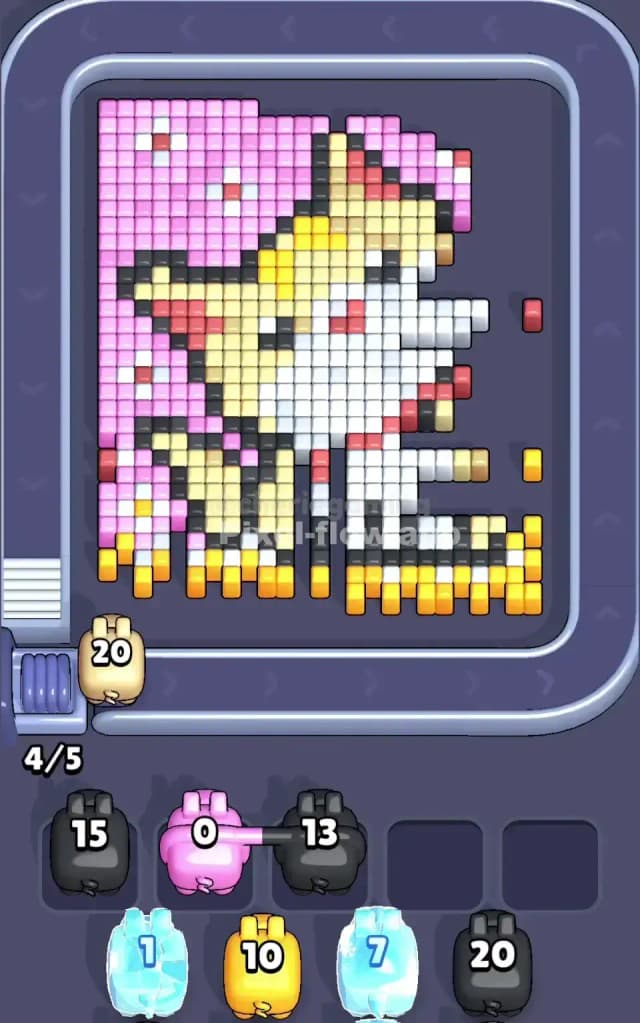
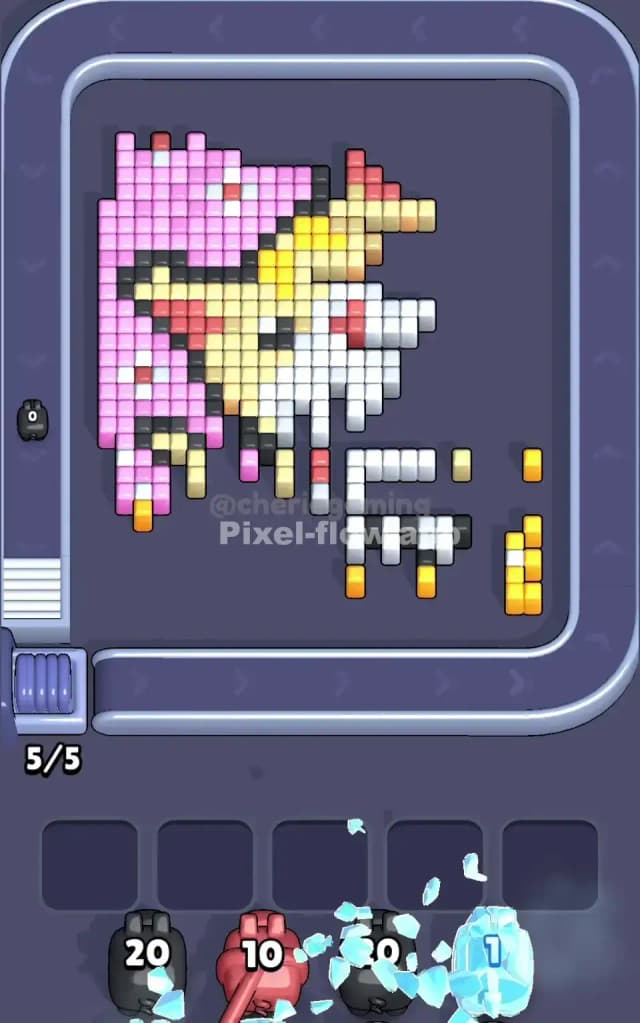
Once your first pig is spent and waiting, your second pig arrives on the conveyor. By now, your partial cyan destruction should have exposed some of the red or tan cubes underneath. If your second pig is red, this is your moment to strike the newly exposed red section with focused fire. Spend 8–12 ammo on red, then let your second pig wait. The key insight for Pixel Flow Level 321 at this stage is to think in layers: cyan is the top barrier, red and tan are mid-levels, and gray is often deeper or to the side. Your pig sequencing should mirror this depth order. After red, you'll want to expose tan and gray regions. If your second pig is tan instead, do the reverse—target exposed tan cubes and leave red for later. The waiting slots fill naturally, but because you're strategically depleting each pig's ammo on visible targets, you're not forcing a jam. Watch the queue constantly: if you see a fourth or fifth pig about to enter and your waiting slots are nearly full, you need to act urgently on the current pig.
End-Game: The Final Stretch and Clean Buffer
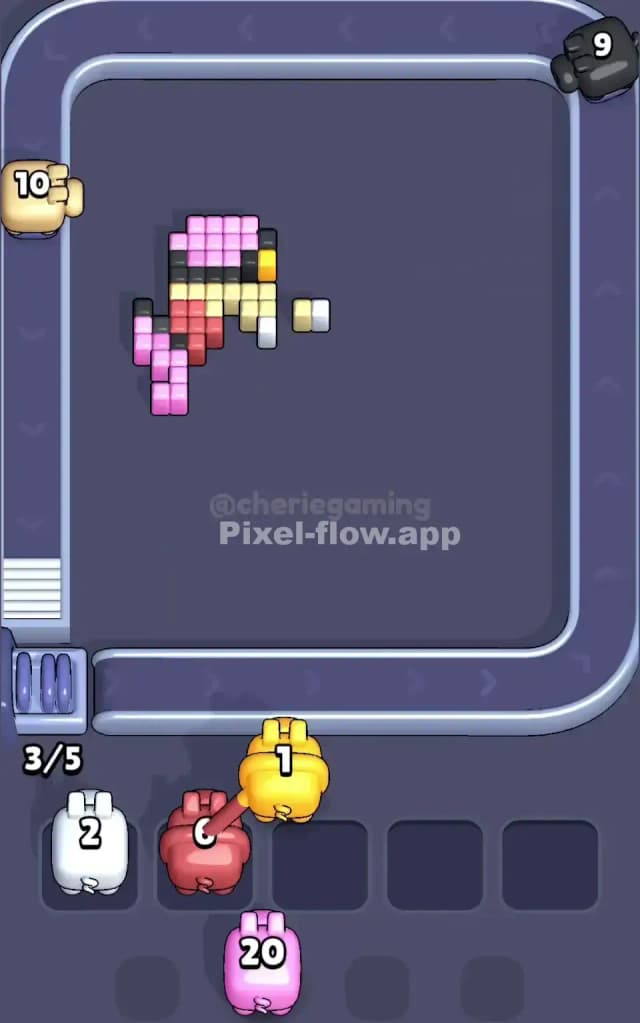
As you approach the tail end of Pixel Flow Level 321, you'll have maybe 15–20 cubes left scattered across the board, likely a mix of colors. Your third pig is probably spending its remaining ammo, and you've got one or two pigs parked in waiting. Here's where patience pays off. Count the remaining cyan, red, and tan cubes. If you have, say, 8 cyan cubes and your waiting tan pig has 5 ammo left, that's a problem—your tan pig can't help with cyan, and if no other targets align, it jams. The solution is to deliberately leave your current pig (the one on the conveyor) mid-stream, shooting only what it needs to expose one more layer or clear one more color zone. Then let it drop to waiting. Now your queued pigs should have fresh, exposed targets. Inch toward the finish line by exposing and depleting colors in tandem. On the very last few cubes, you want exactly one pig with ammo remaining, and its color should match the remaining cubes. If you've orchestrated correctly, that final pig fires its last shots, the board clears, and you've beaten Pixel Flow Level 321 cleanly.
The Logic Behind This Pixel Flow Level 321 Plan
Determinism as Your Advantage
The reason this strategy works for Pixel Flow Level 321 is that the game is completely deterministic. Every pig's ammo count is fixed, every pig's color is fixed, and every cube's position is fixed. There's no randomness, no luck involved. This means that if you fail, you can replay the exact same sequence and learn where you went wrong. This is incredibly powerful: it invites analytical thinking rather than reactivity. By mapping out the board before you start and planning which color your first pig should target, you're essentially pre-solving the puzzle in your head. Pixel Flow Level 321 rewards this kind of deliberate, pre-planned approach because once you know pig one is tan with 20 ammo, you know exactly what to do with it—expose tan and red layers without jamming the buffer.
Managing the Waiting Slots as a Real Resource
Your five waiting slots are not infinite storage; they're a strategic resource that you must manage actively. In Pixel Flow Level 321, every pig that drops into waiting is a pig that's no longer shooting and potentially a pig that could jam you later. Think of keeping waiting slots empty as keeping your options open. If you fill all five slots carelessly with half-spent pigs, you've locked yourself into a situation where the next arriving pig has nowhere to go and no targets to shoot (because you haven't exposed its color yet). By contrast, if you keep 2–3 waiting slots clear, you create breathing room to handle unexpected color patches or to delay a pig's deployment slightly by not releasing it from the queue. This one tactical shift—respecting the waiting slots—often means the difference between a jam and a victory in Pixel Flow Level 321.
Staying Calm and Counting Two Moves Ahead
The final piece of the Pixel Flow Level 321 strategy is mental discipline. Don't just fire away at whatever looks easiest; pause and count. How many cyan cubes are visible? How many red? How many does your next pig have ammo for? When you can answer these questions before deploying, you're playing Pixel Flow Level 321 correctly. The best runs happen when you're thinking two or three pigs ahead—not reacting to the board state, but shaping it deliberately. Watch the conveyor queue, track ammo on each waiting pig, and anticipate which color will be exposed next. This kind of forward planning takes a few seconds of mental effort but transforms Pixel Flow Level 321 from a frustrating guessing game into a solvable puzzle. Once you've beaten it once with this mindset, subsequent replays become faster and more elegant.