Pixel Flow Level 322 Solution | Pixel Flow 322 Walkthrough
How to beat Pixel Flow Level 322: Video solution & walkthrough. The fastest way to pass Pixel Flow 322.
Is this the wrong level layout?🤔
Pixel Flow randomizes levels for different players. Don't worry, just upload a screenshot of your board, and our AI will find the correct video instantly.
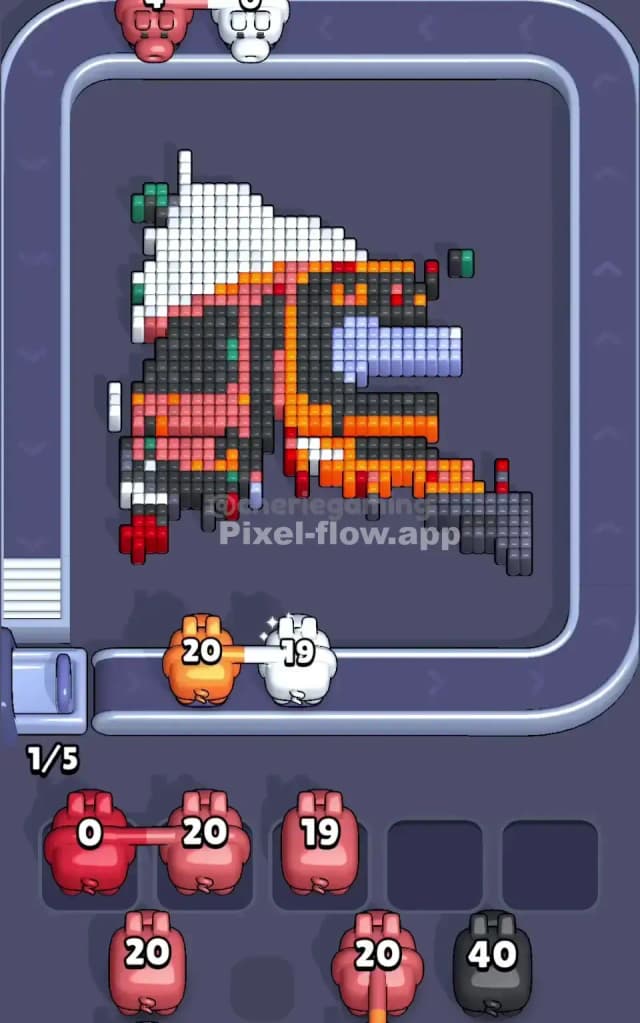
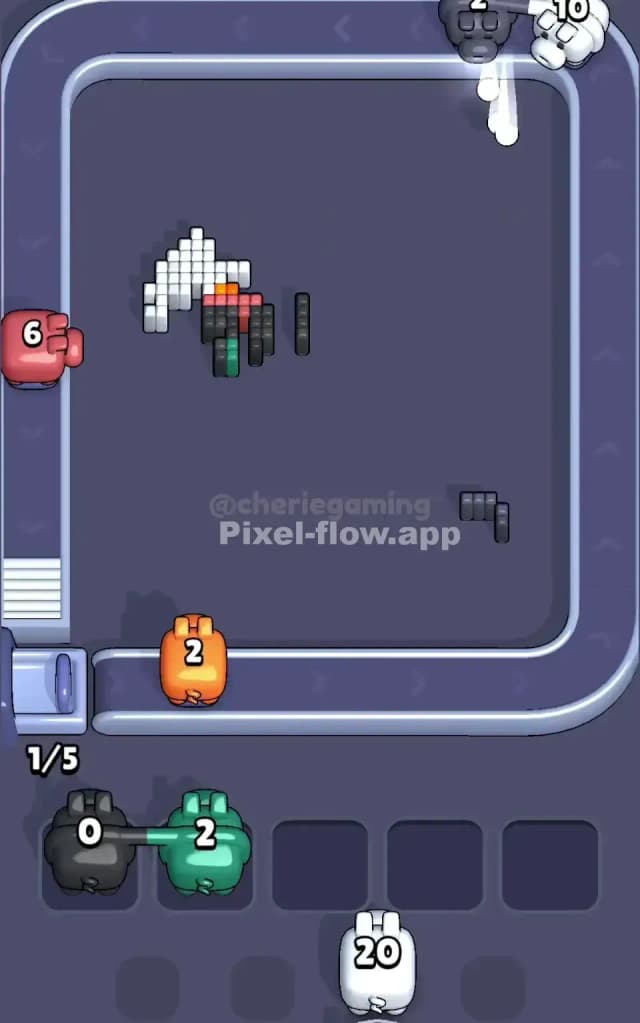
Pixel Flow Level 322 Walkthrough
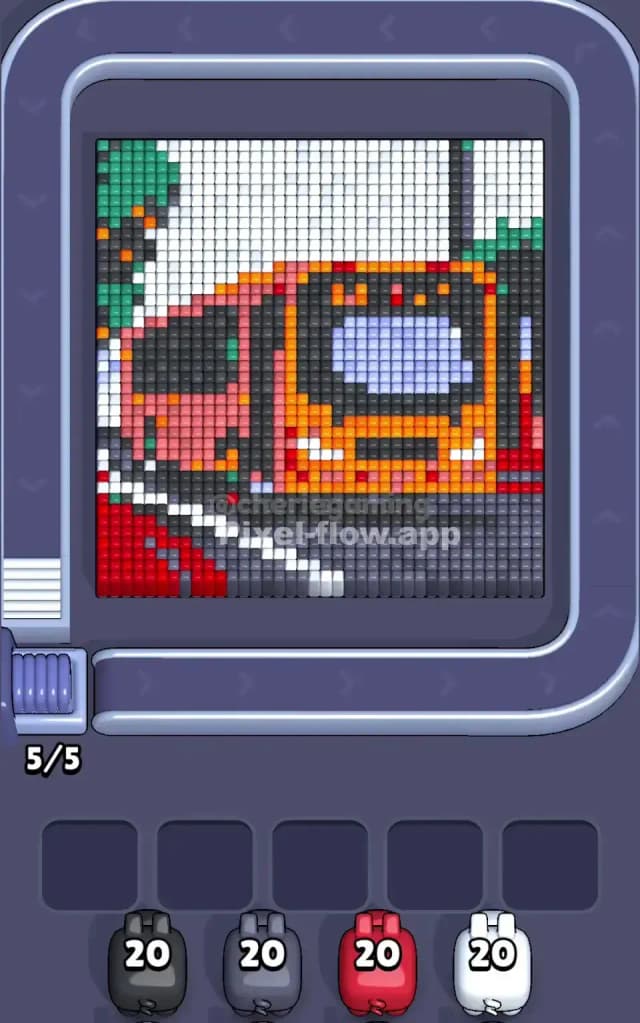
This level features a large, detailed vehicle—an orange bus or tram—angled slightly towards the left, dominating the center of the screen. The scene is split distinctly: a massive white "sky" section at the top, dark grey road pavement at the bottom, and the complex multi-colored bus in the middle. The rules are standard: clear the outer layers of pixels to reveal and destroy the ones underneath. Don't let your waiting slots fill up with useless pigs.
Is it tough? Yes. I would judge this as a very hard level. The complexity comes from the "bus" itself. It uses a mix of orange, black, and red pixels that are tightly interwoven. It's easy to think you are clearing a layer, only to find a single stray pixel blocking the next color you need.
Pixel Flow Level 322 Overview
Imagine a city bus driving towards you on a rainy day. That's the vibe here. The top half is dominated by a huge block of white sky, which acts as your "safe zone" for dumping white pigs. The bottom is a solid slab of dark grey asphalt.
The bus itself is the danger zone. It has a bright orange front face with a grey windshield. The side of the bus, angled away to the left, is a darker mix of red and black.
Asymmetry is key here:
- Top: Almost entirely white. Very safe.
- Bottom: Heavy dark grey. Also safe.
- The Trap: The center. The orange frame of the bus and the red side panels are layered awkwardly. You will often see an orange pig come down the belt, but the orange pixels are buried under a single black pixel that acts as a shield. If you aren't careful, you'll clog your slots with orange pigs that can't shoot yet.
Step by step solution walkthrough for Pixel Flow Level 322
First Color Zone to Erase in Pixel Flow Level 322
I strongly recommend starting with the White Sky or the Dark Grey Road. Ignore the bus entirely for the first minute.
Why? The white area at the top is huge and mostly flat. It’s "free ammo." If you see a white pig, grab it immediately. It will clear huge swathes of the board without getting stuck. The same logic applies to the dark grey road at the bottom. By clearing these massive, simple blocks first, you essentially "frame" the bus, isolating the difficult part of the puzzle so you can focus on it without distractions.
If you try to attack the bus first (orange/red), you will likely fail. The bus layers are too deep, and you'll run out of slot space holding pigs that can only hit one or two pixels at a time.
How to pass Pixel Flow Level 322 without power ups or boosters
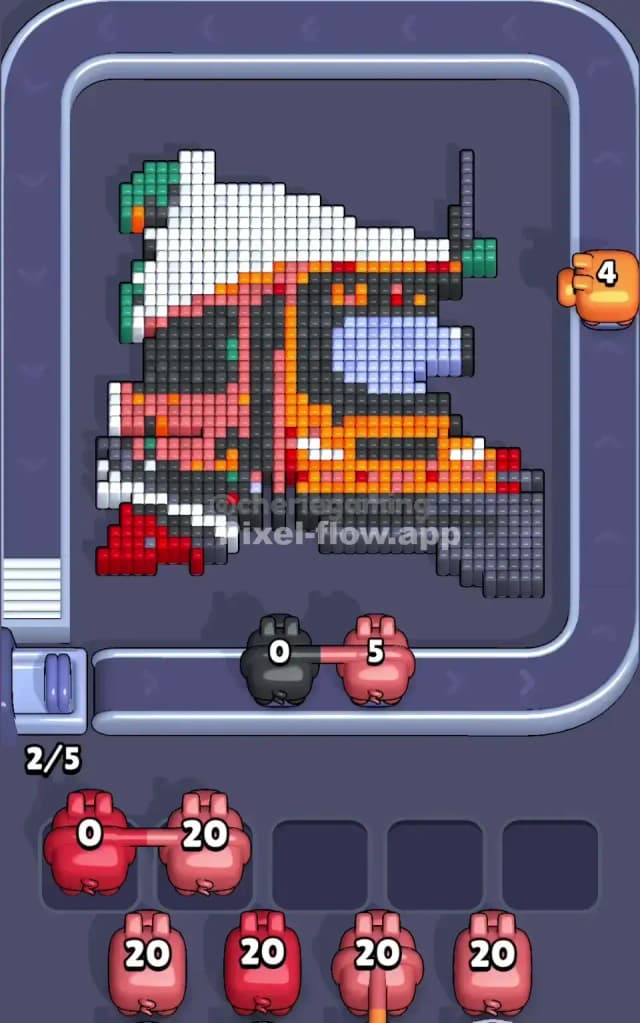
Once the sky and road are gone, the level gets messy. The bus looks half-destroyed, floating in the void. This is the critical moment.
- Prioritize the "Outline" Colors (Black/Dark Grey): The bus has a lot of black outlining the windows and wheels. These black pixels often sit on top of the orange body or the blue window glass. You must clear the black outline to access the colors underneath. If you hoard orange pigs now, you will lose. Prioritize black pigs to strip the "skin" off the bus.
- Watch the Red Side Panel: The left side of the bus is red. This area is tricky because it mixes with the black window tints. Often, a red pixel is hiding behind a grey one. Don't grab a red pig unless you clearly see a cluster of red pixels exposed on the surface.
- The Windshield Trap: The blue/grey windshield is often the last thing to clear. Do not prioritize blue pigs early. The glass is deep inside the image. You usually have to clear the orange frame around the window before the glass becomes a valid target.
Refusing power ups means being patient with the conveyor belt. If a white pig comes and you have any white left (even just 2 pixels), take it. It’s better to waste a slot briefly to clear the board than to let a useful pig pass by while you wait for a "perfect" black pig that might not spawn for ten seconds.
Last Details You Clean Up in Pixel Flow Level 322
As you near the end, you'll likely be left with the center of the windshield and the front bumper.
The windshield usually has a light blue or white reflection in the center that stays buried until the very end. Keep a slot open for that specific light blue/white color. The bumper often has small yellow or white lights that are easy to miss.
Finally, check the top left corner where the "tree" or green foliage is. Sometimes a single dark green pixel hides there, indistinguishable from the black outline until everything else is gone. Make sure you don't ignore the green pigs if that corner is still standing!