Pixel Flow Level 336 Solution | Pixel Flow 336 Walkthrough
How to beat Pixel Flow Level 336: Video solution & walkthrough. The fastest way to pass Pixel Flow 336.
Is this the wrong level layout?🤔
Pixel Flow randomizes levels for different players. Don't worry, just upload a screenshot of your board, and our AI will find the correct video instantly.
Pixel Flow Level 336 Walkthrough
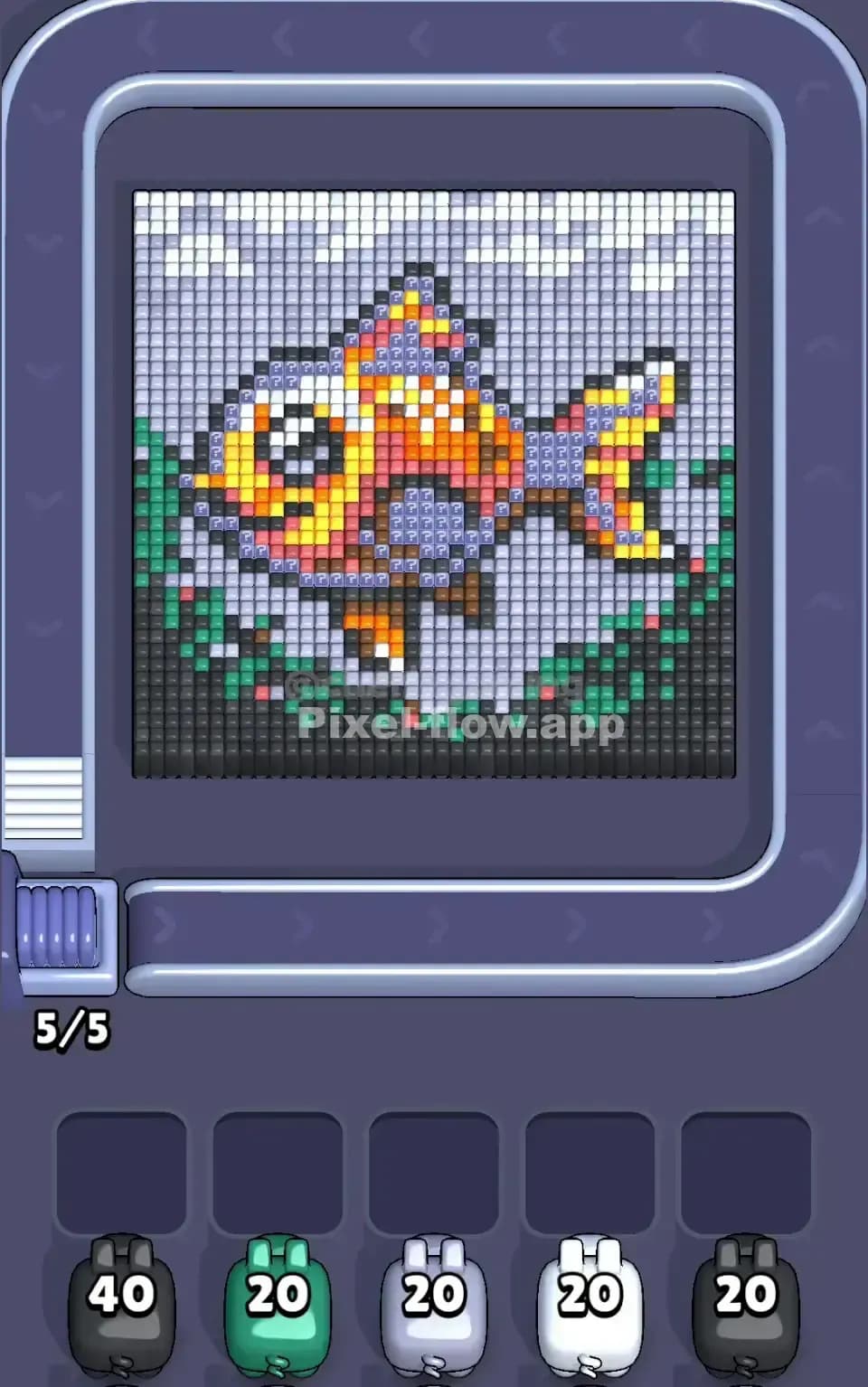
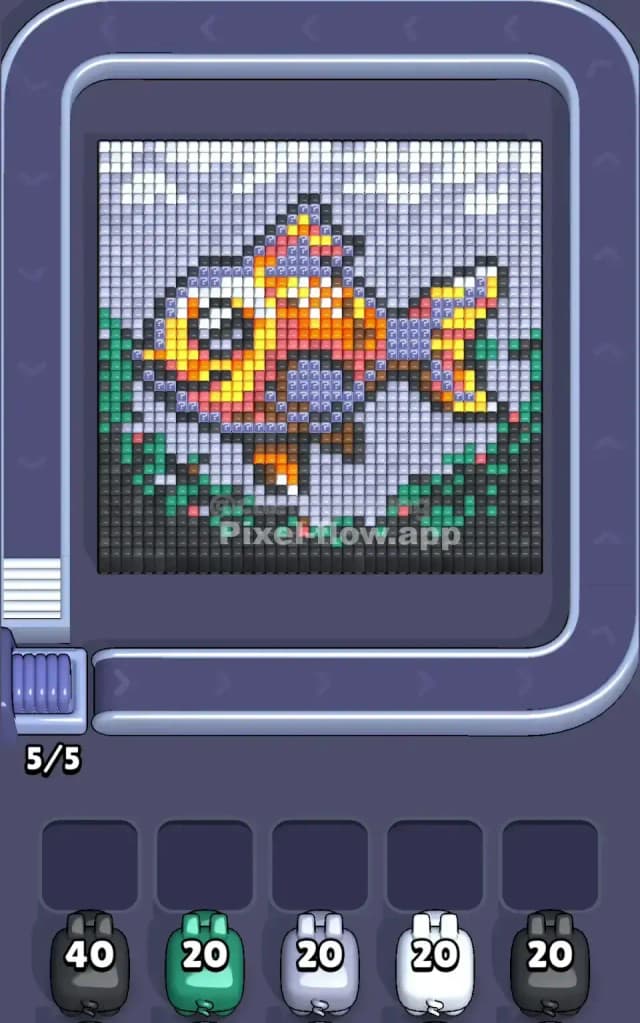
You are looking at a vibrant, chunky pixel art piece of a Koi fish swimming through a stone pond. The background is a mix of light grey water and dark grey rocks, while the fish itself is a complex mix of yellow, orange, and mystery blocks. The rules are simple: match the pig color to the pixel color to clear layers. However, the sheer density of the background layers makes this a very hard level. One mistake with the high-ammo black pigs will clog your slots instantly.
Pixel Flow Level 336 Overview
This level depicts a stylized Goldfish or Koi swimming diagonally toward the top left. The scene is heavy and enclosed. The fish isn't swimming in open ocean; it is surrounded by a thick frame of dark grey rocks at the bottom and lighter grey water or stone at the top.
Green seaweed creeps up both the left and right sides, acting as a "curtain" that blocks shots from hitting the fish's body. The fish itself is the most dangerous part of the board. It is covered in Purple Mystery Blocks (pixels with question marks). You don't know what color lies beneath them until adjacent blocks are cleared, which introduces RNG (randomness) that can mess up your strategy.
The layout is vertically asymmetrical. The bottom half is dense with dark "filler" blocks (the rocks), while the top half is lighter. This means your high-ammo pigs are almost exclusively needed for the bottom rows, while low-ammo pigs handle the top.
Step by step solution walkthrough for Pixel Flow Level 336
First Color Zone to Erase in Pixel Flow Level 336
Ignore the fish. Completely ignore the colorful center. Your absolute priority is the Black/Dark Grey zone at the bottom of the screen.
Look at your queue. You likely have a Black Pig with a massive 40 ammo count. This is a game-ender if you misuse it. That pig is designed to eat through the dark bedrock layer at the very bottom of the image. If you try to save this pig for later, or if you clear the bottom rows with other colors first, you will have nowhere to dump that 40 ammo. The pig will sit in your waiting slot, effectively killing that slot for the rest of the game.
Clear the bottom dark grey rocks immediately. This opens up the "floor" of the level and exposes the orange belly of the fish.
How to pass Pixel Flow Level 336 without power ups or boosters
Once the heavy dark rocks are gone, the board looks messy. You have a half-eaten fish and jagged walls of green seaweed. The temptation is to start blasting the orange fish scales. Don't.
Focus on the Green seaweed on the left and right edges. These vertical green columns act as shields. If you don't clear them, your pigs on the far left and right conveyor belts will waste ammo shooting at indestructible blocks or, worse, have nothing to hit.
After the green is gone, switch your focus to the Light Grey/White background at the top. You need to "peel" the picture from the outside in. Do not pull Orange or Yellow pigs until the background is totally gone. If you pull a Yellow pig while a White block is still hovering over the fish's face, that pig will drop into a slot and stay there.
Deal with the Mystery Blocks carefully. As you clear the grey/white surroundings, these blocks will reveal their true colors. Usually, they turn into Orange or Yellow scales. Adapt quickly. If a mystery block turns Red and you have no Red pig, you have to wait. Patience is key here.
Last Details You Clean Up in Pixel Flow Level 336
The endgame of Pixel Flow 336 is usually a vertical strip of Yellow and Orange.
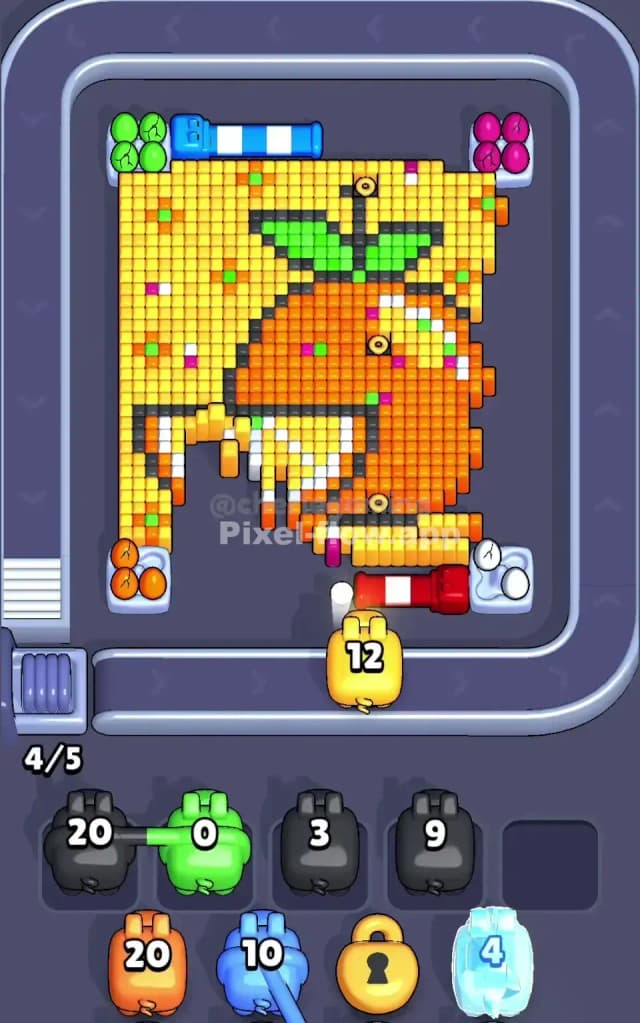
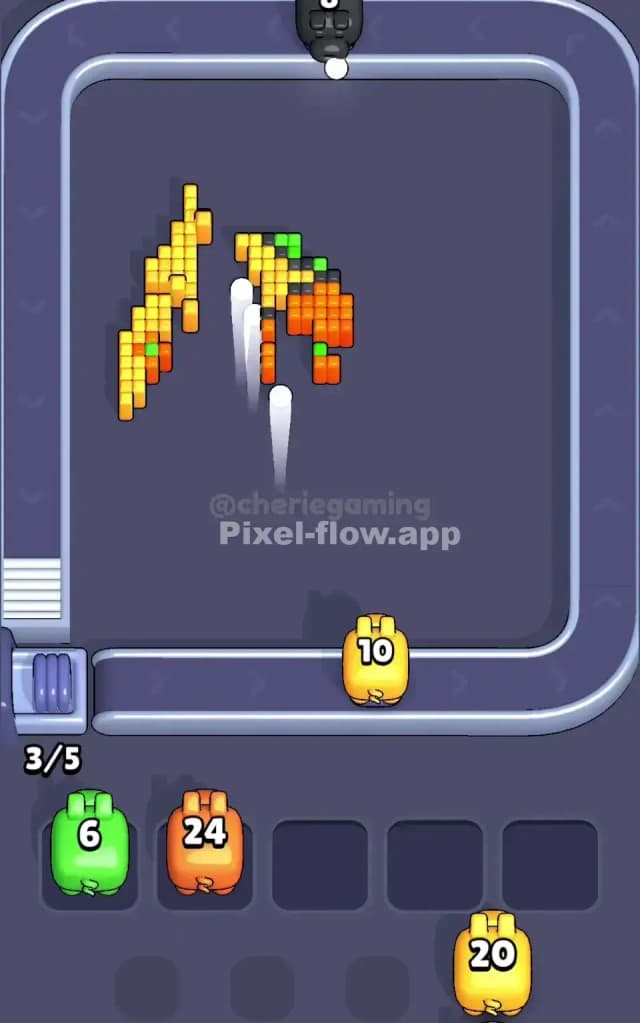
Because the fish is swimming diagonally, the pixel logic often leaves weird, isolated towers of color (as seen in the mid-level breakdown). You will likely be left with the fish's spine—a mix of orange body and yellow fins.
Be very careful with your last few pigs. Often, a single Green pixel is hidden deep inside the fish (part of the layering). Ensure you have a slot open for a sudden Green or Red pig that might be needed to clear the very last internal voxel. If you clog your slots with Yellow pigs thinking the game is over, that one hidden pixel will cause a fail.