Pixel Flow Level 349 Solution Walkthrough | Pixel Flow 349

How to solve Pixel Flow level 349? Get instant solution for Pixel Flow 349 with our step by step solution & video walkthrough.

Share Pixel Flow Level 349 Guide:
Pixel Flow Level 349 Gameplay
Pixel Flow Level 349 Solution 1
Pixel Flow Level 349 Solution 2
Pixel Flow Level 349 Solution 3

Pixel Flow Level 349 Overview

The Board at a Glance

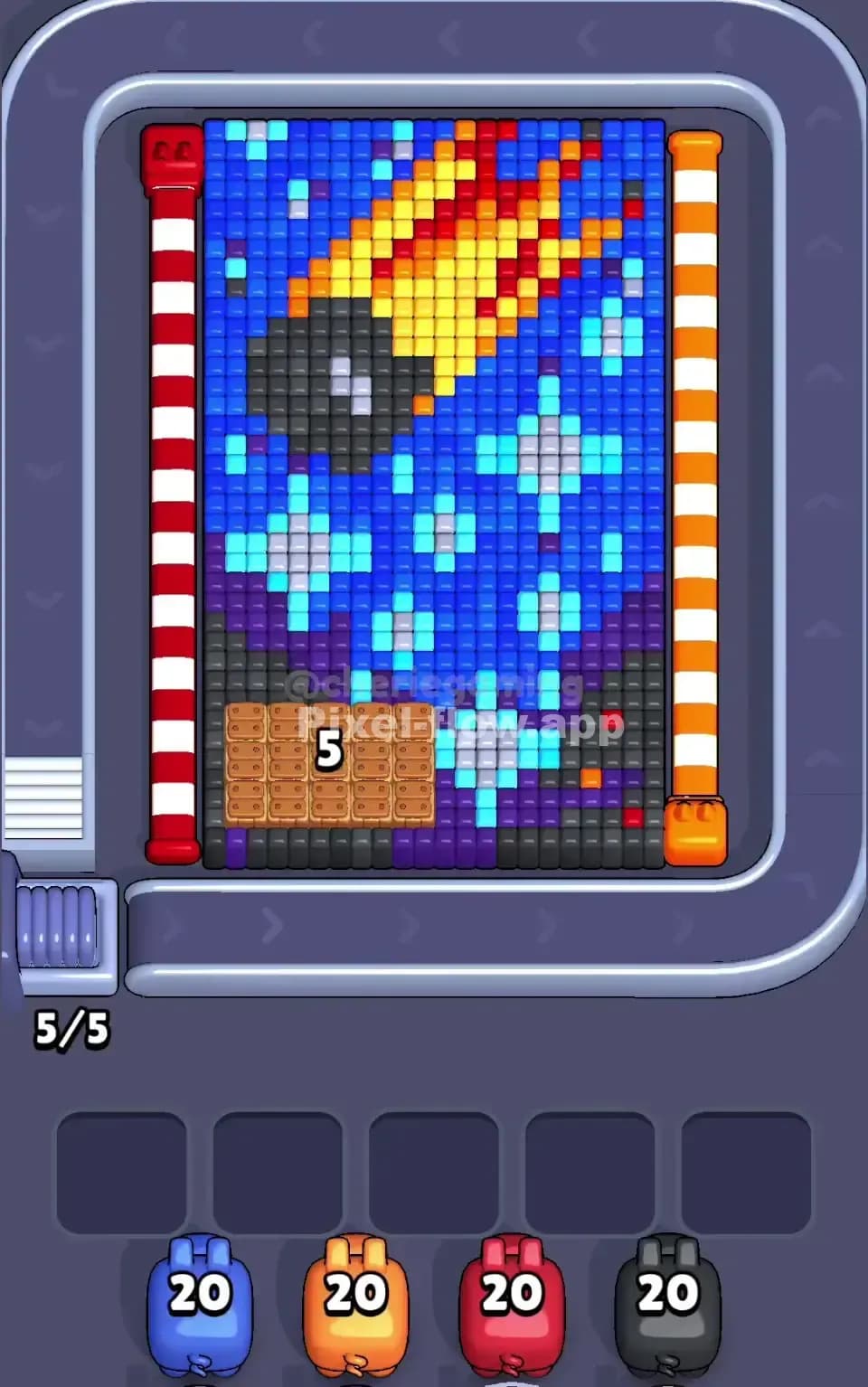
Pixel Flow Level 349 presents a stunning pixel art scene dominated by a bright, layered composition. You're looking at a vibrant sky background filled with deep blue cubes, punctuated by a striking yellow and red diagonal streak that runs across the upper portion of the board—think of it as a comet or lightning bolt cutting through the atmosphere. Below that celestial element sits a darker, more complex middle section with gray and purple tones, and at the very bottom, you'll find a warm brown/tan foundation that serves as the ground level. The visual depth here is key: multiple color layers are stacked intentionally, meaning you'll need to clear specific colors in a careful sequence to expose what's underneath and reach the final victory.

Win Condition and Deterministic Nature

To conquer Pixel Flow Level 349, you must clear every single voxel cube from the board. The game starts you with four pigs on the conveyor belt: a blue pig with 20 ammo, an orange pig with 20 ammo, a red pig with 20 ammo, and a gray pig with 20 ammo. This exact ammo distribution isn't random—it's deterministic and carefully calibrated. Your job is to feed these pigs into the board in the right order so that each one shoots cubes of its own color, spending ammo efficiently and never filling all five waiting slots while pigs still have unspendable ammo left. Sounds straightforward? It gets tricky fast, and that's what makes Pixel Flow Level 349 such a satisfying puzzle.


Why Pixel Flow Level 349 Feels So Tricky

The Blue Bottleneck

Here's the immediate problem with Pixel Flow Level 349: blue dominates the board. Look at the upper two-thirds of the canvas—it's a sea of blue cubes. You have a blue pig with 20 ammo, but honestly, 20 shots might not be enough to clear all the blue in one or two passes. The sneaky part is that blue cubes are scattered across multiple layers and depths. Some blue sits right on top, easy to target, while other blue hides behind the yellow/red diagonal and the darker middle section. If you rush the blue pig too early, you'll spend precious ammo on exposed cubes, then it'll drop into the waiting slots with ammo remaining but nothing left to shoot. That's a jam waiting to happen, and it'll haunt you throughout Pixel Flow Level 349.

Hidden Color Patches and Layer Surprises

The yellow and red diagonal that streaks across the board is visually gorgeous but strategically annoying. Those warm colors sit on top of the blue, meaning you can't access all the blue beneath them until you've cleared the yellow and red first. But here's the catch: you only have an orange pig with 20 ammo and a red pig with 20 ammo to handle potentially dozens of yellow and red cubes. Count them carefully, because if the orange pig can't cover all the orange/yellow cubes visible on the board, you'll be left with a pig that has ammo but no valid targets—a guaranteed waiting slot clog. The purple and gray middle section compounds this problem: it acts as a visual and strategic barrier, hiding what's truly underneath and forcing you to think three or four moves ahead.

The Psychological Weight

I'll be honest—Pixel Flow Level 349 stressed me out the first few attempts. You're staring at a gorgeous pixel art image, and your brain wants to just "clear colors" without a real plan. The waiting slots fill up, you panic, you feed pigs randomly, and suddenly three of your four pigs are sitting idle with ammo left over. The level doesn't feel impossible, but it feels punishing for impulsive moves. The "click" moment came for me when I stopped thinking about individual cubes and started thinking about layers: which colors must I clear first to expose the next layer, and do my pig ammo counts actually match that plan?


Step-by-Step Strategy to Clear Pixel Flow Level 349

Opening: Expose the Foundation

Start by sending your orange pig first. Yes, I know it feels counterintuitive when blue dominates, but trust the process. The orange pig will shoot cubes in the orange section (the right border, primarily), and critically, it'll clear some of the warm-colored diagonal interference. With 20 ammo, the orange pig should handle most of its visible targets—you're aiming to keep at least 2 waiting slots open and avoid a backup. As the orange pig finishes, watch the board carefully. You should see a few orange/yellow cubes scattered in that diagonal zone fall away, revealing slightly more blue beneath and making the board's true structure clearer.

Next, send your red pig. The red pig targets red cubes, which are clustered in that same diagonal and scattered elsewhere. With 20 ammo, it should clear most reds you can see. The goal here is the same: spend ammo fully on visible targets, keep waiting slots under control, and start dismantling the "noise" that's hiding deeper colors. After the orange and red pigs have done their work, Pixel Flow Level 349 should feel visibly simpler—the diagonal is largely gone, and you've got a clearer view of the blue, gray, and purple layers.

Mid-Game: Layer Peeling and Strategic Parking

Now send your gray pig. The gray pig is your workhorse for the dark middle section. Gray cubes are present in that darker zone, and with 20 ammo, this pig can clear a substantial portion of them. However—and this is critical—don't expect the gray pig to clear everything gray in one shot. Watch as it fires: some gray cubes will fall, others will remain. If the gray pig empties its ammo and still has grays visible, that's a sign there are deeper grays you can't access yet. That's not a failure; it's exactly what you want. Park the gray pig if needed (let it drop into a waiting slot after spending its ammo), and move forward knowing you'll tackle the remaining grays later.

At this point, you still have a blue pig with 20 ammo in the queue. This is where the sequence becomes crucial. Before you send the blue pig, take a mental inventory of the board. Blue cubes should now be more visible since you've peeled away the yellow, red, and some gray. Send the blue pig and let it work through the exposed blue. With 20 ammo and a clearer board, the blue pig should make serious headway. However—and I can't stress this enough—if you see blue cubes deep in the board that your pig can't touch because they're blocked by dark gray or purple, don't waste ammo trying. Let the blue pig spend its 20 ammo on what's available, then move forward.

End-Game: Precision and Avoiding the Final Jam

Here's where patience pays off. After your first pass of all four pigs, the waiting slots will have some inhabitants. You might have a blue pig with 5 ammo left, or a gray pig waiting. Don't panic. Look at the board again: what colors remain? You'll likely see purple and dark gray forming a substantial layer, along with scattered blue and cyan cubes.

The trick to finishing Pixel Flow Level 349 cleanly is recognizing that the conveyor belt is cyclic. Your pigs will come around again. When the blue pig cycles back, send it if there's still blue visible. When gray cycles back, send it to tackle more dark cubes. The key is matching ammo to actual available targets on each pass, and gradually wearing down the multi-layered board.

Watch the waiting slots obsessively. If you ever see four slots filled with pigs that have remaining ammo but no valid targets, you've made a critical error—restart and reconsider your sequence. But if you're feeding pigs strategically (only when there are visible targets for them to hit), the waiting slots should naturally cycle, with pigs coming back off the belt as new ones move through the queue.

For the absolute final moves, you're typically left with single-color stragglers. A few purple cubes, maybe some cyan. The remaining pig cycles will pick these off one by one. Be patient, count remaining ammo versus remaining cubes, and confirm before your last pig fires that the board is clear.


The Logic Behind This Pixel Flow Level 349 Plan

Exploiting Determinism and Waiting Slots

Pixel Flow Level 349 is fundamentally a puzzle about order and resource matching, not reflexes. Your four pigs always have 20 ammo each. The board always has the same colors in the same places. The waiting slots are your buffer—they let pigs sit temporarily without jamming the system, as long as those pigs eventually get to spend their remaining ammo. The strategy I've outlined exploits this by ensuring that every pig you send has visible targets to shoot. You're not reacting randomly; you're planning two or three pigs ahead, estimating how many blue cubes exist versus how many ammo the blue pig has, and sequencing warm colors first to expose deeper colors.

The Power of Calm Observation

The difference between frustration and victory in Pixel Flow Level 349 is simple: watch the queue and count. Before you send a pig, pause and visually scan the board for that color. Do you see 25 red cubes? Your red pig has 20 ammo—it won't finish red. That's information. It tells you red might come back around. Do you see only 8 orange cubes? Your orange pig can clear them comfortably and still have 12 ammo left—wait, that's a problem! If your orange pig finishes orange with 12 ammo unused, it'll drop into a waiting slot as a dead weight. So maybe you don't send orange yet; maybe you send red or blue first to expose more orange hidden beneath.

This kind of forward thinking transforms Pixel Flow Level 349 from a chaotic mess into a solvable puzzle. You're not trying to "beat" the level in one brilliant moment—you're negotiating with the board, peeling layers, and managing your finite resources like a true strategist.