Pixel Flow Level 37 Solution Walkthrough | Pixel Flow 37

How to solve Pixel Flow level 37? Get instant solution for Pixel Flow 37 with our step by step solution & video walkthrough.

Share Pixel Flow Level 37 Guide:
Pixel Flow Level 37 Gameplay
Pixel Flow Level 37 Solution 1
Pixel Flow Level 37 Solution 2
Pixel Flow Level 37 Solution 3

Pixel Flow Level 37 Overview

The Board Layout and Pixel Art Subject

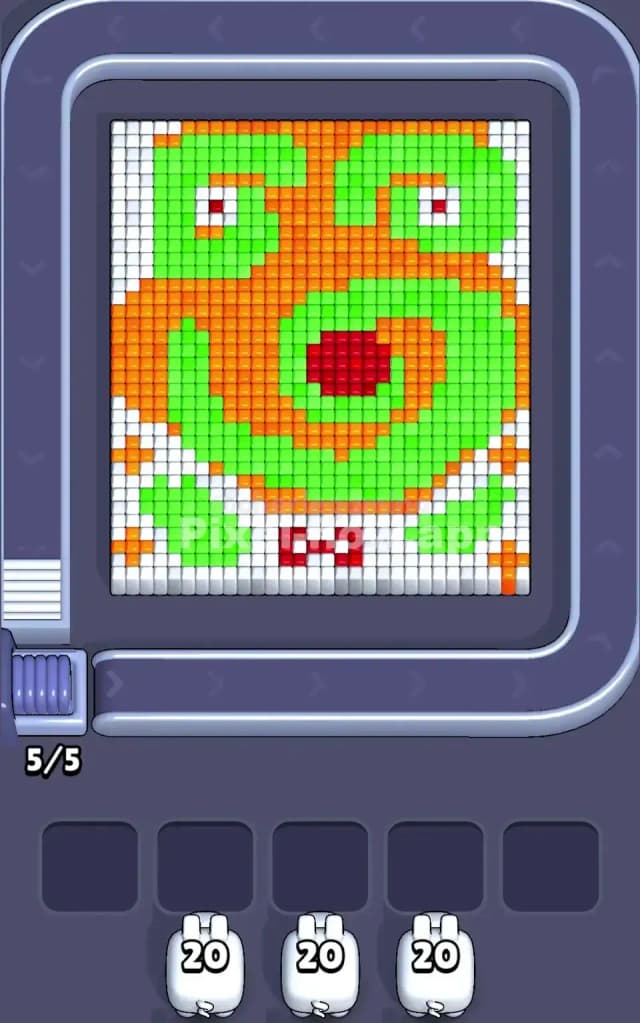
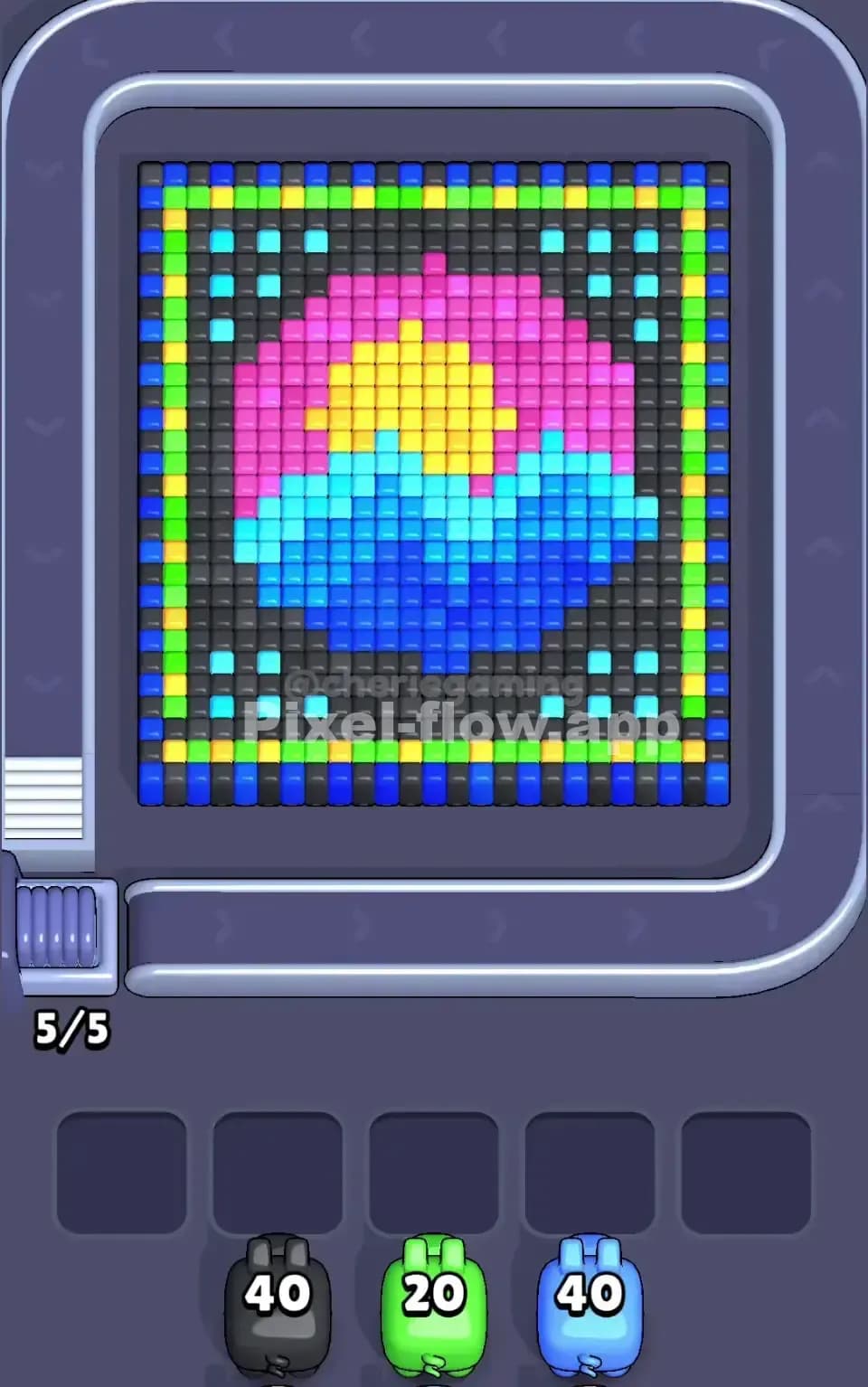
Pixel Flow Level 37 presents you with a charming pixel-art fox face as the central subject, rendered across a multi-layered voxel grid. The fox's face is predominantly composed of green and orange cubes, with striking red cubes forming the nose and subtle white corner details framing the composition. When you first load Pixel Flow Level 37, you'll notice the green dominates the outer and middle regions, while orange creates a bold striped pattern that weaves through the fox's body. This layered structure is deliberate—you're not just clearing random colors, but systematically peeling back the voxel picture to expose deeper sections. The white corner pieces act as spacing elements, and the red nose is a compact, high-visibility target. Understanding this layout from the start is crucial because it tells you which colors will appear when, and which pigs you'll need to deploy first.

The Win Condition and Deterministic Nature

To clear Pixel Flow Level 37, you must eliminate every single cube on the board. The game's beauty lies in its complete predictability: every pig has a fixed ammo count (in this case, three pigs with 20 ammo each), and the order in which they emerge from the conveyor belt is unchanging. This means that Pixel Flow Level 37 isn't about luck—it's about strategy, sequencing, and foresight. If you plan correctly, you'll spend exactly the right amount of ammo on each color and finish with an empty board and an empty waiting queue. If you mess up the order or miscount, you'll end up with pigs trapped in the waiting slots, unable to shoot because their target colors are buried or completely gone.


Why Pixel Flow Level 37 Feels So Tricky

The Orange-Green Bottleneck

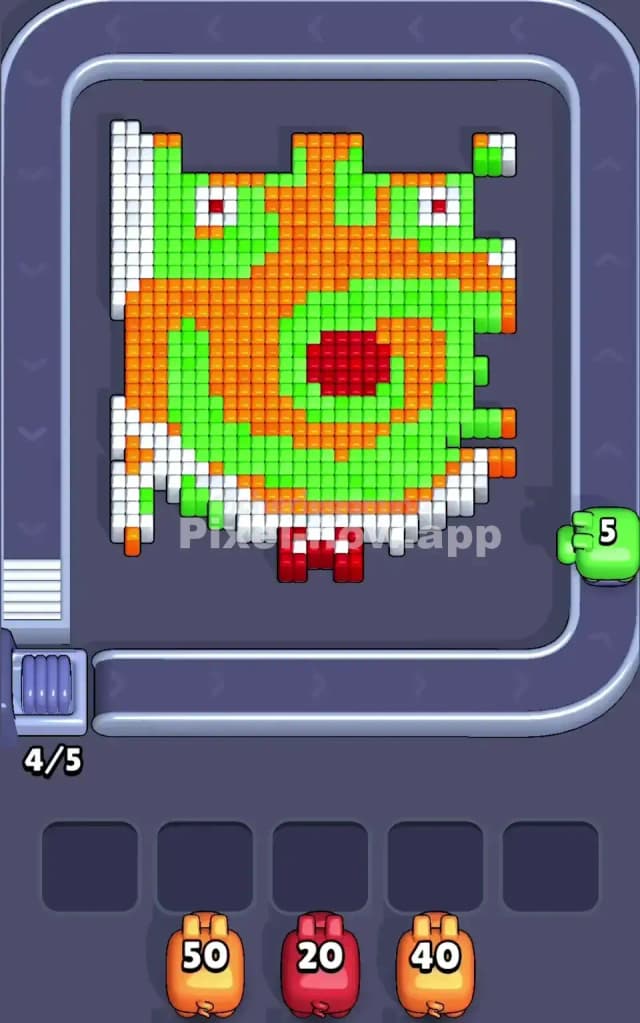
The trickiest aspect of Pixel Flow Level 37 is the constant interweaving of orange and green cubes throughout the puzzle. You can't just clear all green, then all orange—they're interlocked in a way that demands surgical precision. If you send a green pig into the board too early and it empties its ammo on visible greens, you might expose orange underneath that you weren't ready to clear. Then when your orange pig arrives, it'll blow through its 20 ammo in seconds and get stuck in the waiting queue with ammunition still loaded. Conversely, if you hold back your green pig, you might leave greens exposed while your orange pig is still shooting, which feels backwards and wastes turns. The fox's striped pattern is visually appealing but mechanically punishing if you don't respect the layering.

The Red Nose Distraction

The red nose sits right in the middle of the board, small but impossible to ignore. Here's the trap: it's so compact and eye-catching that new players rush to clear it early, thinking it's a priority. In Pixel Flow Level 37, that's almost always a mistake. The red nose should be one of your final targets because it's probably covering a cavity or weak point underneath. If you waste a pig's early ammo on red, you've sacrificed flexibility and likely forced a pig into the waiting slots with nowhere useful to shoot. The red nose isn't a boss—it's a red herring (pun intended).

The White Corners and Pacing

White cubes are present in small clusters at the corners of the board, and they're background—not something any pig can target. This means your three 20-ammo pigs must cover all the green, orange, and red between them. There's no buffer, no extra pig, no room for casual mistakes. If you miscount or miscalculate layering, you'll find yourself with a pig sitting in a waiting slot while you have three cubes of a color left that no remaining pig can hit. The pressure is real, and Pixel Flow Level 37 teaches you to count ruthlessly.

When It Clicked for Me

I'll be honest: I banged my head against Pixel Flow Level 37 for a good five attempts before the logic snapped into place. My turning point came when I stopped watching the pretty pixel art and started tracking the ammo expenditure like a spreadsheet. I realized that the first pig needed to clear only green in the upper layers, leaving orange and red for the second and third pigs. Once I accepted that "saving" a pig by not using it fully was actually a failure condition, everything shifted. The puzzle stopped feeling chaotic and started feeling like a choreographed dance where every step mattered.


Step-by-Step Strategy to Clear Pixel Flow Level 37

Opening: Establish Your First Clean Pass

Your opening move in Pixel Flow Level 37 should target the green cubes in the upper half and left side of the board. Send your first pig (inevitably green with 20 ammo) into the board immediately and let it clear all accessible green on the surface. The key here is to keep at least three waiting slots completely free—you never want more than two pigs sitting idle. As your first green pig shoots, it will expose some orange beneath, but don't panic. That orange is phase two. Your green pig should use roughly 12–15 ammo on this first pass, leaving 5–8 ammo in reserve. If it drops into a waiting slot with ammo left, that's fine—it's now your backup. Do not deploy the second pig immediately; wait two or three turns and watch the queue. You want to bait the game into sending another pig through without desperation. This patience keeps the waiting slots breathing.

Mid-Game: Expose Layers and Manage the Interlock

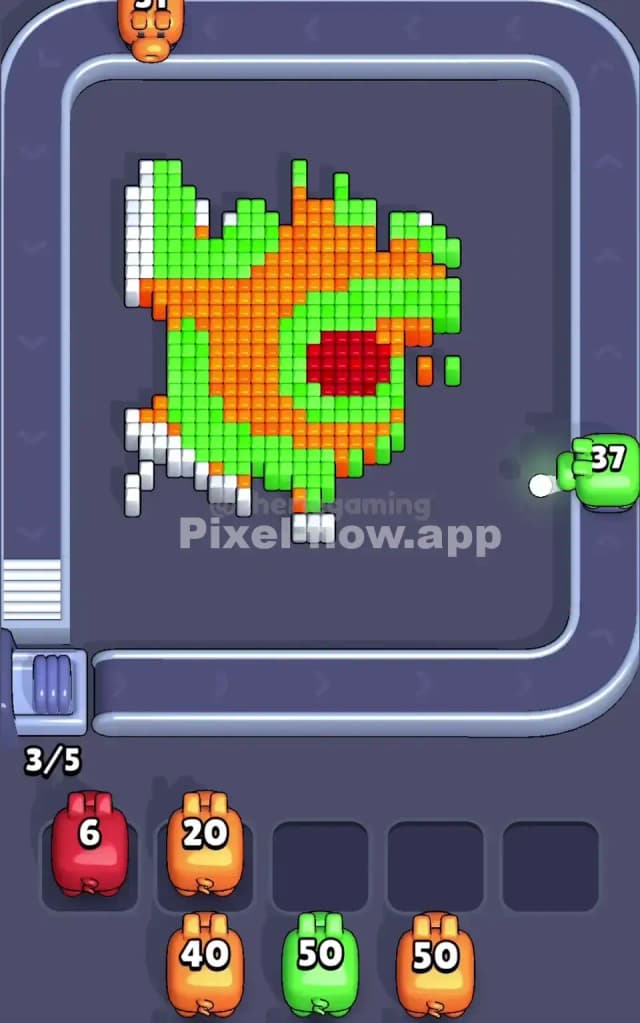
Once your first green pig is parked (whether in the queue or still shooting), your second pig arrives. Depending on the queue state, this is likely your orange pig with another 20 ammo. Here's the critical part of Pixel Flow Level 37: send it in and target the orange stripes that are now visible after green is partially gone. Your orange pig will also chip away at orange-green interlocks, and that's expected. The goal is to spend 15–18 of its ammo on orange, leaving a small buffer. As your orange pig works, the red nose will become increasingly exposed. Resist the urge to let your orange pig finish the nose—save that for your third pig. By mid-game in Pixel Flow Level 37, you should have the first pig in a waiting slot (parked), the second pig actively shooting, and the third pig queued on the conveyor belt. Your waiting slots should still have at least two slots free. If you're full at three pigs, you've mismanaged the opening, and the puzzle gets exponentially harder.

End-Game: Clean Finishes and Queue Discipline

Your third pig (also green or orange, depending on remaining targets) is your closer. In Pixel Flow Level 37, the end-game is about precision and nerve. The third pig should target the red nose and any remaining orange or green in the lower half of the board. You'll have roughly 20 ammo again. The trick is to time this pig's entrance so it arrives when you have maximum flexibility. If your second pig is still shooting but running low, let your third pig wait in the queue. The moment your second pig drops into a waiting slot (or exhausts its ammo), send the third pig in. Finish the red nose with 3–5 ammo if you can, then sweep any lingering colors. The absolute endgame of Pixel Flow Level 37 is when both the first and second pigs are in waiting slots with their ammo spent, and your third pig is the last one shooting. It should empty cleanly, leaving you with three full waiting slots and a blank board.


The Logic Behind This Pixel Flow Level 37 Plan

Ammo Counting as Your Core Skill

Every decision in Pixel Flow Level 37 is built on the foundation of ammo counting. You have exactly 60 ammo across three pigs, and the board has approximately 60 colored cubes (excluding white borders). This 1:1 ratio is not a coincidence—it's intentional design. If you can map roughly how many greens, oranges, and reds are on the board, you'll know that your plan is feasible before you even start. When I approach Pixel Flow Level 37, I take a mental tally: "I see about 30 greens, 25 oranges, and 5 reds. Three pigs at 20 ammo each—check." This mindset transforms the puzzle from a reactive puzzle into a proactive one. You're no longer hoping things work out; you're engineering success.

Queue Management and Waiting Slot Psychology

The five waiting slots are your prison and your safety net. In Pixel Flow Level 37, a pig that lands in a waiting slot with ammo remaining is a pig you miscalculated—but it's also a pig you can still use if you plan carefully. The trap is overfilling the queue. If all five slots are full and your active pig has ammo but no valid targets, you lose immediately. So the real skill in Pixel Flow Level 37 is knowing when to let a pig sit, when to deploy a new one, and how to sequence them so the queue never chokes. Think of it like traffic flow: you're not trying to send all cars through at once; you're spacing them so the lane never jams.

Two-Pig-Ahead Planning

Master players of Pixel Flow Level 37 don't watch one pig at a time—they watch three. As your first pig is shooting, you're already deciding what your second pig will target. As your second pig is active, you're mentally rehearsing your third pig's role. This forward thinking prevents disasters. If you only react to what's happening right now, you'll inevitably create a situation where your third pig arrives with nowhere productive to shoot. In Pixel Flow Level 37, staying calm and thinking two or three pigs ahead is the difference between a clean victory and a frustrating loss.

Pixel Flow Level 37 is a masterclass in planning, patience, and precision. Once you've beaten it, you'll carry these lessons into every subsequent level. Good luck, and trust the math.