Pixel Flow Level 388 Solution | Pixel Flow 388 Walkthrough
How to beat Pixel Flow Level 388: Video solution & walkthrough. The fastest way to pass Pixel Flow 388.
Is this the wrong level layout?🤔
Pixel Flow randomizes levels for different players. Don't worry, just upload a screenshot of your board, and our AI will find the correct video instantly.
Pixel Flow Level 388 Walkthrough
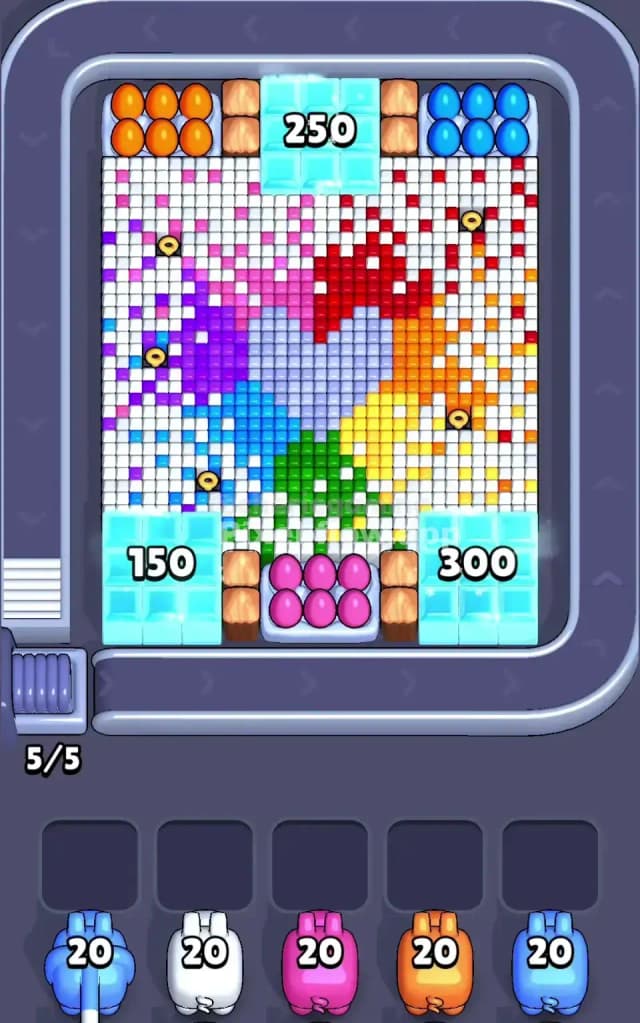
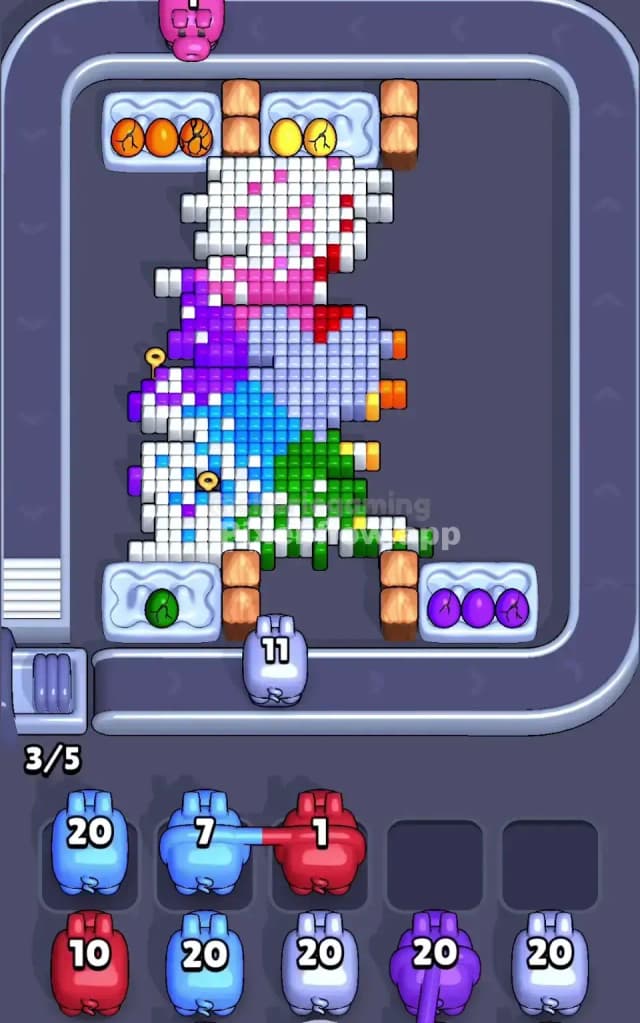
This level hits you with a massive, vibrant rainbow heart exploding into white confetti. The central heart is divided into distinct color zones: purple and blue on the left, red and orange on the right, and green/yellow at the bottom. However, the real challenge isn't the heart itself—it’s the heavy layer of white "noise" pixels scattered everywhere and the three massive Ice Blocks guarding the top and bottom.
To beat Pixel Flow Level 388, you need to crack those ice blocks (labeled 250, 150, and 300) to reach the eggs hidden underneath. You do this by clearing the pixels adjacent to them. It is a very hard level because the board is dense, and the ice block health pools are huge. If you waste pigs on the wrong color zones early on, you will clog your waiting slots before chipping away enough ice.
Pixel Flow Level 388 Overview
Imagine a pixel art explosion. The core is a multi-colored heart, but it’s messy. The background is mostly white, but it’s not a solid block; it’s scattered like static.
- Top Center: A giant Ice Block with 250 HP. It sits right above the "cleavage" of the heart.
- Bottom Left: An Ice Block with 150 HP.
- Bottom Right: A massive Ice Block with 300 HP.
- The Heart:
- Left Side: Deep purples and bright cyans.
- Right Side: Reds bleeding into oranges and yellows.
- Bottom Tip: Green.
The asymmetry here is subtle but dangerous. The right-side ice block has double the health (300) of the left one (150). This means you need significantly more activity on the right side of the board to clear that objective. The white pixels are the "glue" holding it all together. They are everywhere. This is annoying because White Pigs will shoot everywhere, reducing specific ice blocks slowly, whereas colored pigs focus fire on specific zones.
Step by step solution walkthrough for Pixel Flow Level 388
First Color Zone to Erase in Pixel Flow Level 388
Start with the White Pigs.
I know, usually, we focus on colors first. But look at the board. The white pixels are the only color touching all three Ice Blocks simultaneously.
- Narrative Reason: The white pixels are scattered like confetti over the entire image. They block the deeper, solid colors of the heart. If you try to send a Blue or Red pig out first, they might hit a few pixels and then get stuck because their target is buried under white noise.
- Logical Reason: You have massive HP pools to drain (250, 150, 300). A White Pig will likely expend its full ammo clip because there are hundreds of white targets. This maximizes damage per pig and clears the "crust" off the level, exposing the solid colored blocks underneath for your next wave.
How to pass Pixel Flow Level 388 without power ups or boosters
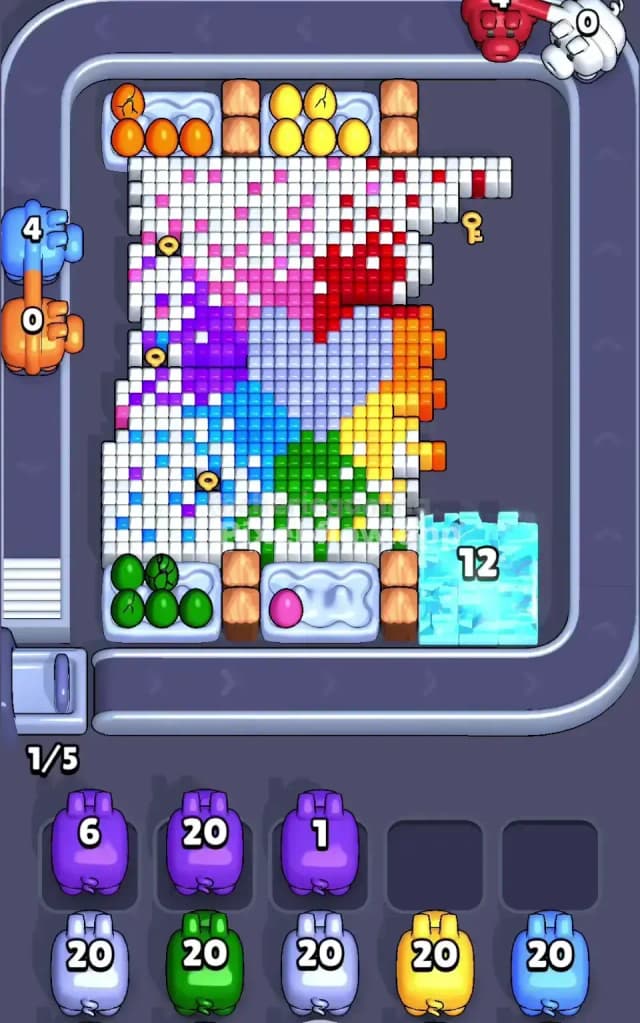
Once the white noise is thinned out, the board looks half-destroyed. You'll see the distinct colored sections of the heart exposed. Now you must switch tactics from "clear everything" to "snipe the ice."
- Prioritize the Right Side (Orange/Red/Yellow): The bottom-right Ice Block has 300 HP. That is your biggest bottleneck. If you see an Orange or Yellow pig, use it immediately. These colors are concentrated on the right side and will help chip away at that 300 HP block faster than the left side will clear.
- Manage the "Waiting Slots": This level is a trap for clogging. Since the heart has so many colors (Purple, Blue, Green, Yellow, Orange, Red), you will get a conveyor belt full of variety. Do not pull a pig if you only see 3-4 pixels of that color exposed. Wait. Let the belt cycle. Only pull a pig (like Green) if you can see a solid chunk of green connected to the bottom ice blocks.
- The Middle Grind: You will likely clear the top Ice Block (250) first because Red, Pink, and Purple touches it. Once the top is open, those pigs become less useful for the bottom objectives. Be careful not to fill your slots with Red/Purple pigs if the only remaining ice is at the bottom.
Last Details You Clean Up in Pixel Flow Level 388
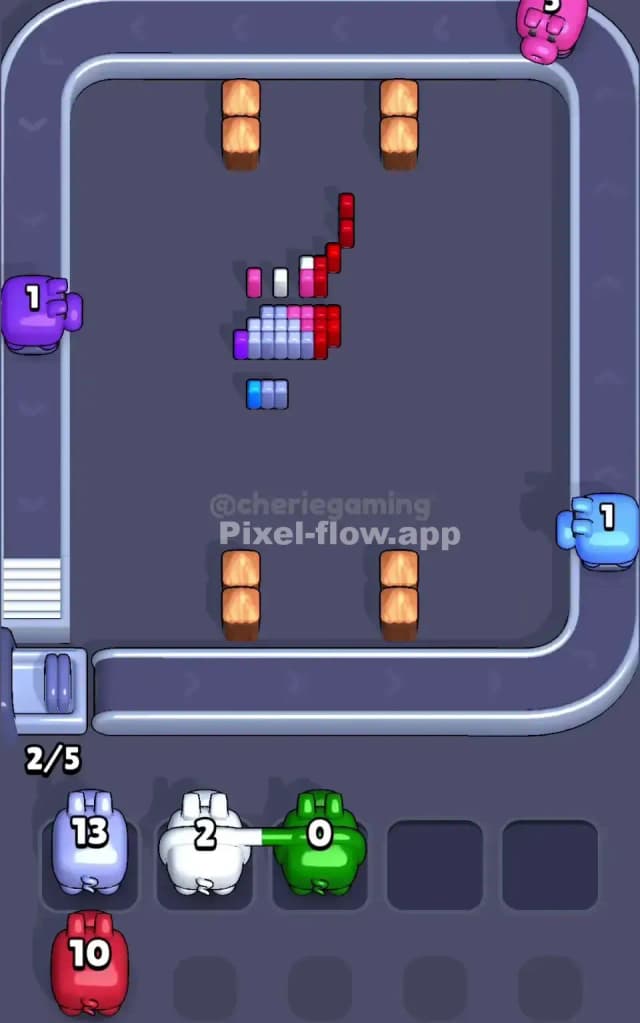
In the final phase, the heart is gone. You are likely left with a few stubborn clusters near the bottom corners.
- The 300 HP Block: This one usually breaks last. You might find yourself with just a few Yellow or Green pixels left tucked right against the wood barriers.
- Hidden Pixels: Watch out for single pixels hiding behind the wooden crates next to the egg slots. Visually, they can be hard to spot.
- Egg Collection: Once the ice breaks, the eggs are exposed. You don't need to clear every pixel to win, you just need to clear enough to break the ice and then let the pigs hit the eggs. However, usually, the ammo required to break the ice inadvertently clears the whole board anyway. Keep an eye on your pig queue—if you have a Blue pig and the only blue pixels left are not touching an ice block, skip it. Save the slot for a color that hits the objective.