Pixel Flow Level 487 Solution | Pixel Flow 487 Walkthrough
How to beat Pixel Flow Level 487: Video solution & walkthrough. The fastest way to pass Pixel Flow 487.
Is this the wrong level layout?🤔
Pixel Flow randomizes levels for different players. Don't worry, just upload a screenshot of your board, and our AI will find the correct video instantly.
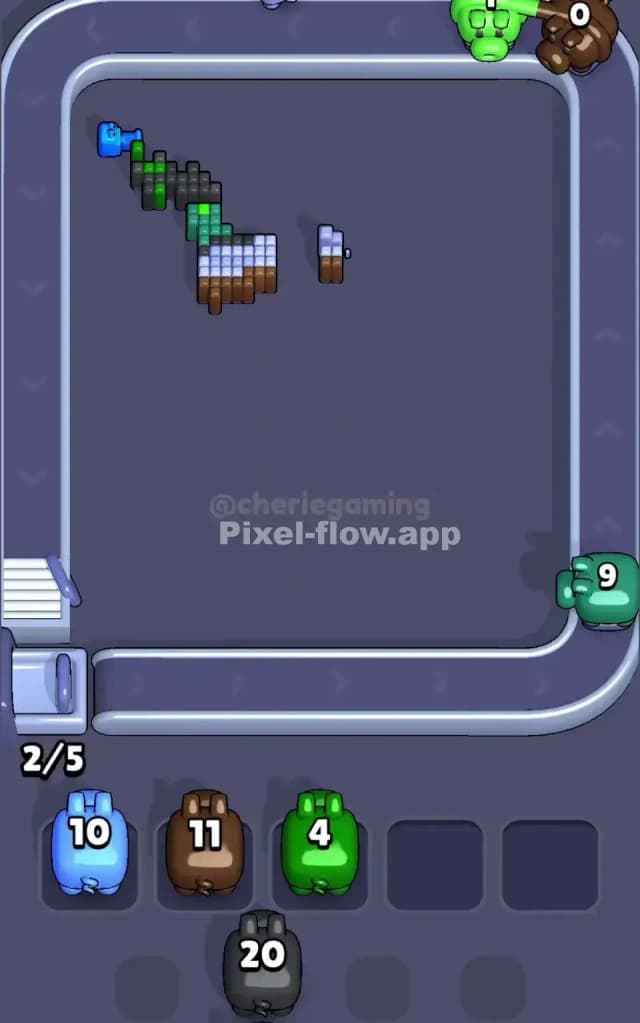
Pixel Flow Level 487 Walkthrough
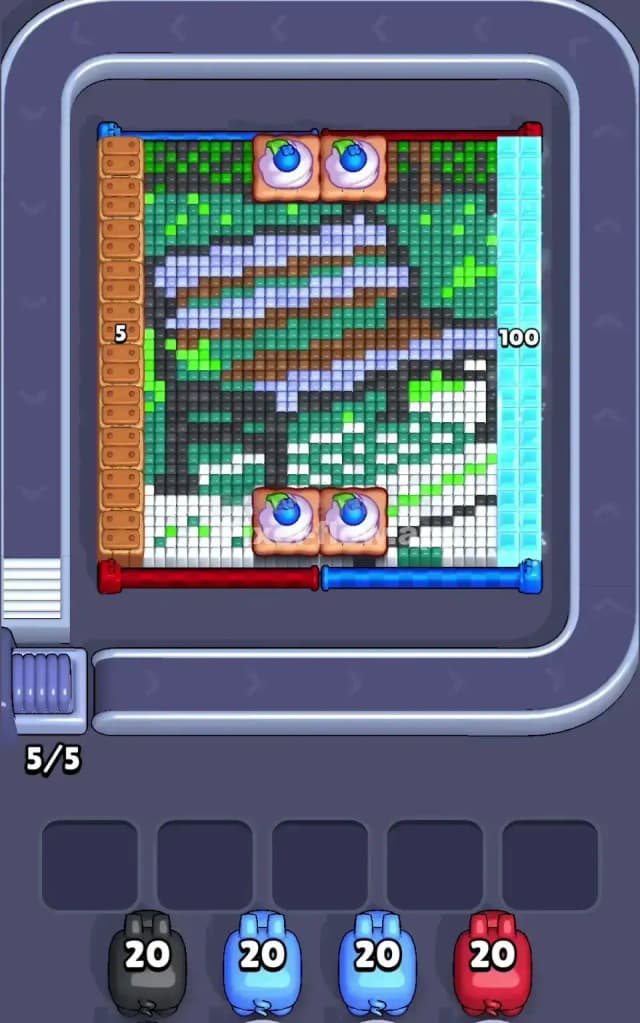
This level features a park bench scene, likely sitting on grass or pavement, blocked in by two massive walls. The rules are standard but tight: you must clear the outer layers to reach the inner pixels without clogging your five waiting slots. Because you are dealing with unbreakable barriers and hidden layers, this is a very hard level that requires strict color discipline.
Pixel Flow Level 487 Overview
The artwork depicts a classic park bench viewed from an angle. The bench itself is made of brown wood slats and grey/black metal legs. Behind and underneath it, you see patches of green grass and white pavement or snow.
However, the real story here is the cage.
- The Left Wall: A tall stack of brown wooden crates. Note the "5" on it. This means it takes 5 hits to break each block, but usually, these specific crate walls are obstacles you must work around or chip away at slowly.
- The Right Wall: A massive wall of light blue ice blocks labeled "100". Do not touch this. You cannot break it with normal pigs. It is a permanent boundary for the right side.
- The Blockers: There are four "Cupcake" blockers sitting on top of the pixel art (two at the top, two at the bottom). These prevent your shots from hitting the pixels directly underneath them until the cupcakes are cleared or the pixels around them are gone.
The board is asymmetrical. The left is brown/heavy, the right is ice/cold. Your shots are funneled into the middle channel between these two walls.
Step by step solution walkthrough for Pixel Flow Level 487
First Color Zone to Erase in Pixel Flow Level 487
Start with the White or Green pigs if they are available early in your conveyor belt.
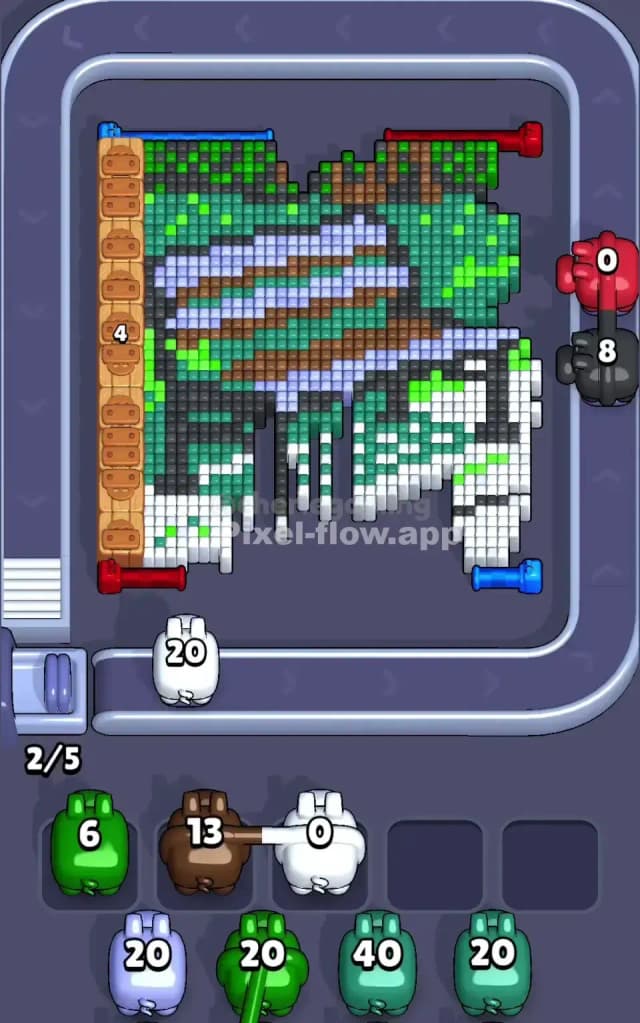
Look at the bottom right quadrant of the bench art. There is a large, exposed section of white pavement tiles. This is the safest opening move. Because the right wall (Ice) is unbreakable, any pig shooting from the right side is useless unless it has a straight shot at the art.
If you get a White pig, it can clear a massive chunk of the bottom right floor. This opens up the "underbelly" of the bench, exposing the black metal legs.
If you get a Green pig, focus on the top left or top middle grass patches. The grass is relatively high up in the "z-layer" (vertical height), meaning it blocks shots from hitting the brown wood of the bench. Shaving the grass early prevents your Brown pigs from wasting ammo later.
How to pass Pixel Flow Level 487 without power ups or boosters
The mid-game is where players lose Level 487. Once the easy white floor and green grass are gone, you are left with the bench structure itself: Brown wood slats and Black/Grey legs.
Here is the trap: The brown wooden wall on the far left shares the same color as the bench slats. If you send a Brown pig out, it might waste all its ammo trying to chip away at the "5" health crate wall on the left instead of hitting the 1-hit bench pixels.
The Strategy:
- Prioritize Angles: Watch where your pig is on the belt. If a Brown pig is on the top or bottom of the conveyor belt, send it! It will shoot "down" or "up" into the bench slats, bypassing the left wall entirely.
- Avoid the Left Side for Brown Pigs: Do not let a Brown pig shoot from the left side of the conveyor belt if the bench is blocked by other colors. It will just hit the wall.
- Clear the Cupcakes: You need to dislodge those four cupcakes. They usually sit on top of the bench edges. Use any color that is adjacent to them (usually the bench wood or the grass) to undercut them. Once the pixels supporting them are gone, the cupcakes vanish, freeing up those columns.
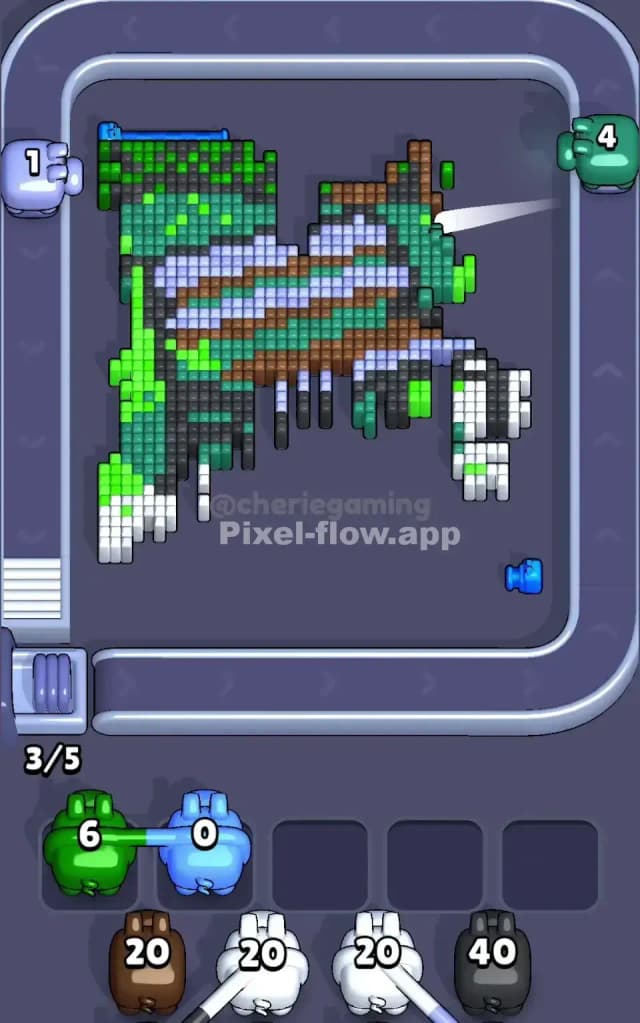
At this stage, your board should look like a floating skeleton of a bench. The white floor is gone, the green grass is gone. You are just hunting the specific brown and black pixels that form the object.
Last Details You Clean Up in Pixel Flow Level 487
The end of Pixel Flow 487 is almost always the Black or Grey pixels forming the legs of the bench.
These pixels are often buried deep beneath the brown slats. You might have one or two black pixels hiding right next to the Ice Wall on the right or tucked behind the Crate Wall on the left.
Save a "sniper" pig (a pig with full ammo) for the end. Don't fill your slots with 3 or 4 mostly-empty pigs. You need a fresh Black pig to clean up the legs. If you have a Grey pig remaining, check the metal supports. Often, a single grey pixel hides near the feet of the bench, obscured by the foreground "white" pavement you cleared earlier. Once the legs are gone, the level is clear.