Pixel Flow Level 496 Solution | Pixel Flow 496 Walkthrough
How to beat Pixel Flow Level 496: Video solution & walkthrough. The fastest way to pass Pixel Flow 496.
Is this the wrong level layout?🤔
Pixel Flow randomizes levels for different players. Don't worry, just upload a screenshot of your board, and our AI will find the correct video instantly.
Pixel Flow Level 496 Walkthrough
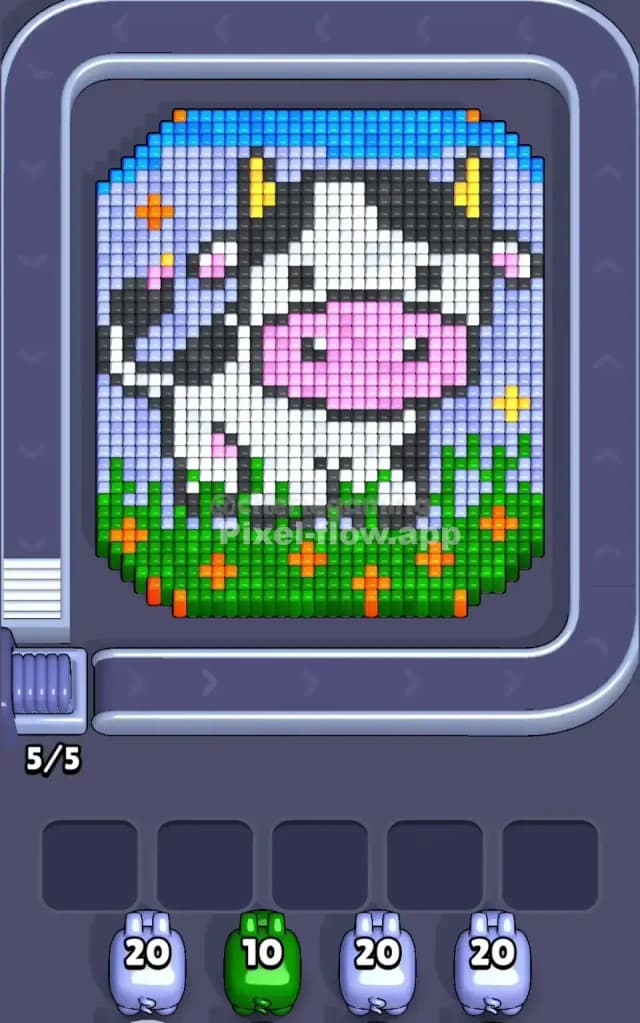
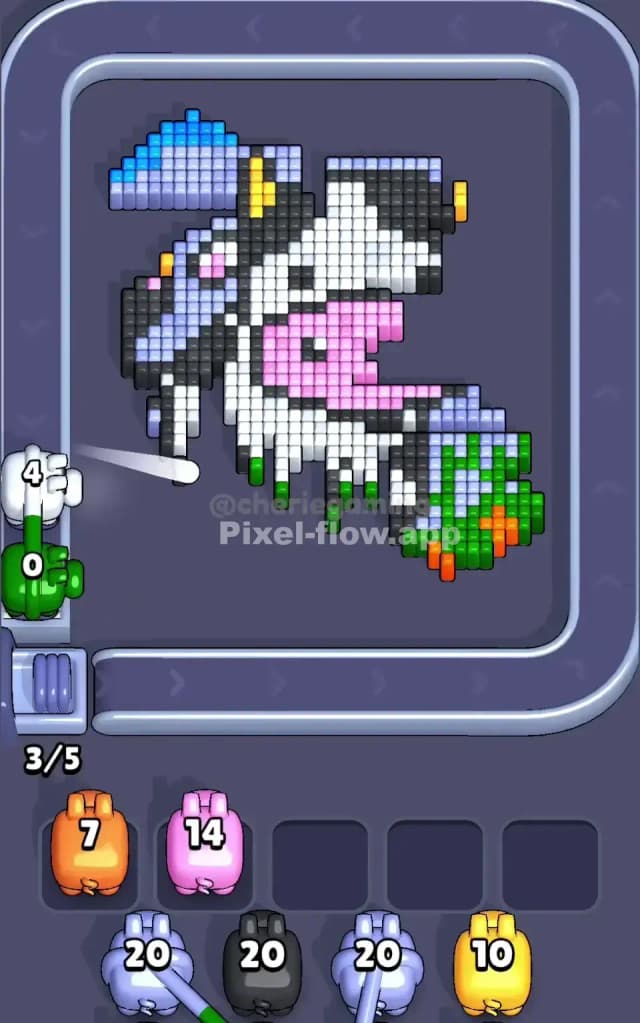
This level features a giant, pixelated black-and-white cow standing in a field. The scene is adorable, but don't let the cute face fool you. This is a very hard level because of how the colors overlap. You have a huge concentration of green grass at the bottom, a massive white body in the center, and a tricky sky gradient in the background.
The core rule here is ammo conservation. The waiting slots are your enemy. If you pull a pig that can't shoot because its target color is buried under another layer, that pig sits in a slot. Fill all five slots with useless pigs, and it's game over. You need to peel this cow like an onion, layer by layer.
Pixel Flow Level 496 Overview
We are looking at a classic farm scene. The central figure is a happy cow, mostly white, with large black patches on its head and sides. It has a distinctive pink snout that acts as a bulls-eye in the middle of the board. The cow is standing in a dense patch of green grass that runs across the entire bottom third of the image. Scattered in the grass are small orange flowers.
The background is a soft blue sky, but notice the gradient: it’s lighter blue near the cow and gets darker blue/purple towards the edges. There are also tiny yellow stars or sparkles in the sky.
Here is the asymmetry to watch out for: The tail. The cow's tail whips out to the left side, adding extra black and white pixels in a weird, thin shape that can be hard to target if you clear the surrounding sky too early. Also, the grass isn't flat; it has little tufts sticking up that block access to the cow's hooves.
Step by step solution walkthrough for Pixel Flow Level 496
First Color Zone to Erase in Pixel Flow Level 496
Start with the Green grass at the bottom.
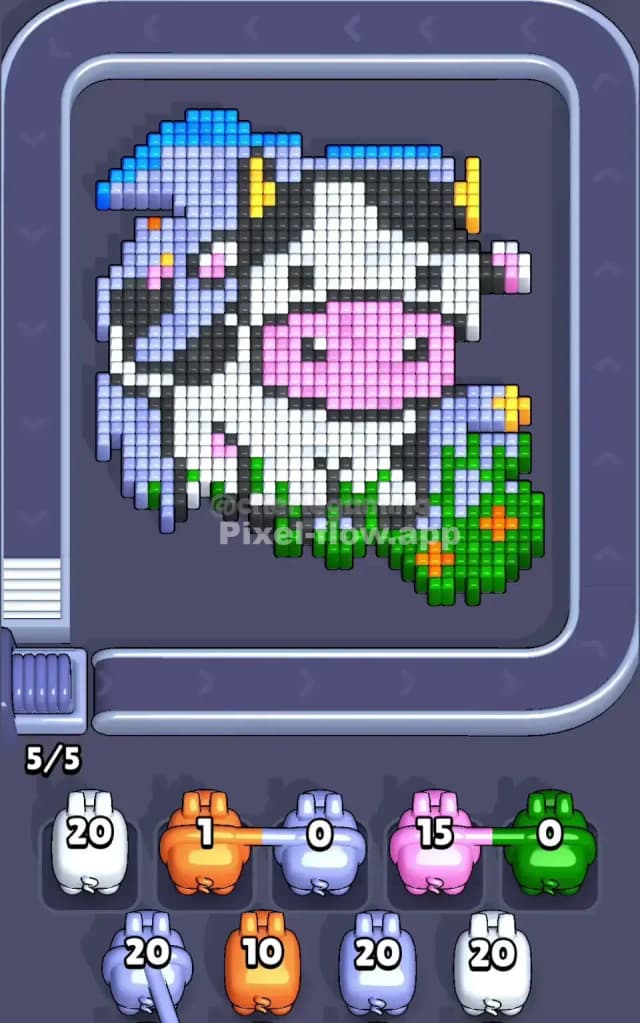
This is the safest bet for two reasons. First, the green layer is thick and uninterrupted at the bottom. It covers the cow’s feet and the bottom of the sky. By clearing the green, you expose the bottom edge of the cow (white pixels) and the lower background (purple/blue pixels).
Narratively, you are "mowing the lawn." If you try to attack the sky (light blue/lavender) first, you will run out of targets quickly because the cow's head blocks most of it. But the green grass is right there in the front row, ready to be eaten. Grab any green pig you see on the belt. If there are no green pigs, look for Orange pigs to snipe the flowers in the grass. Clearing those flowers often breaks up the green blocks, making them easier to target next.
How to pass Pixel Flow Level 496 without power ups or boosters
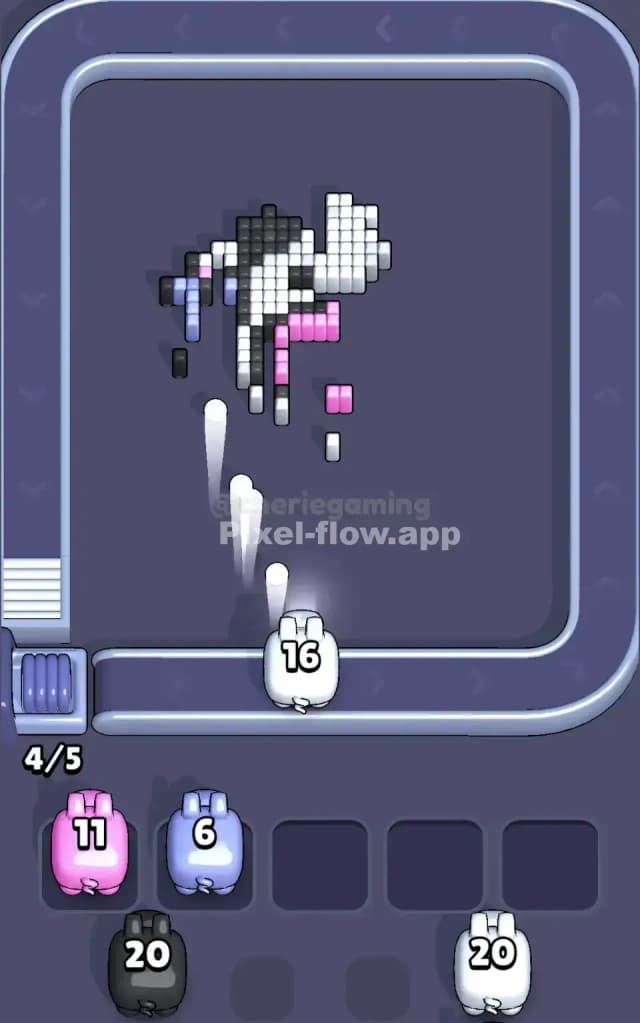
Once the grass is gone, the board looks half-destroyed. You'll see the white legs of the cow floating in space. Now you hit the "Danger Zone."
The cow's body (White) and patches (Black) are huge layers. However, the Pink snout is often a separate, slightly protruding layer. If you see pink pigs, grab them immediately to clear that center mass.
If pink isn't available, prioritize Lavender/Light Blue (the sky edges). Why? Because the sky wraps around the cow. If you clear the sky, you isolate the cow's shape. This prevents your pigs from getting confused about which layer they are shooting.
Be very careful with Black pigs. The black pixels are scattered: some on the ears, some on the side spots, and some on the tail. It is easy to pull a black pig thinking you have a clear shot, only to realize the black pixels are actually behind a white pixel layer. Only pull a Black pig if you clearly see exposed black voxels on the edges or ears. If the black is surrounded by white, leave it alone.
Last Details You Clean Up in Pixel Flow Level 496
In the endgame, you will be left with a scraggly skeleton of the cow. The last stubborn blocks are usually:
- The Horns: Those tiny yellow tips on the ears. They are small and easy to miss until the very end.
- The Tail Tip: A small cluster of black or white pixels on the far left.
- Deep White: The central body of the cow is thick. You will likely need 3-4 full white pigs just to hollow out the stomach area.
Save your White pigs for the absolute end if you can. Once the outer black outline and the pink nose are gone, the white center is basically a free-for-all where you can dump all your remaining ammo without thinking. Just make sure you cleared the orange flowers and yellow stars first, or they will act as annoying blockers preventing a clean sweep.