Pixel Flow Level 501 Solution | Pixel Flow 501 Walkthrough
How to beat Pixel Flow Level 501: Video solution & walkthrough. The fastest way to pass Pixel Flow 501.
Is this the wrong level layout?🤔
Pixel Flow randomizes levels for different players. Don't worry, just upload a screenshot of your board, and our AI will find the correct video instantly.


Pixel Flow Level 501 Walkthrough
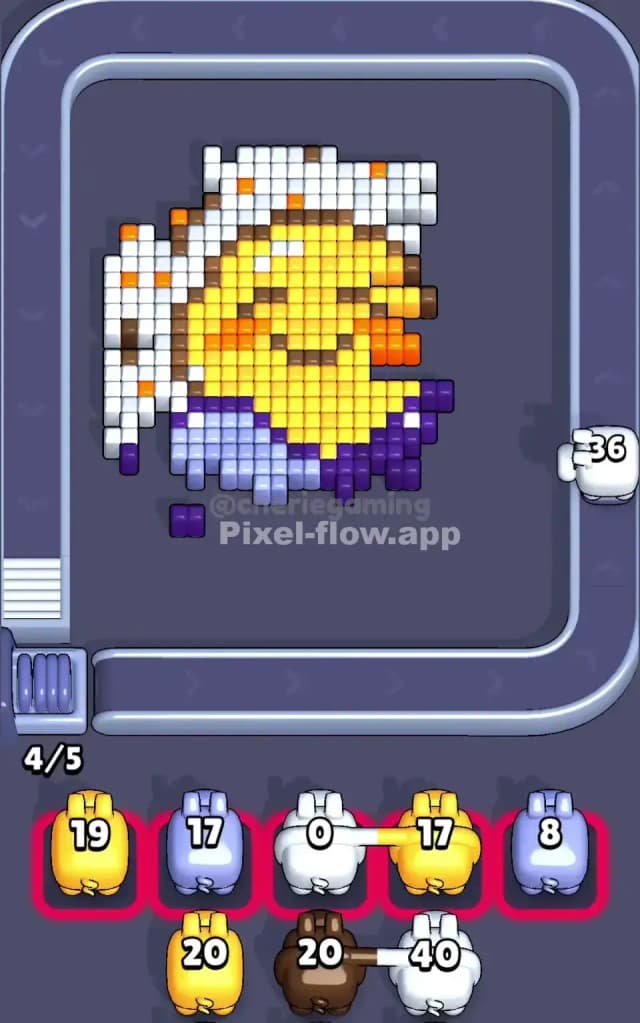
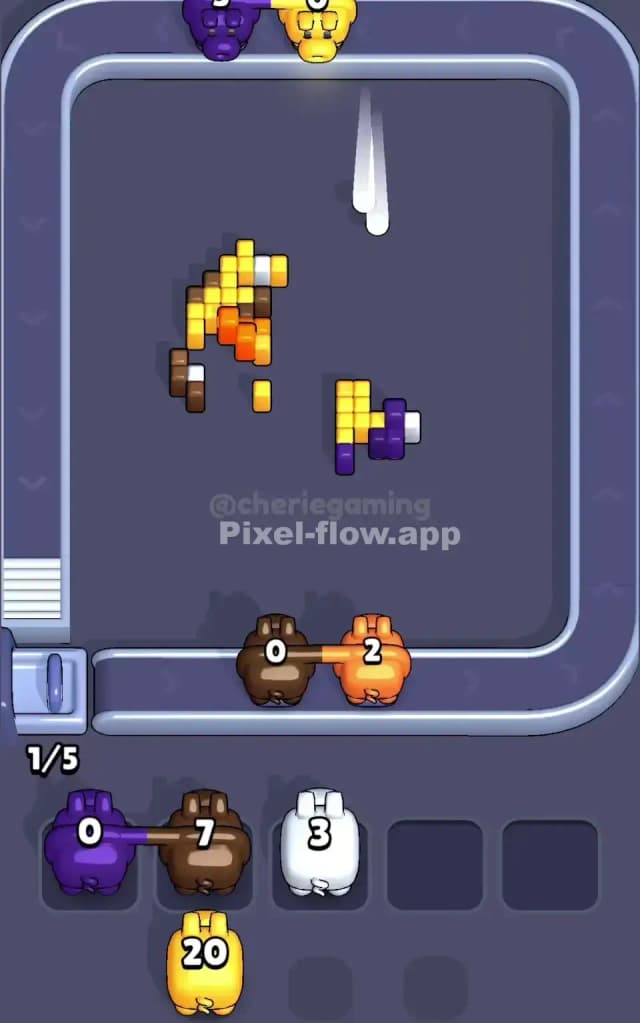
Pixel Flow 501 features a classic celebration scene: a giant yellow smiley face emoji hovering above two balloons, all set against a messy white background filled with orange confetti. The rules here are standard: you must peel away the outer layers (white and confetti) to reach the solid yellow and purple blocks inside. Pigs travel along the conveyor belt, and if they can't hit a target, they clog your waiting slots. Since the shapes are large and centralized, it is not a very hard level, but the scattered "confetti" pixels can create annoying blockages if you aren't paying attention.
Pixel Flow Level 501 Overview
Think of this board as a birthday card. In the dead center, you have a massive, spherical Yellow Face with closed eyes and blushing cheeks. It’s a dense block of color, which is great for dumping ammo. Floating underneath are two balloons. The left one is a lighter Periwinkle/Lavender, and the right one is a deep Purple.
The real trouble is the "air" around them. The background isn't just empty space; it’s a thick wall of White blocks. But it’s not pure white. It’s peppered with single Orange and Brown pixels—like confetti or sparkles. These small, isolated pixels are the primary hazard. They break up your lines of sight. You might think you have a clear shot at the yellow face, only to find a single tiny orange block blocking the path, forcing your Yellow pig to drop into a waiting slot and clog up your board.
Step by step solution walkthrough for Pixel Flow Level 501
First Color Zone to Erase in Pixel Flow Level 501
You have to bully the White background immediately. There is simply too much of it.
Start by prioritizing White Pigs, especially the high-ammo ones (you will see some with 20 or even 40 ammo). Look at the left and right columns first. These vertical strips are mostly solid white. Clearing them "opens the curtains" on the artwork. If you ignore the white outer rim, your colored pigs (Yellow, Purple) will have zero targets and will instantly flood your five waiting slots, ending the game.
Use the Orange Pigs sparingly at the start. Only grab them if an orange "confetti" block is directly blocking a massive white section you need to clear. Otherwise, let them ride the belt. Your goal is to shave the sides down until the balloons are exposed.
How to pass Pixel Flow Level 501 without power ups or boosters
Around the mid-point, the board looks messy. The white sides are gone, but you probably have a jagged shell of white blocks still covering the top of the Yellow Face. This is the danger zone.
You will likely have a mix of pigs in your queue. Here is the priority logic to survive without boosters:
- Target the Face: Once the white layer is thin enough, start grabbing Yellow Pigs. The face is a huge, solid target. A single Yellow pig can unload 20+ ammo in seconds. This clears space in your waiting slots rapidly.
- The Balloon Trap: Be careful with the balloons. The Periwinkle (left) and Deep Purple (right) are different colors. Do not grab a Dark Purple pig if only the Periwinkle balloon is exposed. You will waste a slot.
- Ignore the Sparkles: Do not obsess over clearing every single orange dot. If an Orange Pig comes by and you have a slot open, take it, but don't prioritize it over the big Yellow or White pigs. You need to keep the "heavy hitters" working to churn through the volume of pixels.
If your slots are filling up, stop looking at the colors and look at the lines. Trace the path from the pig's spawn point. If a Brown pixel is the only thing standing between your belt and the giant Yellow face, you must take a Brown pig next, even if it feels like a waste of a turn. You have to clear the obstruction.
Last Details You Clean Up in Pixel Flow Level 501
The end game in Pixel Flow Level 501 is usually just "sweeping the floor." The giant yellow face will be gone. The balloons will be popped.
What remains are usually the Brown outline pixels that defined the smiley face's smile and eyes, and the stray Orange confetti that was hiding behind the main image. At this stage, the risk is low. You have plenty of open space. Just match the colors as they come. The queue usually feeds you exactly what you need to pick off the last 4-5 stragglers. Watch out for the final White blocks that sometimes hide inside the balloon highlights—make sure you don't discard a White pig too early if one of those stubborn blocks is still lingering.