Pixel Flow Level 502 Solution Walkthrough | Pixel Flow 502
How to solve Pixel Flow level 502? Get instant solution for Pixel Flow 502 with our step by step solution & video walkthrough.

Pixel Flow Level 502 Overview
The Board Layout and Starting Colors
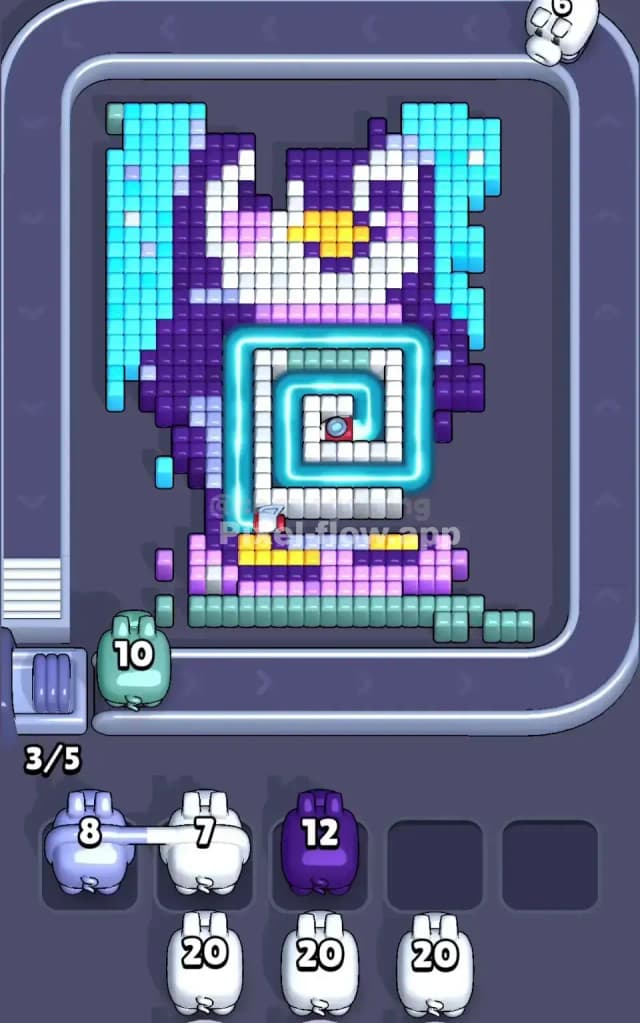
Pixel Flow Level 502 presents a vibrant, symmetrical pixel art design dominated by a bright central cross or plus-sign pattern in yellow that radiates outward like a sunburst. The surrounding areas are densely packed with a rainbow spectrum—magenta, cyan, blue, green, and pink fill the outer and middle zones in what looks like a carefully layered voxel picture. You're looking at a board that's roughly 16×16 cubes, with multiple color depths stacked on top of each other. The symmetry here is deceptive because while it looks balanced visually, the actual cube counts and pig ammo values won't match that visual balance perfectly. You'll notice the waiting slots (currently showing 3/5 filled) already have three pigs queued up, which means you're starting with limited room for error.
Win Condition and Deterministic Flow
To clear Pixel Flow Level 502, you need to destroy every single cube on the board by dispatching pigs in the right sequence. Each colored pig automatically shoots cubes of its matching color, and every successful hit costs exactly one ammo point from that pig's total. The winning insight is that the entire game is deterministic—the pig order is fixed, their ammo counts are locked in, and the board never changes unless you interact with it. This means there's always a correct solution; you just need to find the sequence that prevents your waiting slots from completely jamming up with ammo-depleted pigs.
Why Pixel Flow Level 502 Feels So Tricky
The Yellow Bottleneck
The most obvious problem in Pixel Flow Level 502 is the sheer number of yellow cubes dominating the center. That bright cross pattern is gorgeous, but it's also a massive target that will consume an enormous amount of ammo from whatever yellow pig you have. If you fire the yellow pig too early without exposing the deeper layers underneath, you'll burn through its ammo on surface-level cubes and still leave tons of yellow buried below. Worse, if that yellow pig runs out of ammo while yellow cubes still exist on the board, it'll drop into a waiting slot, potentially blocking your ability to sequence other critical pigs. I found myself staring at the board for a solid minute just counting yellow cubes and realizing I had to be incredibly surgical about when and how I deployed the yellow pig.
Color Patches and Buried Layers
Beyond the yellow problem, Pixel Flow Level 502 has several awkward secondary bottlenecks. The magenta and pink regions are interwoven throughout the middle and sides, creating patches where you can't quite access all the cubes of one color without first clearing something else. There's also what looks like a cyan strip on the left and right edges that might require the blue pigs to clear magenta first, or vice versa. Additionally, you've probably noticed that some colors appear in the upper layers and almost nowhere in the exposed surface, which means some pigs will find targets right away while others will quickly run out of visible matching cubes and get stuck waiting for earlier pigs to clear the way.
When the Level Clicked
Honestly, Pixel Flow Level 502 frustrated me at first because I kept thinking I could brute-force it by just firing pigs left and right. I'd burn through four or five pigs in rapid succession, jam up all five waiting slots with partially-spent pigs, and then panic when no ammo matched the remaining cubes. The turning point came when I realized I needed to slow down and think two or three pigs ahead, asking myself: "If I fire this pig now, will it fully empty or will it get stuck? And if it gets stuck, is that okay because the next pig will expose deeper cubes?" That shift from reactive to predictive thinking made Pixel Flow Level 502 suddenly manageable.
Step-by-Step Strategy to Clear Pixel Flow Level 502
Opening: Establishing Control and Preserving Slots
Start by surveying which pigs are already in the queue and which color has the cleanest, most obvious targets on the board right now. I'd recommend beginning with one of the secondary colors (not yellow yet)—perhaps the bright cyan pig, since those cubes appear on the edges and might be fewer in total count. When you fire that first pig, watch the ammo counter carefully and count the cubes it actually hits. Your goal is to spend enough ammo to free up at least one waiting slot by moving a pig through completely, while also exposing a deeper layer that reveals a new color or creates a clearer path for the next pig. After the first pig, you should still have at least 2 or 3 free waiting slots. Never let yourself drift into a position where 4 out of 5 slots are full before you've established a clear rhythm.
Mid-Game: Sequencing and Exposing Layers
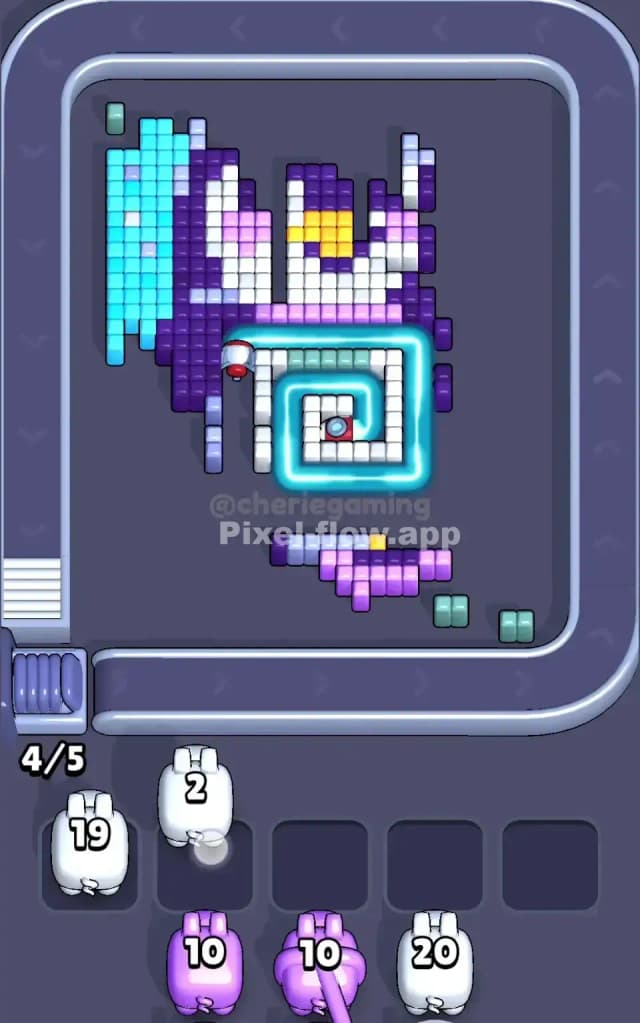
Once you've cleared a secondary color or two, the yellow pig will likely be coming soon. This is where Pixel Flow Level 502 becomes a puzzle of patience. Before you deploy yellow, make sure you've cleared enough non-yellow cubes that the yellow pig can attack a large contiguous block all at once. The key is that you want the yellow pig to spend as much of its ammo as possible on a single pass, clearing not just surface yellow but also exposing what's underneath. If you've done the opening right, the magenta and pink pigs should be queued or recently cleared, which means firing yellow next will likely expose those deeper layers. As you get into the mid-game, start actively parking half-spent pigs in waiting slots if they run out of targets. This is fine—it's intentional. A pig with 5 ammo remaining but zero visible targets of its color can sit in a slot while you cycle through three other pigs that do have targets. Eventually, as you clear more, new cubes of that color will be exposed, and you can pull the waiting pig back into action.
End-Game: The Final Sequence and Clean Shutdown
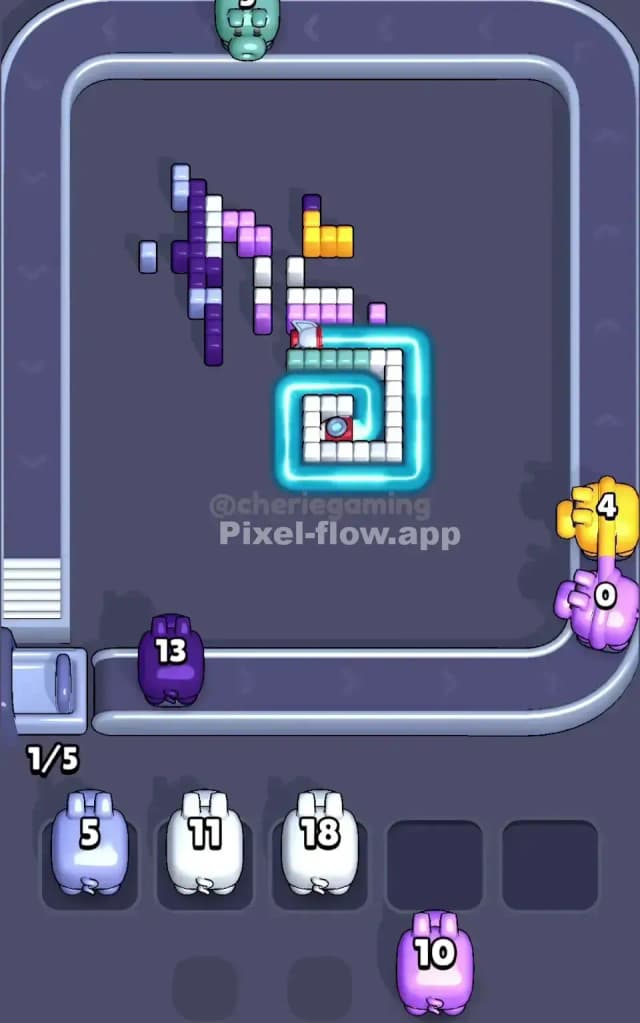
In the closing moves of Pixel Flow Level 502, you're dealing with scattered cubes of 2–3 colors remaining. Your waiting slots are probably full or nearly full, and you're feeling the pressure. This is where all your earlier counting pays off. You should know roughly how much ammo each remaining pig has and approximately how many cubes of each color are still visible. Start with whichever pig has the smallest target list and can definitely go out and be fully spent in one firing. This clears a waiting slot, gives you breathing room, and reduces visual clutter on the board. Next, fire the pig whose remaining targets will expose the final hidden cubes of the last color. You're aiming for a cascade where the second-to-last pig clears its color, exposes the last color in full, and then the final pig fires once or twice to finish Pixel Flow Level 502 cleanly with zero remaining cubes and zero remaining ammo. Avoid a last-second jam by never letting a pig with significant ammo sit in a waiting slot if you can fire it instead—only park pigs if they have no current targets.
The Logic Behind This Pixel Flow Level 502 Plan
Why This Strategy Works
The strategy for Pixel Flow Level 502 isn't about luck; it's about respecting the game's deterministic rules. Every pig has a fixed ammo count and a fixed position in the queue. By starting with a pig that has fewer targets and can fully empty on the visible board, you're proving that at least one pig can be disposed of completely. This guarantees you'll free up a waiting slot, which is your pressure valve. From there, each subsequent pig should either fully empty (and free another slot) or intentionally park itself (temporarily) because you know a later pig will expose new targets for it. The strategy leverages the fact that early pigs' actions determine what the later pigs can see and do. By controlling the early sequence, you control the entire level.
Staying Calm and Counting Ahead
The secret to not getting frustrated with Pixel Flow Level 502 is accepting that you will have pigs sitting in waiting slots; that's not failure, that's patience. Watch the queue carefully—you can always see the next two or three pigs coming. Count their ammo values (displayed on their icons) and estimate how many cubes of each color are visible. When you fire a pig, spend a moment predicting whether it'll fully empty or partially empty. If it empties, great—you freed a slot. If it partially empties and parks, ask yourself: "Is there a pig coming in the next few slots whose actions will expose more of this color?" If the answer is yes, you're on track. If the answer is no, you may need to reconsider the order or revisit your earlier decisions. This forward-thinking approach turns Pixel Flow Level 502 from a chaotic scramble into a controlled, solvable puzzle.
Stick with this strategy, trust your counting, and you'll clear Pixel Flow Level 502 with confidence.