Pixel Flow Level 516 Solution | Pixel Flow 516 Walkthrough
How to beat Pixel Flow Level 516: Video solution & walkthrough. The fastest way to pass Pixel Flow 516.
Is this the wrong level layout?🤔
Pixel Flow randomizes levels for different players. Don't worry, just upload a screenshot of your board, and our AI will find the correct video instantly.
Pixel Flow Level 516 Walkthrough
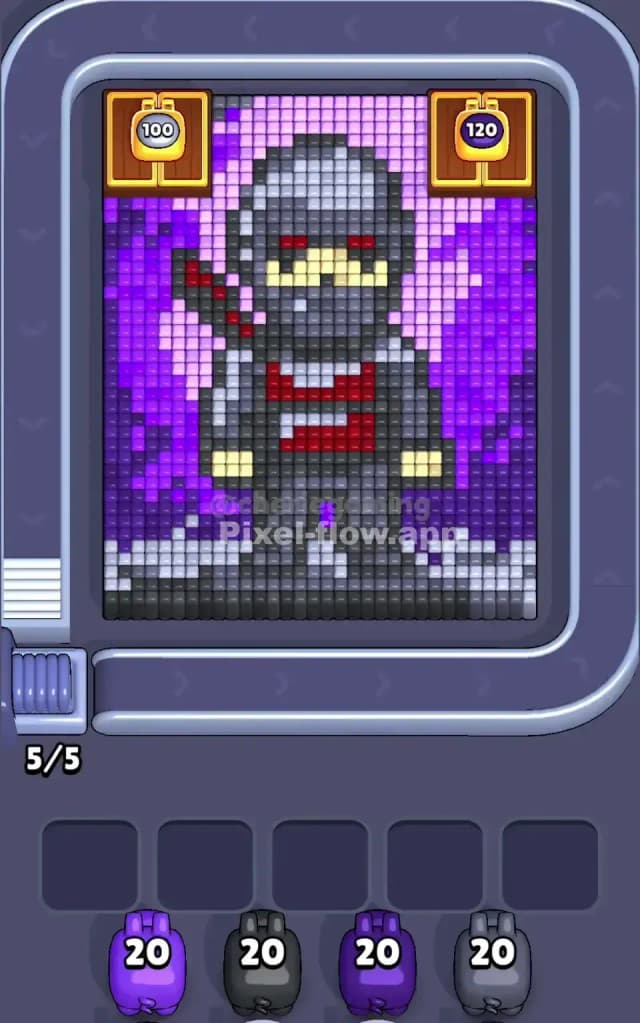
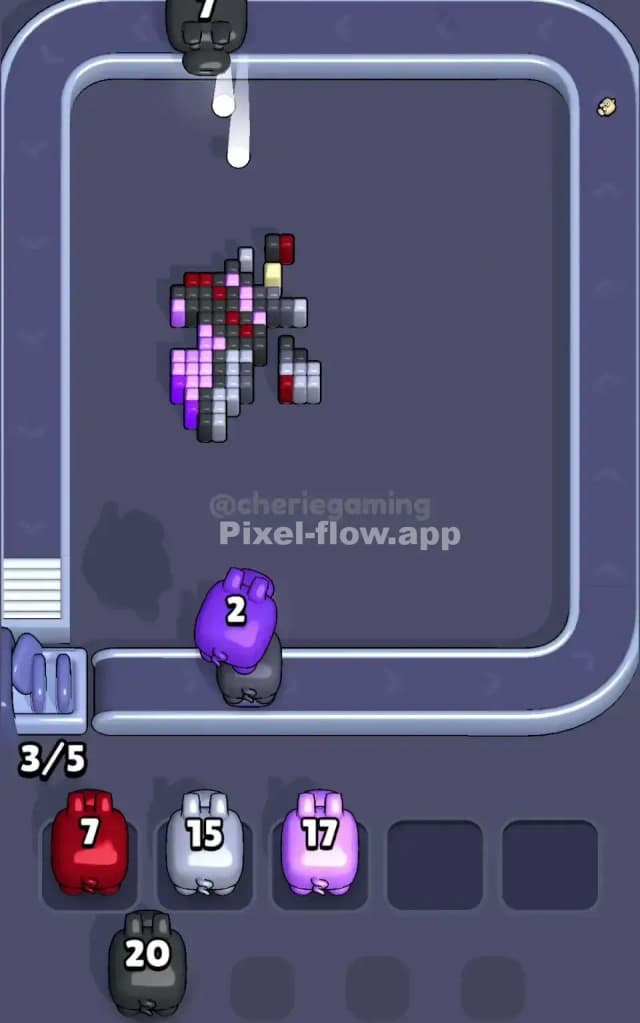
The image in Pixel Flow Level 516 is a pixel-art ninja. He’s standing in a dramatic pose, holding a sword over his shoulder. The colors are moody and dark: lots of purples, dark greys, and blacks, with a few splashes of red for his belt and eyes, and a pale pinkish-purple background.
The rules are standard but tight. You have waiting slots at the bottom. Pigs come down the conveyor belt. If a pig matches the outermost exposed voxels, it shoots. If it doesn't, it clogs a slot. You lose if all slots are full of useless pigs.
Is this level hard? Yes, it is very hard. The difficulty comes from the huge blocks of background color (purple) that look identical but are actually separated by the ninja's body, meaning you can accidentally trap pigs if you don't clear the layers evenly.
Pixel Flow Level 516 Overview
This scene feels like a boss fight. You have a grey-suited ninja standing front and center. He has glowing red eyes and a yellow visor area. A red sash goes across his chest. Behind his back, poking out to the left, is the handle of a katana.
The background is a swirling mix of purples. The outer edges are a deep, dark purple. As you move closer to the ninja's head, the background fades into a lighter pinkish-lavender, creating a "glow" effect around him. The floor is a mess of dark grey and white rubble, looking like smoke or debris.
This creates a massive asymmetry. The left side has the sword handle and darker purple zones. The right side is mostly open background. The real danger here is the verticality. The ninja is a tall, solid pillar of grey in the middle. If you focus too much on the background, you’ll be left with this giant grey column and no grey pigs to clear it, or vice versa. The bottom "rubble" area is also deceptive; it looks like a single strip, but it mixes white and grey randomly, which can eat up ammo unpredictably.
Step by step solution walkthrough for Pixel Flow Level 516
First Color Zone to Erase in Pixel Flow Level 516
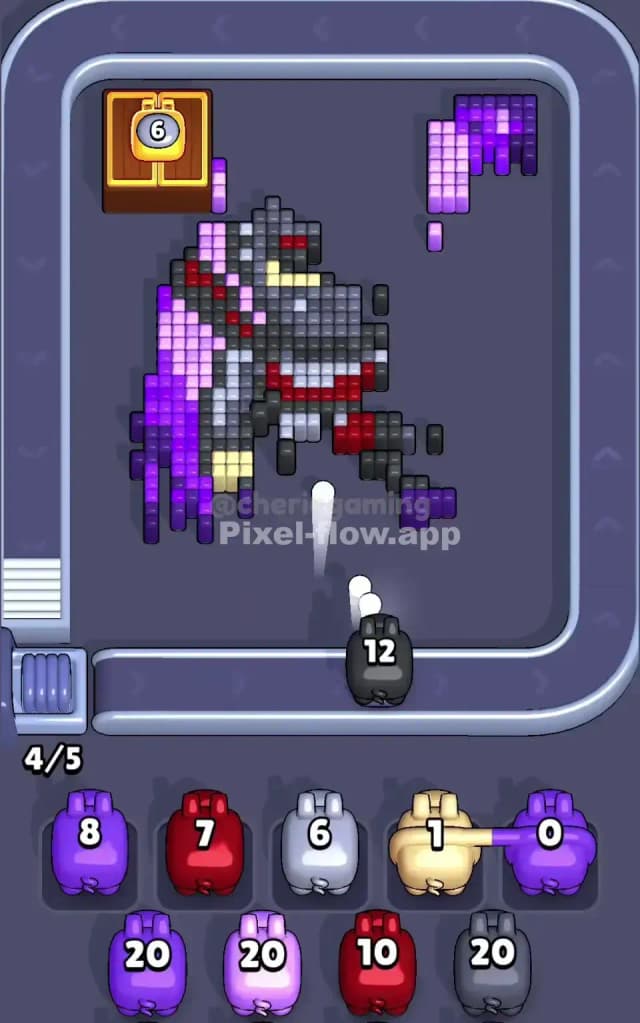
I start by attacking the Dark Purple background on the far left and far right edges.
Here is the logic. The ninja is "sandwiched" by this dark purple. If you look at the board, the outermost layer is almost entirely that deep violet color, especially on the sides. You want to peel this wrapper off first. If you try to target the grey ninja immediately, you will likely fail because most of his grey pixels are buried behind the purple or the white rubble at his feet.
Grab the dark purple pigs immediately. Let them clear those massive vertical columns on the left and right. This exposes the lighter pink layer near the top and the edges of the ninja's grey suit. Do not prioritize the white/grey rubble at the bottom yet. Those blocks are messy and don't clear enough space to be worth the risk of clogging your slots this early.
How to pass Pixel Flow Level 516 without power ups or boosters
Once the outer purple shell is gone, the picture looks half-destroyed. You’ll see the core of the ninja (grey) and the lighter pink background behind his head. At this mid-stage, the danger spikes.
You will likely have a few specific pigs clogging your slots—probably Red or Yellow—because those colors are tiny (eyes, belt) and deeply buried. Ignore them. Don't panic.
Focus your ammo on the Grey pigs now. The ninja's body is the thickest part of the level. It has many layers. You need to drill through his chest and legs to reach the background pixels hidden behind him. If you ignore the grey pigs now, you will end up with a board that is 90% grey blocks and a conveyor belt giving you nothing but pink pigs that have no targets.
The rhythm changes here. You must alternate. Shoot a Pink pig to clear space behind the head. Then shoot a Grey pig to lower the body. Keep the level "flat." If the ninja remains tall while the background disappears, you create a "tower" that blocks shots. If the background remains high while the ninja disappears, you create a "well" that’s hard to shoot into. Keep it even.
Last Details You Clean Up in Pixel Flow Level 516
The end game is tricky because of the "hidden" voxels.
The final few moves usually involve the Red and Yellow bits. The red belt and the red eyes are often the last things standing because they were buried in the middle of the grey torso. You finally get to use those Red pigs that might have been sitting in your waiting slots for five minutes.
Also, watch out for the White rubble at the very bottom corners. These often get forgotten because your eyes are focused on the ninja's face. You might think you're done, but there's a single white block hidden behind a grey foot. Scan the bottom row carefully before you waste a wild card or panic about ammo. Once the red eyes pop and the last white rubble creates a clear path to the floor, the level ends.