Pixel Flow Level 536 Solution | Pixel Flow 536 Walkthrough
How to beat Pixel Flow Level 536: Video solution & walkthrough. The fastest way to pass Pixel Flow 536.
Is this the wrong level layout?🤔
Pixel Flow randomizes levels for different players. Don't worry, just upload a screenshot of your board, and our AI will find the correct video instantly.


Pixel Flow Level 536 Walkthrough
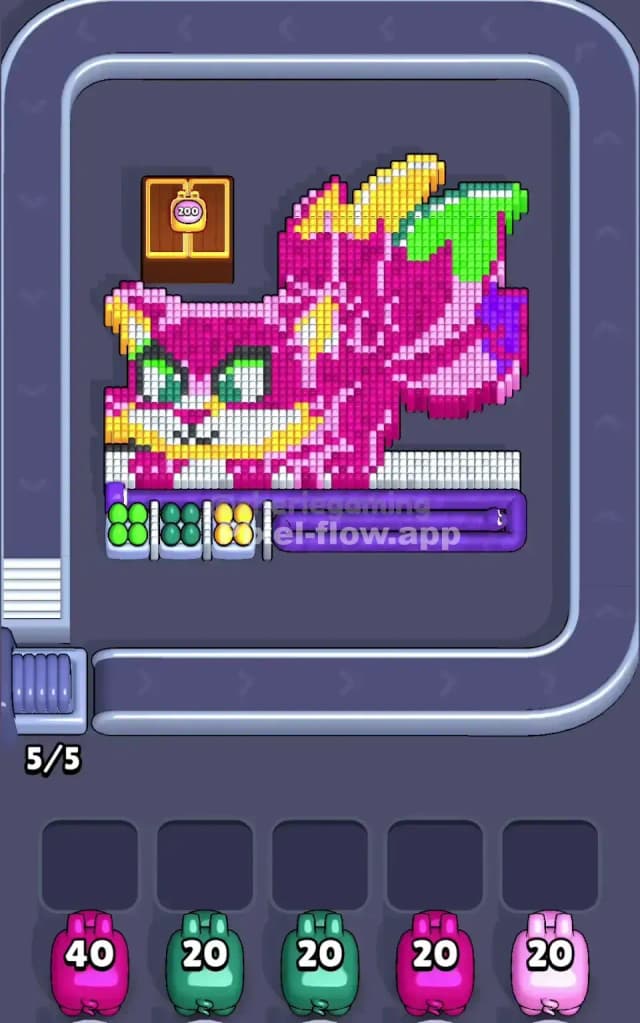
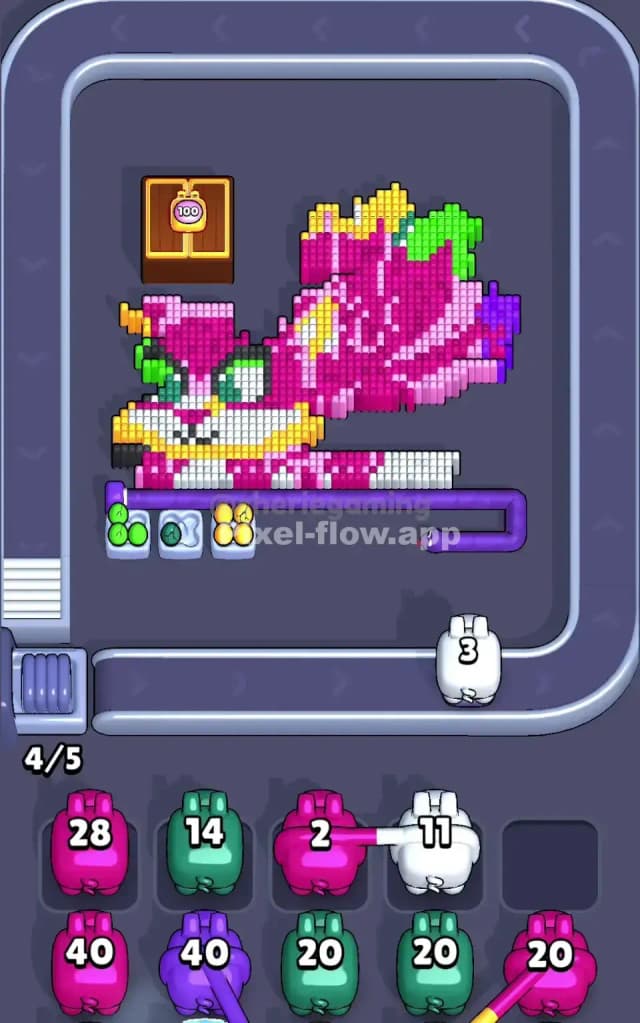
This level features a massive, neon-pink fantasy cat—possibly a kitsune given the tail shape—sitting on a solid white ledge. The colors are densely packed. You have a huge concentration of magenta (pink) making up the body, bright green for the eyes and tail tip, and yellow accents on the ears and chest. A single long white bar runs horizontally across the bottom, acting as a shield for everything above it.
The rule for Pixel Flow 536 is strict: you must peel this onion layer by layer. The game throws high-ammo pigs at you (like that Pink 40-ammo unit in the queue), which is a double-edged sword. If you deploy a 40-ammo pig and only have 5 pink blocks accessible, that pig sits in your waiting slot with 35 ammo, clogging your board. Do that five times, and you lose. Is this a very hard level? Yes. The density of the pink layers makes it extremely easy to clog your slots if you don't calculate depth correctly.
Pixel Flow Level 536 Overview
The artwork in Pixel Flow Level 536 dominates the center of the screen. It creates a claustrophobic feeling because the "cat" is so wide it touches almost every column.
The creature is resting in a "sphinx" pose. The paws and belly are obscured by a stark white row of voxels at the very bottom. Above that, the body is a fortress of pink. It’s not just a flat shape; it's deep. You have to chip away multiple layers of pink fur to even see the face properly.
The face on the left is the most dangerous area. It contains deep-set green eyes surrounded by white and yellow muzzle details. Because the eyes are recessed, green pigs are useless early on. On the top right, there is a large splash of bright green (the tail tip) and some yellow feathers or fur. This asymmetry is key. The right side is taller and mixed with purple, while the left side is dense and protects the gold chest in the top corner.
Step by step solution walkthrough for Pixel Flow Level 536
First Color Zone to Erase in Pixel Flow Level 536
Your absolute priority is the White Horizontal Bar at the bottom.
This isn't a suggestion; it's a physics requirement. In Pixel Flow Level 536, your pigs shoot the first target they see in their lane. That white row acts as a bumper. Until it is gone, you cannot effectively clear the pink belly or the yellow chest fur.
If you ignore the white row and try to start with the pink body using the side angles, you will fail. The white row ensures that the vertical columns are "tall," meaning a pink pig placed in a central lane might only hit one or two exposed pink pixels before being blocked by a white pixel below it (or just running out of targets because the white row pushes the "valid" target line down).
Look for a White Pig or use a generic color if available to scrub this bottom line. Once the white foundation is gone, the cat "falls," and you expose a massive surface area of pink underbelly. This allows your high-ammo Pink pigs to fire continuously without getting clogged.
How to pass Pixel Flow Level 536 without power ups or boosters
Once the bottom white bar is smashed, you enter the mid-game grind. This is where most players fail Pixel Flow 536. The board will look messy. The cat's face will be half-sheared off.
At this stage, you must manage the Pink Ammo Economy. You will likely see a Pink pig with 40 ammo. This unit is dangerous. Do not play it unless you see a "solid wall" of pink. If the pink sections are scattered or checkerboarded with yellow, that 40-ammo pig will clear the few pink blocks and then sit in your tray forever.
Focus on the Yellow and Green pigs here.
- Yellow: The ears and chest have yellow patches that often block deeper pink layers. Clearing the yellow on the chest is vital to opening up the central column for your pink heavy hitters.
- Green: Be careful. The green on the tail (top right) is exposed early. The green in the eyes (left) is buried deep. If you play a green pig, make sure it has a line of sight to the tail. Do not play it expecting to hit the eyes unless you have already hollowed out the face.
You have to alternate. Strip a layer of pink. Check if yellow is blocking the next pink layer. Clear the yellow. Strip the next layer of pink. It is a rhythm. If you rush and spam all your pink pigs, you’ll hit the "bedrock" of other colors and clog out.
Last Details You Clean Up in Pixel Flow Level 536
As you near the end of Pixel Flow Level 536, the board looks like a junkyard. The main body is gone, leaving floating artifacts.
The final obstacles are usually:
- The Deep Green Eyes: These are often the very last things to go on the left side. They sit behind 2-3 layers of face pixels. Save a small green pig for this specific moment.
- The Purple Patch: On the far right, tucked under the green tail, is a small cluster of purple/dark blue. It’s easy to forget because it blends in with the shadows of the pink. Ensure you don't waste a waiting slot on a purple pig until this patch is actually visible.
- The Gold Chest: Once the top-left ear is gone, the 200 gold chest is exposed. It doesn't require a specific color to open, just the removal of the blocks in front of it.
Watch your slots. In these final moves, accuracy matters more than volume. If you have a pig with 20 ammo and only 4 blocks left, think twice. Can you clear those 4 blocks with a different, lower-ammo pig coming up the queue? If yes, wait. Patience clears the board.