Pixel Flow Level 537 Solution | Pixel Flow 537 Walkthrough
How to beat Pixel Flow Level 537: Video solution & walkthrough. The fastest way to pass Pixel Flow 537.
Is this the wrong level layout?🤔
Pixel Flow randomizes levels for different players. Don't worry, just upload a screenshot of your board, and our AI will find the correct video instantly.

Pixel Flow Level 537 Walkthrough
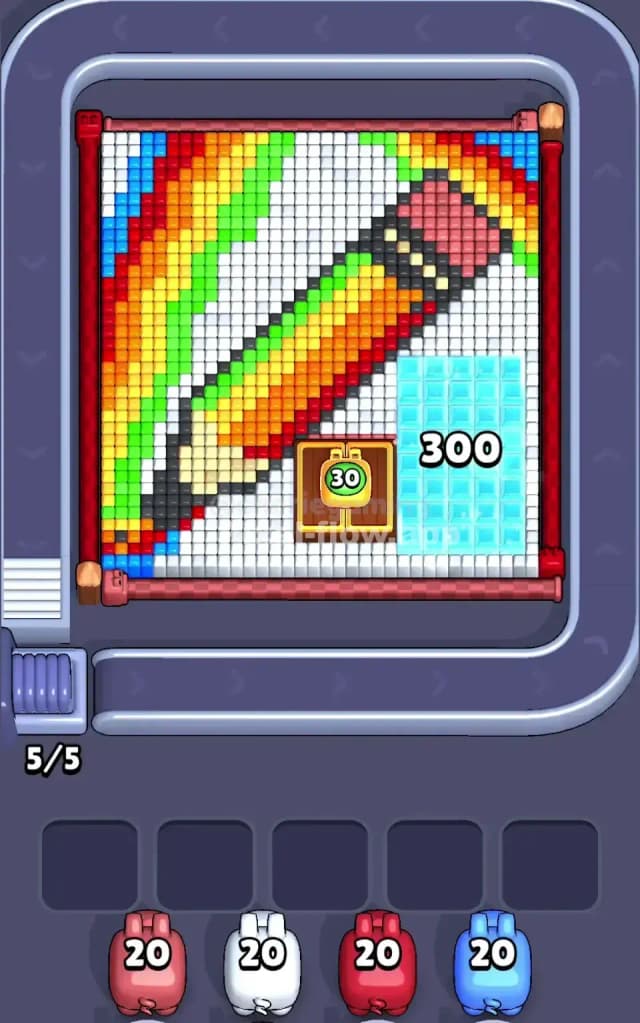
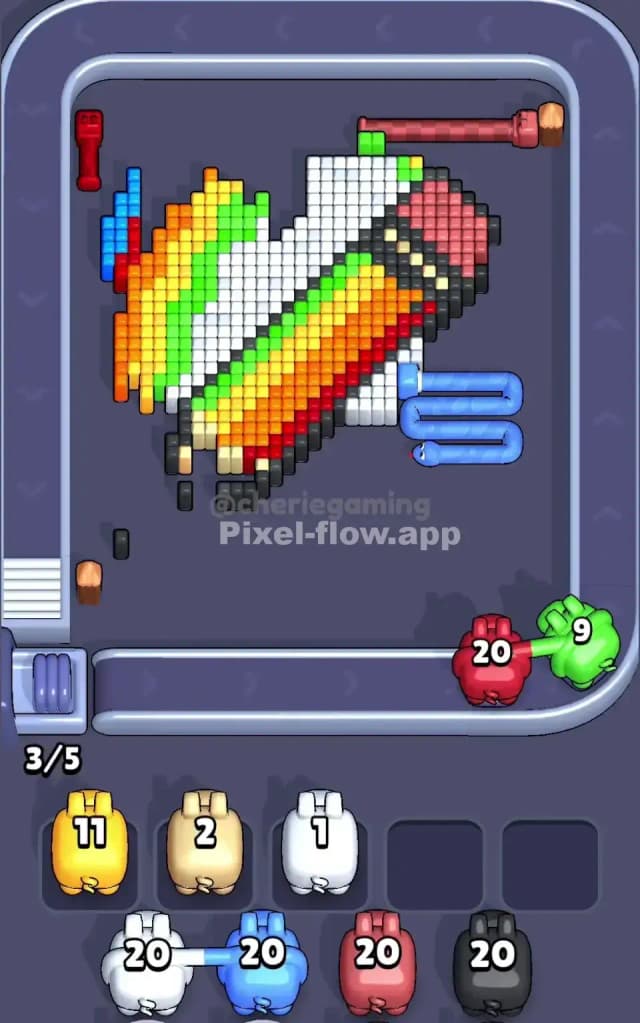
This level features a giant, diagonal pencil resting against a striped rainbow background. The pencil body is mostly yellow and orange, capped with a pink eraser and a grey metal band. The background is a mix of vibrant stripes—blue, red, green, and yellow—filling the upper left. A massive block of white space dominates the bottom right.
You win by clearing layers from the top down to reveal the final shape. Pigs spawn on the conveyor belt; you must tap them to shoot matching colored blocks. If a pig runs out of targets but still has ammo, it gets stuck in your holding slots. Fill all five slots with useless pigs, and you lose.
Is this hard? Yes. This is a very hard level because of the massive White zone and the tricky layering of the pencil’s metal band.
Pixel Flow Level 537 Overview
Imagine a school desk where someone dropped a classic yellow pencil right in the middle of a coloring session. The pencil cuts diagonally from bottom-left to top-right.
The background isn't uniform. The upper-left corner is heavy with rainbow stripes (Blue, Red, Yellow, Green). The bottom-right is deceptively empty-looking, mostly covered in White filler blocks. However, there are two nasty traps here:
- The "300" Ice Block: A huge blue ice zone on the right side sits on top of everything. You can't clear the pencil or the white space beneath it until this ice is shattered.
- The Gold Backpack: Dead center, buried under the pencil, is a Gold Backpack item (giving +30 ammo). You need to dig for this.
The asymmetry is dangerous. The left side is color-heavy. The right side is "blocker-heavy" (Ice and White). If you focus too much on the pretty rainbow colors on the left, the ice on the right will bottle-neck your progress and choke your pig slots.
Step by step solution walkthrough for Pixel Flow Level 537
First Color Zone to Erase in Pixel Flow Level 537
Start with the Blue Pigs targeting the Ice Block.
The huge "300" block of ice on the right side is your primary enemy. Until you crack that ice, effectively 25% of the board is invincible. Any White or Yellow pigs you use early on will waste ammo hitting the invincible layer beneath the ice, or worse, they won't have targets at all and will clog your slots.
Send Blue pigs immediately. They will chip away at the ice. While waiting for Blue pigs, look for Red or Dark Pink pigs to clear the pencil's eraser at the top right, or Black/Grey pigs to hit the metal band. These are safe bets because those colors are distinct and usually sit on the top layer. Avoid White pigs early; the white background is huge, but it's largely covered by other layers or the ice block initially.
How to pass Pixel Flow Level 537 without power ups or boosters
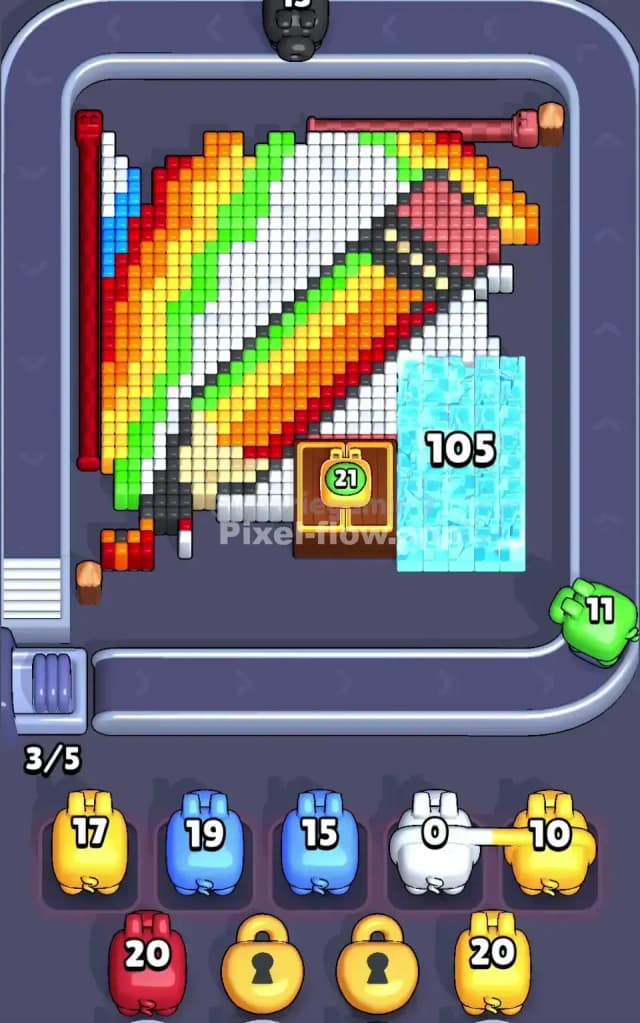
Once the ice is gone and the picture looks half-destroyed, the danger shifts to the "layering trap."
At this mid-stage, the pencil's yellow body is likely exposed, and the white background is accessible.
- Prioritize the White Background: Now that the ice is gone, the bottom-right corner is a massive field of White. White pigs are incredibly efficient here. A single White pig can often clear 20-30 blocks without stopping. This clears the board fast and prevents slot clogging.
- Watch the Metal Band: The grey/black section of the pencil (the ferrule) is tricky. It often sits higher than the yellow wood. If you ignore Grey/Black pigs, they will pile up in your waiting area. If you see a Grey pig, use it immediately to shave that metal band down.
- The Rainbow Stripes: The top-left rainbow (Green, Red, Yellow) is usually safe to ignore until necessary. Those blocks are deep. Don't waste a slot holding a Green pig if you can't see green blocks yet. Let it cycle on the conveyor belt.
The Golden Backpack Rule: By mid-game, you should expose the "30" Gold Backpack in the center. Grab it immediately. It doesn't matter which color triggers it; just clear the blocks on top of it. That extra ammo buffer is crucial for the final cleanup.
Last Details You Clean Up in Pixel Flow Level 537
The end game is usually messy around the pencil tip and the eraser edges.
- The Pencil Tip: The black lead and the beige wood at the tip (bottom left) are often the last valid targets. Save a Beige or Black pig specifically for this.
- Stray Colors: You will likely have random single blocks of Red or Blue left over from the rainbow stripes. Be very careful not to tap a full 20-ammo pig for a single block unless you have empty slots to spare. If you have 4 slots full, wait for the exact color you need. Don't guess.
The final few moves usually involve clearing the last chunks of the yellow pencil body to reveal the bottom-most layer. Keep your eyes on the conveyor belt for Yellow pigs—you will need them until the very last second.