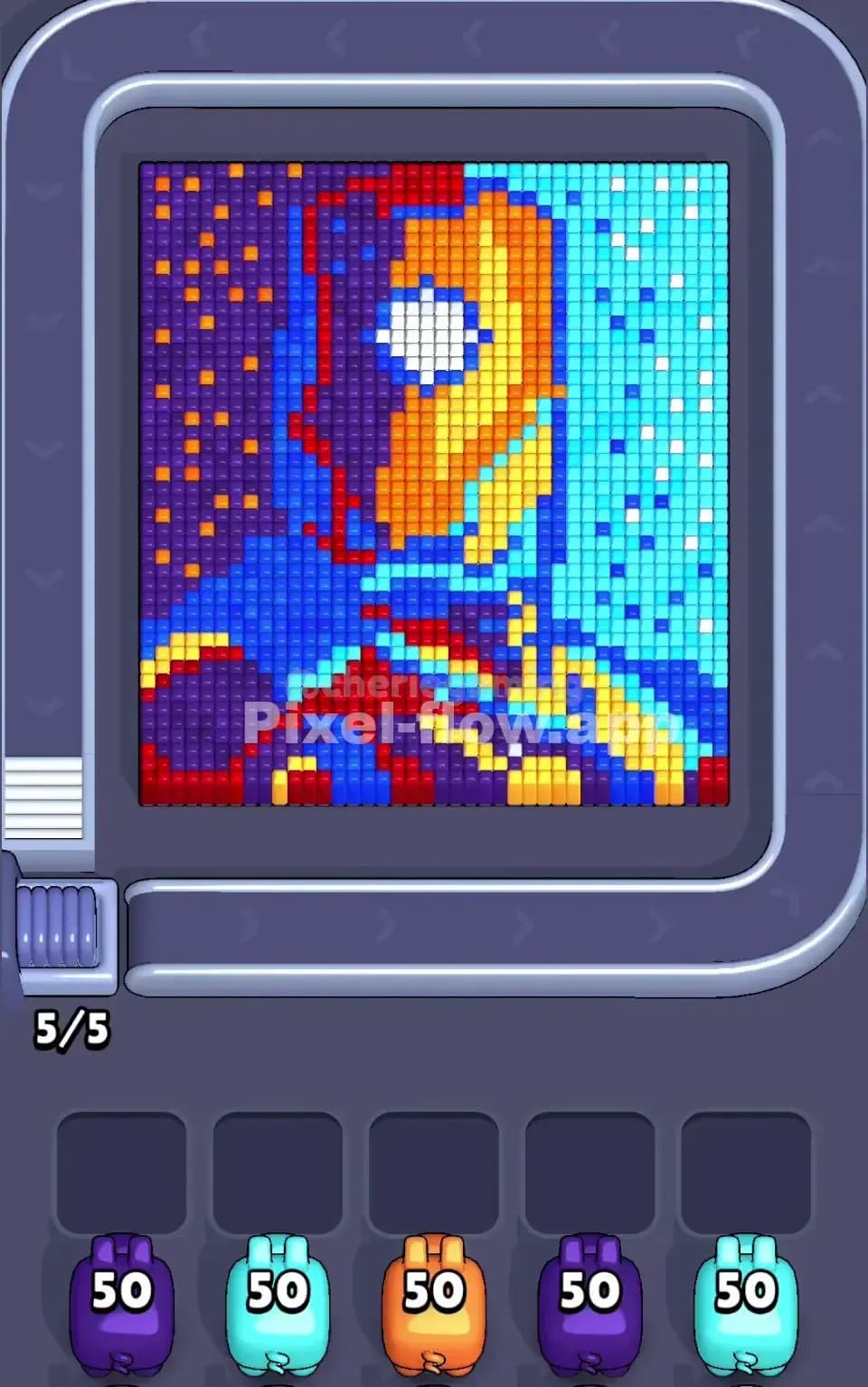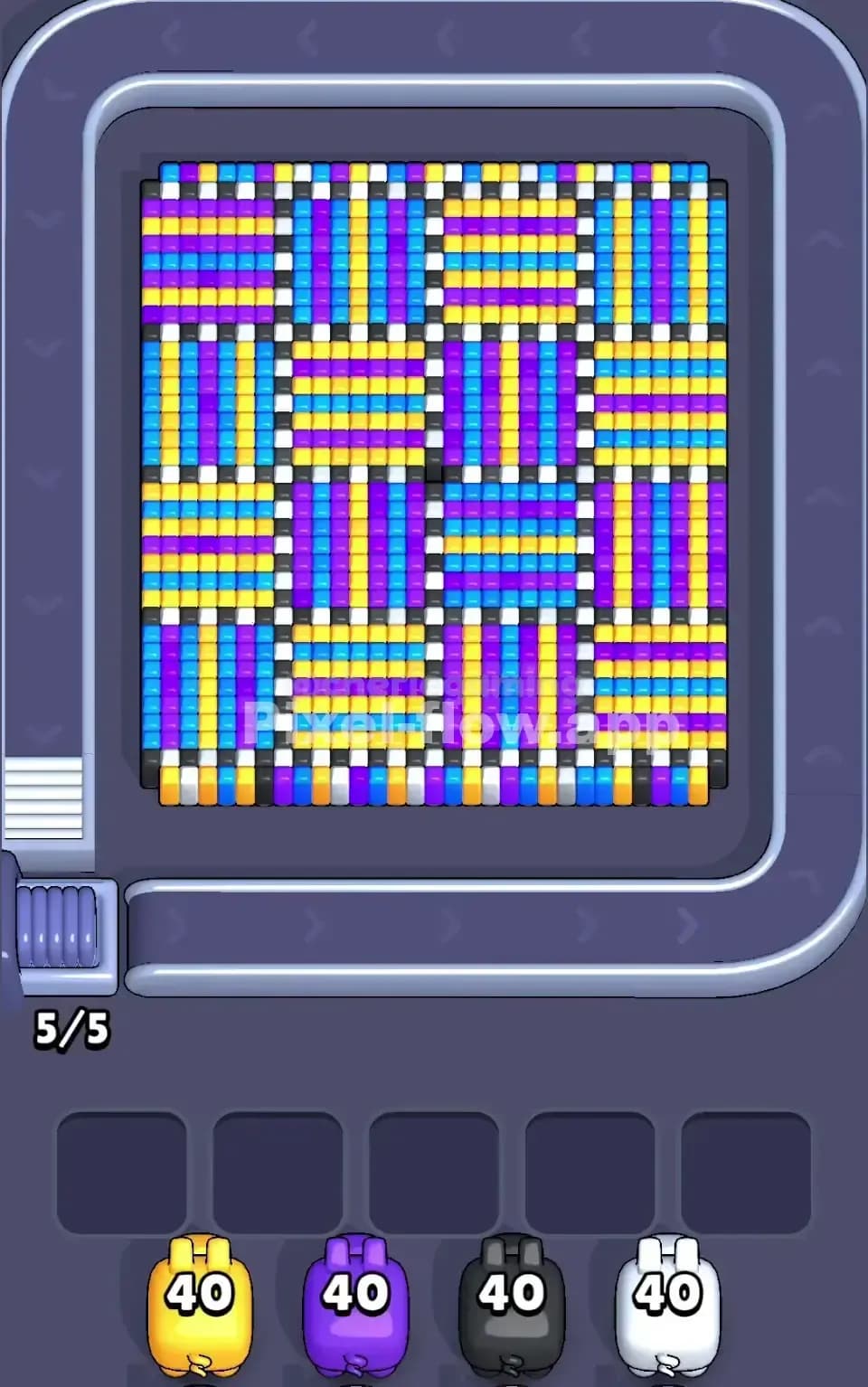
Pixel Flow Level 64 Solution | Pixel Flow 64 Walkthrough
How to beat Pixel Flow Level 64: Video solution & walkthrough. The fastest way to pass Pixel Flow 64.
Is this the wrong level layout?🤔
Pixel Flow randomizes levels for different players. Don't worry, just upload a screenshot of your board, and our AI will find the correct video instantly.



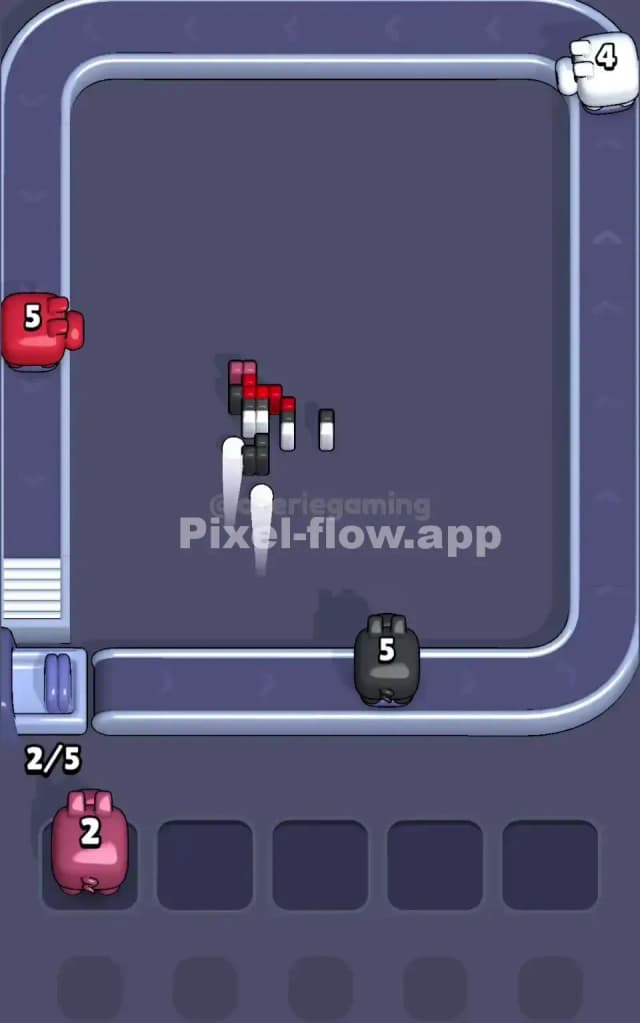
Pixel Flow Level 64 Walkthrough
This level features a massive, pixelated white rabbit holding a carrot, but don't let the cute face fool you. This board is deceptive. The rabbit is "caged" by two tall, striped poles on the far left and right. The left pole is striped orange and white; the right pole is red and white.
These poles are the absolute priority. They block your pigs from hitting the sides of the rabbit. Until they are gone, your firing angles are severely limited to just the top of the head and the very center. Because of these blockers and the tight ammo constraints on the colored pigs, Pixel Flow Level 64 is a very hard level if you play carelessly. You can clog your slots in seconds.
Pixel Flow Level 64 Overview
Imagine a cartoon rabbit trapped in a construction zone. The centerpiece is the white bunny with huge pink ears and a wide, laughing mouth filled with deep pink and a red tongue. It’s holding a small orange carrot on the left side, and a tiny pink tail pokes out on the right.
The scene is heavily guarded.
- The Left Flank: Dominated by a tall Orange and White striped pole. This pole completely protects the carrot and the rabbit's left side.
- The Right Flank: Dominated by a tall Red and White striped pole. This protects the tail and the right side of the body.
- The Outline: A thin black border wraps the entire rabbit, which is notoriously hard to hit without wasting ammo.
The asymmetry here is vital. You cannot use Red pigs on the left pole, and you cannot use Orange pigs on the right pole. You have to match the pole colors exactly to break the cage.
Step by step solution walkthrough for Pixel Flow Level 64
First Color Zone to Erase in Pixel Flow Level 64
Your first move must be to demolish the Striped Poles. I always prioritize the White pig first if possible.
Here is the logic: The poles are the only things standing between you and an easy win. The White pig is the universal key here because both the left and right poles share white stripes. By firing a White pig as it travels up the side conveyor or across the top, you strip away 50% of the blockers on both sides simultaneously.
If you don't have a White pig ready, check the specific side colors.
- If you pull an Orange pig, wait until it is on the left side of the conveyor to shred the orange stripes of the left pole.
- If you pull a Red pig, wait until it is on the right side to smash the red stripes of the right pole.
Do not try to shoot the rabbit's face or ears yet. If you waste ammo on the center while the poles still block the sides, you will run out of valid targets when your pigs loop around to the blocked zones. Kill the cage first.
How to pass Pixel Flow Level 64 without power ups or boosters
Once the poles are gone, the board looks chaotic. The rabbit will be floating in space, likely with its ears partially gone and the white body exposed. This is the "danger zone" for your waiting slots.
You must be disciplined with the Black and Pink pigs. The rabbit has a black outline. These are single-pixel targets. They are incredibly easy to miss. If you pull a Black pig and the conveyor is moving fast, do not panic fire. Wait for the pig to align perfectly with a long vertical strip of the black outline. If you miss, that pig drops into your slot with 19 ammo left, clogging your board.
Focus on the massive blocks of color to keep the flow moving:
- The Body: Use White pigs to clear the massive central stomach area. This is the safest ammo dump.
- The Ears: Use Pink/Purple pigs here, but only from the top. The ears are large targets that are hard to miss.
- The Carrot: Only use the Orange pig here once the Left Pole is totally gone. The carrot is small; make sure you have a clear shot.
If you refuse to use boosters, you have to play slowly. Let the pigs loop around the conveyor multiple times if needed. Never drop a pig into a slot unless you are 100% sure you can empty at least half its ammo on the next pass.
Last Details You Clean Up in Pixel Flow Level 64
As you near the end of Pixel Flow Level 64, the picture is usually just a floating mouth and some debris. The Red Tongue inside the mouth is often the last big cluster. It is buried deep behind the white teeth and pink interior, so you often end up holding a Red pig for a long time waiting for the mouth to open up.
Finally, watch out for the Keys. There are golden keys on the left (near the carrot) and right (near the tail). You usually hit these incidentally while clearing the black outline, but if you miss them, they can prevent the level from finishing. Ensure you snipe these keys as soon as the black outline around them is cleared. The final shot is almost always a stray black pixel near the green pipe at the bottom. Keep a Black pig with low ammo ready for this cleanup.