Pixel Flow Level 66 Solution Walkthrough | Pixel Flow 66

How to solve Pixel Flow level 66? Get instant solution for Pixel Flow 66 with our step by step solution & video walkthrough.

Share Pixel Flow Level 66 Guide:
Pixel Flow Level 66 Gameplay
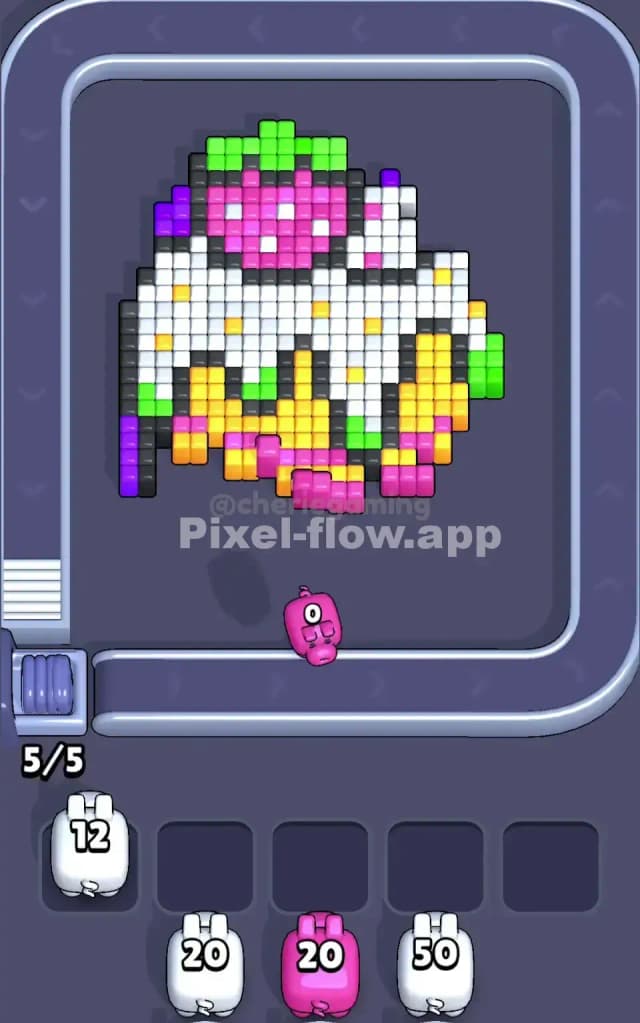
Pixel Flow Level 66 Solution 1
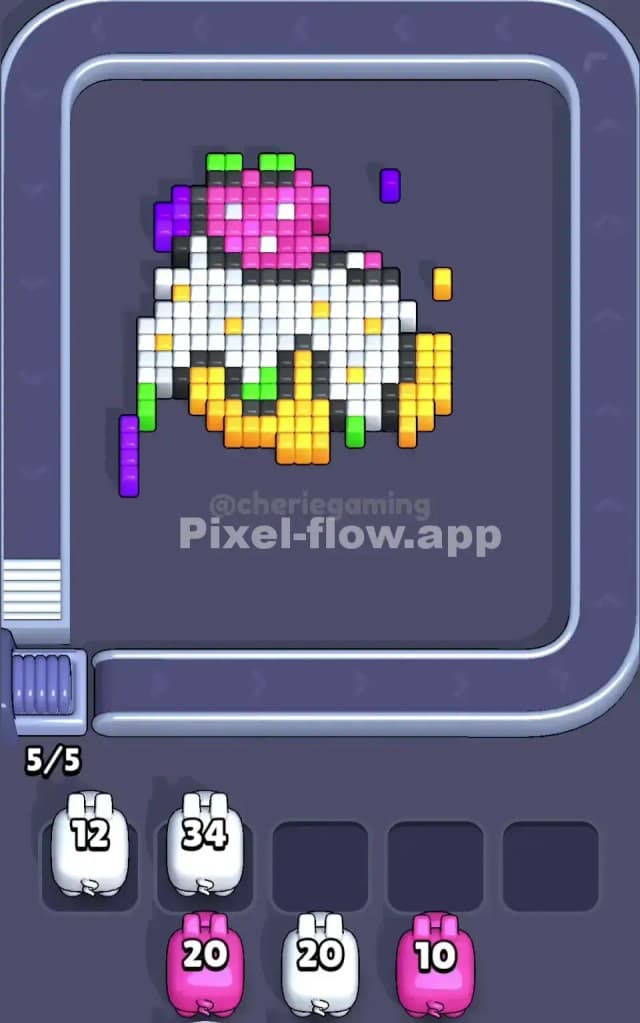
Pixel Flow Level 66 Solution 2
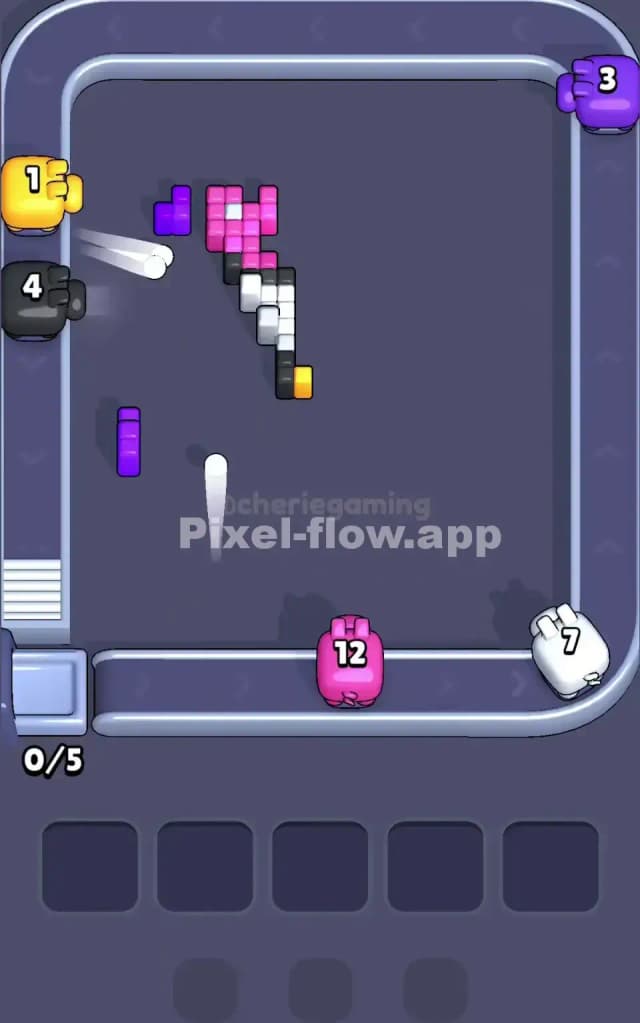
Pixel Flow Level 66 Solution 3

Pixel Flow Level 66 Overview

The Board Layout and Visual Challenge

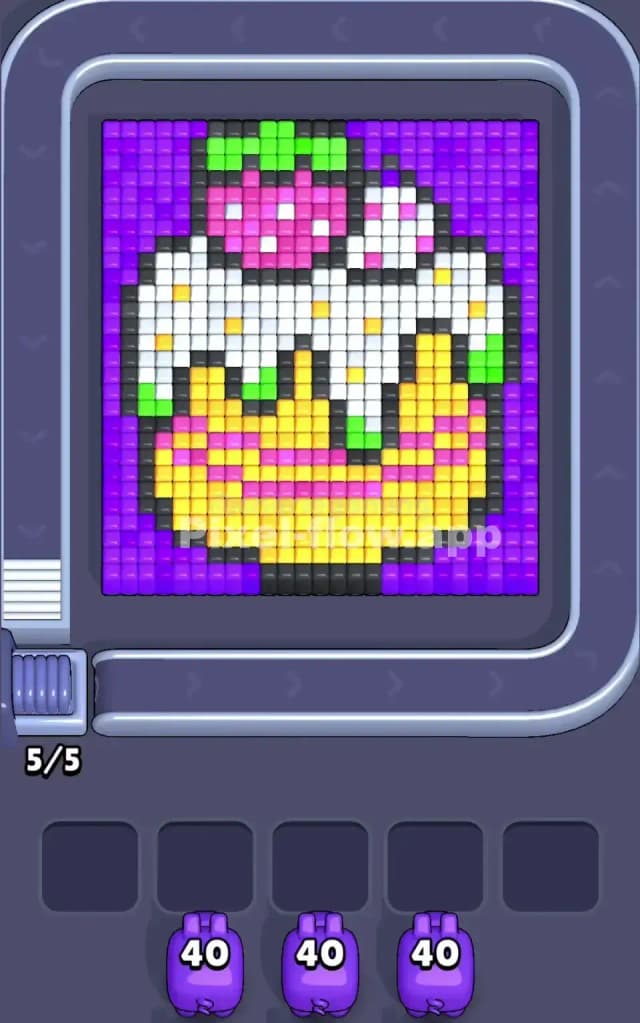
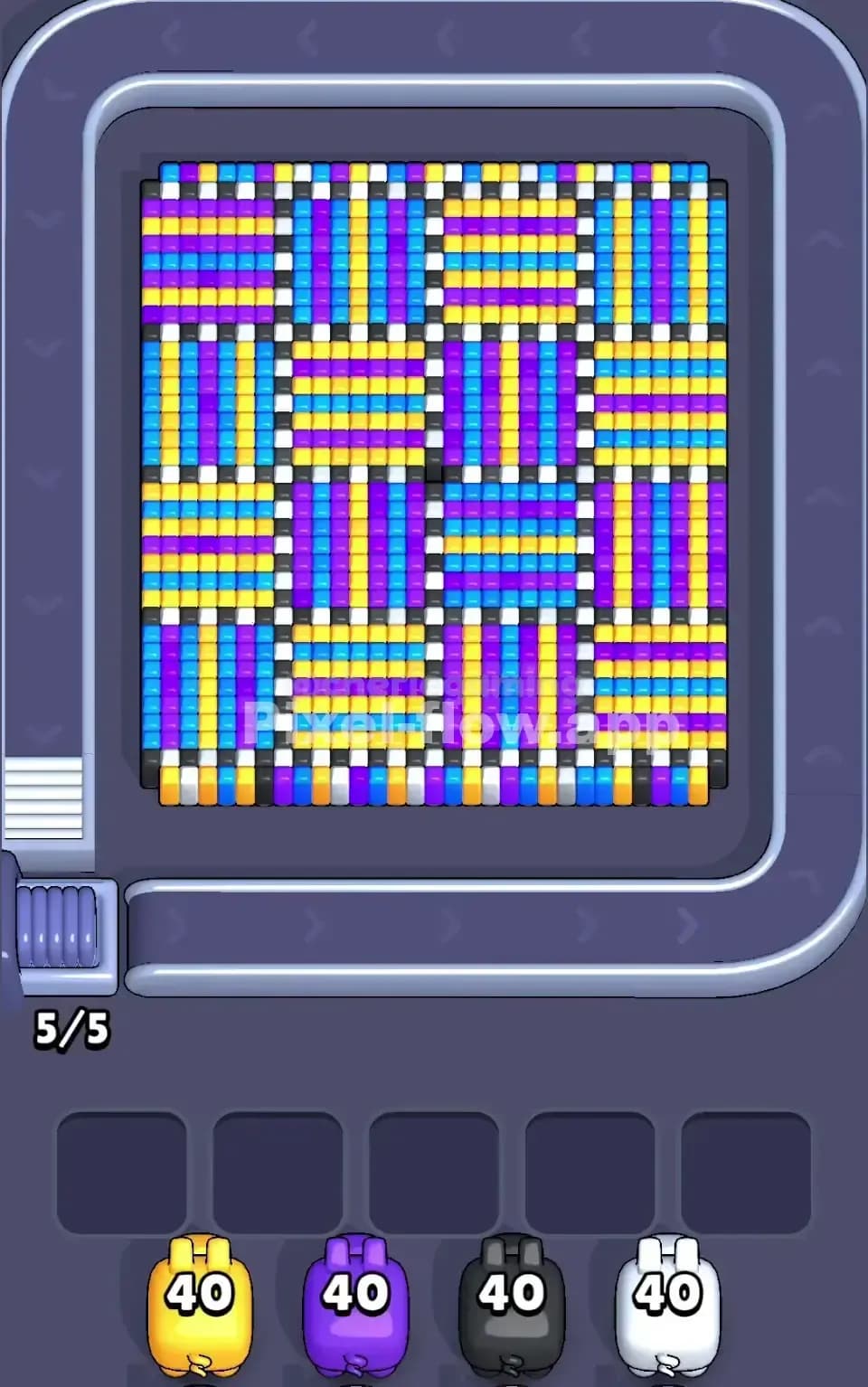
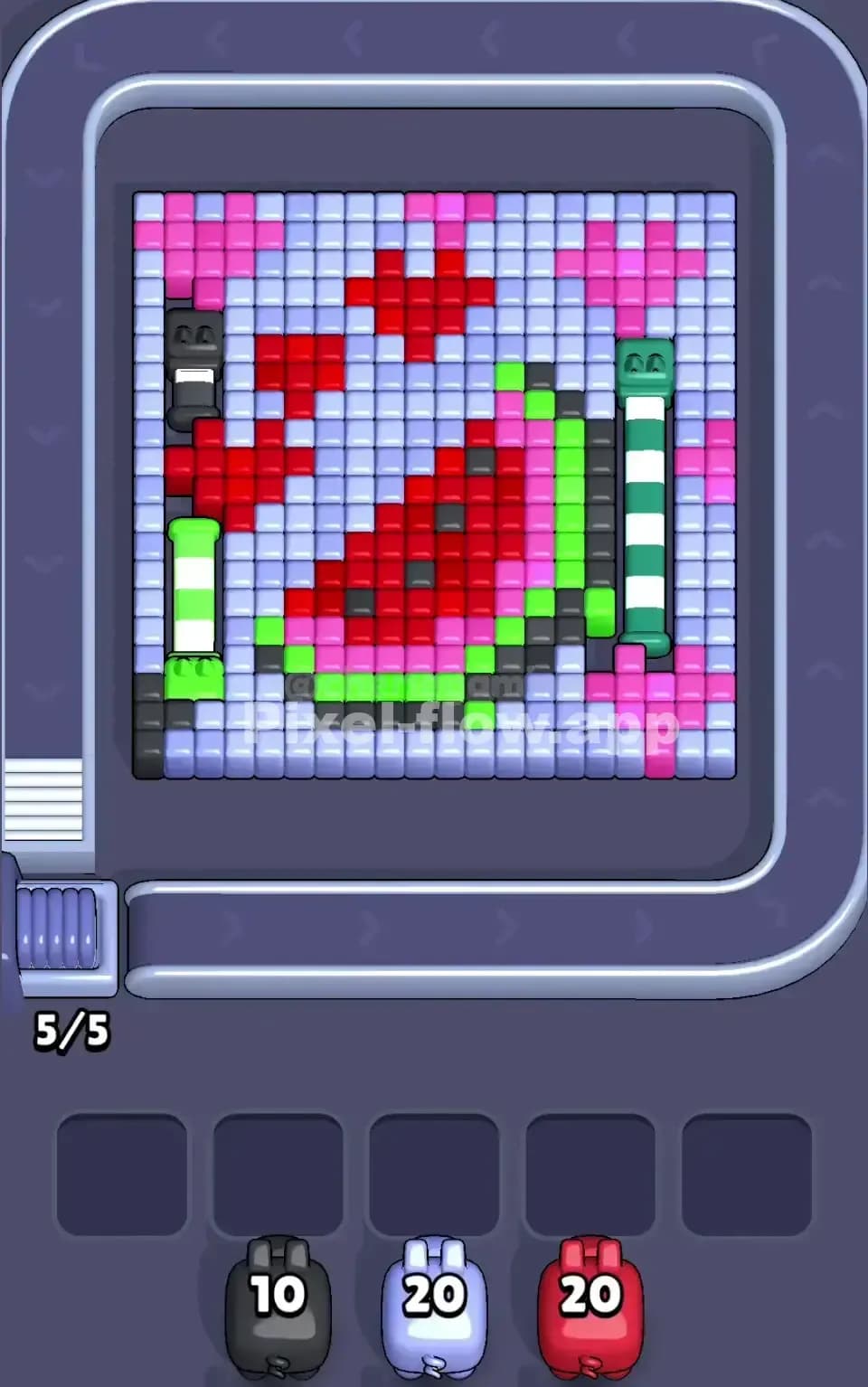
Pixel Flow Level 66 presents a charming pixel art character—what looks like a cute creature or face—layered across a dense voxel canvas. The dominant colors are vivid purple, bright yellow, magenta pink, lime green, white, and black, creating a complex visual puzzle that demands careful sequencing. The purple forms the outer border, creating a natural frame around the entire image. Yellow occupies the lower-middle section in a thick, continuous band, while magenta and white crisscross the upper and central areas in intricate patterns. Green accents and black "shadow" cubes define edges and add depth. This multi-layered arrangement means you won't see the full picture clarity until you've cleared several color passes, making it feel like you're sculpting the final image as you progress.

Win Condition and Deterministic Nature

Your goal in Pixel Flow Level 66 is straightforward: clear every single cube on the board. The level begins with five waiting slots (currently showing three purple pigs with 40 ammo each), and you must fire them strategically so their shots eliminate matching-colored voxels without jamming the queue. The key insight is that pig order and ammo counts are completely deterministic—there's no luck involved. Once you understand which pigs arrive in which sequence and how many shots each has, Pixel Flow Level 66 becomes a pure logic puzzle. Success comes from planning moves two or three pigs ahead, anticipating which colors will be exposed next, and ensuring no pig ever gets stuck without valid targets while others are waiting to deploy.


Why Pixel Flow Level 66 Feels So Tricky

The Yellow Avalanche Problem

The most dangerous aspect of Pixel Flow Level 66 is the sheer volume of yellow cubes occupying the lower half of the board. Yellow forms a thick, almost continuous mass that looks easy to clear at first glance, but here's the catch: you'll likely send multiple pigs with yellow ammo into the board, and if you're not careful about sequencing, you'll burn through ammo on the visible yellow layer only to reveal another dense section underneath. This creates a bottleneck where you feel like you're making progress but your waiting slots are filling dangerously fast with pigs that have no remaining targets. I remember the first time I played Pixel Flow Level 66, I carelessly fired two yellow pigs in a row and suddenly realized I'd exposed a magenta layer that required a pig I hadn't even received yet. The pressure of watching your waiting slots fill up is genuinely stressful.

The Magenta and White Interlocking Puzzle

What makes Pixel Flow Level 66 particularly devious is how magenta and white cubes are interlocked in the upper-middle section, creating isolated pockets and narrow corridors. You can't simply blast away all magenta and expect white to follow naturally. Some white cubes are tucked behind black "frame" pieces that only disappear when you've cleared enough yellow or other colors. Meanwhile, magenta patches appear scattered throughout multiple layers, so a single magenta pig might clear some cubes but leave others unreachable until you've cleared intervening colors. This forced you to think laterally: sometimes you need to fire a pig that seems suboptimal simply to unlock the board state that makes the next pig useful.

The Black Shadow Trap

Black cubes in Pixel Flow Level 66 function as structural supports and visual separators, but they're not actually shootable targets—you can't clear them. Early on, this confused me because I'd think, "Why is there a black cube there?" The answer is that black pieces define the pixel art's outline and create spatial separation. However, they can block your understanding of which colors lie beneath them, making it easy to miscalculate ammo requirements. When you fire a yellow pig and see no target cubes appear after clearing a black-bordered section, you realize there was a hidden layer you couldn't predict. This unpredictability is what makes Pixel Flow Level 66 challenging: you're constantly discovering new color zones as you clear the surface.

The Waiting Slot Pressure

Perhaps the most brutal aspect of Pixel Flow Level 66 is the psychological pressure of the five waiting slots. You start with three purple pigs, each holding 40 ammo, and they occupy three of five slots. That leaves only two free slots for new arrivals. If you send the purple pigs too quickly without clearing enough purple on the board, you'll jam the buffer with stuck pigs, and it's game over. The fear of filling all five slots is real, and it forces you into a conservative, calculated mindset rather than a reactive one. I found Pixel Flow Level 66 clicked for me once I accepted that I needed to let purple pigs sit in the queue for several turns, clearing other colors first to expose more purple cubes that would justify firing those pigs later.


Step-by-Step Strategy to Clear Pixel Flow Level 66

Opening: Manage the Purple Border and Unlock Yellow

Your first priority in Pixel Flow Level 66 should be to fire at least one purple pig to clear the outer purple border. However, don't fire all three purple pigs immediately. Instead, send the first purple pig and let it clear a section of the perimeter. This achieves two things: it opens up the board visually, and it keeps two purple pigs in reserve for later. After the first purple hit, you'll likely see yellow becoming the dominant visible color. Resist the urge to fire yellow immediately. Instead, pause and assess: are there magenta, white, or green cubes you can clear first to reduce the overall burden? Keep at least two waiting slots completely free at all times during the opening phase. This buffer gives you flexibility if new pigs arrive or if you discover unexpected color pockets. The opening of Pixel Flow Level 66 is about establishing control, not rushing forward.

Mid-Game: Sequence Colors to Expose Inner Layers

Once you've broken the purple seal, your focus shifts to strategic pig rotation. The mid-game of Pixel Flow Level 66 requires you to think like a sculptor: each pig removes a layer, and you want to remove layers in an order that minimizes blocked targets. Here's the practical approach: after the initial purple shot, fire a yellow pig if you see a substantial number of exposed yellow cubes. However, don't empty the yellow pig entirely on the first visible batch. Stop when the yellow pig still has 10–15 ammo remaining. This partially spent pig can then slot into a waiting position as a "parking" pig. While it waits, fire other colored pigs—green, magenta, or white—to expose new sections of the board. When fresh yellow cubes appear (revealed by removing the layer above them), bring the parking pig back out and finish its ammo. This leapfrog technique keeps waiting slots open and ensures ammo is spent efficiently. Pixel Flow Level 66 rewards this patient, incremental approach far more than aggressive early clearing.

End-Game: The Final Color Sweep and Waiting Slot Cleanup

As you approach the finish line on Pixel Flow Level 66, your waiting slots should be nearly empty, and you should have a clear picture of which colors remain. The final phase is about precision. Count the remaining cubes of each color and estimate how many pigs you'll need. For instance, if you see 8 white cubes scattered across the board, you need a white pig with at least 8 ammo. If your remaining pigs have 40 ammo each and only 8 targets exist, that pig will become stuck—and that's a failure condition in Pixel Flow Level 66. The solution is to fire the stuck pig only after you're absolutely certain no more valid targets exist, and even then, try to pair it with a clearing action on a different color so the stuck pig can drop into the waiting slots and eventually cycle out naturally. The very last moves of Pixel Flow Level 66 should see you firing pigs with minimal ammo waste, ideally burning exactly the right number of shots to clear the remaining cubes.


The Logic Behind This Pixel Flow Level 66 Plan

Determinism and Predictability Over Guessing

The reason this Pixel Flow Level 66 strategy works is rooted in the game's deterministic nature. You're not gambling; you're executing a puzzle. Every pig that arrives has a fixed ammo count. Every cube on the board is predetermined. The waiting slots fill in a specific order. Once you accept that Pixel Flow Level 66 is a logic puzzle rather than a real-time action game, your stress drops dramatically. You can pause, count, and plan. Write down how many yellow cubes you see, estimate how many more might be hiding beneath other colors, and decide whether to fire a yellow pig now or wait. The strategy outlined above—parking pigs, leapfrogging colors, and maintaining buffer slots—leverages this determinism by letting you control the pace. Pixel Flow Level 66 respects planning; it punishes recklessness.

Staying Calm and Counting Two Pigs Ahead

The final piece of the Pixel Flow Level 66 puzzle is mental discipline. Watch the queue constantly. When you've fired a pig, immediately look at the next pig in line and ask yourself: "Does this color have visible targets right now?" If not, wait. Queue observation is crucial. If you see a magenta pig approaching in position three, but there are no magenta cubes visible, start planning now which colors you'll clear to expose magenta before that pig arrives. This two-pig-ahead mindset prevents the panic of jamming your waiting slots. Pixel Flow Level 66 is solvable by anyone with patience and basic counting skills. The moment you stop rushing and start thinking like the board is a layered cake you're carefully slicing, Pixel Flow Level 66 becomes not frustrating, but genuinely satisfying to solve.