
Pixel Flow Level 67 Solution | Pixel Flow 67 Walkthrough
How to beat Pixel Flow Level 67: Video solution & walkthrough. The fastest way to pass Pixel Flow 67.
Is this the wrong level layout?🤔
Pixel Flow randomizes levels for different players. Don't worry, just upload a screenshot of your board, and our AI will find the correct video instantly.
Pixel Flow Level 67 Walkthrough
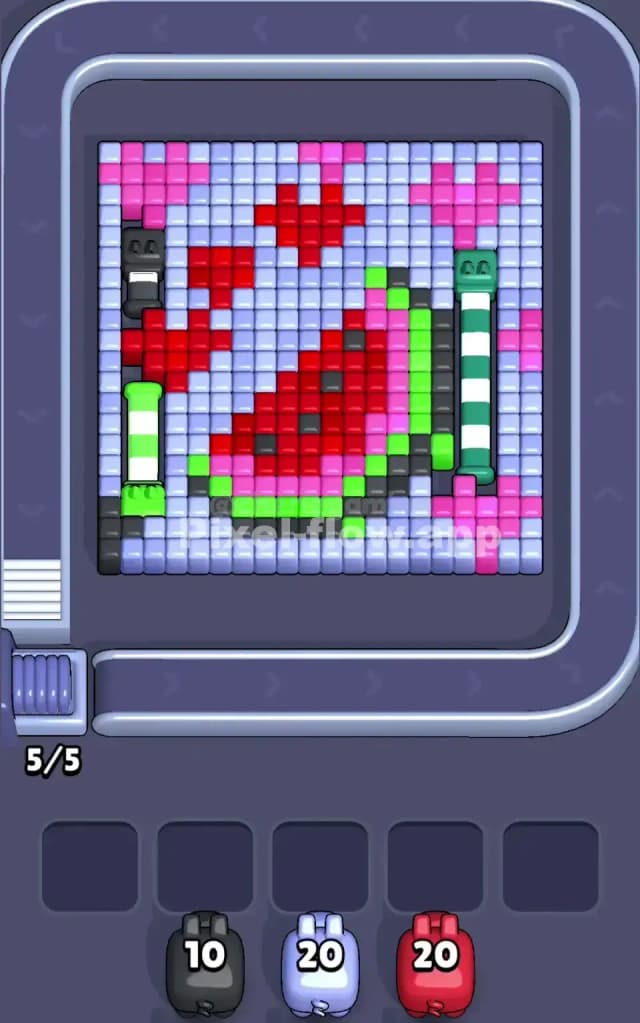
This level is all about summer vibes blocked by industrial plumbing. The artwork features a massive slice of watermelon, complete with pink flesh and black seeds, floating in a sky filled with red and pink hearts. The entire scene is set against a checkered light blue background.
The main problem here isn't the pixel art itself; it's the Obstacles. You have tall Green pipes standing vertically on both the left and right sides of the watermelon, plus a smaller Black pipe tucked in the upper left corner. These pipes physically block your pigs from shooting horizontally into the center of the board.
Is Pixel Flow Level 67 a very hard level? No. It is deceptive, but standard. The ammo counts are generous enough if you don't panic and clog your waiting slots with colors you can't reach yet. The difficulty comes from those green pipes forcing you to clear the board in a very specific order.
Pixel Flow Level 67 Overview
Imagine a picnic blanket or a sunny sky where a giant watermelon slice is the main guest. The background is a dense layer of light blue pixels that acts as a "wrapper" for the whole image. Floating around the melon are jagged red hearts and pink sparkles.
The board is asymmetrical because of the pipes.
- Left Flank: A tall Green pipe at the bottom and a Black pipe near the top. This makes the left side extremely defended.
- Right Flank: A single tall Green pipe.
- Center Mass: The watermelon sits diagonally, heavy on Pink and Red, with a Green rind curving along the bottom and right.
Because the watermelon is tilted, the "rind" (Green) is buried deep on the right side, shielded by that vertical pipe. You cannot just blast the green rind early; you have to surgically remove the surrounding colors first. The Red hearts act as a secondary layer that often sits on top of or adjacent to the main melon, meaning you’ll often need to clear Red to expose the Pink or Black underneath.
Step by step solution walkthrough for Pixel Flow Level 67
First Color Zone to Erase in Pixel Flow Level 67
You absolutely must start with Light Blue.
This isn't just because it's the background; it's because the Light Blue pixels are the only ones fully exposed to the conveyor belt on all sides. Look at the board: the blue fills every gap between the hearts and the melon. If you try to slot a Red or Green pig now, they will just stare at the pipes and refuse to fire, clogging your waiting slots.
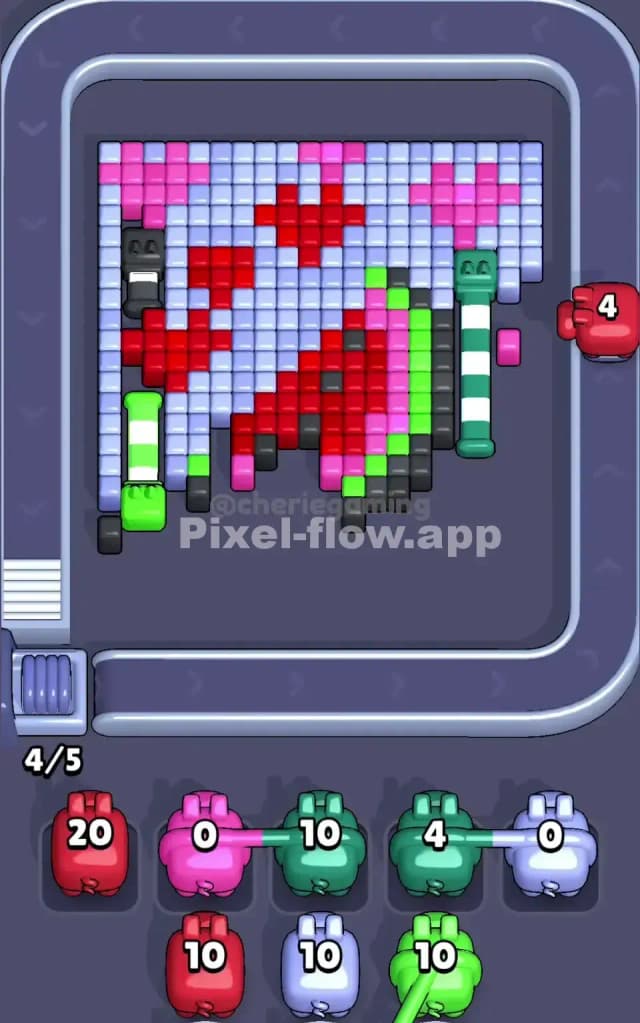
Prioritize the Light Blue pig (20 ammo) immediately.
- Let the Light Blue pig ride the belt.
- It will strip away the "sky" layer.
- This exposes the edges of the Red hearts and the Pink watermelon flesh.
- Crucially, removing the blue creates "air" around the Green pipes, making it easier to snipe pixels that are hiding behind them later.
Do not touch the Black pig (10 ammo) yet. The black pixels are mostly seeds buried inside the melon or the small pipe on the left. You can't hit them efficiently until the top layers are gone.
How to pass Pixel Flow Level 67 without power ups or boosters
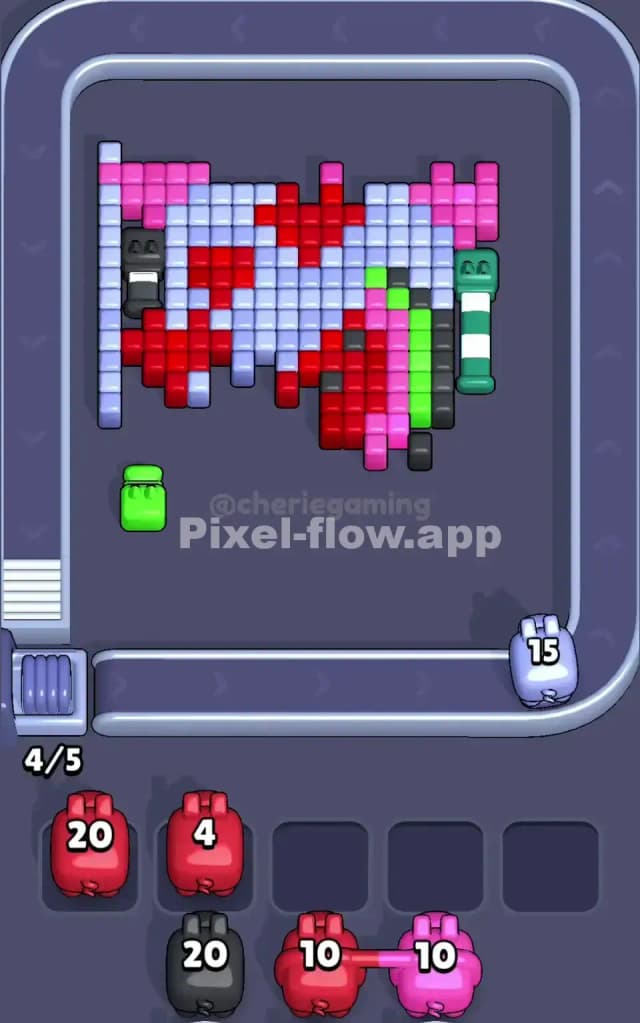
Once the blue sky is gone, the board looks like a messy construction site. You have the Green pipes standing tall, surrounding a floating chunk of Red and Pink blocks. This is the danger zone where people lose.
You will likely see a glut of Red Pigs and Pink Pigs coming down the line. You have to handle them correctly:
- Target the Red Hearts First: The Red pixels are usually protruding "above" the melon slice. They are closer to the surface than the green rind. Use your Red pigs to clear the floating hearts in the top left and top right corners. This opens up firing lanes for vertical shots.
- The Pipe Problem: You will notice you can't hit the sides of the watermelon easily because the Green pipes absorb the shots or block the angle. Stop trying to shoot horizontally.
- Vertical Dominance: Since the sides are blocked, you must rely on your pigs shooting from the Top and Bottom of the conveyor belt loop. Time your taps so the Red and Pink pigs release their ammo as they pass the top or bottom edge of the board. This allows them to drill straight down into the center of the melon, bypassing the pipes entirely.
If your waiting slots start filling up with Green pigs, hold fast. Do not use a booster to clear them. Just wait for the conveyor belt to bring a Red or Pink pig that can actually do damage. You need those Green pigs, but not yet.
Last Details You Clean Up in Pixel Flow Level 67
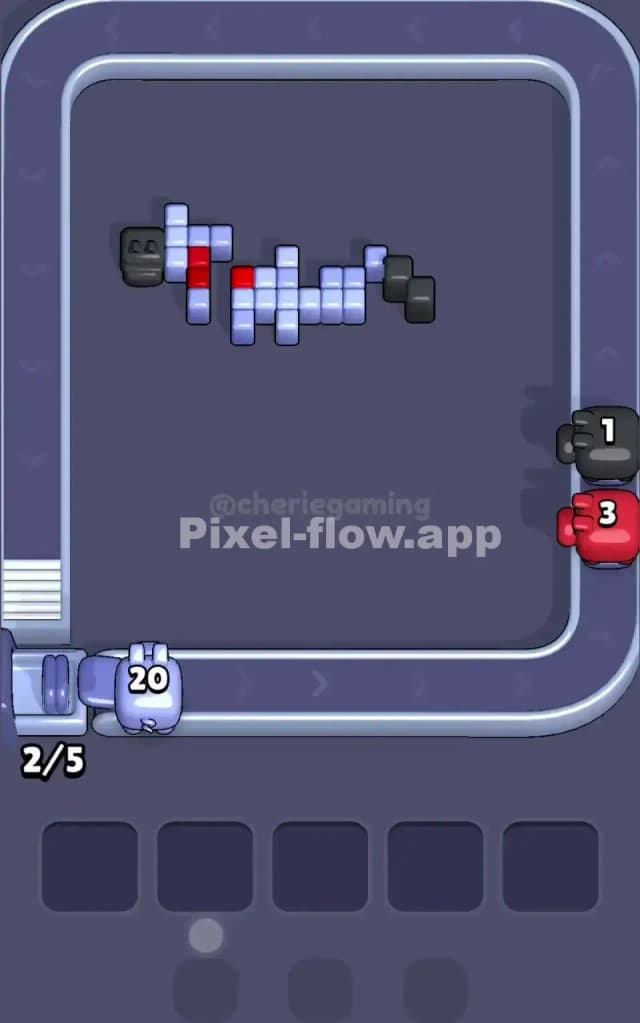
By this stage, the watermelon is half-eaten. The Red hearts are gone, and the Pink flesh is mostly stripped away. Now you are left with the skeleton of the level:
- The Green Rind: Now that the center is hollowed out, the Green pigs in your waiting slots finally have a clear shot at the rind and the vertical pipes.
- The Black Seeds: You’ll see scattered Black pixels that were acting as watermelon seeds. They are deep inside the structure.
This is the cleanup phase. Use the Green pigs to destroy the two vertical pipes first. Once those guardians are down, the rest of the green rind is easy pickings from any angle. Finally, drop your Black pig (10 ammo). With the pipes and rind gone, the black seeds are sitting ducks. They will be the last pixels to vanish, leaving you with a clean, empty gray board.