Pixel Flow Level 68 Solution Walkthrough | Pixel Flow 68

How to solve Pixel Flow level 68? Get instant solution for Pixel Flow 68 with our step by step solution & video walkthrough.

Share Pixel Flow Level 68 Guide:
Pixel Flow Level 68 Gameplay
Pixel Flow Level 68 Solution 1
Pixel Flow Level 68 Solution 2
Pixel Flow Level 68 Solution 3

Pixel Flow Level 68 Overview

The Pixel Flow Level 68 Board Layout

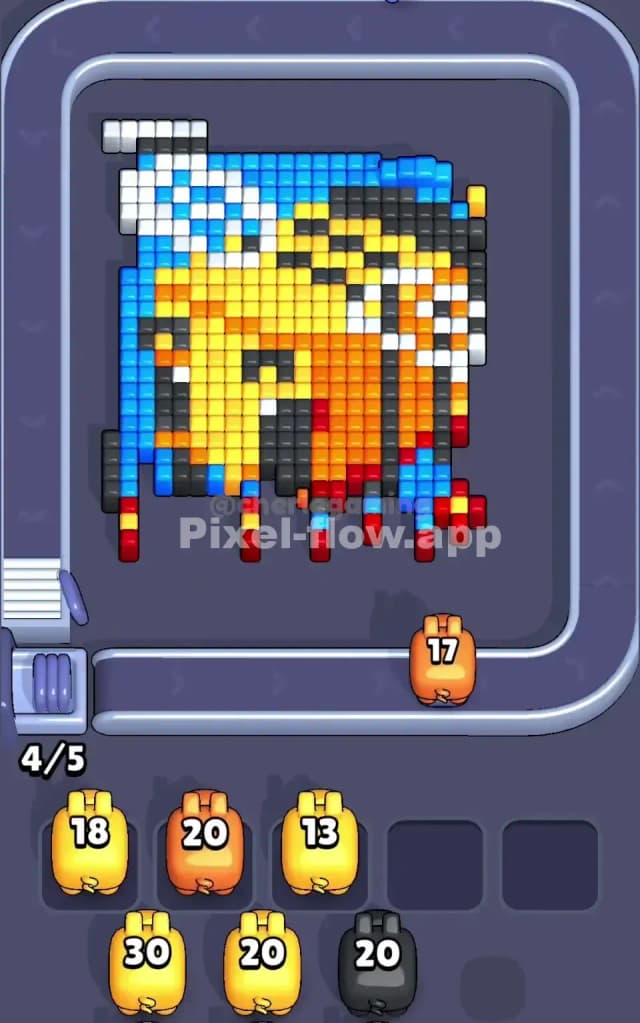
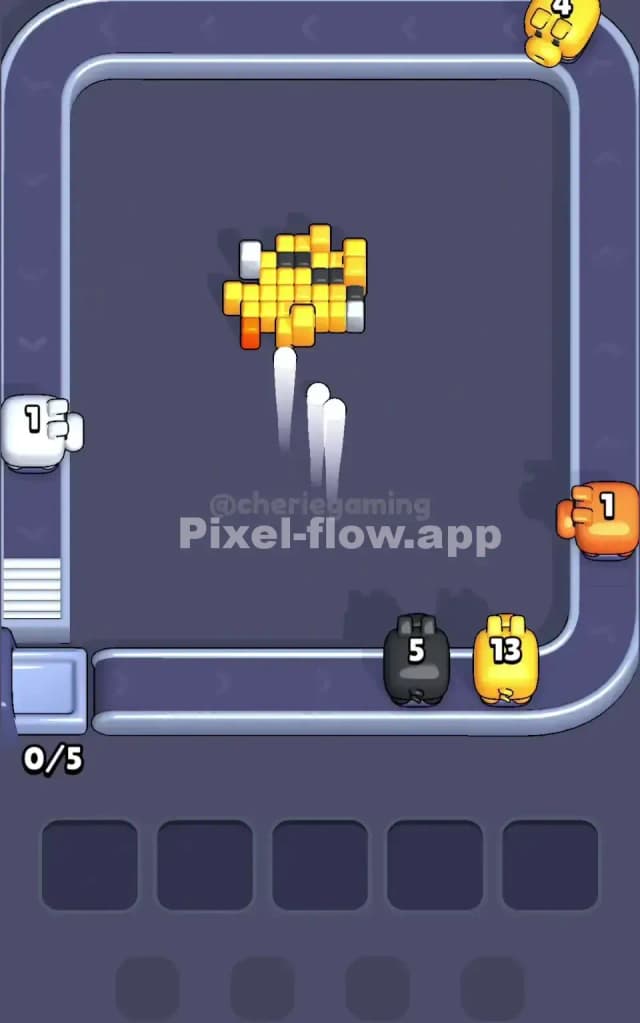
Pixel Flow Level 68 presents you with a vibrant, multi-layered pixel art image dominated by warm tones in the center—think yellows, oranges, and reds blending into a recognizable subject—all wrapped in a frame of cool blues, whites, and blacks. The board is densely packed, which immediately tells you that precision and planning are going to matter more than luck here. The foreground is absolutely crammed with color-coded voxel cubes, and you can see distinct horizontal bands of colors stacked vertically, suggesting that different layers will unlock as you clear the top sections. The surface-level visible colors include a substantial amount of white, black, and blue cubes framing the entire board, with yellow, orange, and red cubes clustering in the central area. This layered structure is the heart of what makes Pixel Flow Level 68 both beautiful and challenging.

Understanding the Win Condition and Deterministic Pig Order

Your goal in Pixel Flow Level 68 is straightforward: clear every single cube on the board. You can see at the bottom that you have five pigs waiting to help—a yellow pig with 30 ammo, and three blue pigs each with either 20 or 40 ammo. That's 110 total ammo shots to work with, and every cube you destroy costs exactly one ammo from the matching color pig. The pig order is completely fixed and deterministic; you can't shuffle them or choose which pig goes next. This means Pixel Flow Level 68 demands that you understand why the pigs arrive in that specific sequence and how that sequence either helps or hinders your cube-clearing strategy. You're not just reacting to what's on screen—you're planning several steps ahead, knowing exactly which pigs are coming and what they can accomplish.


Why Pixel Flow Level 68 Feels So Tricky

The Critical Bottleneck: The Blue Cage

The biggest threat in Pixel Flow Level 68 is the massive population of blue cubes forming a protective border around the entire board. Because blue pigs arrive second and third in your queue (and one arrives fourth), you might think you have plenty of blue firepower. Here's the trap: if those blue pigs burn through their ammo on the visible blue border before you've exposed deeper layers or eliminated blocking colors, you'll end up with blue pigs sitting idle in your waiting slots. Once a pig has no valid targets and all five waiting slots fill up, you're stuck—the game locks, and you fail Pixel Flow Level 68. The blue-heavy perimeter is intentionally designed to tempt you into a premature assault, but surrendering to that temptation is exactly how you jam yourself.

Subtle Problem Spots: Yellow's Loneliness and the Red Squeeze

Another wrinkle that makes Pixel Flow Level 68 deceptively hard is the yellow pig's positioning. You've got 30 yellow ammo arriving first, but the visible yellow cubes are somewhat scattered across the board, mixed in with oranges and surrounded by blues and blacks. If you trigger the yellow pig too aggressively on the fringe yellows, you might spend ammo inefficiently and leave interior yellow cubes stranded when the pig runs dry. Similarly, the red cubes clustered in the lower-middle section of Pixel Flow Level 68 create a pressure point. There aren't many red cubes visible compared to other colors, but they're deeply nestled. If you don't clear the overlying yellows and oranges at the right pace, red cubes will become inaccessible, and you'll face a deadlock.

The Personal Moment: When It Clicked

Honestly, Pixel Flow Level 68 frustrated me for a couple of attempts because I kept launching the yellow pig in random directions, watching ammo tick down, and then being shocked when blue pigs bottlenecked. The moment it clicked was when I stepped back and drew a rough mental map: Which colors block access to which other colors? White and black cubes in Pixel Flow Level 68 act as structural barriers between the warm interior and the cool border. Once I realized that I needed to surgically open pathways—not carpet-bomb the board—the level suddenly felt solvable. That shift from "spray and pray" to "cut and expose" made all the difference.


Step-by-Step Strategy to Clear Pixel Flow Level 68

Opening: The Yellow Pig's Surgical Strike

Start by deploying your yellow pig carefully. Don't empty all 30 ammo at once; instead, target the yellow cubes that are actively blocking pathways to deeper colors. In Pixel Flow Level 68, you'll notice that the yellow cluster in the center-upper region sits atop orange and red zones. Fire the yellow pig and let it whittle down the visible yellow population, but stop and reassess once the yellow pig has spent roughly 15–20 ammo. At that point, you want at least three waiting slots still empty because your blue pigs are coming next, and they're going to be thirsty for targets. If you've opened up some interior pathways with your yellow strikes, you'll see new colors bleeding through—that's success in Pixel Flow Level 68. Keep your waiting buffer healthy; this is not the moment to fill all five slots.

Mid-Game: Sequencing Blue, Exposing Layers, and Parking Carefully

Once your first blue pig arrives, you're in the delicate middle phase of Pixel Flow Level 68. This blue pig should not go all-out on the perimeter. Instead, use it to nibble at blue cubes that are blocking access to the warm interior. The smart play is to let the blue pig spend maybe 10–15 of its ammo on strategic perimeter blues, then hold back. Why? Because you've got two more blue pigs behind it, and you need to expose enough of the board that all three can find meaningful targets without overfilling your waiting slots.

As you clear upper layers in Pixel Flow Level 68, you'll expose yellows, oranges, and reds beneath. This is where you create a feedback loop: each color pig that arrives finds new, fresher targets than the previous pig did. However, watch your waiting slots obsessively. If you're about to trigger a pig and you've already got four stuck pigs sitting idle with ammo, don't press the button. Let that pig stay on the conveyor belt for one more rotation while you manually clear a few cubes with a pig that's already active. Yes, that sounds backwards, but in Pixel Flow Level 68, patience is your best friend.

The black and white cubes in the middle section of Pixel Flow Level 68 are scaffolding; they prop up the whole structure. Don't overthink clearing them early. Let them sit until the warm-colored pigs (yellow, orange, red) have done their work, because those interior colors will naturally destabilize the black and white once they vanish.

End-Game: The Final Color Shuffle and Avoiding a Last-Second Jam

As you approach the endgame in Pixel Flow Level 68, you'll have mostly exhausted the yellows and oranges, and you're down to reds, blues, blacks, and whites. This is where the level either rewards your patience or punishes your greed. At this stage, you should have a rough sense of how many reds, blacks, and whites are left, and whether your remaining blue pigs can actually clear them. If you see that you've got 50 red cubes but only 20 blue ammo remaining, you've already lost Pixel Flow Level 68—you needed to sequence differently earlier. But if you've planned well, your final blue pigs should be able to mop up the outer blues, leaving reds and blacks for any late-arriving pigs or for final mopping.

The absolute last thing you want in Pixel Flow Level 68 is to have two pigs sitting in waiting slots with unspent ammo while three lone cubes of a color you've already finished sit on the board. That's a failure condition disguised as victory. To avoid this, during the final stages, count remaining ammo and remaining cubes of each color. If you're running close, nudge things so that the last pig to fire is the one that clears the final cube. It feels good, and it proves you've mastered Pixel Flow Level 68.


The Logic Behind This Pixel Flow Level 68 Plan

Exploitation of Order, Ammo, and Waiting Slots

The strategy outlined above doesn't rely on luck or speed; it exploits the deterministic nature of Pixel Flow Level 68. You know the pig order is fixed and their ammo counts are fixed. That means you can pre-calculate roughly which pigs should handle which regions of the board. The five waiting slots aren't a generous buffer—they're a finite resource that punishes poor sequencing. By deliberately underutilizing early pigs and building up ammo reserves in later pigs, you create flexibility. You're not reacting to chaos; you're orchestrating a symphony where each pig plays its exact part at the exact moment, and the outcome in Pixel Flow Level 68 is a clean, jam-free victory.

Staying Calm and Planning Ahead

The hardest part of Pixel Flow Level 68 is resisting the urge to fire every pig as soon as it arrives. I know the temptation—the conveyor belt is moving, the music is playing, and there are cubes begging to be destroyed. But champions of Pixel Flow Level 68 take a breath before each trigger pull. Watch the queue; count the ammo; scan the board for bottlenecks. Ask yourself: If I fire this pig now, will the next pig still have valid targets, or will it be stranded? That one question, asked repeatedly during Pixel Flow Level 68, is the difference between a smooth clear and a frustrating restart. You've got the tools—110 ammo distributed across five pigs. The question is whether you have the discipline to use them wisely. Trust the plan, execute it methodically, and Pixel Flow Level 68 will fall.