Pixel Flow Level 71 Solution | Pixel Flow 71 Walkthrough
How to beat Pixel Flow Level 71: Video solution & walkthrough. The fastest way to pass Pixel Flow 71.
Is this the wrong level layout?🤔
Pixel Flow randomizes levels for different players. Don't worry, just upload a screenshot of your board, and our AI will find the correct video instantly.

Pixel Flow Level 71 Walkthrough
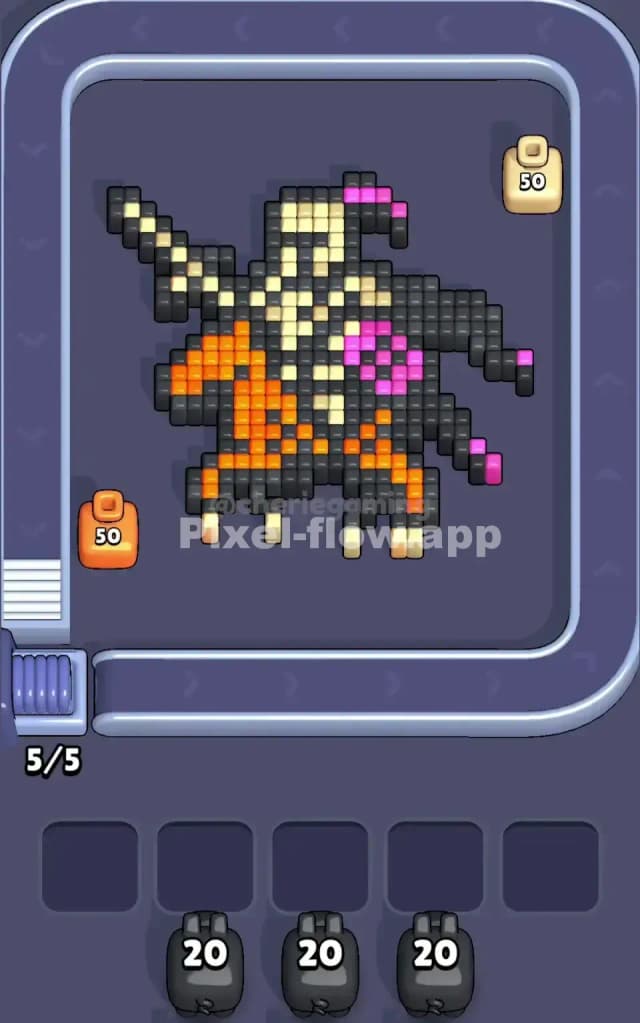
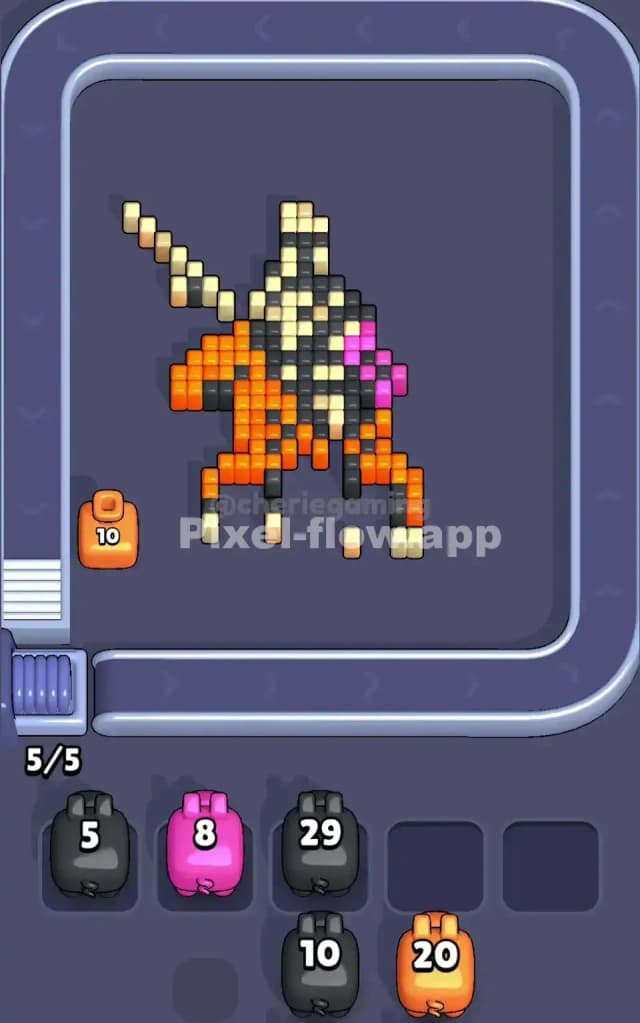
Pixel Flow Level 71 features a complex voxel sculpture of a Skeleton Knight or Grim Reaper riding an orange horse. The figure is brandishing a massive scythe or sword on the left side, while the right side is dominated by a flowing black cape. The core colors here are Black (outer armor and cape), Orange (the horse), Cream (the skeleton bones), and small accents of Pink.
The rules to beat Pixel Flow Level 71 are strict: color-coded pigs arrive on a belt. You tap them to place them on the grid. They shoot blocks of their matching color in a straight line. If they run out of targets but still have ammo, they clog up your five waiting slots at the bottom. If those slots fill up, you lose. Because this sculpture has deep layers where the orange horse is buried under black armor, you have to peel it like an onion. This is a very hard level due to the specific layering of the horse's legs.
Pixel Flow Level 71 Overview
The artwork in Pixel Flow Level 71 tells a clear story: an undead warrior charging into battle. The visual weight is uneven. The left side is sharp and jagged, featuring the long handle of the weapon pointing diagonally up. The right side is heavy and blocky, representing the knight's cape draping over the horse's flank.
The colors create a specific danger. The Black is not just a background; it is a cage. The black voxels form the knight’s helmet, the weapon handle, and crucially, the armor covering the horse's legs. The Orange is the horse's body, but it is trapped underneath that black layer. You cannot clear the horse until you break the cage. The Cream color forms the ribs and skull of the rider, sitting centrally. Finally, there are tiny patches of Pink on the cape and perhaps the horse’s tail. These pink spots are few and far between, making pink pigs dangerous—they have high ammo but few immediate targets.
Step by step solution walkthrough for Pixel Flow Level 71
First Color Zone to Erase in Pixel Flow Level 71
You must start with Black. There is no other logical opening. Look at your starting lineup in Pixel Flow 71: you are given three Black pigs with 20 ammo each right at the start. This is the game shouting the solution at you.
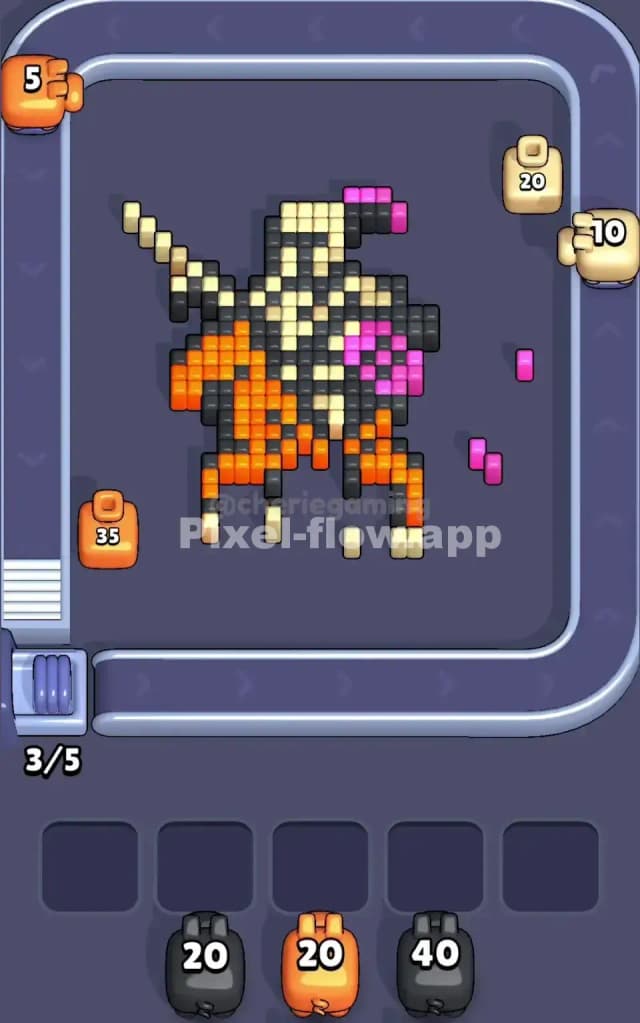
Target the large black mass on the right side (the cape) and the bottom legs first. These areas are thick "walls" of black. By placing your black pigs here, you strip away the outer shell of the sculpture. You need to focus on the horse's legs at the bottom. These black pixels act as blockers. Until they are gone, any Orange pigs you get later will be useless because they can't "see" the orange horse body behind the black legs. Clear the weapon handle on the left last; it’s thin and consumes less ammo, so save it for a pig that is running low.
How to pass Pixel Flow Level 71 without power ups or boosters
Once the black shell is cracked, the level looks messy. You will have a half-eaten sculpture where the Orange horse body is finally visible, and the Cream skeleton ribs are exposed. This is the mid-game trap of Pixel Flow Level 71.
You will likely see a Pink pig or a high-ammo Orange pig coming down the belt. Be extremely careful with the Pink pig. There are very few pink blocks exposed on the cape initially. If you deploy a Pink pig too early, it will shoot maybe 3 blocks and then sit in your waiting slot with 47 ammo left, clogging the board.
Instead, prioritize the Cream (White) pigs if possible. The skeleton's body is vertical and centrally located. Clearing the white ribs opens up a clear channel down the middle of the board. This separates the left side (weapon) from the right side (cape), allowing you to snipe the remaining Orange blocks without hitting obstacles. Do not deploy the Orange pigs until you are sure they have a clear line of sight to the main body of the horse. If you fire them while black pixels still block the view, they will waste space in your slots.
Last Details You Clean Up in Pixel Flow Level 71
The final phase of Pixel Flow Level 71 is usually a scramble to clear "stragglers." These are single, isolated blocks that were hiding behind the main structure.
Usually, the last survivors are the tips of the weapon (Cream/Black mix) or the bottom hooves of the horse (Orange). Because the horse's legs were covered in black armor earlier, you might find one or two orange pixels at the very bottom that you missed. Check the bottom row carefully. If you have a pig with 50 ammo and only 1 target block left, don't panic. Just make sure you have an open slot for him to retire into. The victory triggers as soon as the last pixel vanishes, even if your slots are mostly full.