Pixel Flow Level 78 Solution Walkthrough | Pixel Flow 78

How to solve Pixel Flow level 78? Get instant solution for Pixel Flow 78 with our step by step solution & video walkthrough.

Share Pixel Flow Level 78 Guide:
Pixel Flow Level 78 Gameplay
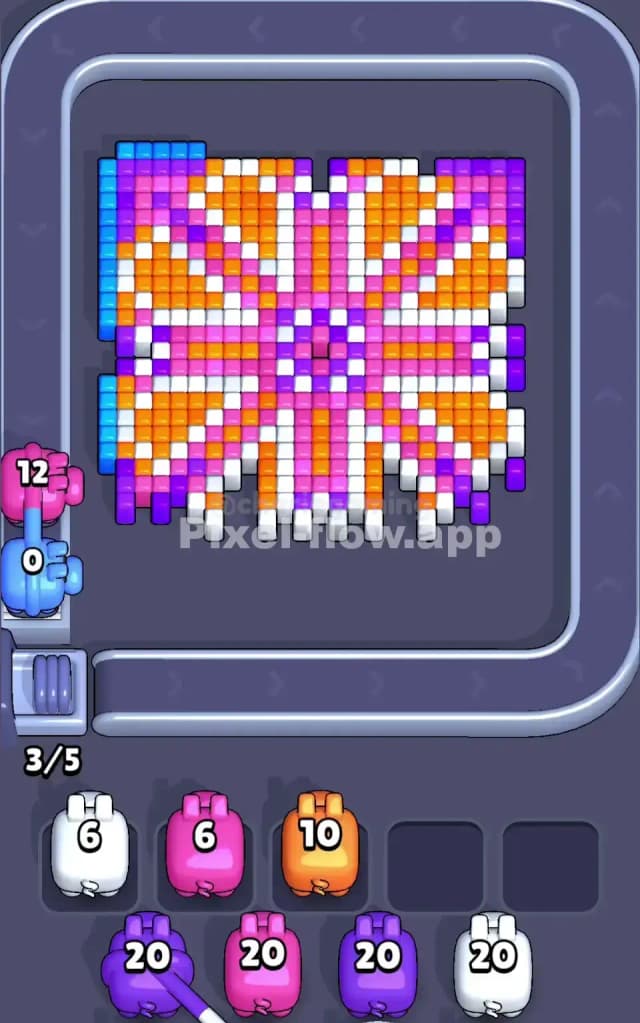
Pixel Flow Level 78 Solution 1
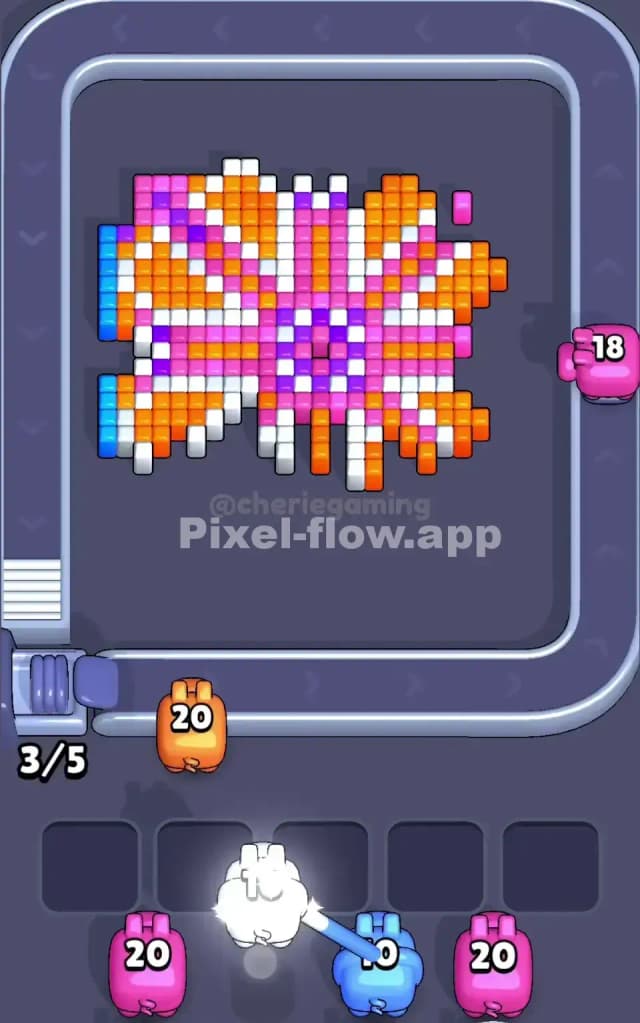
Pixel Flow Level 78 Solution 2
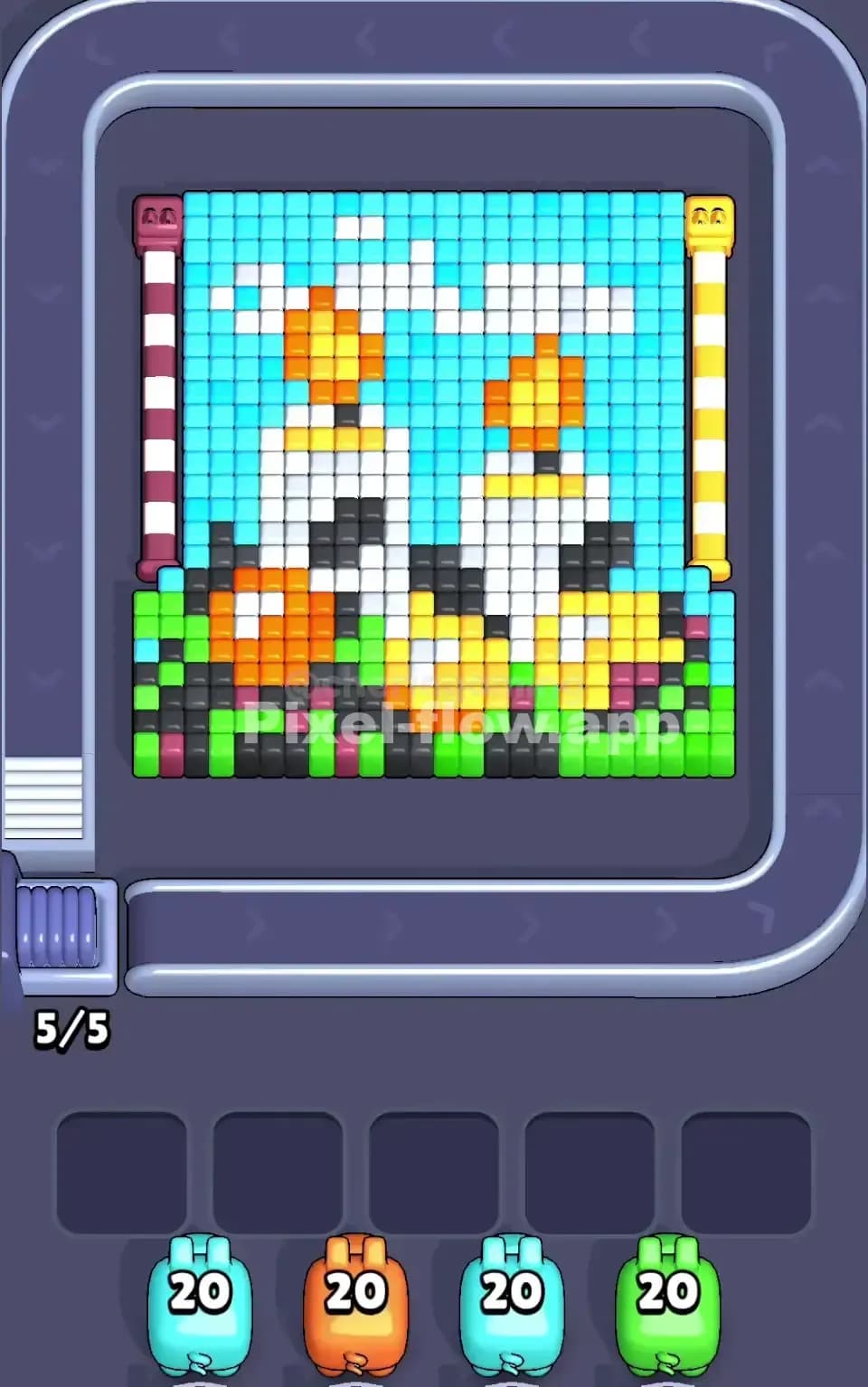
Pixel Flow Level 78 Solution 3

Pixel Flow Level 78 Overview

The Board Layout and Starting Palette

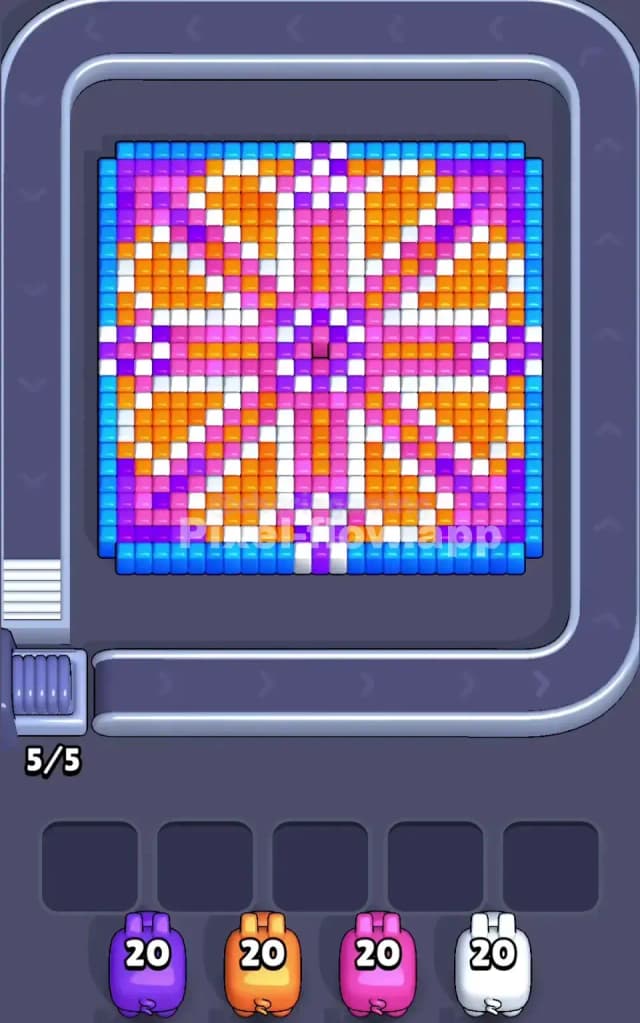
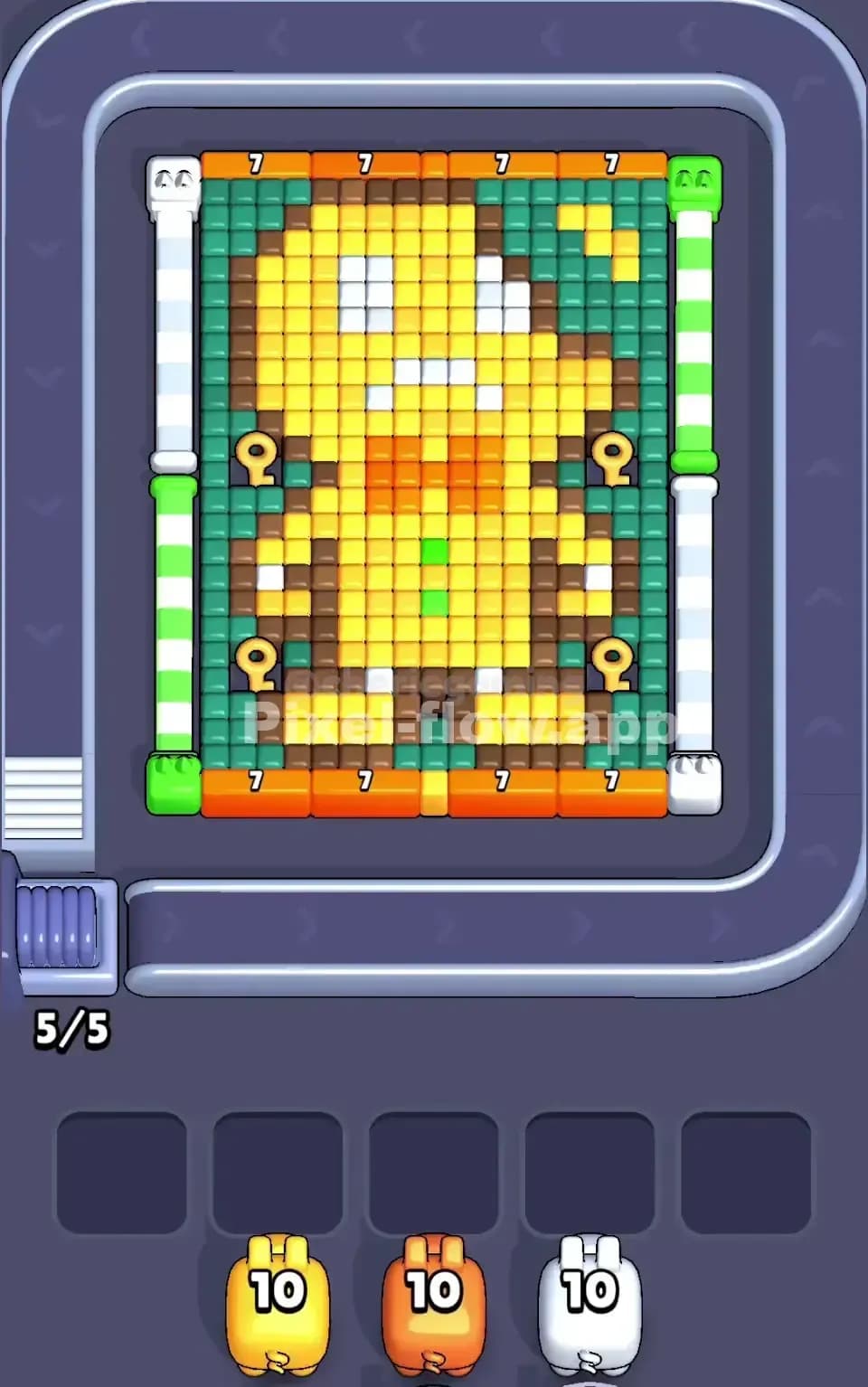
Pixel Flow Level 78 presents a vibrant, symmetrical mosaic pattern that'll grab your attention immediately. You're looking at a dense grid dominated by cyan, purple, orange, magenta, and white voxels arranged in a colorful geometric design. The board feels almost like a pixelated flower or mandala—there's a strong center region with cyan anchoring the top and bottom edges, while purple and orange form intricate interlocking bands through the middle. White cubes act as accent pieces scattered throughout, creating visual breaks in the pattern.

The pixel art itself hints at multiple layers beneath the surface, which is typical of Pixel Flow 78's design philosophy. What you see isn't necessarily what you'll get, because deeper colors lurk underneath, waiting to be exposed once you start clearing the outer voxels. This means your job isn't just to demolish cubes randomly—it's to strategically expose and clear layers in the right sequence.

The Win Condition and Deterministic Nature

Your goal in Pixel Flow Level 78 is straightforward: clear every single voxel on the board without jamming all five waiting slots with stuck pigs. You'll notice the four pigs at the bottom, each carrying 20 ammo and color-coded to match their respective targets. The "5/5" indicator in the top left tells you you're working with a full five-slot waiting area, and every move you make is deterministic—pig order never changes, ammo counts are fixed, and the colors they shoot are locked in. That's exactly what makes Pixel Flow Level 78 solvable, and that's why a solid strategy beats panic.


Why Pixel Flow Level 78 Feels So Tricky

The Mid-Board Bottleneck

The biggest threat in Pixel Flow Level 78 is the dense purple-and-orange core region. This area contains a ton of cubes from both colors, and they're packed so tightly that you can't always see which pig should go next. If you rush through early colors without thinking, you'll quickly fill three or four waiting slots with half-empty pigs that have nowhere to shoot because their target color isn't visible. That's your jam scenario, and it's not fun to recover from.

The checkerboard pattern of orange and white cubes in the middle also creates pockets where individual cubes become inaccessible until you clear surrounding voxels. You might have orange ammo left, but the remaining orange is hidden behind a wall of magenta or white, forcing that orange pig into a waiting slot doing nothing.

Awkward Color Patches and Ammo Mismatches

White is another headache in Pixel Flow Level 78. Because white appears scattered throughout rather than in one dense block, you'll often find yourself with white ammo remaining after the visible white cubes vanish. The white pig drops into waiting, but there might still be a few white voxels buried deeper—problem is, you can't access them until you clear other colors, and now you're sitting with a stuck pig eating up precious buffer space.

The magenta-to-purple color transition also trips up many players. These two pinks are distinct colors in Pixel Flow Level 78, so a magenta pig can't shoot purple and vice versa. When the board mixes them in intricate patterns, it's easy to miscalculate which pig you actually need next. I've definitely had moments where I grabbed the wrong pig mentally and got frustrated—until I realized I'd been looking at the wrong color region.

That Moment When It Clicks

Honestly? Pixel Flow Level 78 felt overwhelming the first few attempts. The symmetry confused me, and I kept assuming "well, if I clear left side, the right side will balance out." That's not how it works. You can't rely on visual symmetry; you have to count actual voxels and predict pig sequences. The breakthrough came when I stopped reacting and started planning three pigs ahead, watching the queue and mentally noting which colors would vanish next. Once you accept that Pixel Flow Level 78 demands deliberate sequencing rather than intuition, it becomes manageable—even satisfying.


Step-by-Step Strategy to Clear Pixel Flow Level 78

Opening: Establishing Control

Start Pixel Flow Level 78 by targeting the cyan border. Cyan dominates the top and bottom edges, and clearing it serves two critical purposes. First, it's visually obvious and removes a huge chunk of volume without surprises, so you'll burn through cyan ammo safely and gain confidence. Second, removing cyan exposes the interior colors and reveals what's actually underneath, showing you the true layout of purple, magenta, and orange for the mid-game.

Don't go all-in on cyan in one sequence—that's wasteful. Instead, let cyan pig enter the board, shoot until the visible cyan is gone or nearly gone, then if cyan pig still has ammo remaining, let it drop into a waiting slot. It won't jam you because you've got four more open slots, and you'll know exactly how much cyan remains for later. Keep at least two waiting slots empty during the opening phase. This gives you breathing room if a pig arrives with no valid targets.

Mid-Game: Sequencing and Layer Exposure

Once cyan is reduced and the board opens up, the real choreography of Pixel Flow Level 78 begins. You'll see orange and magenta intermingled, often with white splinters between them. Here's the key: target orange next, but do it methodically. Send the orange pig in, let it clear visible orange voxels, and monitor how much ammo it spends. Orange has 20 ammo, and there's usually around 18–22 orange voxels total, so you're aiming for a near-perfect spend.

After orange, bring in magenta. The magenta pig will expose yet another layer—often purple and pink variations lurk beneath. As magenta clears, you'll start to see the true depth of Pixel Flow Level 78's design. Here's where patience pays off: don't panic if multiple pigs end up in waiting slots. That's expected in Pixel Flow Level 78. Just make sure at least one slot stays free so you always have an option.

Purple comes next and is usually the thickest color in Pixel Flow Level 78. This is where you slow down. Watch purple pig's ammo like a hawk. When purple has 5–7 ammo left but no visible targets, park it in waiting. Don't force it to shoot cubes that won't help. The goal is to have purple chip away at deep purple blocks gradually, not to empty it all at once.

White is your finisher color and typically sits in pockets and gaps. Don't prioritize white early—it's too scattered. Save white for the very end, when nearly everything else is gone and white cubes become the dominant visible color.

End-Game: The Clean Finish

In the final stretch of Pixel Flow Level 78, you'll have maybe two or three pigs left (some in waiting, some on the belt). Here's the critical move: flush waiting-slot pigs in an order that keeps new pigs arriving. This prevents the board from stalling. If you're sitting with purple, magenta, and white all parked in slots, bring in purple first. If purple finds targets, great—it shoots and clears space. If not, it cycles back but you've got the board's momentum going.

For Pixel Flow Level 78's absolute final moves, you want white pig to be the last one standing, because white is usually scattered and manageable solo. Let it methodically pick off remaining white voxels. Once white is gone, the board is clear, and you've beaten Pixel Flow Level 78.


The Logic Behind This Pixel Flow Level 78 Plan

Why Order and Ammo Count Matter

The strategy above works because it respects Pixel Flow Level 78's core mechanic: pigs arrive in a predetermined order and carry a fixed ammo count. You can't change the pigs themselves, but you can control when they engage the board. By parking pigs in waiting slots strategically, you regulate the flow. Sending a pig in only when its color is visible and you've cleared enough space around it means no wasted ammo and no premature jamming.

Counting matters too. Pixel Flow Level 78 isn't hard if you count—seriously. Spend 30 seconds before you start mentally adding up how many orange cubes you see, how many purple, etc., and compare that to each pig's ammo. This prediction prevents disaster.

Staying Calm Under Pressure

The final piece isn't strategy—it's mindset. Pixel Flow Level 78 can feel chaotic with five slots available and four pigs queued, but it's not. Watch the queue, count ammo, and plan two or three pigs ahead. If you see that three pigs will fill your waiting slots, that's okay—you just need to ensure at least one pig can still move from queue to board before you hit deadlock. Breathe, trust your count, and execute.

You've got this. Pixel Flow Level 78 is tough, but it's fair, and once you nail the strategy, it feels great.