Pixel Flow Level 8 Solution Walkthrough | Pixel Flow 8

How to solve Pixel Flow level 8? Get instant solution for Pixel Flow 8 with our step by step solution & video walkthrough.

Share Pixel Flow Level 8 Guide:
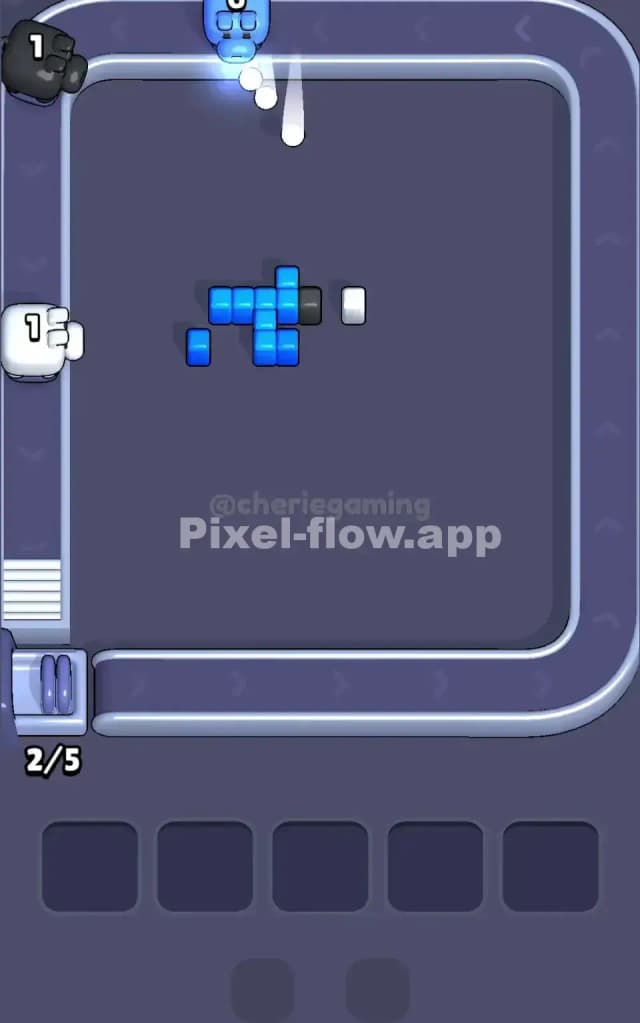
Pixel Flow Level 8 Gameplay
Pixel Flow Level 8 Solution 1
Pixel Flow Level 8 Solution 2
Pixel Flow Level 8 Solution 3

Pixel Flow Level 8 Overview

The Board Layout and Color Structure

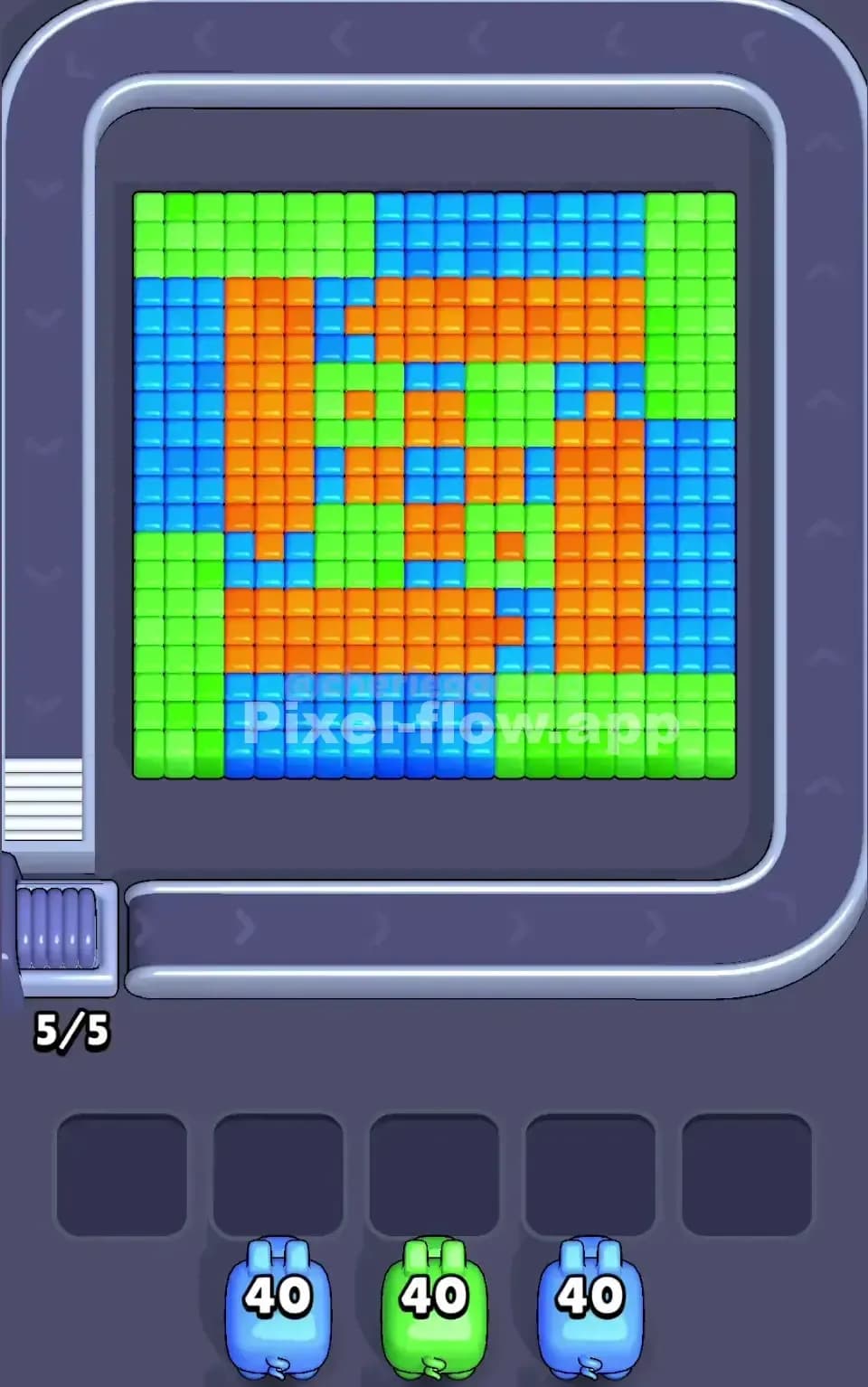
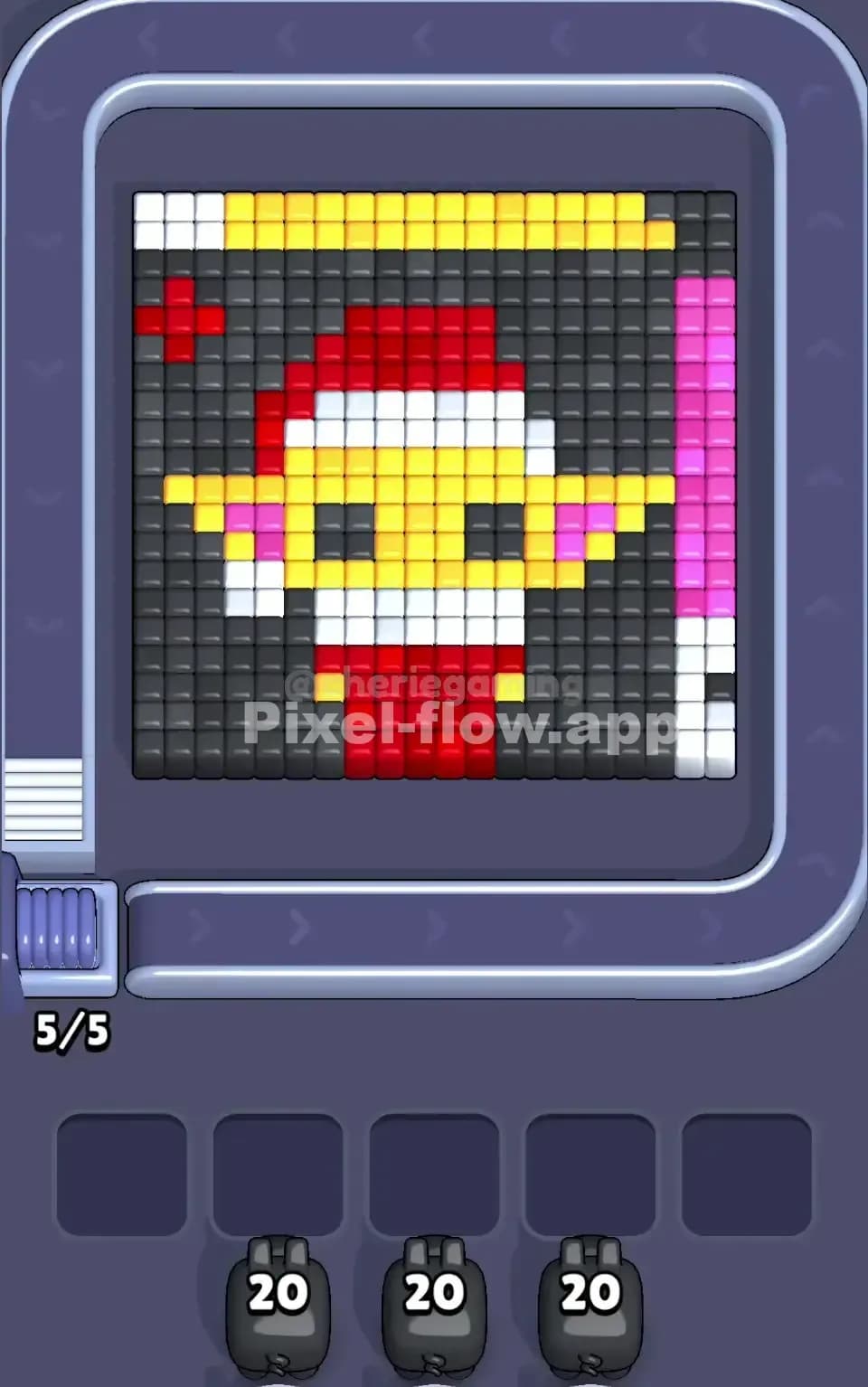
Pixel Flow Level 8 presents a striking voxel artwork dominated by a symmetrical, layered design. At the top sits a yellow and green horizontal stripe, creating an immediate eye-catching border. The middle section reveals the heart of the puzzle: a large blue diamond or shield shape surrounded by white cubes and dark gray obstacles, with yellow accents on the right flank. Below that, another yellow and green stripe mirrors the top, anchoring the composition. You're looking at a deeply nested puzzle where colors overlap in multiple layers, and there's no way to expose the deeper hues without systematically clearing the surface first.

Understanding the Win Condition

To beat Pixel Flow Level 8, you must clear every single voxel cube from the board. The game gives you two pigs on the conveyor belt: a yellow pig with 10 ammo and a blue pig with 10 ammo. Each pig shoots cubes of its own color and consumes exactly one ammo per cube destroyed. The challenge isn't just firing away—it's orchestrating your pig releases so that their combined ammo adds up perfectly to the total number of yellow and blue cubes visible and hidden throughout the level. Every move is deterministic; the pig order never changes, and their ammo counts are fixed. Success hinges on your ability to sequence releases strategically and avoid jamming all five waiting slots with stuck pigs.


Why Pixel Flow Level 8 Feels So Tricky

The Blue Cube Bottleneck

The biggest threat in Pixel Flow Level 8 is the sheer volume of blue cubes packed into the central diamond structure. Your blue pig has exactly 10 ammo, but the visible blue layer alone looks like it contains nearly all of those shots—possibly more if there are hidden blue cubes beneath the white and gray obstacles. This creates an immediate tension: if you release the blue pig too early, it might blow through its ammo on surface-level blues and then drop into the waiting slots with no targets left to shoot. Later, when you've cleared yellow cubes and exposed deeper layers, there might be more blue underneath that the blue pig can't reach because it's already exhausted. That's when you're locked in a losing position, watching helplessly as five stuck pigs sit in your buffer and the level declares failure.

Awkward Color Pockets and Hidden Layers

Pixel Flow Level 8 hides several nasty surprises. The white cubes in the middle create a visual break, but they're not shootable by either your yellow or blue pig—they're dead weight, pure obstacles. Behind them lurks more blue, and possibly blue corners you can't see until the white and gray blocks vanish. The yellow patches on the right side of the board look isolated; are they truly all reachable by your yellow pig, or will some sit stubbornly hidden behind dark gray obstacles? You won't know until you've already fired off half your ammo. Additionally, the symmetrical design is a red herring. Just because there's yellow on both the top and bottom doesn't mean both regions have the same structure underneath. One side might clear cleanly while the other hides additional layers.

The Moment of Realization

I'll be honest—when I first tackled Pixel Flow Level 8, I fired my blue pig immediately and watched it burn through ammo on the central diamond, only to have it drop into slot three with three ammo remaining and nowhere left to shoot. My stomach sank. But here's the thing: that failure taught me to count. I restarted, mentally catalogued every visible blue cube (they're surprisingly hard to count in a dense cluster), and realized the actual puzzle was far tighter than I'd assumed. The level doesn't feel tricky because it's random—it feels tricky because the solution is so precise that one mistake compounds into disaster. Once I understood that timing and observation mattered more than instinct, Pixel Flow Level 8 clicked, and the path forward became clear.


Step-by-Step Strategy to Clear Pixel Flow Level 8

Opening: Target Yellow First, Preserve Buffer Space

Don't rush your blue pig. Instead, release your yellow pig first and let it systematically clear the yellow cubes from the top stripe, the right-side accents, and the bottom stripe. Your yellow pig has 10 ammo, and there appear to be roughly 10 visible yellow cubes scattered across the board—this is no accident. By committing yellow first, you accomplish two things: you expose hidden layers beneath the yellow surface (which might be blue, white, or gray), and you consume one of your two pigs without jamming the buffer. Keep at least two waiting slots empty during this phase. If the yellow pig needs all 10 shots to clear its color completely, that's fine—it will drop into slot one or two when it's done, leaving you ample room to maneuver with blue.

Mid-Game: Sequence Blue Carefully and Park Strategically

Once yellow is exhausted, you'll likely see more blue cubes than before. This is your cue to think hard before releasing blue. Count the newly exposed blue targets carefully. If you see more than 10 new blues, something is hidden in a layer you haven't reached yet. Release blue pig gradually if you're uncertain, watching how many cubes it actually destroys. If blue runs out of ammo while there are still blue cubes visible, it will drop into the waiting slots. That's not necessarily bad—you'll still have empty slots available to absorb it and future pigs. However, if you can anticipate that blue will exhaust itself completely and cleanly, go ahead and release it. The key is never letting five pigs sit in the buffer simultaneously with unspent ammo and no valid targets. Always maintain a mental buffer inventory as you play.

End-Game: Finish Clean Without a Last-Second Jam

As you approach the final cubes of Pixel Flow Level 8, you're likely looking at a board where only blue or yellow remains in scattered pockets. Your pig queue at the bottom shows what's coming next—make sure you can connect those incoming pigs to remaining targets. If you've cleared all yellow but blue is exhausted and sitting in slots, make absolutely certain no additional blue cubes are hiding under the gray obstacles. If they are, you've already lost. Conversely, if yellow is long gone and blue still has ammo, blue's final shots should mop up whatever's left. The true end-game success is finishing with zero pigs remaining in the waiting slots and the board completely clear. This means every single ammo point spent, every single cube destroyed, with nothing wasted and nothing leftover.


The Logic Behind This Pixel Flow Level 8 Plan

Why Strategic Order Beats Random Play

Pixel Flow Level 8 is designed so that the two pigs—yellow and blue, each with 10 ammo—almost perfectly matches the total cube count when you remove obstacles and layers. The puzzle designer set this up intentionally. By choosing to release yellow first, you're not relying on luck; you're exploiting the mathematical certainty that yellow must go somewhere and blue must follow. You're also reducing cognitive load early by knocking out one entire color, making the mid-game blue puzzle simpler to analyze. A random approach—firing pigs willy-nilly, hoping something breaks—almost guarantees you'll stuff the buffer before the end. A strategic approach accepts that the solution is tight and proceeds with careful observation.

Staying Calm and Counting Ahead

The biggest skill in clearing Pixel Flow Level 8 is mental discipline. Before you release a pig, count the cubes it will hit. Before you release the next pig, glance at the queue and ask yourself: "If this pig uses all its ammo, where will it land in the buffer, and do I have room?" Never release a pig on autopilot. Pause between moves, breathe, and verify your target count. Watch the waiting slots like a hawk. The moment you fill four of five slots, every subsequent release must be perfect. This isn't about speed; it's about deliberate, pressure-tested play. Some of the best Pixel Flow Level 8 victories come from players who move slowly and win on their first real attempt rather than rushing through five failed runs.