Pixel Flow Level 89 Solution Walkthrough | Pixel Flow 89
How to solve Pixel Flow level 89? Get instant solution for Pixel Flow 89 with our step by step solution & video walkthrough.


Pixel Flow Level 89 Overview
The Pixel Art and Starting Board Layout
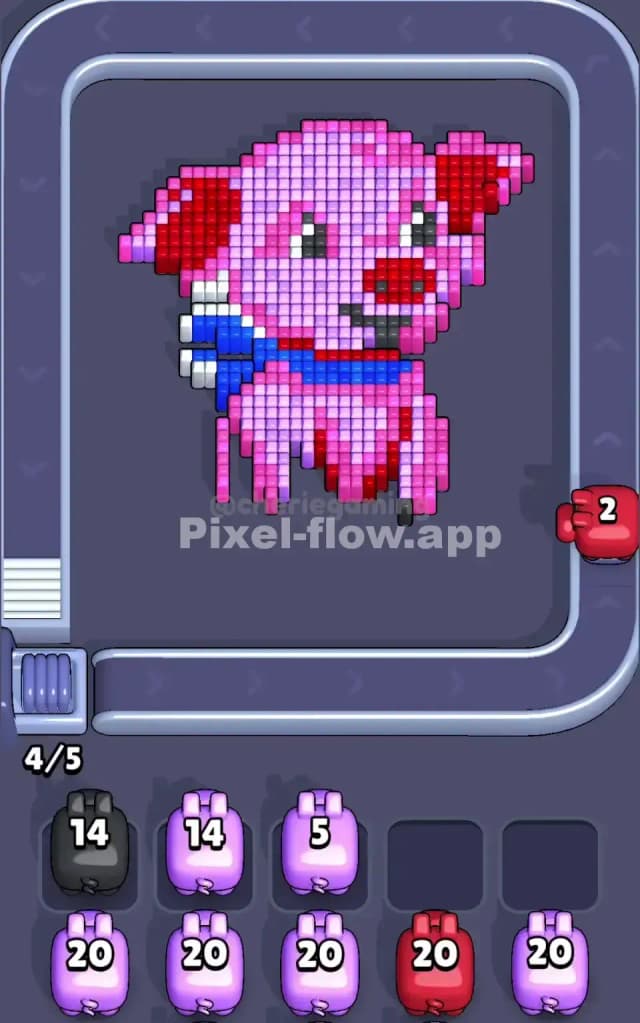
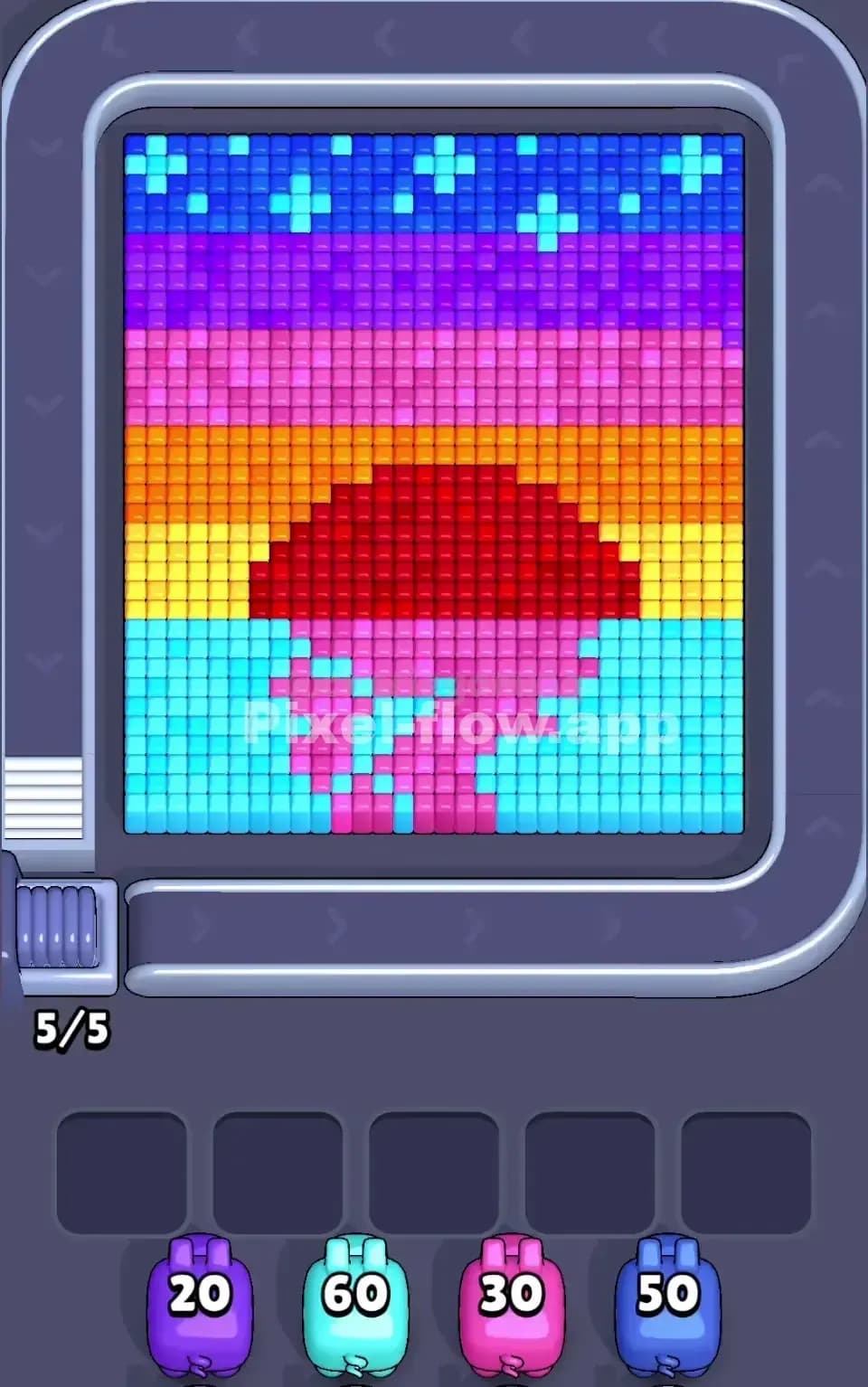
Pixel Flow Level 89 features an adorable puppy face rendered entirely in voxel cubes—and it's a gorgeous, layered design that'll test your patience and planning skills. The dominant colors you'll see right away are soft pink, magenta, and white, which form the bulk of the puppy's cheerful expression. Deep red and dark gray accents mark the nose, mouth, and eye details, while a striking blue section represents one of the eyes, creating a charming asymmetry that adds visual interest and, more importantly, strategic complexity.
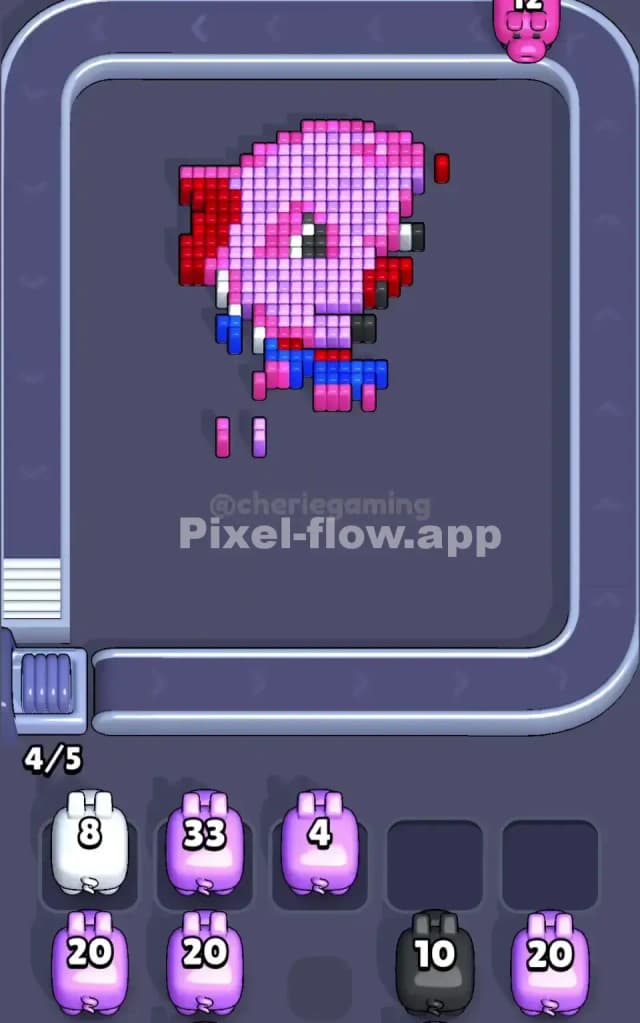
The board structure isn't flat—it's layered. The surface shows the outer pixel art, but underneath are hidden color patches that you'll only expose once you clear the cubes above them. This is classic Pixel Flow Level 89 design: you can't see everything from the start, and that's exactly what makes it tricky.
Win Condition and Ammo Determinism
Your goal is straightforward: clear every single cube on the board. You've got five color-coded pigs queued up at the bottom, each with a fixed ammo count displayed on their icon. In Pixel Flow Level 89, you're looking at white (20 ammo), pink/magenta (20 ammo), white again (30 ammo), red (20 ammo), and white (20 ammo). That's 110 total shots to spend, and every shot must land on a matching-color cube. The beauty—and the trap—is that pig order and ammo are completely deterministic. You can't change how many shots a pig has or which pig comes next. What you can control is when you trigger each pig and whether you leave enough waiting-slot space for pigs that run out of targets.
Why Pixel Flow Level 89 Feels So Tricky
The Pink and Magenta Bottleneck
Here's the sneaky thing about Pixel Flow Level 89: pink and magenta dominate the board visually, but your second pig—the one with 20 magenta ammo—comes very early. If you're not careful, you'll burn through that pig's ammo quickly on obvious targets, only to have it drop into a waiting slot before you've exposed any deeper layers. Then, later in the puzzle, when hidden pink cubes peek through from below, you'll have no pig left to shoot them, and you'll be stuck. That's a game-over scenario if your waiting slots fill up and you can't spend anyone's remaining ammo.
The Awkward White and Red Distribution
White appears three times in your pig lineup (20, 30, and 20 ammo), which sounds generous until you realize that white cubes form the edges and highlights of the puppy's face. They're scattered across the board rather than clustered, which means you'll spend white ammo in small bursts throughout the level instead of in one satisfying sweep. Red is equally deceptive—only 20 shots, but red cubes are concentrated in the nose and mouth area. If you trigger the red pig too early, it'll empty its ammo on that region and drop into a waiting slot, blocking future moves. If you wait too long, you might not have the right colors exposed yet to clear reds efficiently.
The Blue Eye Problem
That striking blue section for one eye is visually small, but it's isolated. You've got no blue pig dedicated to it, which means blue cubes must fall as collateral or sit exposed while you work around them. In Pixel Flow Level 89, accidentally clogging your waiting slots while ignoring blue is a real risk. You'll need to plan ahead so that when adjacent colors clear, blue naturally disappears or you've created a path to expose other colors beneath it.
When the Level Clicked for Me
I'll be honest—my first ten attempts at Pixel Flow Level 89 felt chaotic. I was triggering pigs reactively, watching ammo get wasted on colors I'd already mostly cleared, and then hitting that horrible moment where two pigs were stuck in the waiting slots with no valid targets. The frustration was real. But then I stopped and actually counted cubes by color, looked at the depth layering, and traced which pig's ammo would logically clear which region in sequence. That's when Pixel Flow Level 89 suddenly made sense. It's not about speed; it's about foresight.
Step-by-Step Strategy to Clear Pixel Flow Level 89
Opening: Build Momentum Without Jamming
Start with the white pig (20 ammo). Don't hesitate—white is everywhere on the board as outline and highlight, and it's safe to burn some of that ammo right away. Trigger the white pig and let it clear cubes around the edge of the puppy's face. Your goal here is to peel back the outer layer and expose colors beneath without filling any waiting slots. Since you have five available slots and only five pigs total, you want to keep at least two empty slots free at all times during the opening.
After the first white pig drops (it will, because eventually it'll run out of white cubes to target), immediately send in the pink/magenta pig (20 ammo). This is where you need confidence: there's plenty of pink and magenta in the middle of the puppy's face, so the magenta pig will find targets. But watch carefully—once it gets down to its last few shots and there are no more visible magenta cubes, don't force it. Let it land in a waiting slot (slot two is fine). You've now got three slots still empty, which is plenty of breathing room.
Mid-Game: Layer Exposure and Parking Strategy
Now send in the white pig with 30 ammo. This is your workhorse pig. It'll clear more edge whites and, crucially, start creating holes in the board that expose the colors underneath. You're looking for those red and blue patches to become visible. Keep an eye on the waiting slots—if you've got both white (20) and magenta in slots one and two, and the 30-ammo white is almost done, you're entering the risky zone. Let the 30-ammo white drop into slot three.
Here's the critical moment: send in the red pig (20 ammo). Red is concentrated, so it'll spend its ammo relatively quickly on the nose and mouth area. Don't panic if it lands in slot four—that's expected. The red pig's job is to punch through those deep red details and expose what's underneath them on the next layer.
At this point, you should have four of your five pigs in the waiting slots. That last white pig (20 ammo) is still in the queue, and this is where careful planning pays off. By now, the board should be mostly hollowed out, with only scattered white cubes (the inner whites you couldn't see at the start) still visible. Trigger that final white pig and let it finish off the remaining cubes. If there's any straggler colors, the white edges should expose them.
End-Game: The Final Cleanup
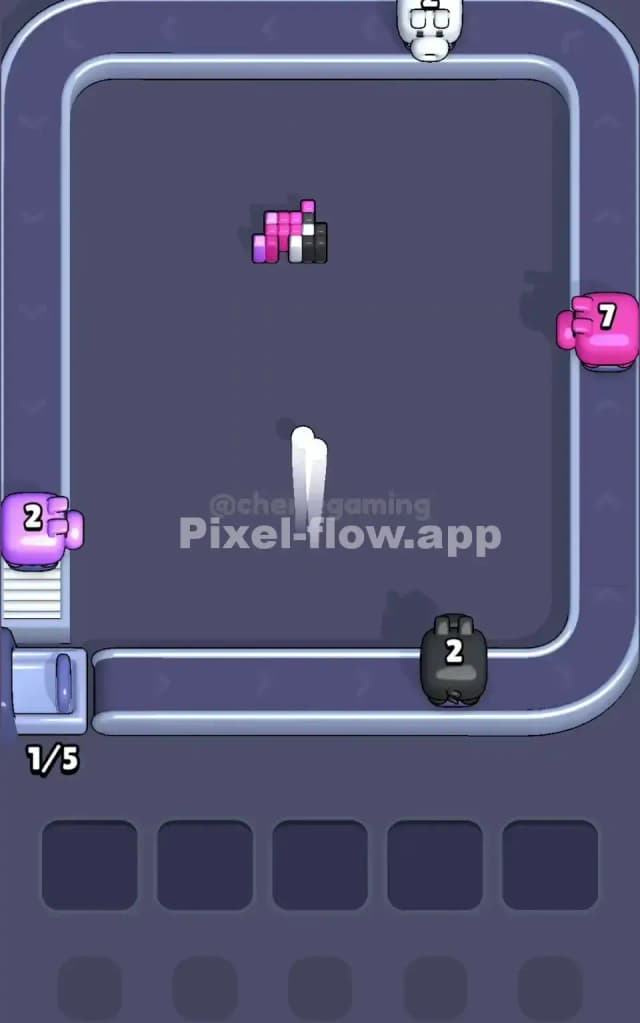
If you've followed the sequence and your counts are right, that last white pig should clear the board entirely or leave only a handful of cubes in colors that have already been eliminated. Here's where patience matters: watch the final pig's shot count. If it drops into a waiting slot with ammo remaining and there are no valid targets on the board, you've failed. This is why the mid-game setup is so crucial—you need to expose all remaining colors before you run out of pigs.
If somehow a few cubes remain after the final white pig, you'll be stuck with a full waiting buffer and no way to clear them. That's a restart. But if you've kept your waiting slots smart—parking pigs strategically rather than panicking—you should see the board collapse layer by layer, with each pig finding just enough targets to spend its ammo fully or close to it.
The Logic Behind This Pixel Flow Level 89 Plan
Pig Order as a Puzzle Constraint
In Pixel Flow Level 89, the pig sequence isn't random flavor—it's the puzzle itself. Your five pigs are dealt in a specific order, and that order is a hint about which colors and regions you should tackle when. The fact that white appears three times tells you that white is structural—it holds the design together and, once cleared, exposes depth. Pink and magenta clustered in the early pigs suggest those colors are surface-level. Red comes late, which means red details are either surface reds that support the overall structure or deep reds that should be saved for near the end. By respecting the pig order rather than fighting it, you're working with the puzzle's intention.
Ammo as a Finite Resource to Budget
Every pig has exactly the ammo it needs to clear its color—if you play perfectly. Pixel Flow Level 89 is designed so that 110 total ammo shots = the number of cubes on the board. This means there's zero room for waste. If you trigger a pig and it shoots at cubes unnecessarily or lands in a waiting slot with ammo unspent, you're burning a resource you can't get back. That's why counting matters so much. Before you trigger the red pig, glance at the board and estimate: "How many red cubes do I see? Is 20 ammo enough?" If yes, pull the trigger. If you're unsure, let another pig soften the board first.
Waiting Slots as a Strategic Buffer
Those five waiting slots aren't just a mercy system—they're a strategic resource themselves. Each slot can hold one pig, and while a pig is waiting, it doesn't drain ammo on invalid targets. This gives you time to clear other colors and expose new targets for the waiting pig's color. However, fill all five slots and you're locked in. The pig on top of the waiting queue is the only pig who can shoot, and if its color isn't on the board, the game ends. This is why parking pigs deliberately—letting a pig with a few ammo shots left drop into a waiting slot while you work on other colors—is actually a brilliant tactical move. You're buying time.
Staying Calm: Count, Plan, Execute
Pixel Flow Level 89 rewards patience over panic. Before you trigger each pig, pause for two seconds and ask: "Will this pig find targets? How many? Should I wait?" Watch the current pig's ammo counter tick down. Look ahead at the queue—which pig is coming next, and will that pig benefit from clearing more of the current color? If you see that the pink pig is about to land in a waiting slot, you've got a window to trigger the white pig and expose more colors before you need pink again.
The magic of Pixel Flow Level 89 clicks when you realize it's not luck—it's math and sequencing. Every move is reversible in your head before you make it. That calm, calculated approach transforms frustration into triumph.