Pixel Flow Level 91 Solution | Pixel Flow 91 Walkthrough
How to beat Pixel Flow Level 91: Video solution & walkthrough. The fastest way to pass Pixel Flow 91.
Is this the wrong level layout?🤔
Pixel Flow randomizes levels for different players. Don't worry, just upload a screenshot of your board, and our AI will find the correct video instantly.

Pixel Flow Level 91 Walkthrough
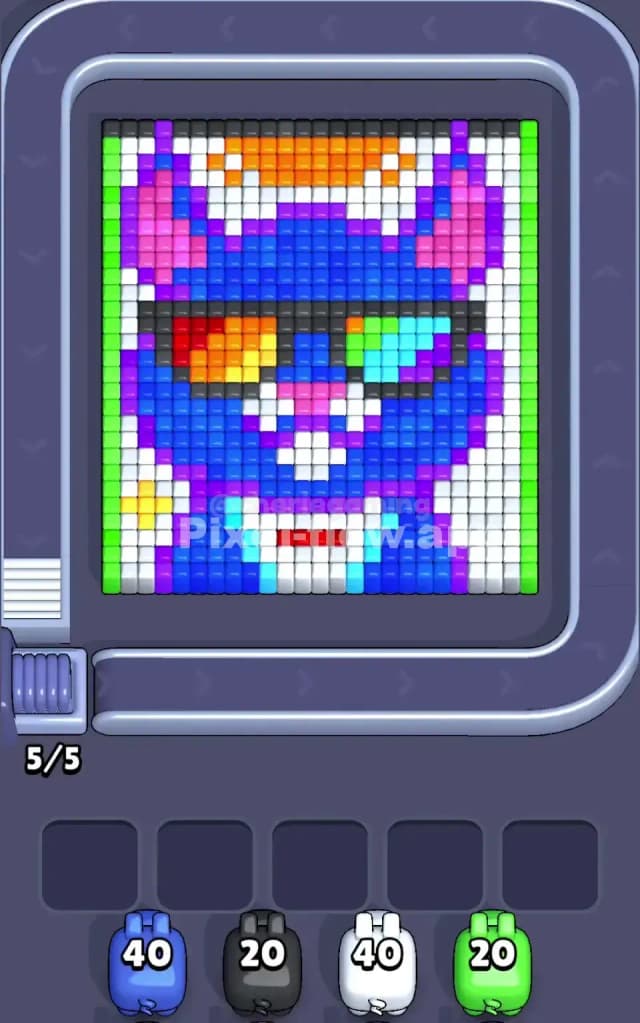
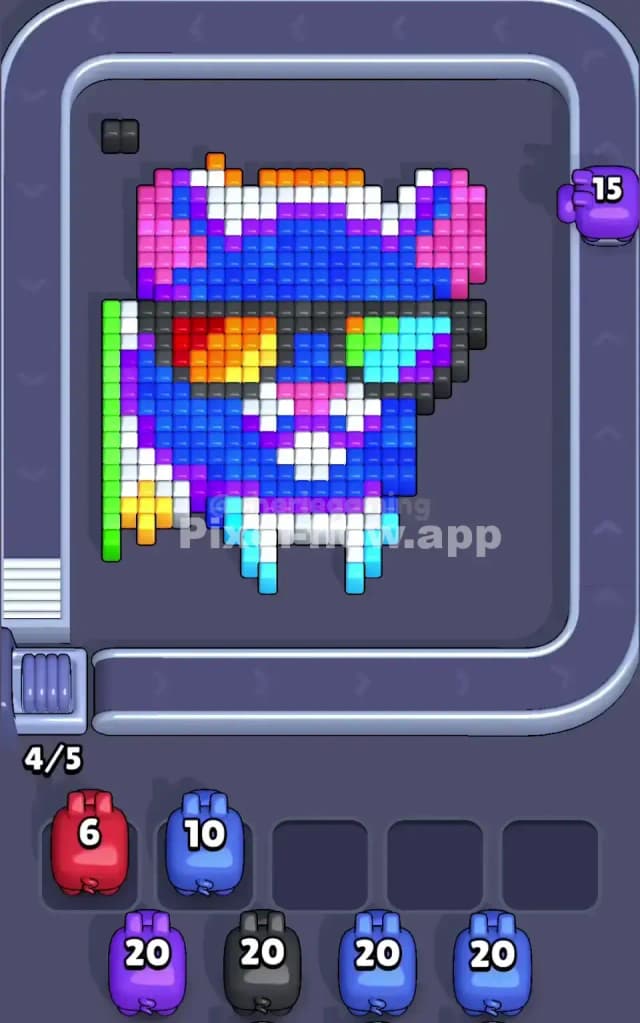
This level features a "Cool Cat" character rendered in voxel art. You are looking at a blue-furred animal face wearing large, black-rimmed sunglasses. The background is primarily white, but notice the two distinct vertical strips of bright green running down the far left and right edges. Your job is simple: match the colored pigs to the pixel blocks.
However, Pixel Flow Level 91 is deceptive. You have a high number of active colors here: Green, White, Blue, Pink, Black, Orange, Red, and Teal. That is eight distinct colors fighting for five waiting slots. If you pull pigs for the sunglasses (Red or Teal) before you have cleared the Blue fur blocking them, you will clog your slots and fail. Because of this strict color-layering requirement, this is a very hard level.
Pixel Flow Level 91 Overview
Imagine a blue cartoon cat trying to look cool for a profile picture. The character dominates the center of the board. It has deep blue fur, perky pink inner ears, and a little pink nose. The defining feature is the pair of oversized "3D style" sunglasses.
The asymmetry here is subtle but dangerous. The sunglasses are not identical. The left lens (your left) is a gradient of fiery colors—Red and Orange. The right lens is cool-toned—Teal and Light Green.
Surrounding this cool cat is a massive amount of White "empty space" pixel blocks, acting as the background. Finally, the picture is framed by two solid columns of bright Green on the absolute edges. It feels crowded. The density of the Blue face means you have to chip away at it for a long time, while the Green and White act as the wrapper you must peel off first.
Step by step solution walkthrough for Pixel Flow Level 91
First Color Zone to Erase in Pixel Flow Level 91
You need to attack the Green vertical strips first.
Here is why. The Green columns on the far left and right are the "crust" of this sandwich. They are the outermost layer physically. Until they are gone, they might block shots angled toward the white background. Also, green pigs appear early in the rotation. If you don't use them immediately on these side strips, they will sit in your waiting slots and do nothing, because there is no other green accessible yet.
Once the Green borders are down, switch your focus aggressively to White. The White pixels form the background and the "shirt" area at the bottom. Clearing the White is essential because it wraps around the entire head. You cannot get a clear shot at the Pink ears or the Orange top tuft until the White sky is cleared away. This phase is satisfying. You are just shredding the wrapper to reveal the blue candy center.
How to pass Pixel Flow Level 91 without power ups or boosters
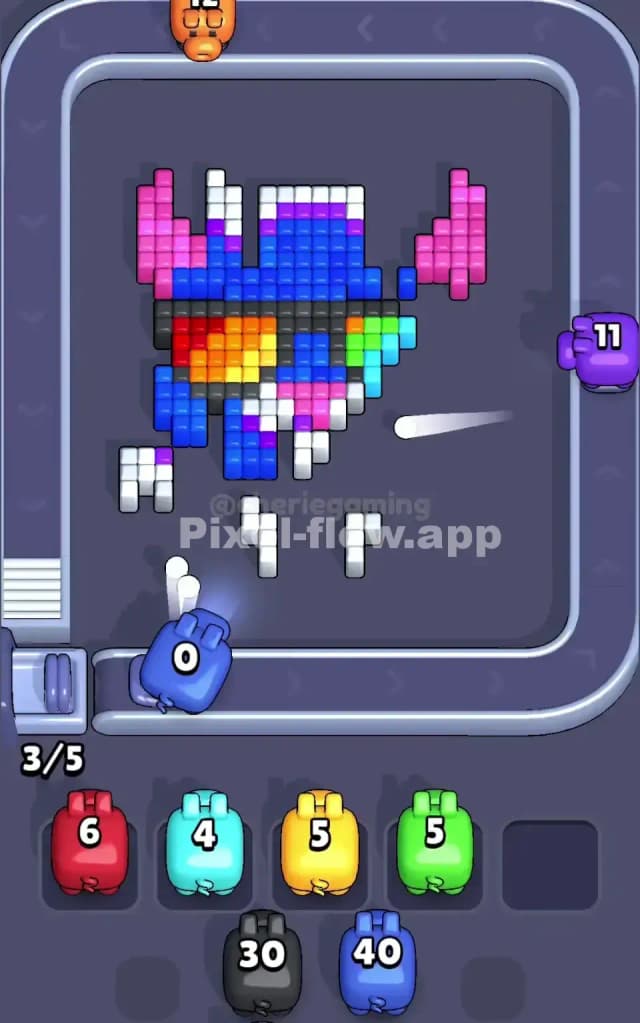
At the halfway point, the board looks messy. The White background is gone, and the Green edges are history. Now you are staring at a large block of Blue fur with Black glasses in the middle.
This is the danger zone.
You will start seeing pigs for the sunglasses' lenses (Red and Teal) and the nose (Pink). Do not pull these pigs unless you have a clear shot. The Black frames of the glasses often block the colored lenses. If you pull a Red pig, but the Black voxels are still covering the Red lens, that pig is dead weight.
Prioritize Blue and Black exclusively in this mid-game phase. The Blue makes up 60% of the remaining mass. It covers the chin, the forehead, and the cheeks. You must strip the Blue face back to expose the sides of the glasses.
If you see a Black pig, check the glasses frames. The frames are wide. Usually, the bridge of the nose or the outer rims are exposed early. Use the Black pigs to "open the window" of the glasses. Only after the Black frames are breached should you even think about touching the Red or Teal pigs. If your slots are filling up with colors you can't reach, burn a generic White or Blue pig on a mismatched block just to clear a slot. It hurts your ammo count, but it saves you from a game-over deadlock.
Last Details You Clean Up in Pixel Flow Level 91
The end of Pixel Flow Level 91 is a precision game. You are likely left with the specific colored lenses of the sunglasses and the pink nose.
The board will look like a floating pair of eyes. The Red/Orange lens on the left and the Teal lens on the right are usually the last things to go because they are buried deepest in the z-axis of the puzzle.
Watch out for the Pink pixels in the ears. Sometimes a stray Blue block will hide one single Pink pixel in the left ear, preventing you from finishing. distinct columns. Ensure you clear the top corners fully before wasting ammo on the center. The last move is almost always a satisfying pop of the colorful glass lenses, finally leaving the board empty.