Pixel Flow Level 92 Solution | Pixel Flow 92 Walkthrough
How to beat Pixel Flow Level 92: Video solution & walkthrough. The fastest way to pass Pixel Flow 92.
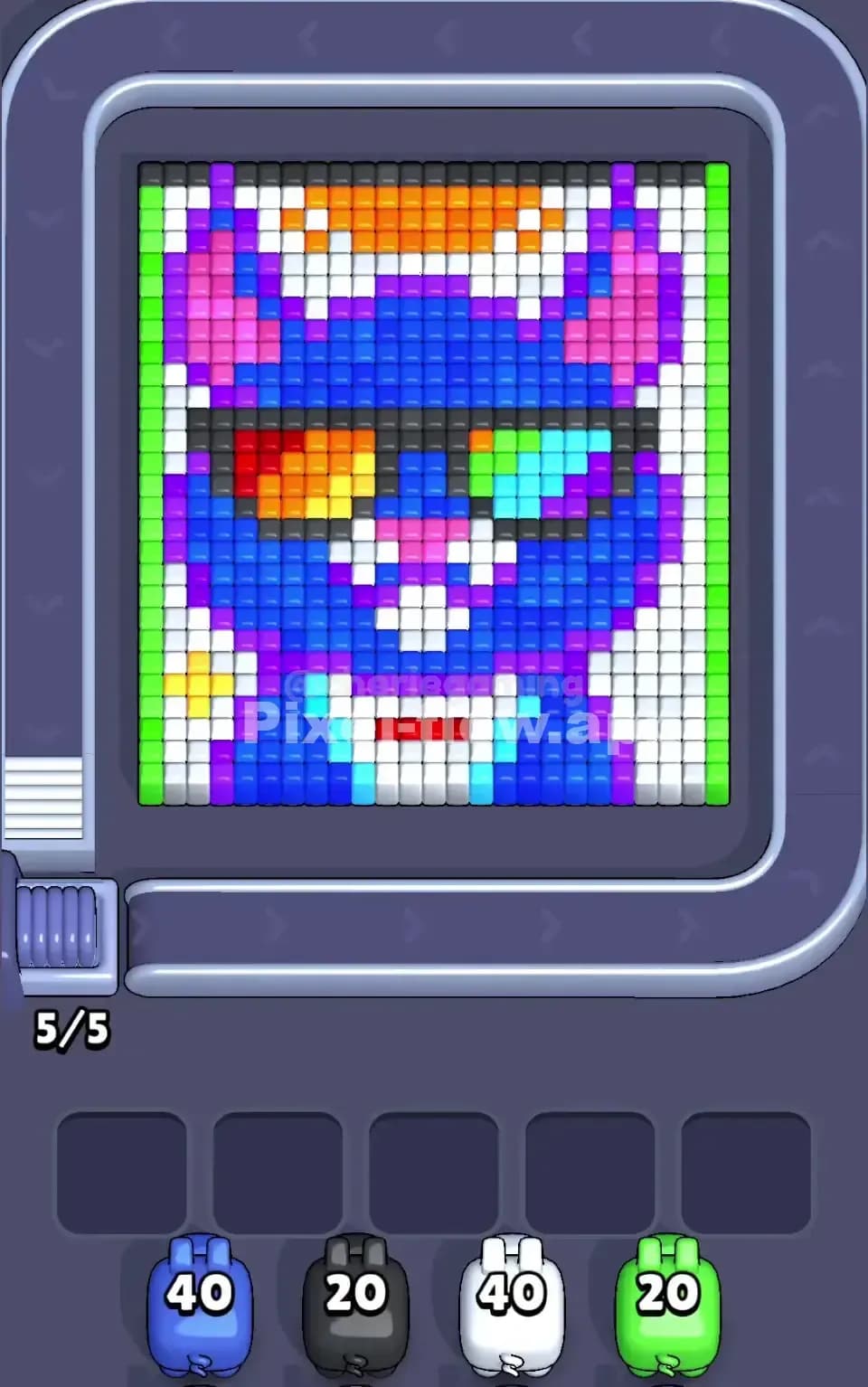
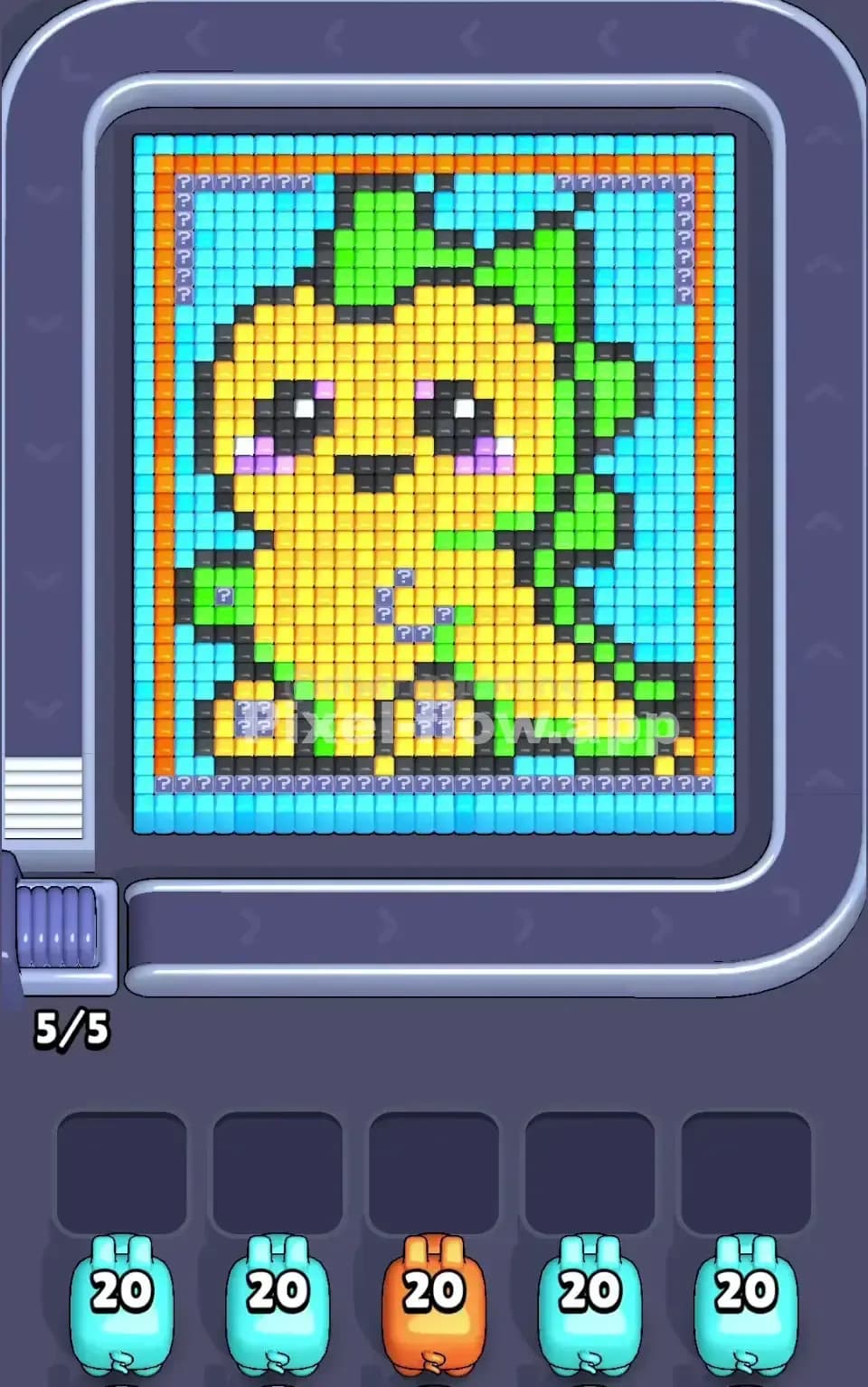
Is this the wrong level layout?🤔
Pixel Flow randomizes levels for different players. Don't worry, just upload a screenshot of your board, and our AI will find the correct video instantly.



Pixel Flow Level 92 Overview
The Starting Board and Its Layers
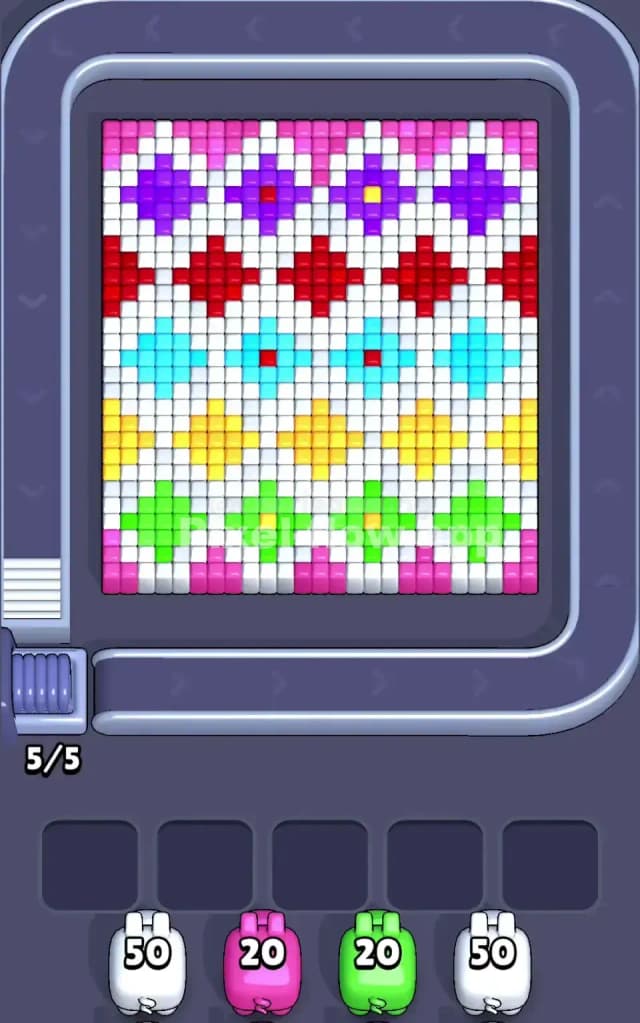
Pixel Flow Level 92 presents a striking geometric pattern with a symmetrical, repeating diamond or chevron motif across the entire canvas. The board is packed with seven distinct color layers stacked vertically: magenta and white dominate the top, followed by purple, red, cyan, yellow, green, and magenta-white again at the bottom. What makes this level visually demanding is how tightly these colors are interwoven—you're not clearing one solid block and moving on. Instead, you've got scattered cubes of the same color spread across multiple depths, and white cubes act as spacers or structural barriers throughout the design.
The pig queue at the bottom shows your ammunition lineup: two white pigs with 50 ammo each, one magenta pig with 20, and one green pig with 20. That's a finite resource pool, and you've only got five waiting slots to manage the pig traffic. The win condition is straightforward—clear every single voxel cube on the board—but the deterministic nature of pig spawning and ammo means you must orchestrate the exact sequence in which colors get exposed and eliminated.
Win Condition and Deterministic Play
Every pig that enters the board will shoot its matching color automatically, spending exactly one ammo per matching cube destroyed. If you jam all five waiting slots with pigs that have no valid targets (because their color isn't visible yet, or you've already cleared it), you're stuck and the level fails. Success in Pixel Flow Level 92 depends entirely on planning ahead: you need to know which colors are accessible when each pig arrives, and you need to engineer the exposure of deeper layers strategically so no pig ever gets trapped with unspendable ammo.
Why Pixel Flow Level 92 Feels So Tricky
The White Ammo Bottleneck
The biggest threat to your run is the sheer volume of white cubes scattered throughout the design. You've got 100 total white ammo across two pigs, and these 50-ammo pigs hit the queue first and last. White acts as a structural filler in this geometric pattern—it's everywhere, from the top edges to the middle gaps. If you're not careful about when you deploy each white pig, you could easily spend all its ammo on accessible cubes while leaving other colors still locked behind white barriers. The second white pig might then have no valid targets left, forcing it into a waiting slot and clogging your buffer before you've even touched cyan, yellow, or the final magenta layer.
Scattered Color Patches and Hidden Depth
Purple, red, cyan, and yellow all appear in small, disconnected clusters throughout the pattern. This fragmentation is deceptive—it looks like there's plenty of each color to shoot, but if white or another color is blocking the way, that red cube three layers deep might be invisible until you clear what's in front of it. The real trap is misjudging how many cubes of a color are actually accessible right now versus how many are hidden. Your magenta pig has only 20 ammo, and magenta appears at the top and bottom; if you don't expose the bottom magenta layer before the magenta pig arrives, it'll only see the top portion and drop into a waiting slot half-empty.
The Ammo-Mismatch Panic
There's a moment in Pixel Flow Level 92 where you realize that one of your mid-game pigs has no matching cubes visible at all. Maybe you cleared all the red too early, and now the next red pig has no targets. Maybe you accidentally locked the cyan behind an unexposed white wall. That sinking feeling—watching a perfectly good pig with 20 ammo slots into the buffer because it literally cannot shoot—is what makes this level psychologically demanding. I found myself restarting multiple times before I learned to count visible cubes per color before each pig entered, and to deliberately hold back on certain colors to keep options open.
Step-by-Step Strategy to Clear Pixel Flow Level 92
Opening: Establish Control and Free Up Slots
Start by deploying your first white pig and immediately target the most exposed white cubes in the top and upper-middle sections. Don't try to clear all 50 in one sweep; instead, shoot until you've opened up access to at least one cluster of the next color in line (purple). You want to burn roughly 15–20 white ammo in the opening move, leaving the first waiting slot free and giving yourself breathing room. As the white pig finishes, observe which other colors have become partially visible. The goal here isn't perfection—it's to avoid a premature jam and to set up the magenta pig for success when it arrives.
Once the first white pig is on the board, let your magenta pig enter immediately. Magenta has only 20 ammo, and it needs to find targets in the top magenta layer. Fire off all 20 ammo into the magenta clusters visible at the top; don't hold back here, because magenta won't return until the very end. Magenta will likely drop into a waiting slot once it's spent, and that's fine—it's a "done" pig that won't jam you later.
Mid-Game: Layer Exposure and Sequencing
After magenta is parked, your green pig enters with 20 ammo. This is where Pixel Flow Level 92 becomes genuinely strategic. Green appears scattered through the middle and lower portions of the board, often tucked behind cyan or yellow. Your immediate task is to identify which green cubes are actually visible right now without any other color blocking them. If you see only 8–10 accessible green cubes, resist the temptation to shoot them all. Instead, shoot just 5–6 green cubes that will also help expose the cyan or yellow below. This deliberate restraint keeps your green pig alive and ready to clean up later green clusters once you've peeled away the covering colors.
Next comes the second white pig with another 50 ammo. This pig is your primary excavation tool for Pixel Flow Level 92's middle layers. Use it to systematically clear white barriers that are hiding red, cyan, and yellow clusters. Work methodically: clear white from one vertical section at a time, exposing the color underneath, then move to the next section. You might spend 25–30 white ammo here, pushing the second white pig into the waiting buffer with 20–25 ammo still in reserve. That remaining ammo is crucial—it's your insurance policy in case a color emerges that you didn't fully anticipate.
End-Game: The Final Color Push and Clean Sweep
Once you've cleared most white and exposed the cyan, yellow, red, and remaining green, you're in the home stretch of Pixel Flow Level 92. At this point, your waiting buffer might hold one or two parked pigs (magenta and the first white, maybe). The second white pig is still active and ready to shoot, and your green pig is also waiting for its second opportunity. Scan the board: what color has the most exposed cubes right now? That's typically cyan or yellow. If five cyan cubes are visible and your second white pig is active, do not shoot them with white—call up your green pig to fire at cyan if green has ammo left, or wait for a cyan pig if one's coming.
The absolute final moves should leave you with a completely empty board and an empty waiting queue. To achieve this, you must ensure that your last pig to enter has precisely enough ammo to finish all remaining cubes of its color, with zero leftover. It sounds impossible, but remember: pig order and ammo are deterministic. If you've been tracking visible cubes carefully and adjusting which pigs you call early or late, you'll hit that clean finish. The moment you see the last cube vanish and all five waiting slots empty, Pixel Flow Level 92 is conquered.
The Logic Behind This Pixel Flow Level 92 Plan
Exploiting Determinism and Slot Awareness
Pixel Flow Level 92 isn't a puzzle of random chaos—it's entirely predictable once you accept that pig order never changes. You know exactly which colors are coming and in what order. The strategy above works because it respects that determinism: instead of reacting to what's visible, you're engineering what becomes visible so that each arriving pig has targets waiting. By deliberately under-spending ammo on certain colors (like green in the mid-game), you ensure that those colors stay visible long enough for their dedicated pig to arrive and finish them cleanly.
The five waiting slots are your real resource. Many players lose Pixel Flow Level 92 because they treat waiting slots as an unlimited parking lot, not realizing that a full buffer with a stuck pig means instant failure. The strategy above keeps you aware of your buffer depth at every step: "After this move, I'll have two free slots. That's enough for the next two pigs." Think of the waiting queue as a conveyor belt you're managing; if you let too many pigs pile up, the belt jams.
Staying Calm and Counting Ahead
The psychological edge in Pixel Flow Level 92 comes from confidence, which comes from planning. Before you send each pig in, mentally count how many cubes of that color are currently visible. If there are fewer cubes than ammo, you've got a problem—unless you're deliberately under-spending to stage the board for a later pig. Conversely, if you see more cubes than that pig's ammo, great; you know the pig will spend everything and move on predictably. This simple habit—count first, shoot second—eliminates most of the panic and guesswork that leads to failure on Pixel Flow Level 92.
Take a breath between major color transitions. Pixel Flow Level 92 won't judge you for a ten-second pause to survey the board and plan three pigs ahead. Watch the queue at the bottom, know which pig is next, and ask yourself: "When that pig arrives, will it see valid targets?" If the answer is no, adjust now. Clear a blocking color or call an earlier pig to expose the needed layer. The level rewards this deliberate, forward-thinking approach far more than it rewards frantic, reactive shooting.