Pixel Flow Level 93 Solution | Pixel Flow 93 Walkthrough
How to beat Pixel Flow Level 93: Video solution & walkthrough. The fastest way to pass Pixel Flow 93.
Is this the wrong level layout?🤔
Pixel Flow randomizes levels for different players. Don't worry, just upload a screenshot of your board, and our AI will find the correct video instantly.

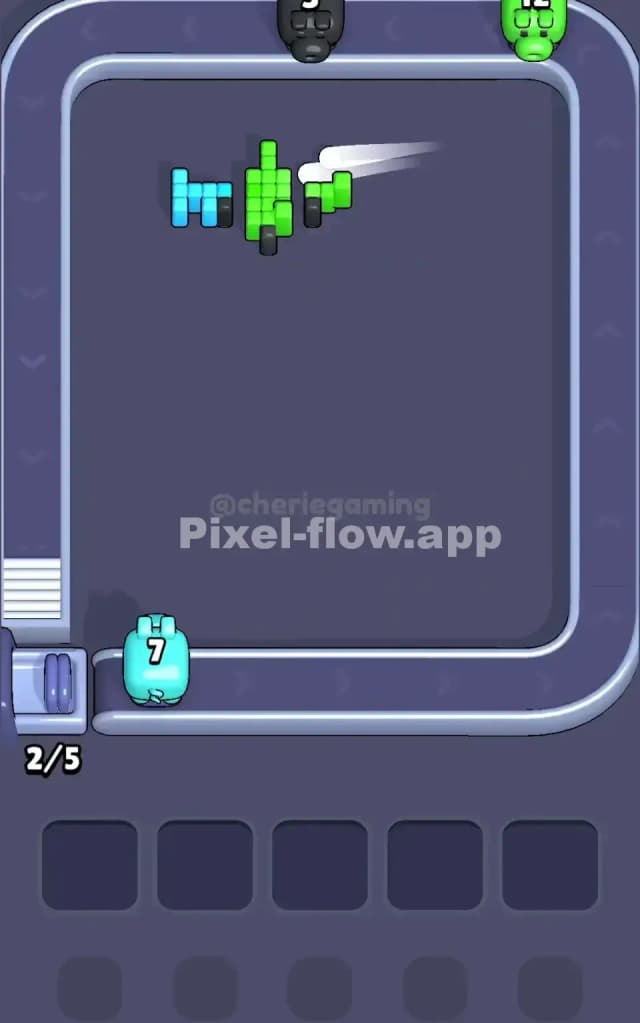
Pixel Flow Level 93 Walkthrough
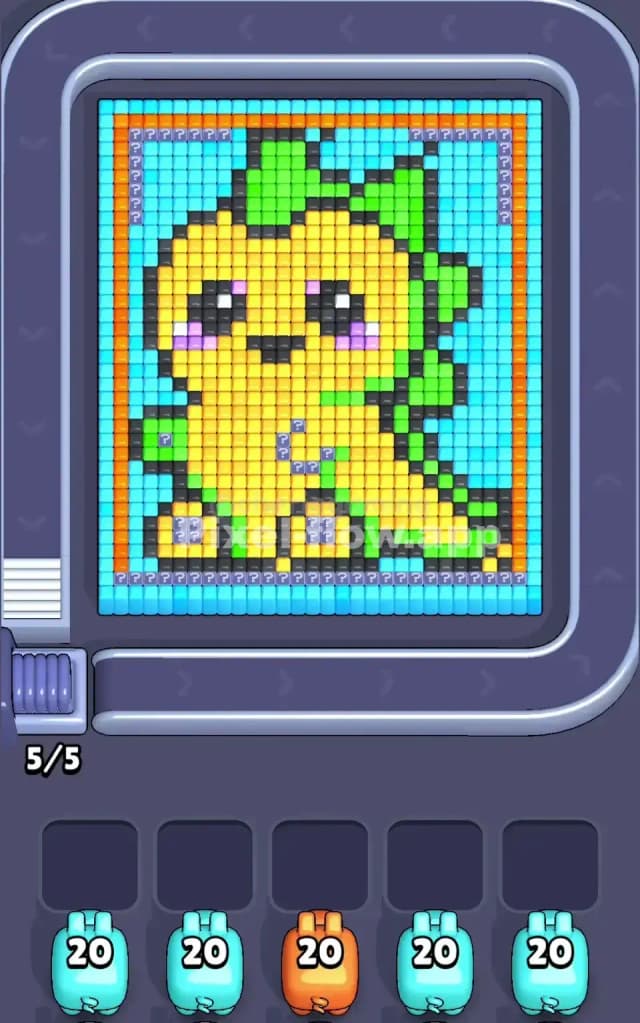
This level features a chunky, pixel-art dinosaur—a yellow beast with bright green back spikes and rosy pink cheeks. It looks cute, but the board layout is deceptive. The main subject is centered, but it is framed by a distinct Orange Border and a field of Light Blue Sky.
You also have to deal with "Mystery Blocks" (grey cubes with question marks) lining the top and bottom edges, plus a few scattered inside the dino's belly. The rule to beat Pixel Flow Level 93 is strict ammo management. You have high-ammo pigs (20+ shots), but the colors are layered deeply. If you deploy a Yellow pig before you’ve exposed enough yellow blocks, that pig will sit in your waiting slot, uselessly blocking new pigs. Because of the density of the central figure and the tricky mystery blocks, this is a very hard level.
Pixel Flow Level 93 Overview
Imagine a portrait of a baby dragon sitting for a school photo. That’s what this level feels like. The dragon is mostly Yellow, facing slightly left, with a jagged Green crest running down its spine. The background isn't complex; it's a solid wash of Light Blue.
The board has a distinct verticality to it. The Orange columns on the far left and right act like picture frames. These are dangerous. They are thin, single-file lines. If you get an Orange pig with 20 ammo, you need to make sure you have access to almost the entire vertical strip, or that pig will act as a clog for a long time. The Mystery Blocks at the bottom act as a "gate." You have to smash through this bottom layer of uncertainty before you can even touch the dragon’s feet.
Step by step solution walkthrough for Pixel Flow Level 93
First Color Zone to Erase in Pixel Flow Level 93
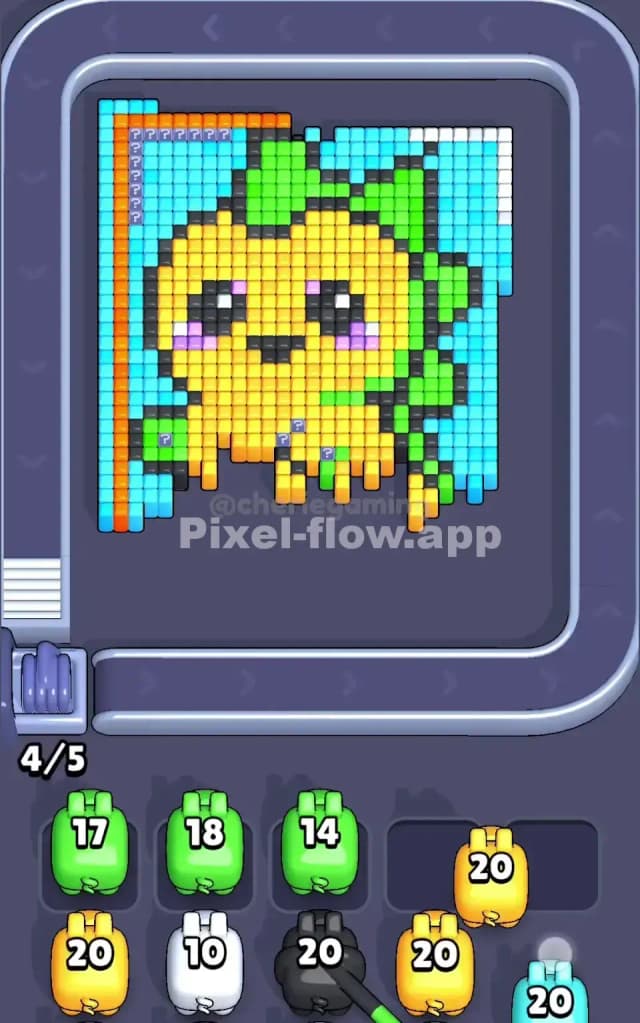
I start by targeting the Light Blue Background, specifically the chunks surrounding the feet and sides.
Here is why: The Blue blocks are the "wrapper" for the level. They are accessible immediately once you breach the bottom row of mystery blocks. By clearing the Blue first, you isolate the central figure. This exposes the Black outline of the dinosaur. More importantly, the Blue zones are large and scattered. Using a Blue pig early is safe because there are plenty of targets, so the pig will empty its ammo quickly and leave the board, keeping your waiting slots open for the harder colors like Green or Pink.
How to pass Pixel Flow Level 93 without power ups or boosters
The mid-game of Pixel Flow 93 is where runs die. You have likely cleared the feet and the bottom background, leaving a floating yellow torso. The trap here is the Yellow mass.
The dragon's body is a huge, solid block of Yellow. It looks tempting to spam Yellow pigs. Don't. The Yellow blocks are often covered by Black outline blocks or scattered Mystery Blocks. If you drop a Yellow pig and it only hits 3 exposed blocks before running out of targets, it will drop into your waiting slot with 17 ammo left. It will sit there. Forever.
Instead, peel the layers like an onion.
- Focus on the Black outlines as soon as they are exposed. They are thin layers that hold the Yellow back.
- Clear the Green spikes on the tail (right side) to open up the back of the dinosaur.
- Only drop a Yellow pig when you see a "surface area" of yellow that looks like it exceeds 15 blocks.
If a Mystery Block turns into a color you don't have a pig for (like Purple for the cheeks), just let it sit. Do not panic and burn a different color pig trying to reach it. Patience is the only way to survive without boosters here.
Last Details You Clean Up in Pixel Flow Level 93
As you reach the end, you will be left with the dinosaur's head. This is the trickiest part of Pixel Flow Level 93. You will usually have the Green crest on top and the White/Black eyes remaining.
The Green blocks are stacked high. You might need to save a Green pig specifically for the very end of the run. The eyes are small islands of color (White and Black) surrounded by Yellow. Watch out for the Pink cheeks. They are tiny clusters. Ensure you have a clear line of sight to them before dropping a Pink/Purple pig, or it will become a permanent clog in your final slot, forcing a restart just pixels away from victory.