Pixel Flow Level 94 Solution | Pixel Flow 94 Walkthrough
How to beat Pixel Flow Level 94: Video solution & walkthrough. The fastest way to pass Pixel Flow 94.
Is this the wrong level layout?🤔
Pixel Flow randomizes levels for different players. Don't worry, just upload a screenshot of your board, and our AI will find the correct video instantly.




Pixel Flow Level 94 Walkthrough
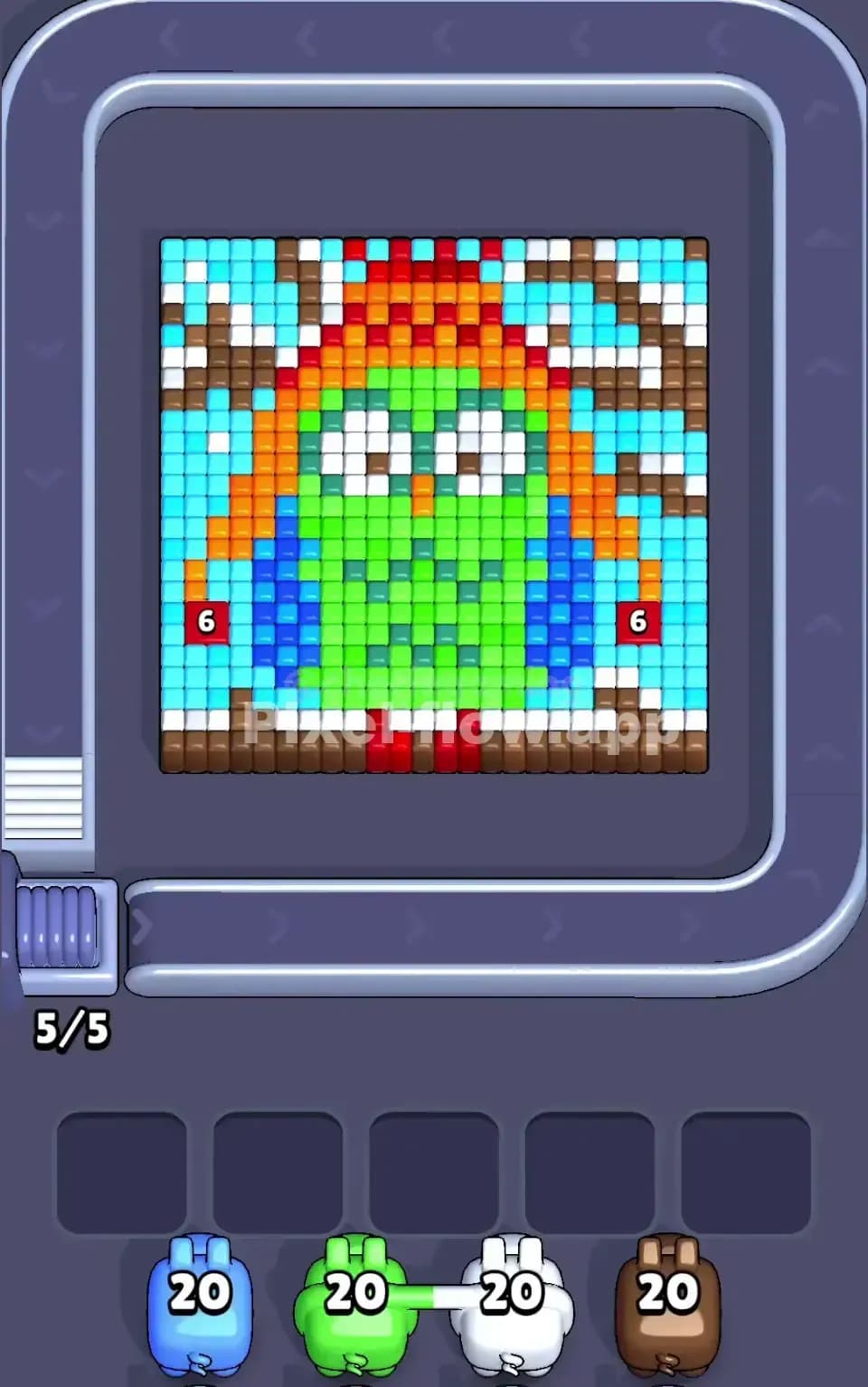
This level features a classic sci-fi icon: a pixelated UFO floating in space. The image is densely packed. You have a large white dome at the top, a thick yellow band across the middle, and a heavy purple and blue base representing the ship's hull and propulsion. Surrounding the ship are scattered "stars" or sparkles in yellow, purple, blue, and white.
The rule for Pixel Flow Level 94 is strict: manage your Waiting Slots. The UFO is a solid block. If you accept too many pigs for the inner layers (like the blue core) before clearing the outer layers (purple hull), your slots will jam. This is a very hard level because the colors are heavily layered on top of each other.
Pixel Flow Level 94 Overview
The artwork here is a chunky, retro spaceship. It feels like an enemy sprite from an 80s arcade shooter.
- The Dome: A large white semi-circle sits on top. It's mostly accessible from the start.
- The Ring: A bright yellow stripe cuts horizontally through the center. This is a crucial structural element.
- The Hull: The bottom half is a mix of purple on the sides and a central blue section that looks like an engine glow or a beam.
- The Debris: Floating around the ship are little "plus" signs and single blocks. You have yellow and purple stars on the left, and blue and white stars on the right.
The asymmetry is dangerous. The left side is heavy on purple pixels, while the center-bottom is dense with light blue and dark blue. The top corners are relatively light, just containing those floating stars. Your eyes might drift to the cool blue engine in the middle, but don't be fooled. That blue is buried deep.
Step by step solution walkthrough for Pixel Flow Level 94
First Color Zone to Erase in Pixel Flow Level 94
I start by targeting the Purple hull sections on the far left and right.
Here is why: The purple blocks form the outer "shell" of the bottom half. If you look closely at the layering, the light blue engine parts in the middle are often obstructed or surrounded by these purple walls. Furthermore, there are floating purple stars in the top left that are easy pickings.
- Prioritize Purple Pigs: Grab them immediately to clear the large purple flanks on the bottom left and right. This exposes the inner blue core.
- Grab Yellow Early: The yellow stripe is wide and mostly exposed. Clearing the yellow band separates the top dome from the bottom hull, effectively breaking the puzzle into two smaller, manageable chunks.
- Ignore Blue (Initially): Do not fill your slots with Blue pigs yet. The blue pixels are largely trapped in the bottom center. If you take a Blue pig now, it will likely sit in your waiting slot with 8/10 ammo left, clogging your flow.
How to pass Pixel Flow Level 94 without power ups or boosters
At the mid-point of Pixel Flow Level 94, the board usually looks messy. The yellow band should be gone. The purple sides should be stripped away. You are left with a floating white dome and a stubborn block of blue pixels at the bottom center.
This is the danger zone.
- The White Dome Trap: The white dome is thick. You need high-capacity White pigs to clear it. However, intermixed with the white dome are often black outline blocks or hidden background pixels. Watch the conveyor belt closely. Only take a White pig if you see a clear line of sight to the dome.
- The Blue Engine Core: Now that the purple is gone, the light blue center is vulnerable. You need to aggressively hunt for Light Blue pigs. This central column is dense. A single pig can unload its entire ammo clip here, which is exactly what you want to free up a slot instantly.
- Slot Management: If you have a waiting slot filled with a color that has no targets (e.g., a Black pig waiting for outlines that are still covered), do not take another pig unless it matches a currently exposed color perfectly. You cannot afford two "dead" slots in this phase.
Last Details You Clean Up in Pixel Flow Level 94
The end game of Pixel Flow 94 is usually a scattering of Black outline blocks and a few stubborn White pixels.
- The Black Outlines: Once the colorful hull and dome are erased, you will see the black frame that held the ship together. These are usually the last to go because they exist on the deepest layer. Save your Black pigs for the very end.
- Hidden Stars: double-check the corners. Sometimes a single white or blue "star" block in the top right corner survives because it wasn't connected to the main ship. Don't let a stray pig waste a slot waiting for that one block while the conveyor belt moves on.
- Final flush: Your last move will likely be a high-ammo pig clearing the bottom-most layer of the background or the final black pixels of the UFO's base. Ensure your slots are empty enough to grab that final specific color.